
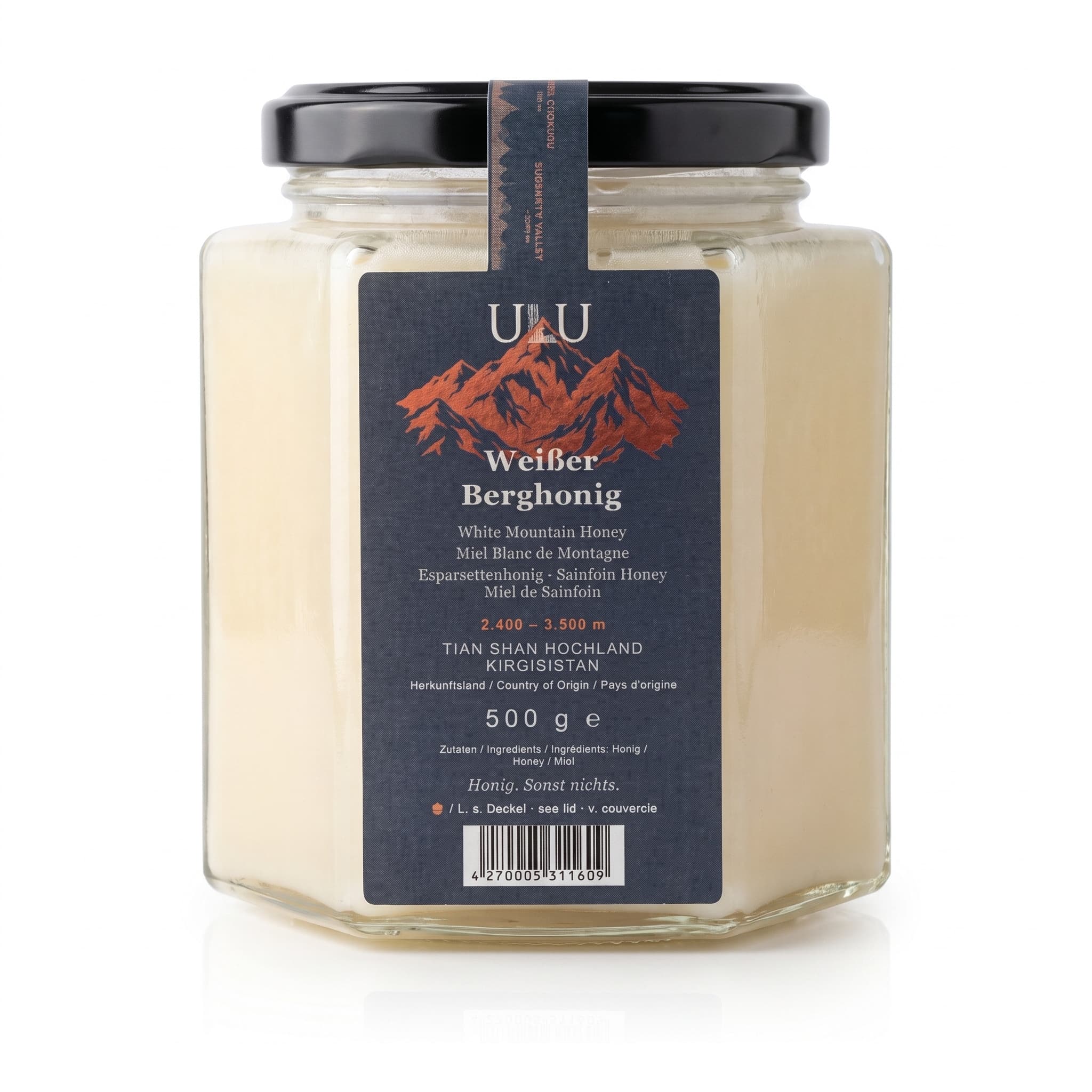
Miel blanc de sainfoin du Kirghizistan
Miel de Montagne
What is great does not shout. It endures.
34,90 €
Prix unitaire : 69,80 €/kgRare miel blanc de sainfoin des hauts plateaux du Kirghizistan. De quatre régions du Tian Shan, à 2 400–3 500 m d’altitude, où l’esparcette sauvage couvre les prairies du Tian Shan. Blanc crémeux, floral et doux. Non pasteurisé, travaillé en douceur à 40 °C maximum, cristallisé naturellement. Notre miel de montagne a obtenu l'argent aux Apimondia World Beekeeping Awards 2019 à Montréal. Apimondia est la fédération internationale des associations d'apiculteurs. L’alternative au miel de Manuka, pour une fraction du prix.
- Votre miel entre de bonnes mains
- Emballage anti-casse & envoi soigné
- Livraison en France par DHL
- Chez vous en 5 à 10 jours ouvrables
- Miel primé — Apimondia Argent
Détails du produit
- Variety
- Sainfoin honey (Onobrychis viciifolia)
- Origin
- Kyrgyzstan — Regions Naryn, Issyk-Kul, Talas
- Altitude
- 2,400–3,500 m a.s.l.
- Texture
- Creamy-firm, naturally crystallised
- Colour
- White to ivory
- Contents
- 500 g (jar)
- Storage
- Cool and dry, protected from light
- Certifications
- Apimondia Silver 2019 (Supplier)
Informations sur la denrée alimentaire
- Dénomination
- Miel de sainfoin
- Ingrédients
- Miel
- Quantité nette
- 500 g
- Pays d’origine
- Kirghizistan
- Exploitant du secteur alimentaire
- Mante UG (haftungsbeschränkt), An den Eichen, 24248 Mönkeberg, Deutschland
Dégustation
- Couleur et texture
- Blanc crémeux, cristallisé naturellement
- En bouche
- Doux et floral, avec une délicate note de caramel
Origine
- Altitude
- 2 400–3 500 m
- Montagnes
- Tian Shan, Kirghizistan
- Floraison
- Sainfoin (Onobrychis viciifolia)
- Récolte
- Une fois par an
- Traitement
- Travaillé en douceur à 40 °C max., non pasteurisé
En cadeau : commandez avant le vendredi 18.12.2026 pour une livraison avant Noël. Voir les coffrets
L'Histoire
In the highlands of the Tian Shan, between 2,400 and 3,500 metres, sainfoin blooms — a wild legume that releases its nectar for just a few weeks each year. Family beekeepers keep their bees here. No industrial beekeeping, no supplemental feeding, no blending. The bees collect what the mountains give. This honey is the product of a landscape that still exists as it did centuries ago.