
Conscious Living
Wool Scarf Origin Kyrgyzstan — Tradition Meets Design
Last updated:
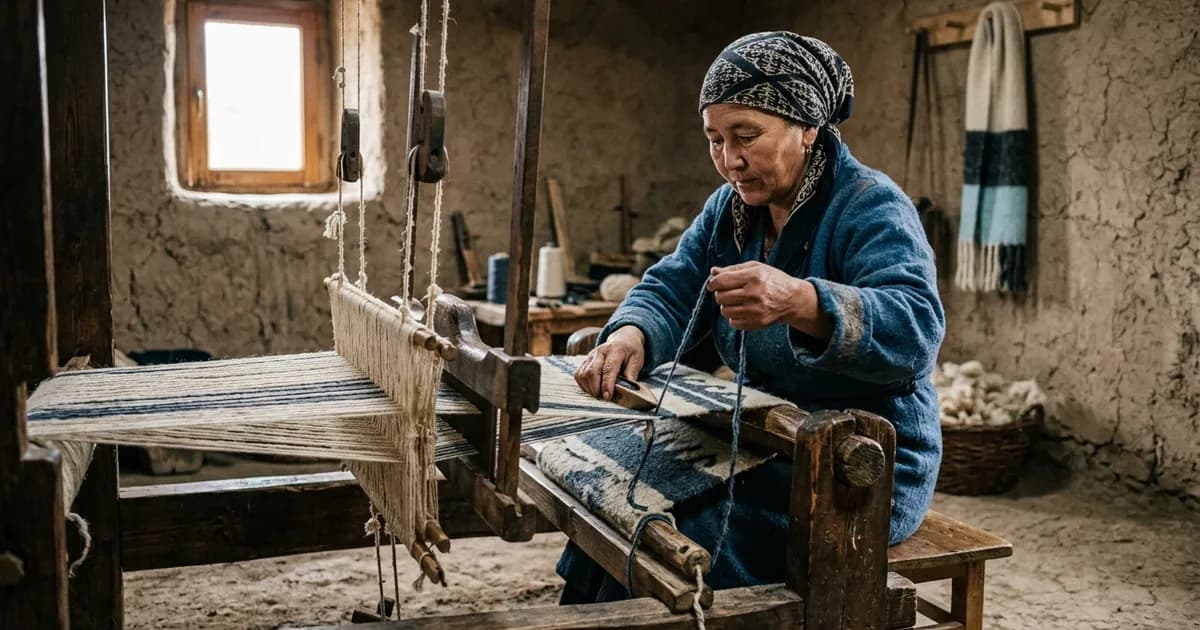
Most wool scarves have no story. They come from a warehouse, somewhere. The wool comes from a factory, somewhere else. Nobody knows who made them anymore — and that, by silent agreement, isn't supposed to bother anyone.
A wool scarf made from Kyrgyz highland wool is the opposite of that.
The wool scarf origin begins at 2,000 to 3,500 meters, in the Tian Shan mountains of Central Asia. It begins with sheep that have never seen a barn. With a climate that reaches 40°C in summer and drops to minus 30°C in winter. And with a wool structure that doesn't just survive these extremes — it's built into them.
This isn't romance. This is materials science.
Quick Summary
Kyrgyz highland wool for ULU scarves comes from sheep that graze on pastures between 2,000 and 3,500 meters in the Tian Shan mountains. The extreme temperature swing of up to 70°C between midsummer and midwinter forces a particularly dense, lanolin-rich fiber structure. The wool is hand-shorn, hand-spun, and processed using traditional weaving techniques passed down orally for generations. The result is a scarf that doesn't pretend to be high quality — it is, because its environment demanded it.
Why Kyrgyz Wool Is Different — and Why It Matters
There are thousands of wool scarves on the market. Merino from Australia. Alpaca from Peru. Cashmere from Mongolia. Kyrgyz highland wool rarely appears on this list — which makes it one of the last truly undiscovered raw materials in the European fashion world.
The reason lies in geography.
The Tian Shan mountains are not a mountain range in the tourist sense. They are a system of high plateaus, lowlands, and extreme weather corridors stretching over 2,500 kilometers, crossing the borders of Kyrgyzstan, China, Kazakhstan, and Tajikistan. On these high plains live Kyrgyz sheep — a hardy local breed that has been bred for thousands of years not for high performance, but for survival.
Survival here means: wool that insulates.
Temperature range of up to 70°C: Between the hot summer (up to +40°C in valley floors) and the deep winter (down to -30°C on high plateaus), Kyrgyz mountain sheep develop a wool structure that neither Australian Merinos nor New Zealand crossbreeds can produce under similar laboratory conditions. (Kyrgyz Institute of Animal Husbandry, Bishkek, 2022)
This wool is not finer than Merino. It is denser. Longer-stapled. Richer in lanolin. Exactly what a scarf needs that isn't just meant to look good, but to perform — at the neck, in the wind, in the rain.
From the Hive
Honey knowledge the supermarket skips
Twice a month: varietals, harvest, origin. Plus 10% off your first order.
10% off your first order · No spam. Unsubscribe anytime.
From Sheep to Scarf: The Journey of Kyrgyz Wool
Spring: Shearing on the Highland Pasture
The annual calendar of Kyrgyz wool production begins in May, when the sheep are driven from their winter quarters to the summer pastures. Shearing takes place at elevations between 2,000 and 2,500 meters — by hand, with blade shears, without machines. Dzhaksylyk, a shepherd from the Chuy Valley northeast of Bishkek, shears his flock of about 180 animals in two to three weeks.
For a single ULU scarf, the fibers from at least two sheep are needed.
The wool is sorted immediately after shearing: inner fleece (soft undercoat, in direct contact with the sheep's skin) is separated from outer fleece (coarser outer layer). For scarves, only the inner fleece is used — the layer that retains warmth because it had to do so its entire life.
At least 2 sheep per scarf: A finished woven ULU wool scarf contains the inner fleece wool of at least two Kyrgyz mountain sheep. The sorting process is manual — no mechanical picking separates the quality layers. (Dzhaksylyk Apiaries & Wool House, Chuy Valley, Spring 2025)
Summer: Washing, Drying, Carding
The raw wool is washed outdoors — with river water, some soap, and a lot of patience. Machines speed up this process industrially to just a few minutes; in traditional processing, washing a batch takes half a day. This isn't inefficiency. It's protecting the fiber scales, which tear off under overly aggressive mechanical treatment and permanently weaken the wool.
After drying, the wool is carded — manually untangled so that all fibers are aligned in parallel. Only then is it ready for spinning.
Spinning itself is the moment when handmade wool becomes visible. Under a microscope, machine-spun yarn looks uniform — regular twist angles, consistent fiber lengths. Hand-spun yarn shows variability: minimally different thicknesses, slightly varying twists. This variability isn't a weakness. It's the reason for the distinctive hand feel that industrial yarn never has.
Autumn and Winter: Color from Nature
Kyrgyz wool scarves in traditional production are dyed with natural colors. The color palette is earth-bound:
| Shade | Source | Property |
|---|---|---|
| Ivory / Natural White | Undyed wool | Raw state, warm white tones |
| Yellow / Ochre | Onion skins | Lightfast, warm |
| Brown / Dark Brown | Walnut shells | Very lightfast, deep |
| Dark Blue / Indigo | Indigo plant, dyer's knotweed | Rich, ages beautifully |
| Red / Terracotta | Pomegranate rind, madder | Warm base tone |
| Gray / Slate Blue | Iron mordant on wool | Cool, modern |
Natural dyes from plants and minerals: Kyrgyz textile artisans use a palette tradition passed down orally over generations. No dyeing school, no textbook — only the knowledge of which plant produces which shade at which water temperature. (Documentation: Central Asian Crafts Institute, Bishkek, 2021)
The Weaving: Where Tradition Meets Pattern
The weaving technique used for ULU scarves is the foundation of a millennia-old Central Asian textile culture. There are no standardized measurements, no digital pattern templates, no computerized looms.
There is a weaver. A loom. And a pattern she knows by heart.
Aizat weaves in a small workshop in Kara-Balta, about 60 kilometers west of Bishkek. She learned weaving from her mother, who learned it from her mother. The pattern library she works with — geometric shapes, stripe compositions, abstracted nature motifs — is part of a chain of oral tradition that no archive contains. It lives in her memory.
A scarf by Aizat requires between four and six hours of pure weaving time. Preparation, setting up the loom, and finishing work not included.
Four to six hours of pure weaving time per scarf — plus yarn preparation, setting up the loom, and hand-finishing the ends. ULU scarves don't carry a factory number. They carry Aizat's handwriting. (Workshop documentation Aizat Textile, Kara-Balta, 2025)
What Lanolin Actually Does — and Why Industrial Wool Can't
Lanolin is the natural wool wax produced by the sebaceous glands of the sheep. It's the reason wet wool doesn't immediately feel soaked through. The reason wool still warms despite moisture. The reason a good wool scarf doesn't need to be washed daily.
Industrial wool processing removes lanolin for efficiency reasons: it complicates machine processing, clogs rollers, and disrupts the dye balance with synthetic colors. Most wool scarves on the market no longer have any significant lanolin content.
Kyrgyz highland wool, gently washed with river water, retains a significant portion of its natural lanolin content. This isn't a marketing claim. It's a direct consequence of gentle processing.
| Property | Kyrgyz Highland Wool (gently processed) | Industrial Merino Wool (Superwash) |
|---|---|---|
| Lanolin Content | Retained (approx. 3–5%) | Largely removed (<1%) |
| Fiber Scaling | Intact, pronounced | Worn away by chlorination |
| Temperature Regulation | Active (lanolin film + hollow chamber) | Passive, reduced |
| Felting Tendency | Higher with improper care | Reduced (chemical treatment) |
| Decades of Durability | Very high with proper care | Medium |
| Hand Feel | Slightly textured, alive | Soft, uniform, smooth |
Nomadic Heritage: What Wool Tells About a Way of Life
Kyrgyz society was nomadic for millennia. Families moved with their herds across the highland plateaus of the Tian Shan — from spring pastures at 1,500 meters to summer pastures at 3,000 meters and back. Everything they owned had to be transportable, repairable, and multifunctional.
Wool wasn't one material among many. It was the material.
From it came yurt felts, blankets, clothing, slippers, carpets. Not as luxury — as a survival necessity. This function defined the material quality: wool that didn't keep warm in a nomadic community didn't get a second chance.
This selection logic is written into the genetics of the Kyrgyz sheep breed. Not through laboratory breeding, but through millennia of natural selection in one of the harshest mountain environments on earth.
UNESCO Intangible Cultural Heritage: Kyrgyz felt-making — the closest relative of wool weaving — was inscribed on UNESCO's Intangible Cultural Heritage list in 2012 (entry 00695). It is thus internationally recognized as a living, non-musealized practice. (UNESCO, 7th Session of the Intergovernmental Committee, Paris, 2012)
The scarves that Aizat weaves carry this heritage. Not as a folklore copy — as a living continuation of a practice that never stopped because it never stopped working.
How ULU Trades Directly — and Why the Origin Is Traceable
Between the sheep in Dzhaksylyk's flock and the scarf in your hands, there are typically five to eight intermediary steps: traders, processors, yarn dealers, importers, wholesalers, brands. Each step takes a margin. Each step removes the finished scarf further from its origin.
ULU works directly. No intermediaries between us and Dzhaksylyk, Aizat, and the craftswomen who process the wool. This means:
- The price we pay reaches the people who do the work.
- We know the names. The places. The altitudes.
- When quality changes, we speak with a person — not with a supply chain.
This isn't philanthropy. It's a business model that works because quality and transparency are connected.
Those who know where their wool comes from have a reason to make it well.
Frequently Asked Questions About Wool Scarf Origin Kyrgyzstan
Where does the wool for ULU wool scarves come from?
ULU wool scarves are made from highland wool of Kyrgyz mountain sheep that graze on pastures between 2,000 and 3,500 meters in the Tian Shan mountains (Kyrgyzstan). The wool is hand-shorn, manually sorted, and gently processed to preserve the natural lanolin content. Shepherds like Dzhaksylyk from the Chuy Valley are direct partners without intermediaries.
What is the difference between Kyrgyz wool and Merino wool?
Kyrgyz highland wool is not finer than Merino, but denser, longer-stapled, and richer in lanolin. While Australian Merino wool is optimized for fineness and body contact, Kyrgyz mountain sheep develop a fiber structure through extreme temperature fluctuations (up to 70 °C between summer and winter) that insulates particularly effectively. Kyrgyz wool is also rarely industrially chlorinated (Superwash), which preserves the natural fiber scaling.
Are ULU scarves dyed with natural colors?
Yes. Traditionally processed ULU wool scarves are dyed with natural colors from plants (onion skins, walnut shells, pomegranate rind, indigo plants). These colors age differently than synthetic dyes: they grow deeper, not faded. The color palettes and methods are passed down orally from craftswoman to craftswoman — without written templates.
Why is a handmade wool scarf from Kyrgyzstan more expensive than an industrial scarf?
A ULU wool scarf contains the wool of at least two sheep, was hand-shorn, sorted, washed, carded, spun, dyed, and woven — with a total effort of several days per piece. The price pays for direct labor. No factory, no automation, no hidden wage suppression through five intermediary steps. The result is a scarf that doesn't get worse in one season, but better.
How do I care for a wool scarf made from Kyrgyz highland wool?
Hand wash at a maximum of 30 °C with pH-neutral wool detergent. Don't rub, don't wring. Dry flat on a towel, not in the sun. Kyrgyz highland wool has a higher lanolin content than industrially treated wool — that means more care requirements, but also more reward with proper treatment. Detailed guide: → How to wash a wool scarf — step by step
Can I give a ULU wool scarf as a gift?
Yes — and it is one of the few gifts with a complete story. The recipient knows where the wool came from, at what altitude the sheep grazed, who wove the scarf. A Kyrgyz wool scarf from direct sourcing is the opposite of a faceless gift card. More on this: → Gift from Kyrgyzstan — handmade, named, direct
What is Kyrgyz craftsmanship?
Kyrgyz craftsmanship encompasses traditional craft techniques that emerged from the nomadic way of life in Central Asia — felt work (Shyrdak, Ala-Kiyiz), wool processing into textiles and scarves, mountain beekeeping. Felt craftsmanship has been a UNESCO Intangible Cultural Heritage since 2012. More on the different craft traditions: → Kyrgyz craftsmanship — nomadic traditions that survive
A scarf is a scarf — until it is one that tells a story
Aizat in Kara-Balta will eventually stop weaving. Maybe she has a daughter who will learn it. Maybe not. That is the honest situation.
What is certain: As long as she weaves, every scarf that comes from her hands carries a precision that no algorithm has. A decision about which fibre, which tension, which pattern — made by a person who has spent her life making these decisions.
That is the origin. Not geography alone. But the knowledge that lives within it.
The wool comes from 3,000 metres. The scarf comes from Aizat. That is not a slogan. That is the complete address.
Read more:
- → How to wash a wool scarf — keeping it soft and beautiful
- → Kyrgyz wool — what sets it apart from others
- → Kyrgyz craftsmanship — nomadic traditions that survive
- → Gift from Kyrgyzstan — handmade, named, direct
ULU Editorial — 13.04.2026
Share
Between the hot summer (up to +40 °C) and the deep winter (down to -30 °C), Kyrgyz mountain sheep develop a wool structure that neither Australian merinos nor New Zealand crossbreeds produce under comparable conditions.
A finished ULU wool scarf contains the inner fleece wool of at least two Kyrgyz mountain sheep — sorted by hand, because no machine picking can separate the quality layers.
Four to six hours of pure weaving time per scarf — plus yarn preparation, loom setup, and hand-finishing the ends. ULU scarves carry no factory number. They carry Aizat's signature.
Kyrgyz highland wool gently washed with river water retains a significant portion of its natural lanolin content — a direct consequence of gentle processing, not a marketing claim.
Kyrgyz felt-making was added to the UNESCO Intangible Cultural Heritage list in 2012 (entry 00695) — as a living, non-musealized practice.
Natural dyes from plants and minerals age differently than synthetic dyes: a ten-year-old Kyrgyz wool scarf looks deeper than a new one — not worn out.
Frequently Asked Questions
ULU wool scarves are made from highland wool of Kyrgyz mountain sheep grazing between 2,000 and 3,500 metres in the Tian Shan mountains (Kyrgyzstan). The wool is hand-shorn, manually sorted, and gently processed to preserve its natural lanolin content. Direct sourcing without intermediaries from shepherds like Dzhaksylyk in the Chuy Valley.
Kyrgyz highland wool is denser, longer-stapled, and richer in lanolin than Australian merino wool. Mountain sheep in the Tian Shan develop a fibre structure through extreme temperature swings (up to 70 °C between summer and winter) that provides exceptional insulation. Kyrgyz wool is rarely industrially chlorinated (superwash), which preserves the natural fibre scales and lanolin content.
Yes. Traditionally processed ULU wool scarves are dyed with plant-based natural colours: onion skins (yellow/ochre), walnut shells (brown), pomegranate bark (red/terracotta), indigo plants (blue). These colours deepen with age rather than fading. The dyeing recipes are passed down orally from artisan to artisan.
A ULU wool scarf contains the wool of at least two sheep and is produced through manual steps over several days: hand-shorn, sorted, washed, carded, spun, dyed, and woven with 4–6 hours of pure weaving time. No factory, no automation, no hidden wage compression through intermediary steps. The result is a scarf that lasts decades.
Hand wash at a maximum of 30 °C with pH-neutral wool detergent. Do not rub or wring. Dry flat on a towel, not in sunlight or on a radiator. Kyrgyz highland wool with higher lanolin content felts more quickly with improper handling than chlorinated industrial wool — but rewards careful care with decades of durability.
Yes — a ULU wool scarf is one of the few gifts with a complete story: origin altitude, shepherd's name, weaver. The recipient receives not just a textile but a traceable provenance. Kyrgyz wool scarves work as a gift for people who value quality over labels.
Kyrgyz craftsmanship encompasses traditional handcraft techniques from the nomadic way of life in Central Asia: felt-making (Shyrdak, Ala-Kiyiz), wool processing into textiles and scarves, and mountain beekeeping. Felt-making has been UNESCO Intangible Cultural Heritage since 2012 (entry 00695). The weaving tradition for scarves and textiles is a closely related branch of the same wool-processing culture.

Jamilia
Autorin, ULU Magazin
Jamilia schreibt über kirgisisches Handwerk, Honig und die Geschichten hinter den Produkten. Aufgewachsen in Zentralasien, lebt sie zwischen Bischkek und Berlin.
Related Articles

Conscious Living
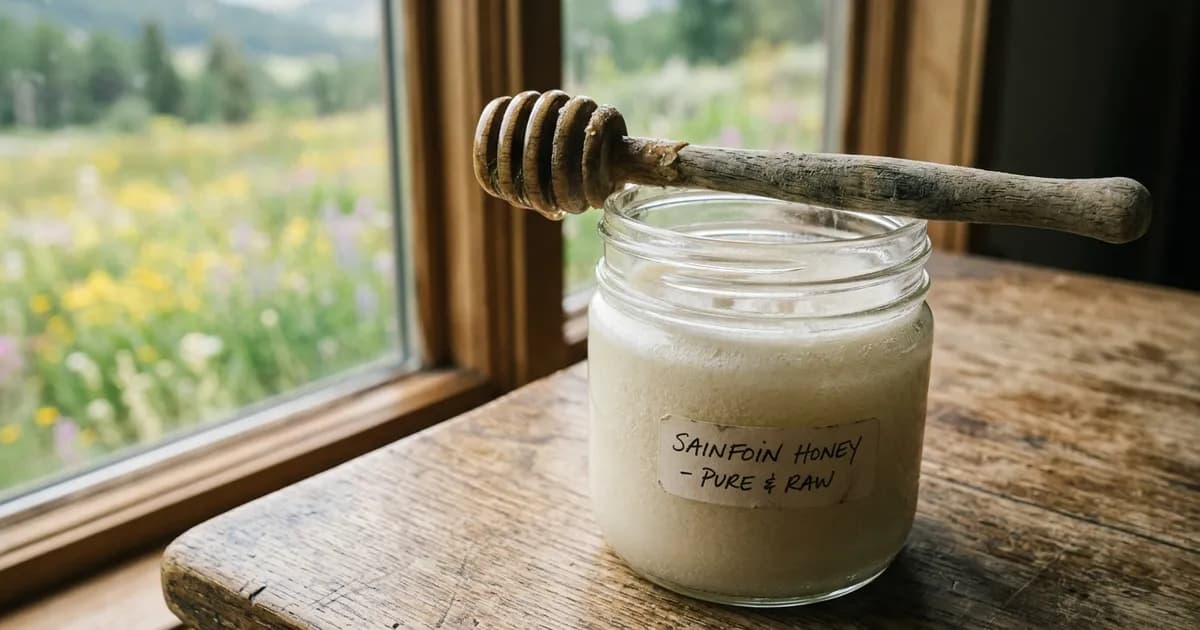
Honey and Gut Health: What Current Research Actually Shows
Research into honey and gut health is growing rapidly — but the headlines often outrun the actual findings. Here is what the studies say, and what they do not.
Conscious Living
Honey Antioxidants: What the Research Actually Says
Gallic acid . Taxifolin . What these numbers mean — and what they do not promise.
Conscious Living
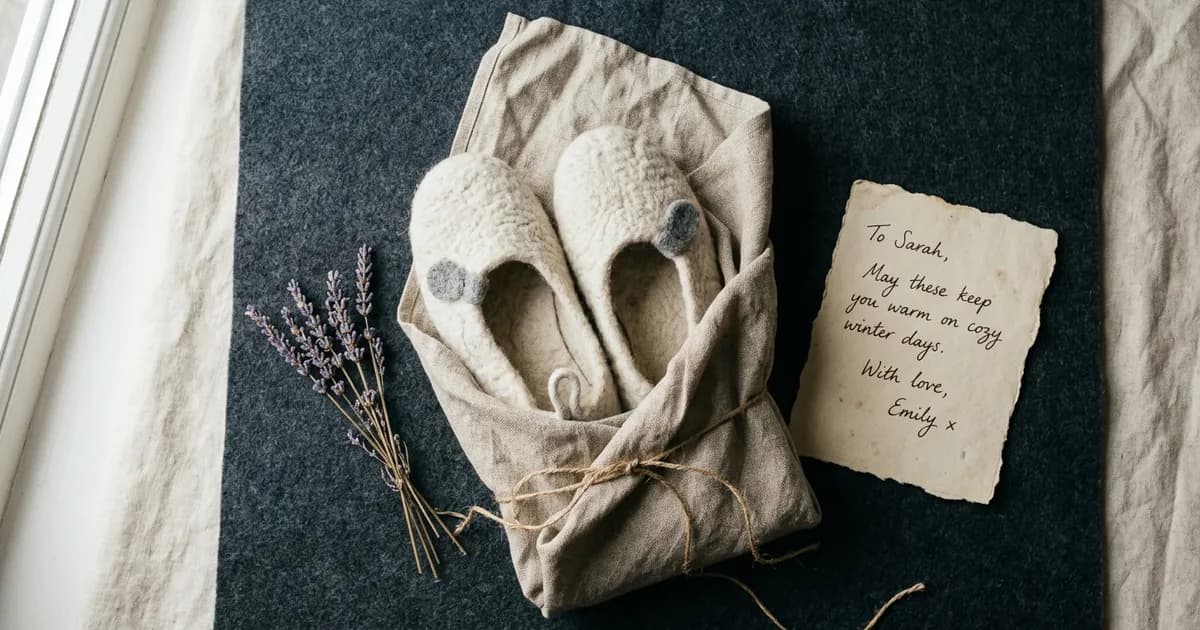
Felt Ballerinas as a Gift — For Every Occasion
Handmade felt ballerinas work as gifts because they are used daily and remind the wearer of their origin. ULU Steppe Ballerinas are crafted by Gulnara in Naryn, Kyrgyzstan (2,036 m altitude) — from untreated highland wool, 4 to 6 hours of handwork per pair. Wet felting has been on the UNESCO Intangible Cultural Heritage list since 2016 (Element No. 00695). Suitable for Mother's Day, birthdays, Christmas, housewarming, thank-you gifts and weddings — available with ULU gift packaging.
From the Hive
Honey knowledge the supermarket skips
Twice a month: varietals, harvest, origin. Plus 10% off your first order.
10% off your first order · No spam. Unsubscribe anytime.