
Conscious Living
Sainfoin Honey vs Acacia Honey — The Comparison
Last updated:
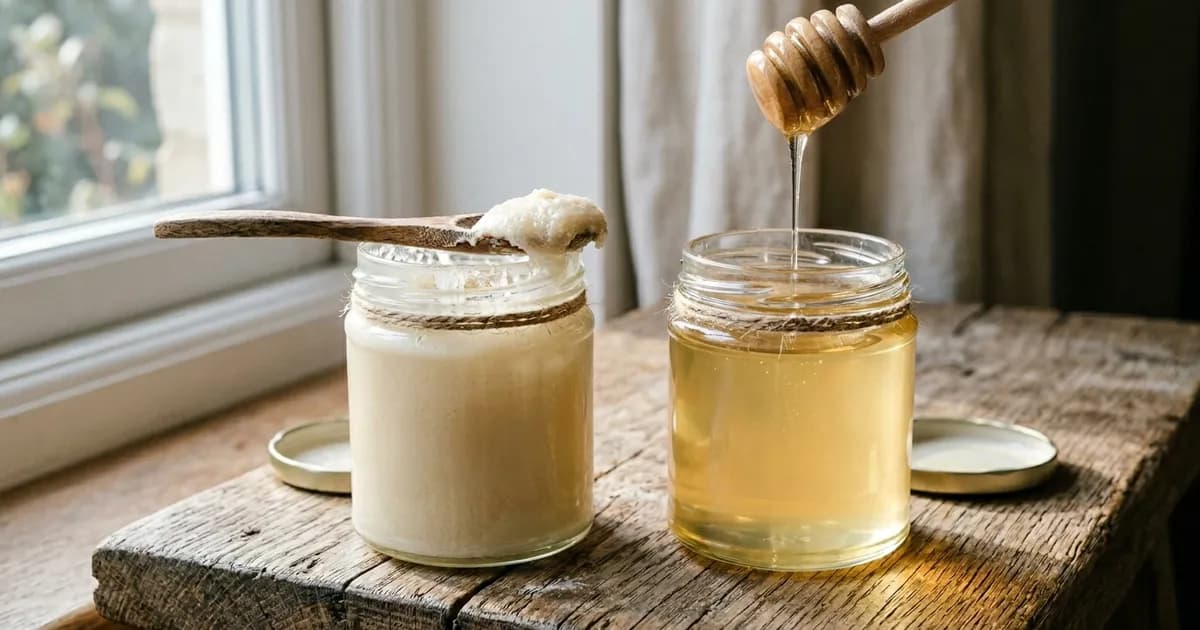
Two mild, light honey varieties. Both appreciated. But the differences begin where most product descriptions stop.
Acacia honey is liquid, widely available, and has been a classic in German households for decades. Sainfoin honey is creamy-white, rare, and comes from a high mountain range that most people couldn't find on a map. Both have real strengths — and both have a different home.
This comparison helps you make the right choice for your taste, your kitchen, and your standards.
Key Takeaway
Sainfoin honey and acacia honey are both mild, light honey varieties with a high fructose content — but their chemistry, texture, origin, and intensity differ significantly. Acacia honey (fructose: ~43%, glucose: ~27%) stays liquid for months to years and has a very neutral flavor. Sainfoin honey from the Kyrgyz Tian Shan (2,400–3,500 m) crystallizes into a creamy-white mass with fine crystals. If you're looking for neutrality and liquidity, acacia honey serves you well. If you value origin, depth, and texture, choose sainfoin honey.
Quick Overview: The Key Differences at a Glance
| Criterion | Sainfoin Honey | Acacia Honey |
|---|---|---|
| Botanical Source | Sainfoin (Onobrychis viciifolia) — legume | Black locust (Robinia pseudoacacia) — originally North America |
| Color | Whitish to light beige, creamy | Water-clear to pale yellow, transparent |
| Texture / Crystallization | Creamy-firm, medium-fine crystals — crystallizes within a few weeks | Liquid, often stays liquid for 1–2 years (high fructose content) |
| Flavor | Mild-floral, slightly nutty, subtle sweetness with depth | Very mild, neutral, almost odorless — subtly floral |
| Fructose / Glucose | ~38–41% fructose / ~32–35% glucose | ~43% fructose / ~27% glucose |
| Main Origin | Kyrgyzstan (Tian Shan, 2,400–3,500 m), Central Europe | Eastern Europe: Romania, Hungary; little from Germany |
| Price (500 g) | approx. €18–35 (premium segment) | approx. €8–15 (standard segment), German beekeeper up to €18 |
| Availability | Rare — niche suppliers, direct import | Very good — supermarket to apiary |
| Use Cases | Pure, on sourdough bread, in tea, as a gift | Baking, tea, salad dressings, general cooking |
| Apimondia Award | Silver 2019, our beekeeping partner (Canada); Kyrgyz beekeepers 3× gold 2013 (Kyiv) | No specific world awards |
From the Hive
Honey knowledge the supermarket skips
Twice a month: varietals, harvest, origin. Plus 10% off your first order.
10% off your first order · No spam. Unsubscribe anytime.
What Is Sainfoin Honey — and Where Does It Come From?
Sainfoin honey is a monofloral honey produced exclusively from the nectar of the sainfoin plant (Onobrychis viciifolia). Sainfoin is a legume — a pulse like clover and acacia — and thrives on calcareous, dry soils at medium to high elevations.
The main growing regions are in Central Asia: the Kyrgyz Suusamyr Valley and the broader highlands of the Tian Shan mountains (Naryn, Issyk-Kul, Talas, Osh) are considered the core regions for the world's finest quality. Beekeepers like Nursultan in the Suusamyr Valley work at elevations between 2,400 and 3,500 meters — far above any pesticide use and any intensive agriculture.
Sainfoin honey crystallizes quickly into a dense, creamy-white mass with fine, uniform crystals. The characteristic white color comes from this crystallization itself — not from processing or additives.
2,400–3,500 m — elevation of sainfoin nectar flows in the Kyrgyz Tian Shan
Our beekeeper the cooperative won the Silver Medal at the 2019 Apimondia World Beekeeping Conference in Canada — the most prestigious honey competition in the world. Kyrgyz beekeepers previously won three gold medals at the 2013 Apimondia congress in Kyiv.
What Is Acacia Honey — and Why Is It So Popular?
Acacia honey is one of the most popular monofloral honeys in Germany — and for good reason. It's mild, liquid, versatile, and barely changes its physical state. For people who want to dissolve honey in beverages or bake with a neutral flavor, it's a true all-rounder.
Botanically speaking, it doesn't actually come from true acacia nectar: German "acacia honey" comes from the black locust (Robinia pseudoacacia), a North American species brought to Europe in the 17th century. Today, extensive black locust forests grow primarily in Hungary and Romania — where the majority of acacia honey sold in Germany is harvested. Genuine German acacia honey is relatively rare and correspondingly more expensive.
The liquidity of acacia honey has a clear chemical explanation: with roughly 43% fructose and only ~27% glucose, the fructose/glucose ratio is approximately 1.59. Fructose is significantly more soluble than glucose — at this ratio, stable crystals barely form, and the honey remains liquid for months to years (Tandfonline, 2016).
~43% fructose / ~27% glucose — sugar profile of acacia honey, fructose/glucose ratio ~1.59
Chemistry and Composition: What Really Sets These Two Honeys Apart?
The difference between sainfoin honey and acacia honey isn't just about flavor — it's in the molecular structure.
Acacia honey has the highest fructose content among common monofloral honeys at ~43%. This makes it liquid and very mild. The polyphenol content is moderate; specific flavonoids or unusual aroma compounds are not characteristic.
Sainfoin honey has a more balanced sugar profile (~38–41% fructose, ~32–35% glucose) and therefore crystallizes faster and creamier. What matters most is its polyphenol profile: gallic acid (high concentration), taxifolin (high concentration), and high concentration 5-HMF were identified as the main phenolic compounds. The aroma profile comprises 60 volatile compounds, of which 71.31% are terpenoids — hotrienol is the characteristic marker compound.
Taste and Texture: For Which Palate?
If you stir honey into your tea and don't want a strong flavour of its own, acacia honey will make you happy. It's the most diplomatic of all honeys: mild, liquid, low-maintenance. It doesn't interfere with anything and enriches through its restraint.
Sainfoin honey is a different choice. It's not overpowering — but it has character. The creamy-white texture on bread or cheese is an experience in its own right. The taste is mild-floral with a slightly nutty note that comes from the sainfoin nectar and terpenoid profile. The fine crystal structure, which develops through slow processing at max. 20°C, gives it a texture that liquid honey lacks.
In short: acacia honey is the perfect everyday companion. Sainfoin honey is for moments when honey should be the star of the show.
For Whom Is Acacia Honey the Better Choice?
Acacia honey is the right choice when:
- Liquid consistency matters — e.g. for tea, dressings, baking
- A very neutral, unobtrusive flavour is desired
- The budget needs to stay manageable
- Honey is used regularly in larger quantities in everyday life
- Fructose intolerance is not an issue (acacia honey has the highest fructose content)
Good acacia honey from a German beekeeper (e.g. from Saxony-Anhalt or Brandenburg) costs around €10–18 for 500 g and has reliable quality. kein Problem
For Whom Is Sainfoin Honey the Better Choice?
Sainfoin honey is the right choice when:
- Texture and mouthfeel matter — creamy consistency on bread, toast, or straight from the jar
- Origin and transparency are important — named beekeeper, GPS-located region, Apimondia award
- A honey with a notable polyphenol profile is sought (gallic acid, taxifolin, hotrienol)
- A rare, artisanal product is sought as a gift or personal enrichment
ULU's Sky Nectar Honey comes from four regions of the Tian Shan, Kyrgyzstan: Naryn, Issyk-Kul, Talas and Osh, at 2,400 to 3,500 meters. It is stored at max. 20°C to preserve its fine crystalline structure.
Our Conclusion
Acacia honey is not a bad honey. It's an honest, reliable honey — and for many uses, the most pragmatic choice. If you want liquid, if you want mild, if you want everyday honey: acacia honey delivers.
Sainfoin honey is something different. It is specific in origin, texture, chemistry, and history. It comes from one of the purest landscapes of Central Asia, has been awarded multiple international honours, and has a polyphenol profile that stands out in laboratory research. It's not an everyday honey — it's a honey for the moment when honey should mean something.
Both have their place. The only question is which moment you're experiencing right now.
Frequently Asked Questions
What is the difference between sainfoin honey and acacia honey?
Sainfoin honey comes from the sainfoin plant (Onobrychis viciifolia), a legume, and crystallises to a creamy white. Acacia honey comes from the black locust (Robinia pseudoacacia) and stays liquid for months to years due to its high fructose content (~43%). Sainfoin honey has a richer polyphenol profile and a more intense texture; acacia honey is milder, more neutral, and more versatile in the kitchen.
Which honey stays liquid the longest?
Acacia honey stays liquid the longest — often 1–2 years and longer. This is due to its fructose/glucose ratio of ~1.59: fructose is significantly more soluble than glucose and prevents crystal formation. Sainfoin honey crystallises within a few weeks into a creamy-firm mass, which is a natural quality characteristic.
Is sainfoin honey or acacia honey better for tea?
Acacia honey works well for tea — it dissolves easily, has a neutral taste, and doesn't overpower the tea's aroma. Sainfoin honey dissolves somewhat more slowly due to its crystal structure, but can be fully dissolved with brief stirring. If you see honey in tea primarily as a sweetening background agent, acacia honey is the better choice.
Why is sainfoin honey white?
The white colour of sainfoin honey is caused by crystallisation. As it crystallises, the honey forms very fine, uniform crystals that scatter light — similar to powdered sugar compared to coarse sugar. Freshly harvested sainfoin honey is still light amber to yellowish; the white creaminess only develops during controlled storage below 20°C.
Where does the acacia honey in the supermarket come from?
The majority of acacia honey sold in Germany comes from Eastern Europe — primarily Hungary and Romania, where extensive black locust forests grow. Genuine German acacia honey is rare and tends to be more expensive (€10–18 / 500 g). When buying, it's worth checking the origin label.
Can I use sainfoin honey for baking?
Sainfoin honey bakes well, but its creaminess and polyphenol profile impart a subtle flavour of its own. For recipes where honey should remain neutral in the background (e.g. granola bars, salad dressings), acacia honey is the more flexible choice. For recipes where honey should carry the flavour (gingerbread, honey cake, grilled vegetables), sainfoin honey brings more depth.
More about sainfoin honey from Kyrgyzstan: Sky Nectar — Sainfoin Honey from the Tian Shan | What Is White Honey? | Sainfoin Honey — The Complete Guide | Mountain Honey from Kyrgyzstan
ULU — Truly sweet is rare.
Share
Acacia honey has a fructose/glucose ratio of ~1.59 (~43% fructose, ~27% glucose) — this explains why it stays liquid for months to years, while other honeys crystallise within weeks.
Sainfoin honey contains gallic acid and taxifolin as its main phenolic compounds, along with 60 volatile aroma compounds, of which 71.31% are terpenoids with hotrienol as the lead compound.
Our beekeeper the cooperative won Silver at the 2019 Apimondia World Beekeeping Conference in Canada — the most prestigious honey competition in the world. Kyrgyz beekeepers previously won three gold medals at the 2013 Apimondia congress in Kyiv.
Most acacia honey sold in Germany comes from Hungary and Romania, where extensive black locust forests (Robinia pseudoacacia) grow — genuine German acacia honey is rare and more expensive.
Frequently Asked Questions
Sainfoin honey comes from the sainfoin plant (Onobrychis viciifolia), a legume, and crystallises into a creamy-white solid. Acacia honey comes from the black locust tree (Robinia pseudoacacia) and stays liquid for months to years due to its high fructose content (~43%). Sainfoin honey has a richer polyphenol profile and a more intense texture; acacia honey is milder, more neutral, and more versatile in the kitchen.
Acacia honey stays liquid the longest — often 1–2 years and beyond. This is due to its fructose/glucose ratio of ~1.59: fructose is significantly more soluble than glucose and prevents crystal formation. Sainfoin honey crystallises within a few weeks into a creamy-firm mass, which is a natural quality indicator.
Acacia honey works well in tea — it dissolves easily, has a neutral flavour, and doesn't overpower the tea's aroma. Sainfoin honey dissolves slightly more slowly due to its crystal structure but can be fully dissolved with brief stirring. If you mainly want honey as a subtle sweetener in tea, acacia honey is the better choice.
The white colour of sainfoin honey results from crystallisation. As it crystallises, the honey forms very fine, uniform crystals that scatter light — similar to icing sugar compared to coarse sugar. Freshly harvested sainfoin honey is still light amber to yellowish; the white creaminess only develops during controlled storage below 20°C.
Most acacia honey sold in Germany comes from Eastern Europe — primarily Hungary and Romania, where extensive black locust forests grow. Genuine German acacia honey is rare and tends to be more expensive (€10–18 / 500 g). It's worth checking the origin label when buying.
Sainfoin honey bakes well but imparts a subtle distinctive flavour due to its creaminess and polyphenol profile. For recipes where honey should remain neutral in the background (e.g. granola bars, salad dressings), acacia honey is the more flexible choice. For recipes where honey should carry the aroma (gingerbread, honey cake, roasted vegetables), sainfoin honey brings more depth.

Jamilia
Autorin, ULU Magazin
Jamilia schreibt über kirgisisches Handwerk, Honig und die Geschichten hinter den Produkten. Aufgewachsen in Zentralasien, lebt sie zwischen Bischkek und Berlin.
Related Articles

Conscious Living
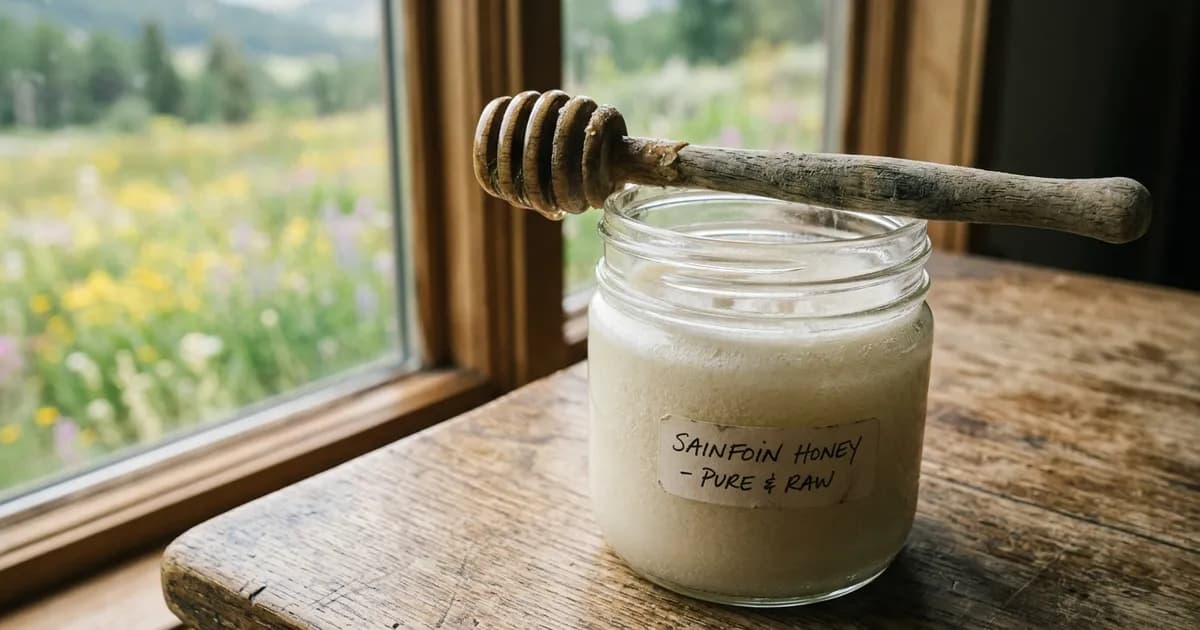
Honey and Gut Health: What Current Research Actually Shows
Research into honey and gut health is growing rapidly — but the headlines often outrun the actual findings. Here is what the studies say, and what they do not.
Conscious Living
Honey Antioxidants: What the Research Actually Says
Gallic acid . Taxifolin . What these numbers mean — and what they do not promise.
Conscious Living
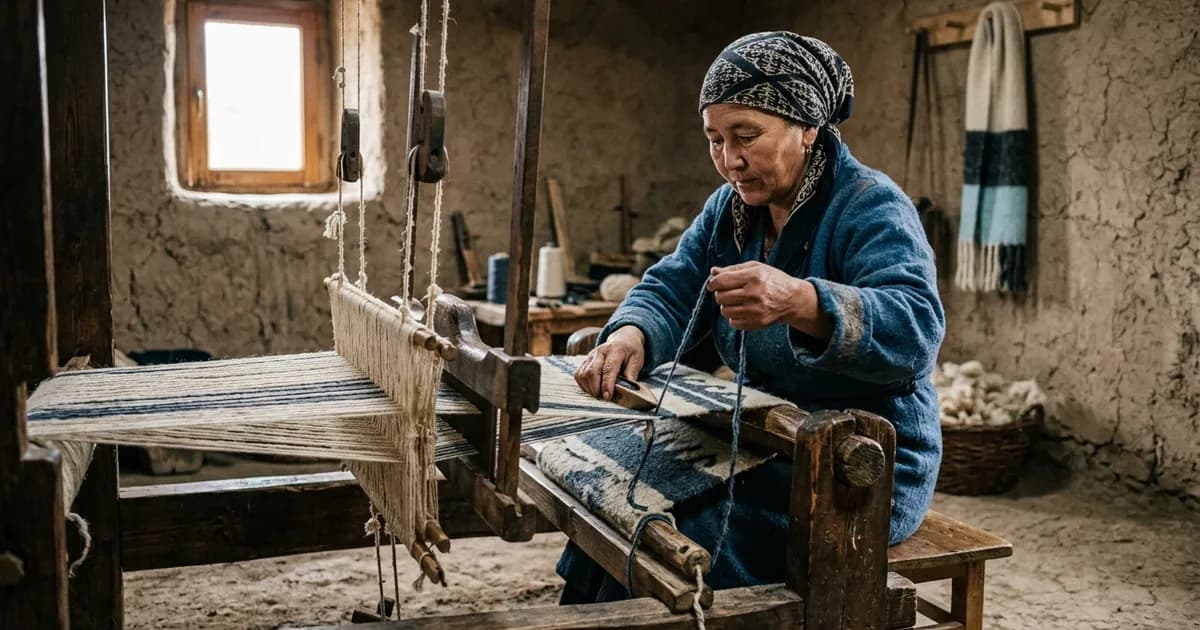
Wool Scarf Origin Kyrgyzstan — Tradition Meets Design
Kyrgyz highland wool for ULU wool scarves comes from sheep grazing between 2,000 and 3,500 metres in the Tian Shan mountains. The extreme temperature swing of up to 70 °C forces an exceptionally dense, lanolin-rich fibre structure. The wool is hand-shorn, dyed with natural colours, and processed using orally transmitted weaving techniques — by named artisans without intermediaries. Kyrgyz felt-making has been on the UNESCO Intangible Cultural Heritage list since 2012 (entry 00695).
From the Hive
Honey knowledge the supermarket skips
Twice a month: varietals, harvest, origin. Plus 10% off your first order.
10% off your first order · No spam. Unsubscribe anytime.