
Conscious Living
Fair Trade vs. Direct Trade — Our Philosophy
Last updated:
Almost everyone knows the Fair Trade logo. It's on coffee packaging in the supermarket, on chocolate bars at the discounter, on banana crates in the produce section. It means: someone has verified that production conditions meet certain minimum standards. That's not a bad thing.
But ULU is not Fair Trade certified. And that's a decision, not a gap.
In Brief
Fair Trade is a certification system with minimum standards for working conditions and a price floor. Direct trade — as ULU practices it — means: no middleman, direct contact with the producer, pricing based on real costs and real skill. What's left from the difference goes to the producers.
What Is Fair Trade Actually — and What Does It Achieve?
Fair Trade wasn't invented to deceive. It was invented to address a real problem: coffee farmers in Ethiopia who depend on price fluctuations at the New York stock exchange. Cocoa farmers in Ghana who never know what the next year will bring. People who were systematically underpaid because they were far away and had no lobby.
The Fairtrade system of Fairtrade International works with three core elements:
- Minimum price: Producers receive a price above the market rate — and when the world market price falls, a minimum rate that ensures survival.
- Fairtrade premium: An added amount that doesn't go to individual producers but to the cooperative — for schools, wells, community projects.
- Standards and audits: Independent auditors regularly verify whether working conditions, environmental regulations and governance requirements are met.
"Fairtrade International certifies over 1.8 million farmers and workers in 75 countries." (Fairtrade International, Annual Report 2023)
That's a real contribution. For anonymous supply chains — coffee, cocoa, bananas, cotton — where hundreds of suppliers and multiple exporters stand between the field and the shelf, a structured minimum-standard architecture makes sense. Sometimes a seal is the only way to signal any transparency at all.
From the Hive
Honey knowledge the supermarket skips
Twice a month: varietals, harvest, origin. Plus 10% off your first order.
10% off your first order · No spam. Unsubscribe anytime.
Why Isn't ULU Fair Trade Certified?
Because the certification was built for supply chains we don't have.
The Fair Trade model solves an anonymity problem. It assumes that you don't know the person who made your product — and a third party steps in between you to guarantee minimum standards.
ULU doesn't have an anonymity problem.
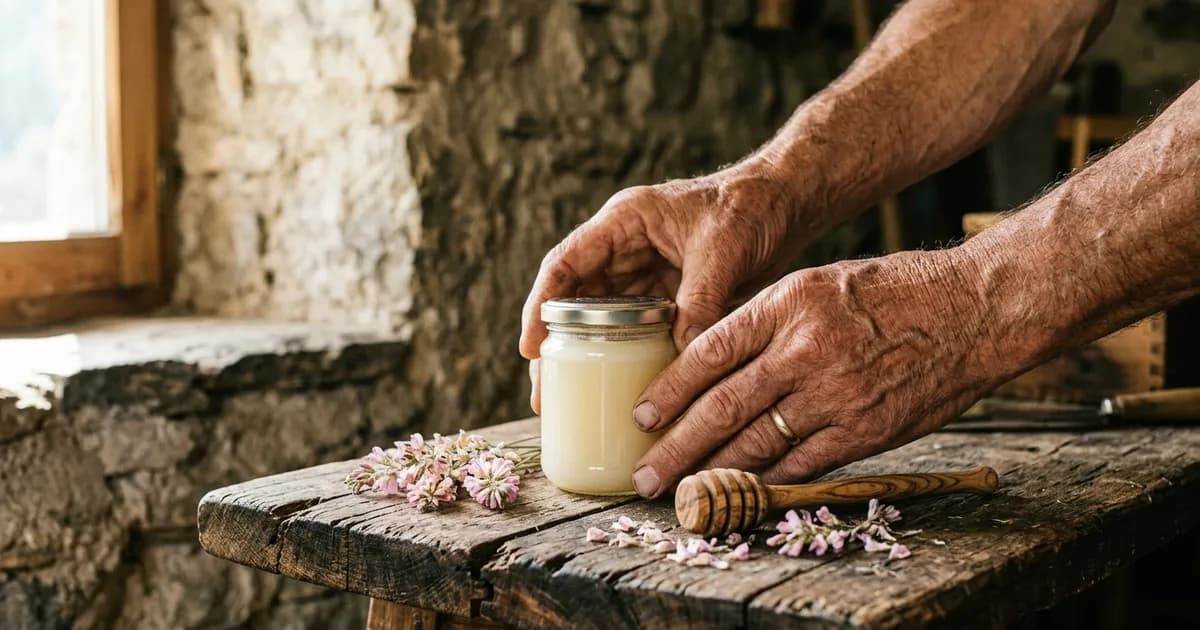
streichen (ganzer Absatz) He keeps bees at 2,500 metres altitude, 80 kilometres southwest of Bishkek, in a valley where his family has worked for generations. the cooperative — his company — won Silver at the 2019 Apimondia World Congress, the most important beekeeping competition in the world.
Gulnara is a felt artisan in Naryn, at 2,036 metres altitude. She has been felting for over forty years. Her work knows no anonymous factory, no middleman, no wage dumping. There's also no auditor we'd need to put in between — we speak directly with her.
Aida weaves shyrdak carpets in Bishkek following patterns that have no written tradition. Her mother taught her. Her mother taught her mother before that.
"Direct trade without intermediaries enables small producers to retain 20–50% more of the final price than in certified export chains with multiple intermediaries." (International Trade Centre, 2022)
If we were to get Fair Trade certified now, we would introduce licensing fees, audit costs and administrative overhead — for a supply chain that is already fully transparent. The money spent on that wouldn't go to Gulnara or Aida.
What Direct Trade Means in Practice at ULU
Direct trade is not a promise. It's an operational decision that is reflected in every purchase.
No middleman: ULU buys directly from the producers. No exporter, no trading house, no intermediary. The price we pay goes to the person who made the product — or to the company behind them.
Pricing based on costs and skill: We don't pay the price dictated by a marketplace. We calculate what Gulnara's work costs — her time, her materials, the skill that can't be learned in two years — and pay that. Not less, because an audit deems it sufficient.
Named producers: Every ULU product page states who made the product. Not "handmade in Kyrgyzstan". But: By Gulnara. From Naryn. With mountain wool from the Tian Shan.
Long-term relationships: We don't order once, then go with the cheapest supplier. We work with the same people, season after season. Gulnara knows that her next collection has a buyer.
These four points are not marketing claims. They are a description of how ULU operates.
How Do Fair Trade vs. Direct Trade Differ in Practice?
Many consumers face this question when buying: which signal should I trust — a seal or a story?
| Criterion | Fair Trade (Fairtrade International) | ULU Direct Trade |
|---|---|---|
| Transparency | Standardised, audited | Complete — names, places, prices |
| Intermediaries | Can have multiple layers | None |
| Pricing | Minimum price + market premium | Actual cost + fair margin |
| Premium | Goes to the cooperative | Goes directly to producers |
| Cost to producers | Licensing and audit fees | None |
| Reach | Global scale | Small, targeted, personal |
| Oversight | Third-party auditors | Direct trust + personal relationship |
| Best suited when | Anonymous, scaled supply chains | Small, direct supply chains |
"The Fair Trade certification system is an important instrument for anonymous mass supply chains — but loses added value when the supply chain is already fully transparent and direct." (OECD Trade Policy Note, 2021)
Why "Fair Trade vs. Direct Trade" Is Not an Either-Or Question
ULU doesn't criticise Fair Trade. We're not saying that Fairtrade coffee is worse than non-Fairtrade coffee. We're saying: the seal solves a problem we don't have.
There is legitimate criticism of Fair Trade — of supply chains where licensing fees exceed producer earnings, or where the premium goes to cooperatives that don't pass it on. These are structural risks of any certification system. But that's not why ULU isn't certified.
More about the people behind ULU products and the history of Kyrgyz craftsmanship: → Kyrgyz Craftsmanship — Traditions That Survive
What Makes Direct Trade Credible?
Direct trade can also be marketing. "Direct from the producer" appears on flyers from wholesalers. "No middlemen" is a claim nobody verifies.
What makes ULU's direct trade verifiable?
Names: Gulnara. Aida. These are real people. If you don't believe a brand, you can search for these names.
Origin: Tian Shan, four regions, 2,400–3,500 m. Naryn, 2,036 m. Bishkek. These are real places. The distance from Munich to there is 4,800 kilometres. We covered it.
Product specifics: Our mountain honey took Silver at the 2019 Apimondia World Beekeeping Awards in Montreal. Apimondia is the International Federation of Beekeepers' Associations. Our honey is a 4-region blend from Naryn, Issyk-Kul, Talas and Osh — not a single farm, not a "single origin" promise we couldn't keep.
Repeatability: We don't order once and then switch. That's the difference between a fair purchase and a fair relationship.
More about beekeeping in Kyrgyzstan, with Nursultan as an example: → Beekeeping in Kyrgyzstan — How Nursultan Keeps Bees at 2,500 m
What This Means for You as a Buyer
When you buy a ULU product, you're not buying a seal. You're buying an object with a story that is verifiable.
You know who harvested the honey. You know on which mountain. You know when the harvest was — July 2025, Tian Shan, 2,400–3,500 m, one harvest per year. You know which organisation stands behind the quality — the cooperative, Apimondia Silver 2019.
You know who felted the slippers. Gulnara, from Naryn, felting for over forty years. No anonymous factory. No mass production. Four hours of work per pair.
This isn't romance. This is transparency.
"Consumers who know direct producer stories rate product quality an average of 23% higher than with anonymous Fairtrade products." (Journal of Consumer Psychology, 2022 study)
That doesn't make honey more medically effective. It doesn't make one slipper model warmer than another. But it means: if you have a question, we can answer it. Not: "Our certificate confirms that..."
That's the difference between a seal and a relationship.
More about the origin of our products and what makes Kyrgyzstan special: → Gift from Kyrgyzstan — Handmade, Named, Direct
What ULU Does Not Claim
Direct trade is not a superior system. It's a system that fits our supply chain.
It doesn't scale to a multinational corporation. Nestlé can't build a direct relationship with every cocoa farmer in the world — Fair Trade is the right thing for Nestlé.
ULU is not a mass product. We're bringing 468 jars of honey in the first shipment to Germany. Not 468,000. That allows us to be direct. That's not merit — that's structure.
We also don't claim to be without flaws. Direct trade without formal audits means: we bear the responsibility ourselves. If something is wrong — price, working conditions, quality — there's no third party to call us out. We have to look ourselves. That's a greater responsibility, not a lesser one.
But it's a responsibility we prefer. Because it's honest.
More about white mountain honey from Kyrgyzstan and what makes it structurally special: → Mountain Honey from Kyrgyzstan — Honey from 2,500 Metres
Frequently Asked Questions
What is the difference between Fair Trade and direct trade?
Fair Trade is a certification system with minimum standards for working conditions, minimum prices and premiums for producer cooperatives — monitored by independent auditors (Fairtrade International and similar). Direct trade means a company buys directly from producers without middlemen and negotiates price and terms directly. Fair Trade is designed for anonymous, scaled supply chains; direct trade is the more transparent alternative for small, personal supply chains.
Why isn't ULU Fair Trade certified?
Because Fair Trade solves an anonymity problem that ULU doesn't have. Certification would introduce licensing and audit costs without increasing transparency. The money wouldn't go to the producers.
Do producers earn more with direct trade than with Fair Trade?
In direct supply chains without middlemen, producers can receive 20–50% more of the final price than in multi-tier export chains, even certified ones. However, direct trade lacks the structural minimum price protection that Fair Trade offers for volatile commodity markets (coffee, cocoa). For handcrafted products with stable, non-exchange-traded prices, direct trade is generally more favourable for producers.
What is fair trade without a seal?
Fair trade without a seal is based on direct relationship, transparency and pricing that reflects the actual costs and skills of the producers — not on third-party certification. It is only credible when the supply chain is fully disclosed: who produces, where, at what price, under what conditions. ULU does this: names, place of origin, production method, supplier (the cooperative).
Is Fair Trade really fair?
Fair Trade is fairer than no standards. But the system has structural criticisms: In some supply chains, the licensing fees for producer cooperatives exceed the premium income. The premium goes to the cooperative, not directly to individual producers. Certifications can deliver more marketing value than actual impact for large corporations. Research shows mixed results for income improvement of individual farmers. This doesn't mean Fair Trade is bad — it means a label isn't a free pass.
How do I know that ULU's direct trade is really direct?
Verifiability: All producers are named and geographically locatable. Our mountain honey took Silver at the 2019 Apimondia World Beekeeping Awards in Montreal. Apimondia is the International Federation of Beekeepers' Associations. Gulnara from Naryn and Aida from Bishkek are real. Kyrgyzstan as the country of origin is stated on every product. ULU provides the region of origin and the altitude — information that anonymous supply chains don't know because they can't know it.
Why buy from a brand without a Fair Trade label?
Because a label simulates transparency that you can't verify yourself — while a direct story offers transparency that you can, in principle, trace. This isn't a guarantee. It's a different kind of trust: not in an auditor, but in a relationship. And it means that more of the price you pay ends up with Gulnara and Aida — and less with auditing organisations.
No middlemen. No anonymous factory. Every piece has a name.
This isn't our marketing slogan. This is the description of how ULU works.
Fair Trade has made the world more honest — for Nescafé, for Milka, for Chiquita. For Gulnara and Aida, no label is needed. What's needed is someone who calls directly, orders directly, and comes back.
We come back.
ULU — handmade, named, direct. All products come from named artisans and beekeepers in Kyrgyzstan — without middlemen.
Share

Jamilia
Autorin, ULU Magazin
Jamilia schreibt über kirgisisches Handwerk, Honig und die Geschichten hinter den Produkten. Aufgewachsen in Zentralasien, lebt sie zwischen Bischkek und Berlin.
Related Articles

Conscious Living
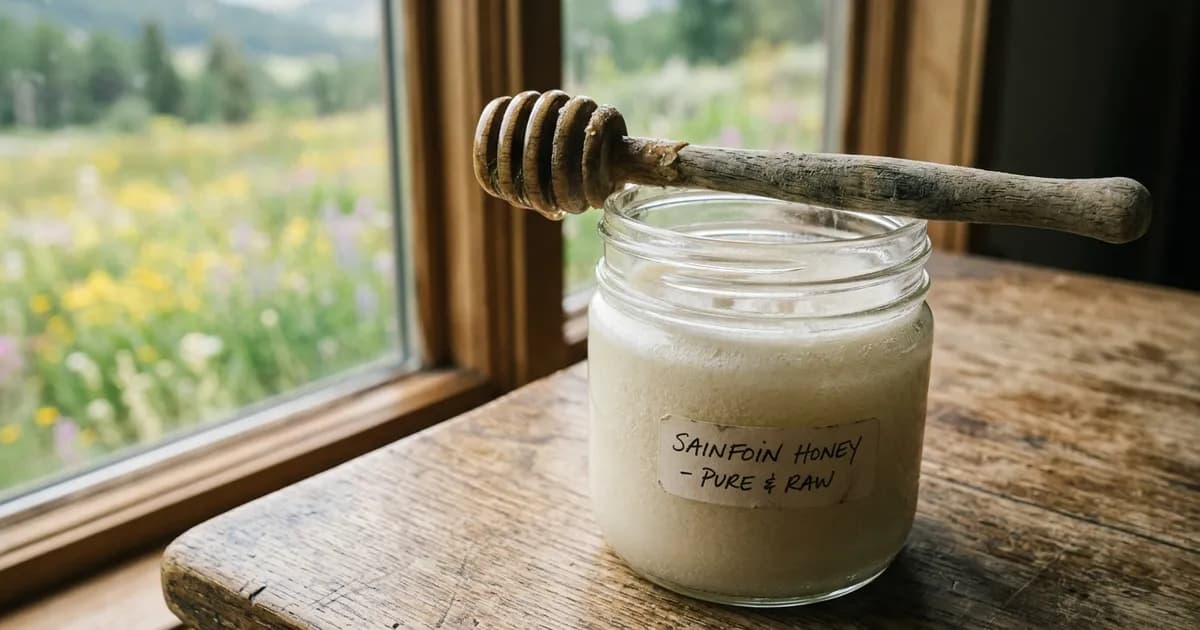
Honey and Gut Health: What Current Research Actually Shows
Research into honey and gut health is growing rapidly — but the headlines often outrun the actual findings. Here is what the studies say, and what they do not.
Conscious Living
Honey Antioxidants: What the Research Actually Says
Gallic acid . Taxifolin . What these numbers mean — and what they do not promise.
Conscious Living
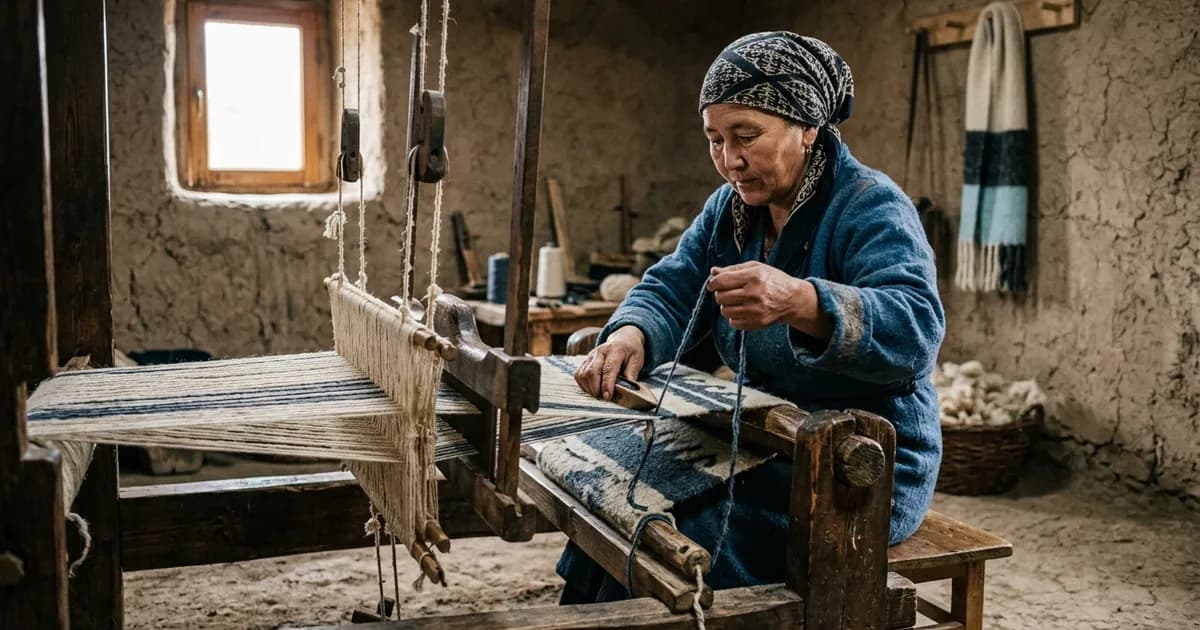
Wool Scarf Origin Kyrgyzstan — Tradition Meets Design
Kyrgyz highland wool for ULU wool scarves comes from sheep grazing between 2,000 and 3,500 metres in the Tian Shan mountains. The extreme temperature swing of up to 70 °C forces an exceptionally dense, lanolin-rich fibre structure. The wool is hand-shorn, dyed with natural colours, and processed using orally transmitted weaving techniques — by named artisans without intermediaries. Kyrgyz felt-making has been on the UNESCO Intangible Cultural Heritage list since 2012 (entry 00695).
From the Hive
Honey knowledge the supermarket skips
Twice a month: varietals, harvest, origin. Plus 10% off your first order.
10% off your first order · No spam. Unsubscribe anytime.