
Conscious Living
Felt Ballerinas vs. Glerups — The Honest Comparison
Last updated:
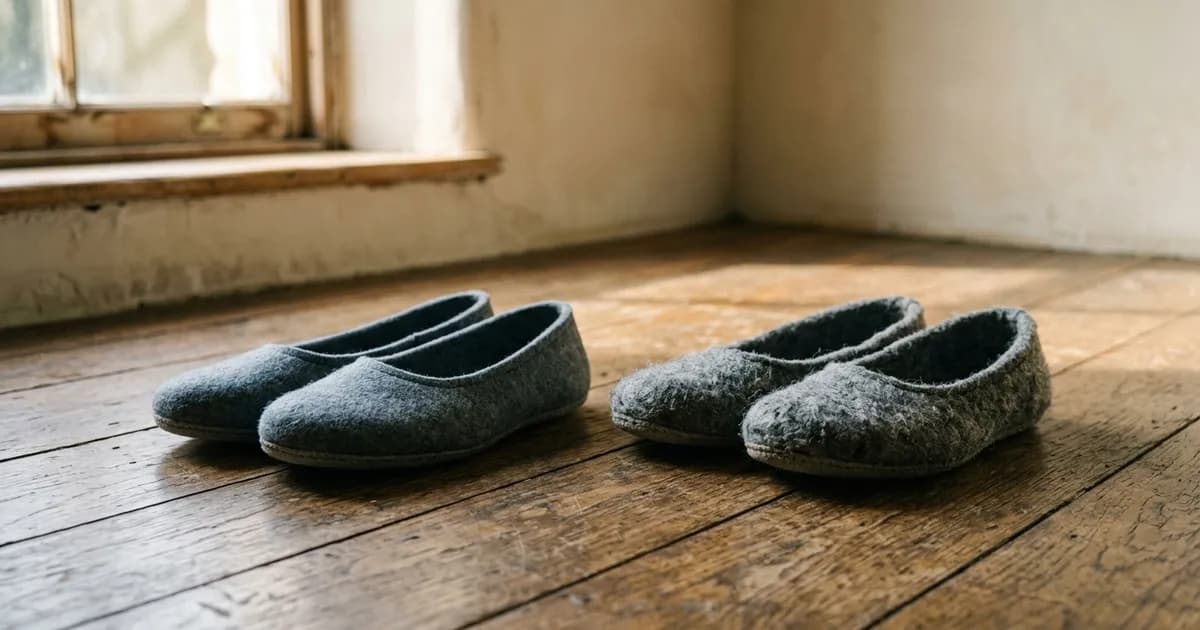
Glerups are good. That's not up for debate. The Danes made felt slippers mainstream, their design is timeless, and anyone who wears a pair instantly understands why. If you're searching for "felt ballerinas vs glerups," you're interested in exactly this question: What's the difference between an established Scandinavian label and a handcrafted shoe from Kyrgyzstan — and does that difference actually matter in everyday life?
This article gives you the answer. No sugarcoating, no discount codes, no marketing fluff. Just the honest comparison.
The Short Version
Felt ballerinas from ULU and Glerups both use high-quality wool — but that's where the similarity ends. Glerups are manufactured in their own facility in Romania, using wool from New Zealand and Gotland; the result is a consistent, well-designed mass product. ULU's Steppe Ballerinas are wet-felted individually by hand by Gulnara in Naryn (Kyrgyzstan, approx. 2,000 m altitude) — each shoe is one of a kind, made from highland wool from sheep that graze above 2,500 m. Which product is right for whom? This comparison will show you.
Quick Overview: Felt Ballerinas vs. Glerups
| Criterion | ULU Steppe Ballerinas | Glerups |
|---|---|---|
| Material | 100% highland wool, Kyrgyzstan (2,500+ m) | ~10% Gotland wool + ~90% ZQ wool New Zealand |
| Production | Entirely hand-felted (individual pieces) | Machine-manufactured, factory Romania |
| Origin | Naryn, Kyrgyzstan — artisan Gulnara | Design office Denmark, production Romania |
| Sole options | Leather or natural rubber (your choice) | Leather or natural rubber (your choice) |
| Price (women's) | Premium (direct trade, no middleman) | from approx. €75–95 |
| Durability | High — dense hand-felted structure, repairable | High — machine-uniform, robust |
| Individuality | Each pair minimally unique (handcraft) | None — industrially standardized |
| Carbon footprint | Short supply chain, direct from producer | Wool from NZ + production RO → longer chain |
From the Hive
Honey knowledge the supermarket skips
Twice a month: varietals, harvest, origin. Plus 10% off your first order.
10% off your first order · No spam. Unsubscribe anytime.
What Makes Glerups a Good Shoe?
Glerups has earned its reputation. The story begins in 1993 on the Thasdalsgård farm in North Jutland: Nanny Glerup discovers felting as a hobby, processes the wool from her own Gotland sheep — and builds a label that today is carried in German boutiques from Waschbär to naturschuh-kontor.
What Glerups gets right:
- Consistent design: The minimalist, timeless silhouette concept is clear and recognizable.
- Material integrity: Natural wool, no unnecessary chemicals, mechanically cleaned.
- Sole choice: The decision between leather sole (flexible, quiet) and natural rubber (grippy, more durable) is well thought out.
- Wide availability: Available anytime in German specialty retail and online — no waiting for the next collection.
The catch: Today, Glerups are manufactured in a factory in Romania, with wool from New Zealand. That's not bad — ZQ Premium Wool from New Zealand is one of the most rigorously controlled wool standards in the world. But it's a global supply chain, not a direct relationship.
Glerups is the IKEA of felt slippers — in the best sense. Reliable, well-designed, available everywhere. For those who know what they're getting and want exactly that.
How Are ULU Steppe Ballerinas Made?
Gulnara lives in Naryn, a small town in the heart of Kyrgyzstan, at approximately 2,000 m altitude. She has been felting for over 40 years. She learned her technique from her mother, who learned it from her mother. The wool comes from sheep that graze on highland pastures above 2,500 m — an altitude where pesticides are economically impractical and traditionally unknown.
The felting process is physical: raw wool is wetted, worked with soap and pressure into a dense, even structure. No seams. The shoe is formed from a single piece. The result is a felt density that machine production struggles to replicate — because each hand applies different pressure, each shoe is shaped slightly differently.
That's not a flaw. That's the feature.
"Your shoe was made by a machine. Gulnara's shoe was shaped by hands that have been doing this for 40 years."
Each shoe carries the invisible signature of its maker — in the slightly uneven surface texture, in the density that conforms to your foot after a few weeks of wear.
Why Wool Origin Matters More Than You Think
Not all wool is created equal. The climate, the altitude, the sheep's diet — all of this affects fiber properties.
Glerups uses a blend of Gotland wool (approx. 10%, Denmark) and ZQ-certified wool from New Zealand (approx. 90%). ZQ wool is a reliable standard: animal welfare and environmental regulations are verifiable. New Zealand, however, is 18,000 km away.
The wool for ULU's Steppe Ballerinas comes from Kyrgyz highland sheep. Kyrgyz sheep (predominantly the Kyrgyz Finewool type) have developed a thick, resilient fleece designed for extreme temperature swings — hot summers, snowy winters. The fiber has a natural spring structure that retains warmth and wicks moisture.
Mountain wool from 2,500 m altitude has a fiber structure that lowland Merino wool cannot replicate — because the conditions the sheep lives in are written directly into the fiber.
The supply chain is short: wool → Gulnara → ULU → you. No middleman, no certification maze, no estimated values.
Sole Options Compared
Both brands offer leather soles and natural rubber soles. That's no coincidence — it's the industry standard for premium felt slippers.
Leather sole: Quieter on hard floors, more supple when rolling through a step, develops a patina over time. Ideal for hardwood and tile.
Natural rubber sole: Grippier, easier to care for, longer-lasting with daily use. Better on smooth floors and slightly damp surfaces.
ULU offers both options — the choice is yours. Glerups does too. On this point, nothing separates you except the origin of the raw material.
Who Should Choose Glerups?
Glerups is the right choice if:
- You want to buy now — no lead times or pre-order windows.
- You want a proven product you know from recommendations or magazines.
- Consistency matters more to you than uniqueness — every pair identical, as ordered.
- You want to try them on in a brick-and-mortar store before buying (Glerups is stocked in German specialty shops).
Glerups delivers what it promises. If you don't care about the story behind an individual pair, you'll get a flawless, long-lasting felt shoe here — made in a factory, designed in Denmark, wool from New Zealand.
Who Should Choose ULU?
ULU Steppe Ballerinas are the right choice if:
- You want to know who made your shoe — by name, not by certification.
- You want a shoe that breaks in with you. Not perfect right away, but over time.
- Short supply chains and direct trade relationships matter to you — not as a label, but as a fact.
- Design and origin are not compromises for you: You want both.
Elegance doesn't end at the front door.
Our Conclusion
Glerups is not a bad shoe. Quite the opposite. But when you know that your Steppe Ballerinas were hand-felted by Gulnara in Naryn — from highland wool as ancient as the Kyrgyz nomadic tradition — that's not a marketing promise. That's provenance.
The difference isn't in the material alone. It's in what stands behind the material: a woman, a region, a technique passed down through generations.
Both shoes last. Only one of them has a story.
To the Steppe Ballerinas → Discover here
Frequently Asked Questions
What is the difference between felt ballerinas and Glerups?
Felt ballerinas refers to the shoe style — a flat, soft house slipper in ballerina form made from wool felt. Glerups is a Danish brand that offers felt house shoes in this style, among others. The key difference lies in the production: Glerups manufactures in its own factory in Romania, while ULU felt ballerinas are entirely hand-felted by Gulnara in Naryn, Kyrgyzstan.
Are Glerups really handmade?
Glerups markets itself with an artisanal origin story that began on a Danish farm in 1993. Today, the shoes are industrially manufactured in a factory in Romania. "Handmade" in the sense of individual handcrafted pieces no longer applies to current Glerups production.
Which wool is better — New Zealand ZQ wool or Kyrgyz highland wool?
Both are high quality. ZQ Premium Wool (New Zealand) is a certified standard with controlled animal welfare requirements. Kyrgyz highland wool from sheep above 2,500 m altitude has a naturally robust fibre structure shaped by the harsh climate — dense, resilient fibre with good thermoregulatory properties. Which is "better" depends on your priorities: certification or direct relationship.
How long do wool felt ballerinas last?
Quality-made felt ballerinas from dense wool felt last 5–10 years with regular use. The decisive factors are sole type (natural rubber lasts longer than leather under intensive use), care habits, and the initial density of the felt. Hand-felted shoes with high felt density often show slower wear at pressure points compared to machine-made products.
Can I wash felt ballerinas?
Wool felt shoes should never be machine washed — the felting process would continue and alter the shape. Recommended: hand wash with lukewarm water and mild wool soap, dry flat on a towel. For a detailed guide: Washing & caring for felt ballerinas.
Are handmade felt ballerinas more expensive than Glerups?
Handmade felt ballerinas from direct trade are in the same price range as Glerups (from approx. €75 upwards), depending on the sole and model. The price difference, if any, is explained by the fully handcrafted production and the direct trade relationship without intermediaries. The value lies less in the material than in what stands behind it.
Share
Glerups shoes are now produced in a factory in Romania, using a wool blend of approx. 10% Danish Gotland wool and approx. 90% ZQ Premium Wool from New Zealand (glerups.de, company page).
ULU Steppe Ballerinas are entirely hand-felted by Gulnara in Naryn, Kyrgyzstan (approx. 2,000 m altitude) — from highland wool of sheep grazing on pastures above 2,500 m.
Hand-felted wool shoes with high felt density typically show a lifespan of 5–10 years with regular use — depending on sole type and care.
ZQ Premium Wool (New Zealand) is a certified standard with controlled animal welfare requirements — Kyrgyz highland wool, by contrast, comes without a certification maze, directly from a traceable producer-buyer relationship.
On the German market, Glerups felt slippers are available from approx. €75 (as of 2025–2026); handmade felt ballerinas from direct trade are in the same price range.
Nanny Glerup began felting in 1993 on the Thasdalsgård farm in North Jutland using wool from her own Gotland sheep — today the company produces in Romania.
Frequently Asked Questions
Felt ballerinas describes the shoe style — a flat, soft house slipper in ballerina form made from wool felt. Glerups is a Danish brand that offers felt slippers in this style, among others. The key difference is in production: Glerups manufactures in its own factory in Romania, while ULU felt ballerinas are entirely hand-felted by Gulnara in Naryn, Kyrgyzstan.
Glerups markets itself with a craft origin story that began in 1993 on a Danish farm. Today, the shoes are manufactured industrially in a factory in Romania. Handmade in the sense of individual piece craftsmanship no longer applies to current Glerups production.
Both are high quality. ZQ Premium Wool is a certified standard with controlled animal welfare requirements. Kyrgyz highland wool from sheep above 2,500 m altitude has a naturally robust fibre structure. Which is better depends on your priorities: certification or direct relationship.
Quality-made felt ballerinas from dense wool felt typically last 5–10 years with regular use. The decisive factors are sole type, care and the initial density of the felt.
Wool felt shoes should never be machine washed — it changes their shape. Hand washing with lukewarm water and mild wool soap is recommended, then dry flat.
Handmade felt ballerinas from direct trade are in the same price range as Glerups (from approx. €75), depending on sole and model. The added value lies in the craftsmanship and the direct supply chain.

Jamilia
Autorin, ULU Magazin
Jamilia schreibt über kirgisisches Handwerk, Honig und die Geschichten hinter den Produkten. Aufgewachsen in Zentralasien, lebt sie zwischen Bischkek und Berlin.
Related Articles

Conscious Living
Honey and Gut Health: What Current Research Actually Shows
Research into honey and gut health is growing rapidly — but the headlines often outrun the actual findings. Here is what the studies say, and what they do not.
Conscious Living
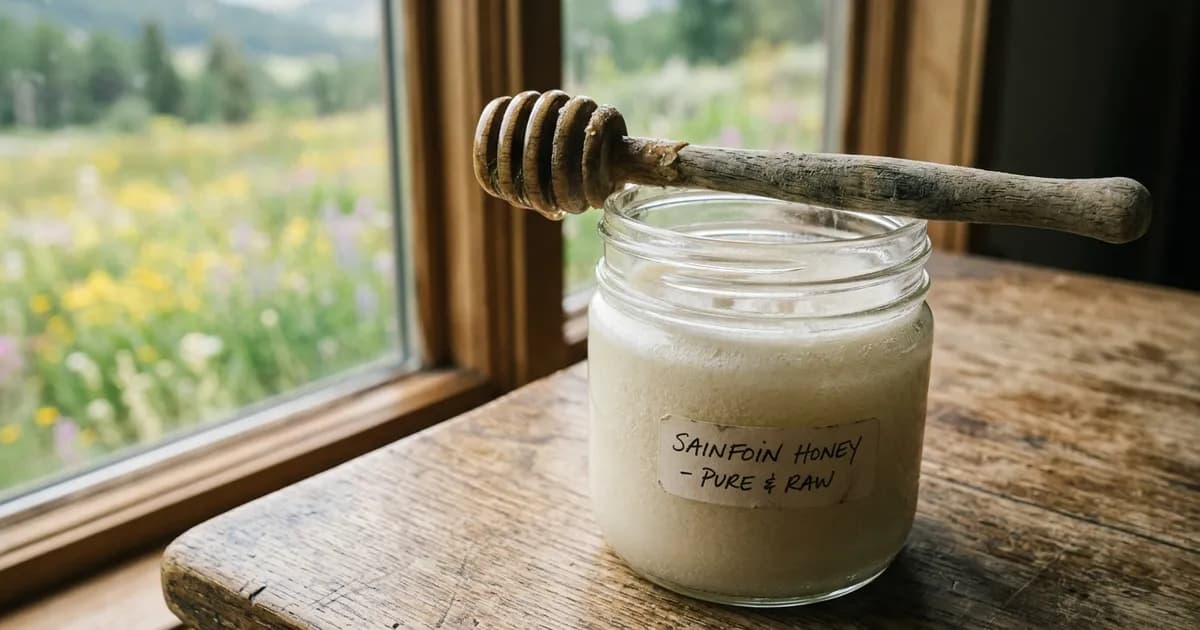
Honey Antioxidants: What the Research Actually Says
Gallic acid . Taxifolin . What these numbers mean — and what they do not promise.
Conscious Living
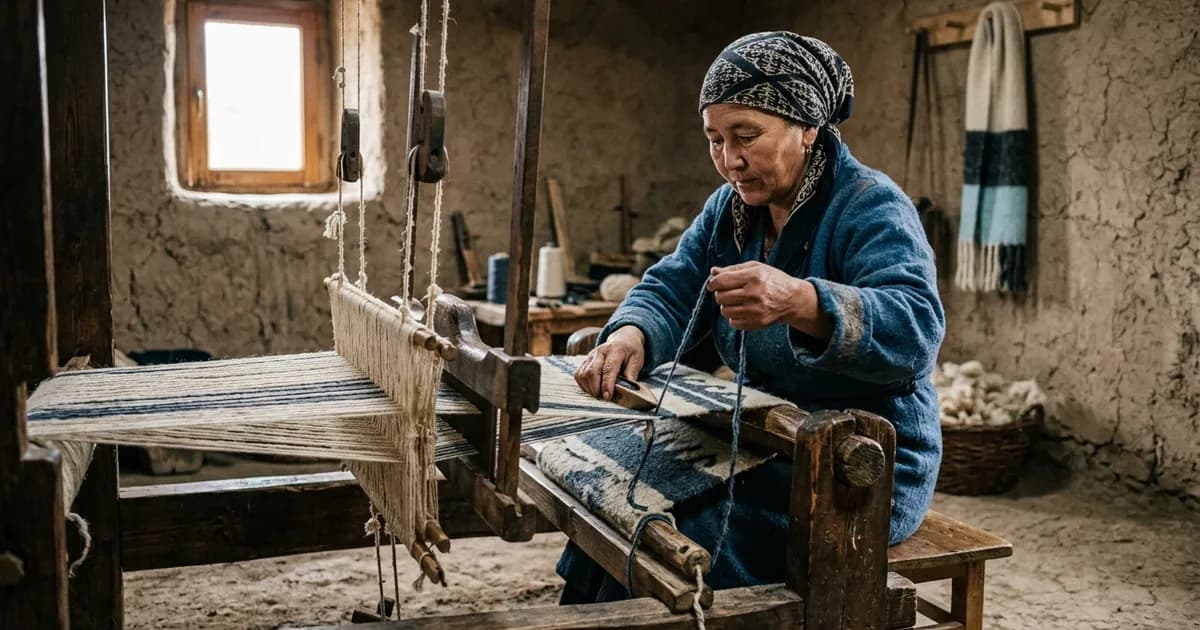
Wool Scarf Origin Kyrgyzstan — Tradition Meets Design
Kyrgyz highland wool for ULU wool scarves comes from sheep grazing between 2,000 and 3,500 metres in the Tian Shan mountains. The extreme temperature swing of up to 70 °C forces an exceptionally dense, lanolin-rich fibre structure. The wool is hand-shorn, dyed with natural colours, and processed using orally transmitted weaving techniques — by named artisans without intermediaries. Kyrgyz felt-making has been on the UNESCO Intangible Cultural Heritage list since 2012 (entry 00695).
From the Hive
Honey knowledge the supermarket skips
Twice a month: varietals, harvest, origin. Plus 10% off your first order.
10% off your first order · No spam. Unsubscribe anytime.