
Conscious Living
Felt Ballerinas vs. Haflinger — Handmade Meets Tradition
Last updated:
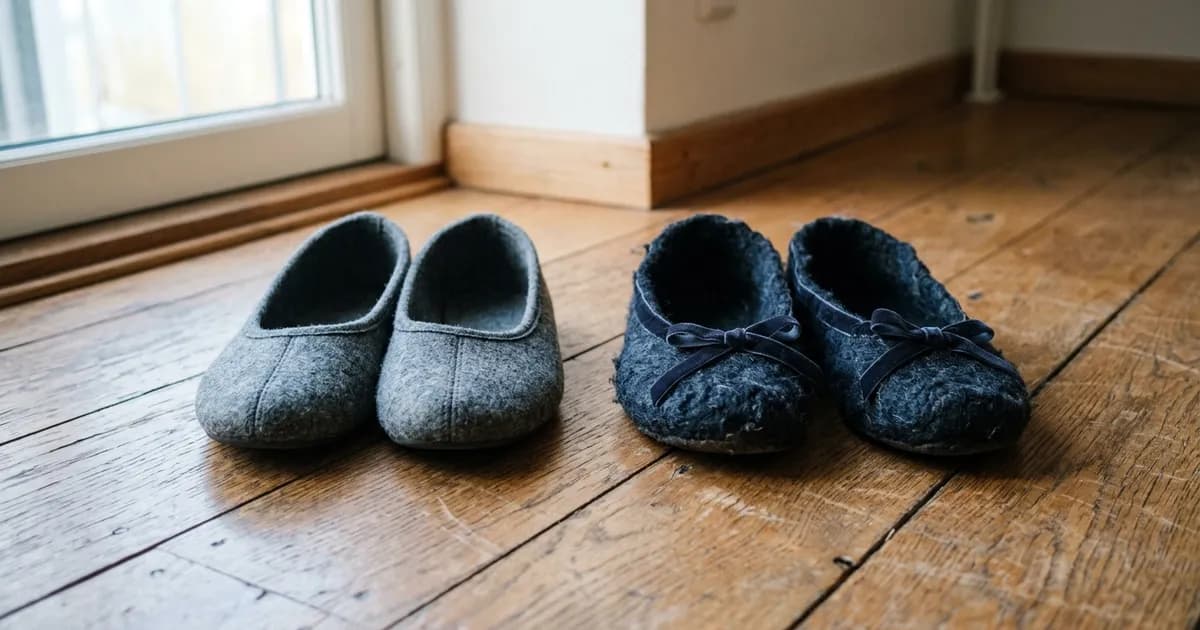
Haflinger is an institution. Based in Goslar since 1898. Virgin wool, felt sole, anatomical cork bed — a slipper that has survived three generations. That's a real achievement.
And yet: when Gulnara from Naryn shapes a piece of felt, something different happens. Not necessarily better — but different. This difference is what we want to describe here.
In Brief — Felt Ballerinas vs. Haflinger:
Haflinger has been producing felt slippers in Goslar since 1955 — factory-made, reliable, climate-regulating. ULU Steppe Ballerinas are handcrafted in Naryn (Kyrgyzstan): one maker, one batch size, one wool from 3,000 m altitude. The main difference isn't the material (both use real virgin wool), but the origin of production: industrial fulling process vs. hand-felting technique. If you're looking for consistency and brand reliability, Haflinger is a solid choice. If you want a slipper that has someone behind it — a story, a name, a face — ULU is the right fit.
Quick Overview: The 8 Most Important Criteria
| Criterion | ULU Steppe Ballerina | Haflinger Ballerina |
|---|---|---|
| Production | Hand-felted, one-of-a-kind | Industrially fulled, series |
| Wool Origin | Highland wool, Kyrgyzstan, ~3,000 m | European virgin wool, DE/EU suppliers |
| Maker | Gulnara, Naryn — 40+ years of experience | Anonymous, Goslar factory |
| Sole | Hand-stitched non-slip sole | TPR rubber sole or felt sole |
| Design | Minimalist, 3 colour ways | Wide range, 7+ models |
| Price | Premium (justified by provenance) | €49.90–€89.90 |
| Traceability | Full (artisan, village, wool) | Origin: "Europe" (suppliers) |
| For whom | Buyers who want to know the maker | Buyers who value reliability and choice |
How Is a Felt Slipper Actually Made?
Between industrial fulling and hand-felted work lies more than a process — it's a different way of understanding material.
Haflinger uses the industrial fulling process: virgin wool is knitted, then compressed through controlled heat, moisture, and mechanical friction. The result is a uniform, hard-wearing fulled fabric with defined properties — perfectly reproducible, scalable, reliable. The factory in Goslar is considered one of the last German manufacturers to handle this entire process in-house. That's genuine value.
ULU Steppe Ballerinas are made by wet felting by hand. Gulnara starts with raw wool — uncombed, straight from the highlands — lays it in layers, works with hot water, friction, and the pressure of her hands. Each piece is formed individually. The thickness, the density, the curve at the toe — she decides. No two pairs are mathematically identical. That's not a flaw. That's the hallmark.
Key difference: Haflinger standardises the wool into fabric — then into a shoe. Gulnara shapes the wool directly into the shoe form.
From the Hive
Honey knowledge the supermarket skips
Twice a month: varietals, harvest, origin. Plus 10% off your first order.
10% off your first order · No spam. Unsubscribe anytime.
Wool Origin: What Altitude Has to Do with Quality
Not all wool is created equal. That sounds like marketing speak — but it's chemistry and geography.
Haflinger sources its virgin wool from selected European suppliers. The exact origin is not public. "European virgin wool" is a reliable standard — not poor quality, but not a story either.
The wool for ULU Steppe Ballerinas comes from highland sheep in Kyrgyzstan that graze at approximately 3,000 m. At this altitude, wool grows more slowly, the fibres become denser, and the natural fat content (lanolin) is higher. Colder temperatures, fewer pesticides, no barn — the animal lives the way sheep have lived for millennia.
The result: a wool with higher natural insulation performance and a softer hand feel that differs from industrially treated wool. Not dramatically — but noticeably.
Worth knowing: Haflinger calls its material "Schurwolle" (virgin wool) — a quality seal guaranteeing the wool was shorn from living animals (not slaughter wool). ULU highland wool meets the same standard but adds provenance transparency: Naryn Province, Kyrgyzstan.
Sole Construction: Where the Philosophy Becomes Visible
A sole isn't just slip protection — it reveals what floor a shoe was made for.
Haflinger offers model variety: felt sole (soft, suitable for indoors), TPR rubber sole (robust, also for short outdoor trips), anatomical cork-latex footbed on higher-priced models. Technically well thought out, developed for the everyday German household. The advantage: the cork-latex footbed adapts to the individual foot shape. The disadvantage: these layers mean more manufacturing depth — and more layers mean potentially more separation points with extended use.
ULU Steppe Ballerinas have a hand-stitched non-slip sole — thin, flexible, attached to the felt. No footbed stack, no cork, no rubber mould. The shoe moulds to the natural foot. Those who need orthopaedic support will prefer the Haflinger cork-latex construction. Those who prefer barefoot-like contact with the ground will appreciate the ULU construction.
Design Aesthetic: Two Worlds, Two Intentions
Haflinger thinks in collections. 7+ ballerina models, colours from anthracite to brick red, sizes 36–46, annual range renewal. That's a strength: every customer finds their model.
ULU thinks in attitudes. Three colour ways — Night Blue, Midnight, Stone & Berry — not as a fashion collection, but as a landscape of colours that don't go out of date. The ballerina is slim-cut, with a velvet ribbon finish. It doesn't look like a slipper. That's the intention: "Elegance doesn't end at the front door."
If you're looking for choice, model variety, and seasonal availability: Haflinger delivers that reliably. If you're looking for a shoe that looks just like the shoes in your wardrobe — only softer and warmer: ULU.
Price and Value: What Justifies a Premium, and When?
Haflinger Ballerinas cost €49.90 (Slipper Fiocco, Marina) to €89.90 (Everest Softi, Everest Basico). That's a fair market price for a German quality product with market reliability.
ULU Steppe Ballerinas are positioned at a premium — above this range. The justification lies not in the material alone, but in the arithmetic of small batches: Gulnara produces in small runs. No economies of scale, no factory stock, no bulk discount. In return: full traceability, a direct trade relationship, and the certainty that the price wasn't created through a supply chain with four intermediary stages.
Who benefits from the premium? Buyers who aren't purchasing "a slipper" — but who see the shoe as a decision. Those who buy because they know Gulnara aren't paying more for wool. They're paying for the right to say: I know who made this.
Who is Haflinger better for?
Haflinger is the right choice for:
- Buyers who need model variety and size selection (children, men, special widths)
- Those looking for an orthopedic footbed (cork-latex, anatomically shaped)
- Those who prefer quick availability in German retail
- Households with multiple people who all need to be outfitted
- Those who value return security and established service (60-day return policy)
Haflinger has been based in Goslar since 1898 — the heritage company has proven that its product works. That's no small statement.
Who are ULU Steppe Ballerinas better for?
ULU is the right choice for:
- Buyers who care about the story behind the product
- Those who want to know from whom — not just from where — the shoe comes
- Minimalist-minded buyers with an affinity for timeless design
- People who understand craftsmanship as an attitude, not a sales argument
- Gift buyers looking for something unique (no second identical pair exists)
Our verdict
Haflinger and ULU solve the same problem in different ways: a warm, high-quality felt slipper for your own home. Haflinger solves it with industrial precision, long market experience, and proven construction. ULU solves it with the opposite: one-of-a-kind piece, named maker, alpine origin.
Neither shoe is the wrong choice here. The question is a different one: Do I want to know who made my shoe?
If yes — Gulnara is waiting in Naryn.
Frequently asked questions
What is the difference between felt ballerinas and Haflinger slippers?
Felt ballerinas is a product category term for ballerina-shaped slippers made from wool felt. Haflinger is a German brand (since 1898, Goslar) that manufactures such shoes industrially. The difference lies in the production method: Haflinger uses a mechanical felting process in series production; handcrafted felt ballerinas like the ULU Steppe Ballerina are created through wet felting by hand — a one-of-a-kind piece per pair.
Are Haflinger slippers really handmade?
Haflinger describes its manufacturing process as "by hand and with attention to detail" — this refers to artisanal care within an industrial production process in Goslar. This is not a promise identical to hand-felted one-of-a-kind pieces like those by Gulnara (Naryn, Kyrgyzstan), where each pair is shaped by one person from start to finish.
Which felt ballerinas last longer — Haflinger or handmade?
Both last several years with proper care. Haflinger's fulled fabric is very robust due to industrial compression. Handcrafted wet felt made from highland wool has a naturally high density and can be refreshed with light re-felting care (brief wet felting). Longevity depends primarily on care and usage intensity — not on the production method alone.
How much does a good felt ballerina cost?
Haflinger ballerinas cost €49.90 to €89.90 depending on the model and sole construction. ULU Steppe Ballerinas are premium positioned. As a general rule: felt ballerinas under €30 are usually made from blended felt with synthetic fibre content — no comparison to pure virgin wool.
Which wool is better — European virgin wool (Haflinger) or highland wool (ULU)?
Both are genuine virgin wool — from living animals, not a slaughter by-product. Highland wool from 3,000 m altitude (Naryn, Kyrgyzstan) grows under extreme conditions: colder temperatures, denser fibre, higher lanolin content. This means naturally higher insulation. European virgin wool is quality-standardised and reliable. The noticeable quality superiority of highland wool lies in the hand feel and insulation depth — especially in direct comparison on cold floors.
Can I wash felt ballerinas?
Haflinger models are washable according to the manufacturer (cold, gentle cycle). ULU Steppe Ballerinas made from wet felt can be cared for by hand with lukewarm water and mild soap — no machine washing. Gentle drying (flat, no direct sunlight) applies to both.
ULU Steppe Ballerinas — Hand-felted by Gulnara, Naryn, Kyrgyzstan. Wool from 3,000 m altitude. Velvet ribbon trim. No two pairs are identical.
Shop the Steppe Ballerinas → How to care for felt ballerinas → Handmade slippers: What makes the difference? → All ULU products from Kyrgyzstan →
Share
Haflinger has been producing felt slippers in Goslar since 1955 — as one of the last German companies with a fully in-house fulling process.
ULU Steppe Ballerinas are created through wet felting by hand: Gulnara (Naryn, Kyrgyzstan, 40+ years of experience) shapes each pair as a one-of-a-kind piece — no two pairs are mathematically identical.
Highland wool from ~3,000 m altitude (Naryn Province, Kyrgyzstan) has a denser fibre structure and higher natural lanolin content than conventional European virgin wool due to the extreme growing conditions.
Haflinger ballerinas cost €49.90 (entry-level, Slipper Marina) to €89.90 (Everest Basico with cork-latex footbed) — market-leading price position for German mass-produced slippers.
Master passementier Emil Otto Sr. founded a textile craft workshop in Goslar in 1898 — the basis of today's Haflinger tradition. Slippers have been manufactured there since 1955.
Frequently Asked Questions
Felt ballerinas is a product-category term for ballerina-shaped slippers made from wool felt. Haflinger is a German brand (since 1898, Goslar) that manufactures such shoes industrially. Handcrafted felt ballerinas like the ULU Steppe Ballerina are created through wet felting by hand — one unique piece per pair.
Haflinger describes its manufacturing process as 'by hand and with attention to detail' — meaning artisanal care within an industrial fulling process. That is not the same promise as hand-felted one-of-a-kind pieces, where each pair is shaped by one person from start to finish.
Both last several years with proper care. Haflinger boiled wool is very robust due to industrial compression. Handcrafted wet felt from highland wool can be refreshed with light re-felting care. Longevity depends primarily on care and usage intensity.
Haflinger ballerinas cost €49.90 to €89.90 depending on the model. Felt ballerinas under €30 are usually made from blended felt with synthetic fibre content — no comparison to pure virgin wool.
Both are genuine virgin wool. Highland wool from 3,000 m (Naryn, Kyrgyzstan) grows under extreme conditions: denser fibre, higher lanolin content. European virgin wool is quality-standardised. The noticeable quality advantage of highland wool lies in its hand feel and insulation depth.
Haflinger models are washable according to the manufacturer (cold, gentle cycle). ULU wet-felted ballerinas are cared for by hand with lukewarm water and mild soap — no machine washing. Gentle drying (flat, no direct sunlight) applies to both.

Jamilia
Autorin, ULU Magazin
Jamilia schreibt über kirgisisches Handwerk, Honig und die Geschichten hinter den Produkten. Aufgewachsen in Zentralasien, lebt sie zwischen Bischkek und Berlin.
Related Articles

Conscious Living
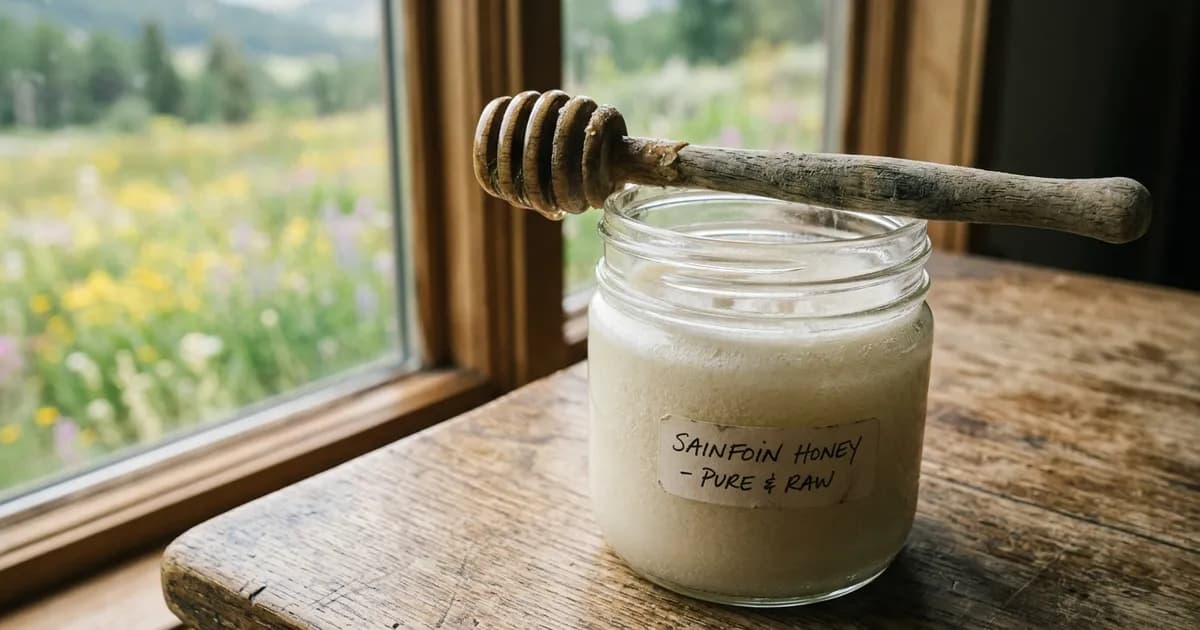
Honey and Gut Health: What Current Research Actually Shows
Research into honey and gut health is growing rapidly — but the headlines often outrun the actual findings. Here is what the studies say, and what they do not.
Conscious Living
Honey Antioxidants: What the Research Actually Says
Gallic acid . Taxifolin . What these numbers mean — and what they do not promise.
Conscious Living
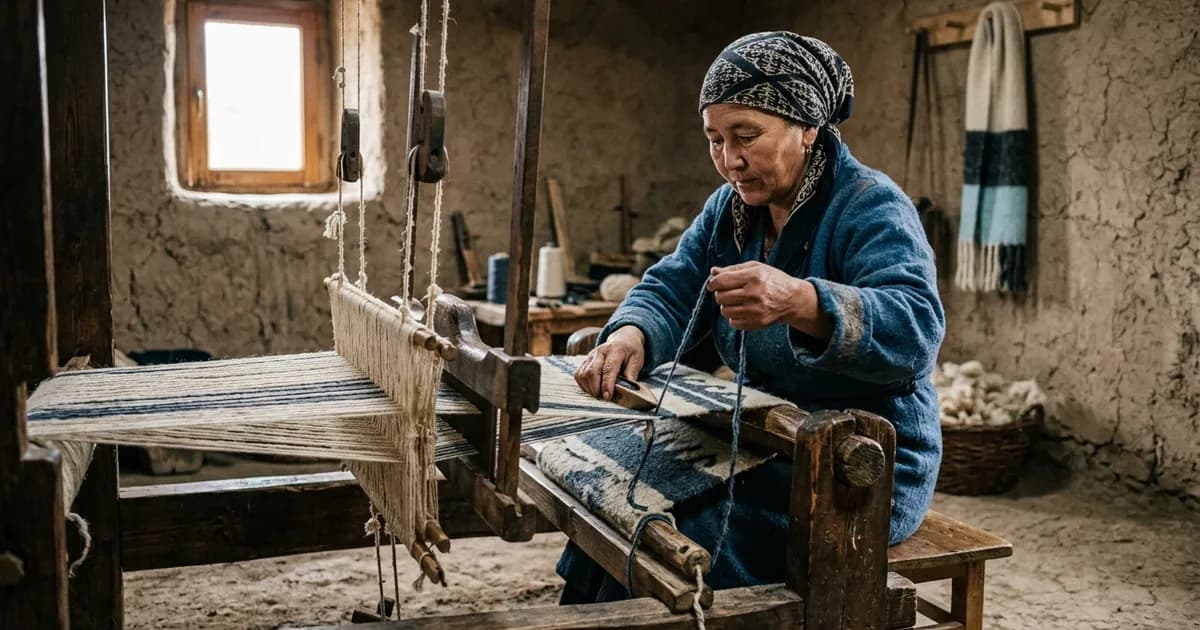
Wool Scarf Origin Kyrgyzstan — Tradition Meets Design
Kyrgyz highland wool for ULU wool scarves comes from sheep grazing between 2,000 and 3,500 metres in the Tian Shan mountains. The extreme temperature swing of up to 70 °C forces an exceptionally dense, lanolin-rich fibre structure. The wool is hand-shorn, dyed with natural colours, and processed using orally transmitted weaving techniques — by named artisans without intermediaries. Kyrgyz felt-making has been on the UNESCO Intangible Cultural Heritage list since 2012 (entry 00695).
From the Hive
Honey knowledge the supermarket skips
Twice a month: varietals, harvest, origin. Plus 10% off your first order.
10% off your first order · No spam. Unsubscribe anytime.