
Conscious Living
A Gift from Kyrgyzstan — What Makes It Special?
Last updated:
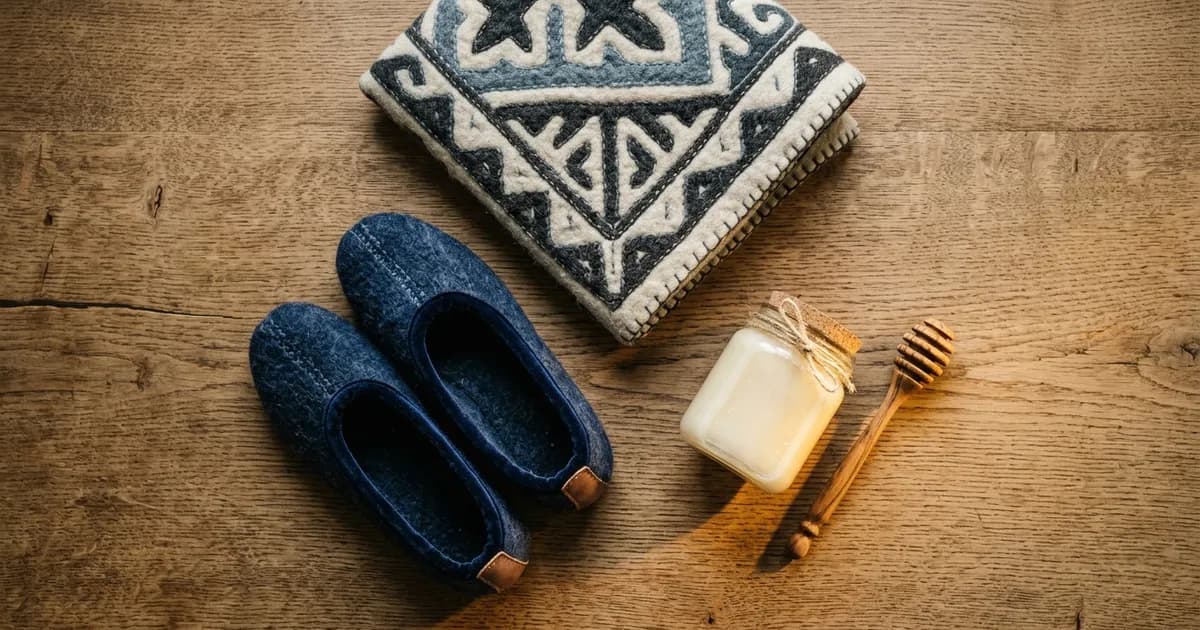
TL;DR / In Brief: A gift from Kyrgyzstan isn't a souvenir — it's an object with a history, an origin, and a person behind it. Shyrdak carpets have been on the UNESCO list of the Intangible Cultural Heritage of Humanity since 2012 (UNESCO ICH list, 2012). Felt slippers from Naryn Province are made by hand — each one individually, by artisans like Gulnara, who has mastered this technique over 40 years. And sainfoin honey from four regions of the Tian Shan (2,400–3,500 m altitude) is rare. One example of the beekeepers up there is Nursultan in the Suusamyr Valley, who, like his father before him, never used chemicals.
Kyrgyzstan is no typical travel destination. For most people it turns up, at best, at the edge of a Central Asia map — somewhere between Kazakhstan and China, mountainous, unknown.
That's exactly why a gift from Kyrgyzstan does something to the recipient that a gift from an online shop never can: it asks a question. Where was this actually made? By whom? How? And it's the answers to those questions that make the gift meaningful — not the object itself.
This article shows what Kyrgyzstan actually produces, which forms of craft exist, who's behind them — and how to get these things to Germany without having to travel there yourself.
In Brief
A gift from Kyrgyzstan combines design, origin, and craft in a way European mass-produced goods can't reach. Shyrdak carpets are UNESCO cultural heritage (since 2012), felt slippers from Naryn Province are made individually by named artisans like Gulnara, and sainfoin honey from four regions of the Tian Shan at 2,400 to 3,500 m altitude counts as rare. ULU brings all these things directly — with no middleman — to Germany.
What Makes Kyrgyzstan the Source of Extraordinary Gifts?
Kyrgyzstan lies entirely in the mountains. About 90 percent of the country sits above 1,500 metres — a circumstance that held back industry and made room for craft. Nomadic peoples, who lived for centuries in yurts, developed a material culture built on what was available: wool, felt, leather, wildflower meadows.
What grew out of that is no folkloric niche. It's a living craft passed down through generations — from mother to daughter, from beekeeper to son. And it's a craft that is formally recognised: in 2012 UNESCO listed the art of making Kyrgyz felt carpets (Ala-kiyiz and Shyrdak) as intangible cultural heritage of humanity worth protecting (UNESCO ICH entry no. 00693, 2012).
That sets a gift from Kyrgyzstan structurally apart from what sits in European gift shops. There's no factory behind it. There's a person.
From the Hive
Honey knowledge the supermarket skips
Twice a month: varietals, harvest, origin. Plus 10% off your first order.
10% off your first order · No spam. Unsubscribe anytime.
Shyrdak — The Carpet That Outlives 100 Years
The shyrdak is the best-known Kyrgyz export in the crafts field — and at the same time the least understood.
When people hear "carpet," they think of IKEA or Turkish bazaars. A shyrdak is neither. It's a handmade mosaic carpet of pressed wool felt, in which two layers of contrasting felt are laid over each other, patterned with chalk, then cut out precisely and sewn back together. The patterns — geometric symbols representing horns, water, mountains — are older than the written Kyrgyz language.
Durability: The average lifespan of a shyrdak carpet is 100 years, often more. (Encyclopedia of Crafts, WCC Asia Pacific Region)
At ULU, Aida makes these carpets in her workshop near Bishkek. She learned the technique from her mother, who learned it from hers. The patterns carry no names you'll find in a dictionary — they're family language in wool.
Naryn, the province at the heart of Kyrgyzstan, was named "World Craft City for Felt Carpet" in 2019 — a title that ties together international cooperation and regional identity. (World Crafts Council, 2019)
A shyrdak carpet from ULU is no home textile. It's a design object with provable origin.
Felt Slippers from Naryn — Craft You Wear Every Day
While the shyrdak stays on the wall or the floor, a pair of felt slippers from Kyrgyzstan is something else: a functional object used daily — and one that gets better with use.
Gulnara, an artisan from Naryn Province, has been making hand-felted house shoes for more than 40 years. Her hands work at a speed that only comes from decades. Every pair is shaped individually — from pure mountain wool that comes from sheep grazing the Kyrgyz highlands, at least 3,000 metres up.
ULU's Steppe Ballerinas build on this tradition. They don't look like what you'd typically picture as a "slipper" — no floppy felt, no mass production. Velvet trim, textured felt, three colourways (Night Blue, Midnight, Stone & Berry) that can't be mixed in any factory, because the dyeing happens by hand.
Who is this a gift for? For people who would buy Haflinger or Giesswein — but want to know whose hands made the shoes. That's the difference: Haflinger is Austria and factory. Gulnara is Naryn and 40 years of experience.
Sainfoin Honey — Kyrgyzstan's Answer to Manuka
Honey from Kyrgyzstan is no niche curiosity for organic fans. It's the deliberate counter-design to a market dominated by a single honey from New Zealand — and one that, in Germany especially, is looking for a real alternative.
Sainfoin honey comes from the nectar of the sainfoin plant (Onobrychis viciifolia), which grows almost exclusively wild in Kyrgyzstan's highlands — in valleys like the Suusamyr Valley at around 2,500 metres. The honey is gently processed at max. 40 °C, not pasteurised, cream-white, nutty in taste — and extremely rare.
One example of beekeeping there is Nursultan: he works his hives in the Suusamyr Valley without chemicals, as his family has for generations. Neither he nor his father ever used pesticides, antibiotics, or sugar. That's no marketing statement — it's the reality of a region where agriculture in industrial form simply never took place.
What kind of gift is this? ULU sainfoin honey is aimed at people who would buy manuka — but don't want to pay 10 times as much or take on the carbon footprint of half the globe. Same premium tier. Different route.
Wool Scarves from the Kyrgyz Highlands
Less well known than carpets, but worn daily in Europe: handwoven wool scarves from Kyrgyz mountain wool. The herders who supply this wool graze their flocks on pastures above 3,000 metres — an altitude where the climate is cold enough for the wool to grow denser.
The scarves in ULU's Highland range come straight from these herders. No middleman, no factory in Bishkek, no standardising to machine measure. Every colour scheme takes its cue from the landscape: glacier blue, ochre yellow, stone grey — tones you don't pick from a Pantone catalogue, but from a valley.
Who is this a gift for? For people with a capsule-wardrobe mindset. Who would buy a COS scarf, but want more than a label.
Who Is a Gift from Kyrgyzstan Right For?
| Recipient | Why it fits | Recommendation |
|---|---|---|
| People who "have too much" | Not one more of the same — but something with a history | Shyrdak carpet or honey |
| Design-conscious home decorators | Heritage craft with a modern aesthetic, not rustic | Shyrdak carpet |
| People who wear Haflinger / Giesswein | Same category, real origin, a named maker | Steppe Ballerinas |
| Manuka lovers or gourmets | The rarest honey, direct origin, no surcharge | Sky Nectar sainfoin honey |
| Travel enthusiasts / world explorers | Kyrgyzstan is Europe's least-known premium travel destination | Shyrdak + honey combo |
| Minimalists | An object you keep. No trend. No season. | Wool scarf, felt flats |
Why ULU — What's the Difference?
Kyrgyz products turn up here and there on Etsy, on niche marketplaces, in world shops. What's missing is almost always the same thing: the name of the person who made it. The exact region. The year of the harvest.
ULU is built as a bridge — not as a sales channel. Jamilia, the founder, comes from Kyrgyzstan herself. The relationships with Aida and Gulnara are personal — no agencies, no middlemen, no certification logos standing in for transparency.
That makes a gift from Kyrgyzstan through ULU something different: you can tell the recipient who made it. Not "made in Kyrgyzstan." But: Gulnara. Naryn. 40 years.
"What's truly great doesn't need to shout."
Packaging & Presentation
All ULU products are wrapped in natural-white recycled paper — no over-the-top boxes, no plastic, no marketing material taking up more room than the product. A handwritten origin card is included: the artisan's name, the region, the product specification. That's the packaging. That's enough.
For givers who want more: on request, ULU offers handwritten accompanying cards with the story of the respective producer — in English too, if wanted, for international gift-giving.
Frequently Asked Questions
What is a typical gift from Kyrgyzstan?
Typical gifts from Kyrgyzstan are handmade objects from the nomadic tradition: shyrdak felt carpets (UNESCO cultural heritage since 2012), hand-felted slippers and house shoes from mountain wool, handwoven wool scarves, and sainfoin honey from highlands like the Suusamyr Valley. What makes them special is the direct origin — many products can be traced back to a specific person, region, and way of making.
Where can you buy a gift from Kyrgyzstan in Germany?
In Germany there are few sellers with direct Kyrgyzstan import and proven origin. ULU (ulu.style) is an importer aimed at the German market with personal artisan relationships — no middleman. Individual products (e.g. sainfoin honey) are also available on beeleto.de or via Amazon, but without the same origin transparency.
Why are shyrdak carpets special as a gift?
Shyrdak carpets have been on the UNESCO list of the Intangible Cultural Heritage of Humanity since 2012. They're made from two layers of contrasting wool felt in mosaic work — a process done entirely by hand. The patterns are a symbolic language from Kyrgyz nomadic tradition. The average lifespan of a shyrdak is 100 years. As a gift, that's an object that outlasts generations. (Encyclopedia of Crafts, WCC Asia Pacific Region)
What is sainfoin honey and why is it special as a gift?
Sainfoin honey is a white, creamy honey made from the nectar of the sainfoin plant. In Kyrgyzstan this plant grows almost exclusively wild in highlands like the Suusamyr Valley (2,500 m). The honey is gently processed at max. 40 °C, not pasteurised. Beekeepers like Nursultan in the Suusamyr Valley work as their fathers did before them — without chemicals. As a gift, sainfoin honey is the alternative to manuka at the same premium level, but with European origin and a fraction of the carbon footprint. More on this: Honey as a gift — what to know.
For which occasion is a gift from Kyrgyzstan suitable?
Gifts from Kyrgyzstan suit people who are hard to buy for — because they "already have everything." They work for Christmas, birthdays, housewarmings, and anniversaries. Shyrdak carpets are classic housewarming gifts. Felt slippers suit Christmas or a thank-you. Honey works for almost any occasion, especially as a culinary gift or an addition to a gourmet hamper.
Are ULU's products craft-certified?
ULU works with named artisans in direct partnerships — Aida (shyrdak), Gulnara (felt flats). The transparency lies not in a certificate but in the direct relationship: name, region, production description. That's a deliberate choice — certification logos are no substitute for real relationships.
Internal Links
Further reading on individual products:
- Felt ballet flats — understanding the craft from Naryn
- Shyrdak carpet — origin, technique, care
- Honey as a gift — what to know
- Buy sainfoin honey — origin & guide
Author: ULU editorial team — ulu.style Published: 13.04.2026 Last updated: 13.04.2026
Share
Shyrdak felt carpets from Kyrgyzstan were added to the UNESCO list of the Intangible Cultural Heritage of Humanity in 2012 — as a craft form worth protecting in Naryn and Issyk-Kul.
The average lifespan of a shyrdak carpet is 100 years — which makes it one of the most durable handmade gifts there is.
Naryn was named 'World Craft City for Felt Carpet' in 2019 — a World Crafts Council title recognising the region as a global centre for felt craft.
Gulnara, an artisan from Naryn, has been making hand-felted house shoes from pure mountain wool for over 40 years — each pair individually, with no machine support.
Frequently Asked Questions
Typical gifts from Kyrgyzstan are handmade objects from the nomadic tradition: shyrdak felt carpets (UNESCO cultural heritage since 2012), hand-felted slippers and house shoes from mountain wool, handwoven wool scarves, and sainfoin honey from highlands like the Suusamyr Valley. What makes them special is the direct origin — many products can be traced back to a specific person, region, and way of making.
In Germany there are few sellers with direct Kyrgyzstan import and proven origin. ULU (ulu.style) is an importer aimed at the German market with personal artisan relationships and no middleman. Individual products such as sainfoin honey are also available on beeleto.de or via Amazon, but without the same origin transparency.
Shyrdak carpets have been on the UNESCO list of the Intangible Cultural Heritage of Humanity since 2012. They are made from two layers of contrasting wool felt in mosaic work. The patterns are a symbolic language from Kyrgyz nomadic tradition. The average lifespan is 100 years — as a gift, an object that outlasts generations.
Sainfoin honey is a white, creamy honey made from the nectar of the sainfoin plant, which grows almost exclusively wild in Kyrgyzstan's highlands like the Suusamyr Valley (2,500 m). It is gently processed at max. 40 °C, not pasteurised. Beekeepers like Nursultan in the Suusamyr Valley work as their fathers did — without chemicals. As a gift, it is the alternative to manuka at the same premium level, with European origin.
Gifts from Kyrgyzstan suit people who are hard to buy for. Shyrdak carpets are classic housewarming gifts. Felt slippers suit Christmas or a thank-you. Honey works for almost any occasion — especially as a culinary gift or an addition to a gourmet hamper.
ULU works with named artisans in direct partnerships: Aida (shyrdak), Gulnara (felt flats). The transparency lies not in a certificate but in the direct relationship, with name, region, and production description — a deliberate choice, because certification logos are no substitute for real relationships.

Jamilia
Autorin, ULU Magazin
Jamilia schreibt über kirgisisches Handwerk, Honig und die Geschichten hinter den Produkten. Aufgewachsen in Zentralasien, lebt sie zwischen Bischkek und Berlin.
Related Articles

Conscious Living
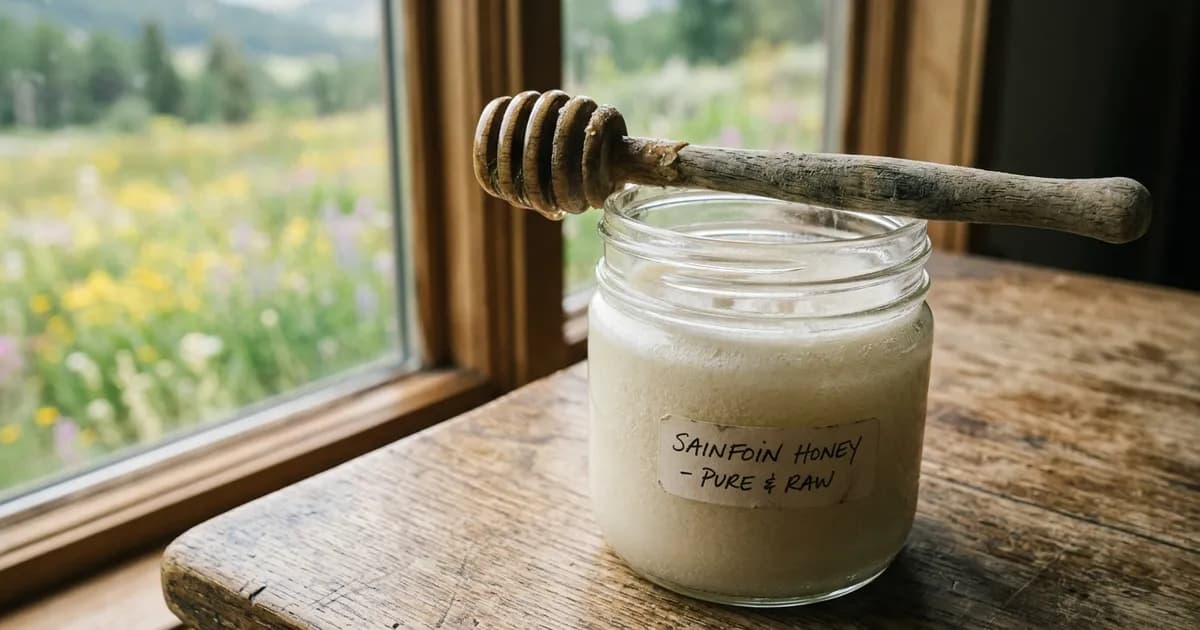
Honey and Gut Health: What Current Research Actually Shows
Research into honey and gut health is growing rapidly — but the headlines often outrun the actual findings. Here is what the studies say, and what they do not.
Conscious Living
Honey Antioxidants: What the Research Actually Says
Gallic acid . Taxifolin . What these numbers mean — and what they do not promise.
Conscious Living
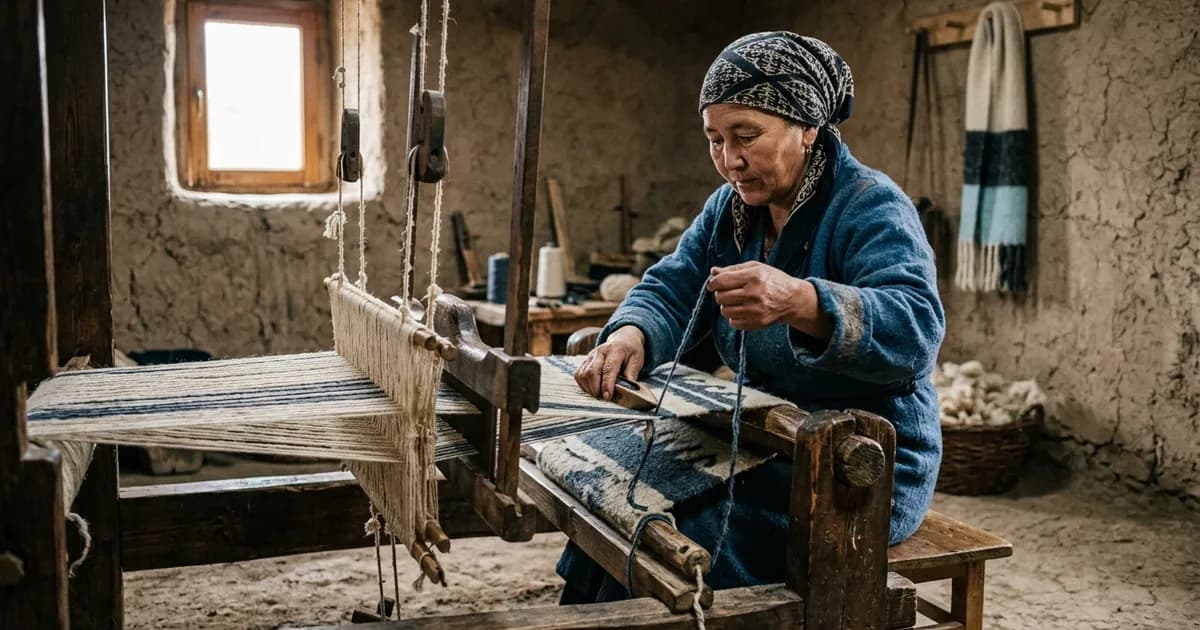
Wool Scarf Origin Kyrgyzstan — Tradition Meets Design
Kyrgyz highland wool for ULU wool scarves comes from sheep grazing between 2,000 and 3,500 metres in the Tian Shan mountains. The extreme temperature swing of up to 70 °C forces an exceptionally dense, lanolin-rich fibre structure. The wool is hand-shorn, dyed with natural colours, and processed using orally transmitted weaving techniques — by named artisans without intermediaries. Kyrgyz felt-making has been on the UNESCO Intangible Cultural Heritage list since 2012 (entry 00695).
From the Hive
Honey knowledge the supermarket skips
Twice a month: varietals, harvest, origin. Plus 10% off your first order.
10% off your first order · No spam. Unsubscribe anytime.