
Conscious Living
Handmade vs. Fair-Trade-Certified
Last updated:
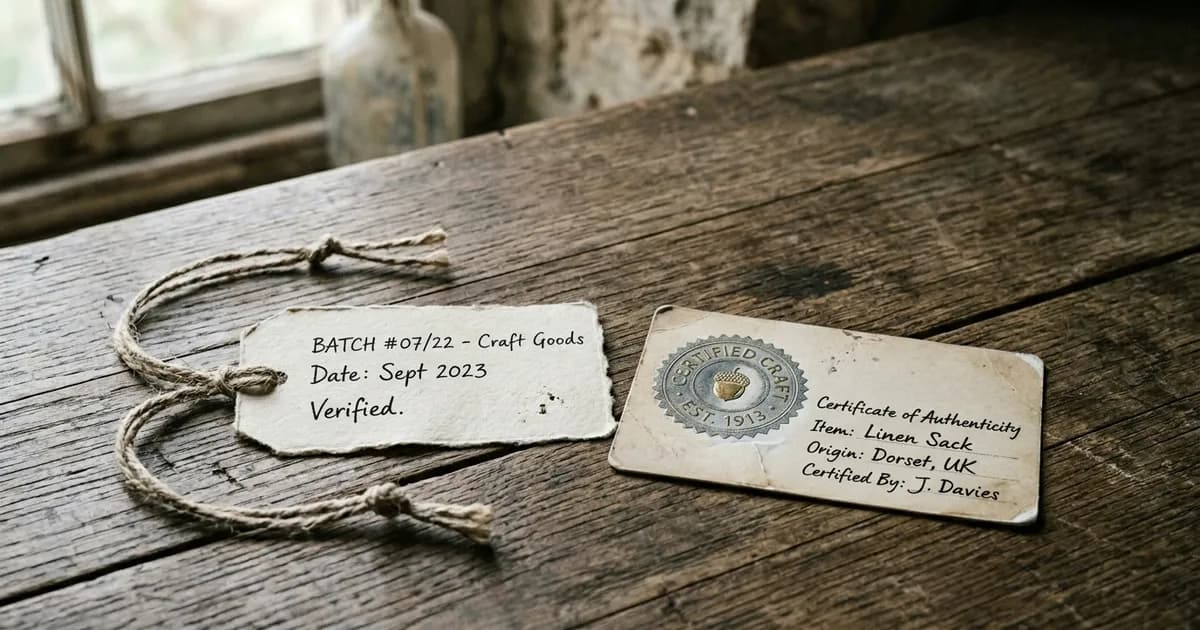
The Fairtrade label costs money. The consumer doesn't pay for it — the producer does.
If you're searching for "handmade vs fair trade," you're asking the right question. Behind both terms lies a genuine concern: Who makes the product, under what conditions, and how much of it actually reaches the person who created it with their own hands? This article doesn't give a simple answer — because there isn't one. But it lays bare what's really behind each approach.
In Brief
Fair trade certifications (Fairtrade International, WFTO) set standards for minimum prices, working conditions, and transparency — and that's commendable. But the system has a structural catch: the licensing and audit costs are borne by the producers themselves, often between 500 and 2,000 EUR per year. For a craftswoman in Naryn or Gulnara in a Kyrgyz cooperative, that's no small matter. ULU is not Fair Trade certified. Not because we lack the values. But because the money that would flow into a label should stay in the workshop instead.
What Is Fair Trade — and What Isn't It?
Fair Trade is not a unified system. There are several organizations with different standards:
| Organization | Focus | Target Group |
|---|---|---|
| Fairtrade International | Agriculture, raw materials (coffee, cocoa, cotton) | Large producer cooperatives, plantations |
| WFTO (World Fair Trade Organization) | Crafts, small producers, entire value chain | Cooperatives, social enterprises |
| Fair Trade USA | Factories, apparel, agriculture | US market, licensing model |
What they don't deliver: personal relationships. An annual audit is not a conversation.
From the Hive
Honey knowledge the supermarket skips
Twice a month: varietals, harvest, origin. Plus 10% off your first order.
10% off your first order · No spam. Unsubscribe anytime.
What Does the Fair Trade Label Cost — and Who Pays for It?
This is the question that usually doesn't get asked.
A WFTO membership costs producers between 500 and 4,000 EUR per year depending on revenue. Fairtrade certifications for small producer groups are similar. On top of that come audit costs (external auditors travel in), administrative overhead for documentation and reporting, and potentially consulting fees for initial certification.
For CONTIGO or GEPA, which are certified as large importers, the company bears these costs. For the producer herself — the craftswoman, the cooperative — it's different. Small craft groups in Central Asia that wanted to get certified directly face a system that simply wasn't built for their scale.
500 EUR in annual fees equals several months of income in a Kyrgyz craft cooperative. The label says less about conditions on the ground than a direct conversation.
This isn't an attack on Fair Trade. It's a structural observation.
What Does "Handmade" Really Mean?
Handmade is not a protected term. In Germany and the EU, there is no legal definition. A shoe manufactured in a factory on a semi-automatic machine can call itself "handcrafted" as long as a human hand was involved at some point.
What ULU means by handmade:
- Gulnara in Naryn, Kyrgyzstan (approx. 2,000 m altitude) felts every single ballet flat from start to finish herself — wet felting technique, no machine involvement. She's been doing this for over 40 years.
- Aida in Bishkek crafts Shyrdak carpets using the traditional felt appliqué technique — cutting patterns, sewing them together, each carpet requiring 40–80 hours of work.
This isn't a certification. These are names. Names we know because we were there.
Why ULU Is Not Fair Trade Certified
Direct answer: We decided against certification because the money that would have to be spent on it flows more meaningfully into the partnership itself.
ULU works with direct partnerships:
| Partner | Product | Relationship |
|---|---|---|
| the cooperative | Honey supplier | Apimondia-awarded, export certificates available |
| Gulnara | Felt ballet flats, felt products | Naryn cooperative, direct ordering |
| Aida | Shyrdak carpets | Direct commission, Bishkek |
- Immediate feedback: If a stitch is off or a batch of honey is too moist, we talk about it right away — no annual audit, no interim report.
- Pricing autonomy: We don't negotiate downward. We pay what the work is worth — and adjust when the cost of living changes.
- Transparency without administrative burden: Our partners don't have to fill out self-assessment forms or receive auditors. They do their work.
- Trust that grows: A relationship over three years evolves. An audit appointment doesn't.
The Fair Trade label is a minimum standard. Direct partnership is a different ambition.
When Is Fair Trade the Better Choice?
Fair Trade works well when:
- Supply chains are long and complex (coffee, cocoa, cotton from dozens of countries)
- Buyers have no direct access to producers and depend on verified standards
- Producers themselves are large enough to meaningfully bear certification costs
- The consumer cannot build a direct basis of trust and needs a system to fulfill that function
CONTIGO, GEPA, and similar organizations do real work. They have transformed supply chains, enforced minimum prices, and kept child labor out of value chains. That deserves respect.
ULU is not that model. ULU is 200 pairs of felt ballet flats per year, commissioned directly from Gulnara. A certification system for this scale would be like a highway for a mountain road. It would fit — but it wouldn't be right.
Comparison Table: Fair Trade Label vs. Direct Partnership
| Criterion | Fair Trade Seal (e.g. WFTO/Fairtrade) | ULU Direct Partnership |
|---|---|---|
| Price Guarantee | Yes — minimum prices defined | Yes — negotiated directly, no downward price pressure |
| Working Conditions | Audited, documented | Personally known, directly addressable |
| Supply Chain Transparency | Systemic — reports, certificates | Direct — names, locations, visits |
| Cost for Producers | €500–4,000/year + audit | No system fees |
| Feedback Speed | Annual audit | Immediate, personal |
| Scalability | Very good — for large supply chains | Limited — suited for small cooperatives |
| Consumer Trust | Seal instantly recognizable | Trust must be earned through story |
| Suited For | Mass-market goods, global supply chains | Artisan cooperatives, direct import |
What You Can Concretely Do as a Buyer
A seal is a proxy — a stand-in for trust when you have no direct connection. That's legitimate. But if you want more, there are concrete questions:
Ask these questions of any supplier — certified or not:
- Can you tell me the name of the person who made this product?
- What is your relationship with your producers — annual audit or regular contact?
- How is the price structured, and what share goes directly to production?
- How long have you been working with this partner, and what has changed during that time?
- Are there photos or visit reports from the production site?
Anyone who can't answer these questions — seal or no seal — has something to hide.
Handmade vs. Fair Trade isn't the real question. The real question is: Can you tell me who made it?
The ULU Model: Direct and Honest
We're not certified. We have Gulnara, Aida, and our beekeeping partner. We have visits, conversations, and direct commissions. We don't have a marketing department writing "ethically sourced" on our homepage — because we believe ethics isn't a marketing category.
What we do instead: We publish who we know, where they live, and how they work. We set prices so that the labor is respected. We grow slowly — because direct partnership doesn't scale like a certification license.
That's not a reason to avoid buying a Fair Trade product. It's a reason to look closely — regardless of the seal.
What's truly great doesn't need to shout.
Discover our products → To the ULU Shop
Frequently Asked Questions
What is the difference between handmade and Fair Trade?
"Handmade" describes the manufacturing process — a product that is fully or predominantly crafted by hand, without industrial mass production. "Fair Trade" is a certification system that audits working conditions, minimum prices, and supply chain transparency. Both concepts can overlap — a handmade product can be Fair Trade certified — but they don't have to.
Is Fair Trade really fair for producers?
Fair Trade certifications set real minimum standards and have measurable positive effects in many supply chains — especially for coffee, cocoa, and textiles from large production chains. A structural problem exists for smaller producers: the annual certification costs (€500–4,000) can represent a significant financial burden for small artisan cooperatives. The Fair Trade system is designed for large, well-organized producer groups — not primarily for individual artisans.
Why isn't ULU Fair Trade certified?
ULU works with personally known partners in Kyrgyzstan: Gulnara (felt ballerinas), Aida (shyrdak carpets), and our beekeeping partner (honey). The decision against certification is based on the assessment that the cost of a seal is better invested directly in the partnership and fair compensation for producers. Personal relationships and direct feedback replace the audit process for us.
Can you really trade fairly without a Fair Trade seal?
Yes — if the supply chain is short enough for direct verification to be possible. With a direct import from a personally known artisan in Kyrgyzstan, that's the case. With a coffee plantation employing hundreds of seasonal workers and five intermediaries, a certification system is indispensable. The question isn't seal or no seal — but: What does the importer actually know about their producers?
What does "direct trade" mean concretely at ULU?
Direct trade means: ULU orders directly from the producers — without a platform, without intermediaries, without certification brokers. We know the names, locations, and working conditions of our partners from personal contact. The price is negotiated directly, and the margin that would otherwise go to intermediary levels stays in the production process.
Are handmade products automatically more ethical?
No. "Handmade" says nothing about working conditions, wages, or supply chain transparency. A product can be entirely handcrafted and still have been produced under poor conditions. The relevant questions remain the same: Who made it, how, and what did the person who made it receive from it?
How can I as a buyer recognize fair trade practices?
Three reliable signals: First, the supplier can name who made the product. Second, there is verifiable information about the production conditions (no generic "ethical" or "sustainable" claims). Third, the price is at a level that enables fair compensation — not a bargain price that comes at the producers' expense. Additionally: A Fair Trade seal is a reliable minimum signal when the first three criteria cannot be verified.
Further reading:
Share
The Fairtrade label costs money. It's not the consumer who pays — it's the producer.
A €500 annual fee equals several months' income in a Kyrgyz artisan cooperative. The label says less about conditions on the ground than a direct conversation.
The Fair Trade label is a minimum standard. Direct partnership is a different ambition.
Handmade vs. Fair Trade isn't the real question. The real question is: Can you tell me who made it?
Gulnara in Naryn, Kyrgyzstan (approx. 2,000 m altitude) felts every single ballerina from start to finish herself — wet felting technique, no machine involvement. She's been doing it for over 40 years.
Fair Trade works well for coffee, cocoa, and cotton from large supply chains — but a certification system for 200 pairs of felt ballerinas per year would be like building a motorway for a mountain road.
Frequently Asked Questions
Handmade describes the production process — a product made entirely or predominantly by hand. Fair Trade is a certification system that audits working conditions, minimum prices, and supply chain transparency. The two concepts can overlap but don't have to.
Fair Trade certifications set real minimum standards with measurable positive effects, especially in large supply chains. A structural problem exists for smaller producers: annual certification costs of €500–4,000 can represent a significant financial burden for small artisan cooperatives.
ULU works with personally known partners: Gulnara (felt ballerinas, Naryn), Aida (shyrdak, Bishkek), and our beekeeping partner (honey, Tian Shan). Instead of paying for a label, ULU channels that money directly into fair compensation and the partnership. Personal relationships and direct feedback replace the audit process.
Yes — when the supply chain is short enough for direct verification. With a direct import from a personally known artisan, that's the case. In large supply chains with many intermediaries, a certification system is indispensable.
ULU orders directly from producers — no platform, no middlemen, no certification intermediaries. We know the names, locations, and working conditions of our partners from personal contact. Prices are negotiated directly, and the margin that would otherwise go to intermediaries stays in the production process.
No. Handmade says nothing about working conditions or wages. The relevant questions remain: Who made it, how, and what did the maker receive? A product can be entirely handmade and still produced under poor conditions.
Three reliable signals: The seller names who made the product. There is traceable information about production conditions — no generic claims like 'ethical' or 'sustainable'. The price is at a level that allows fair compensation. A Fair Trade label is a reliable minimum signal when these criteria cannot be verified directly.

Jamilia
Autorin, ULU Magazin
Jamilia schreibt über kirgisisches Handwerk, Honig und die Geschichten hinter den Produkten. Aufgewachsen in Zentralasien, lebt sie zwischen Bischkek und Berlin.
Related Articles

Conscious Living
Honey and Gut Health: What Current Research Actually Shows
Research into honey and gut health is growing rapidly — but the headlines often outrun the actual findings. Here is what the studies say, and what they do not.
Conscious Living
Honey Antioxidants: What the Research Actually Says
Gallic acid . Taxifolin . What these numbers mean — and what they do not promise.
Conscious Living
Wool Scarf Origin Kyrgyzstan — Tradition Meets Design
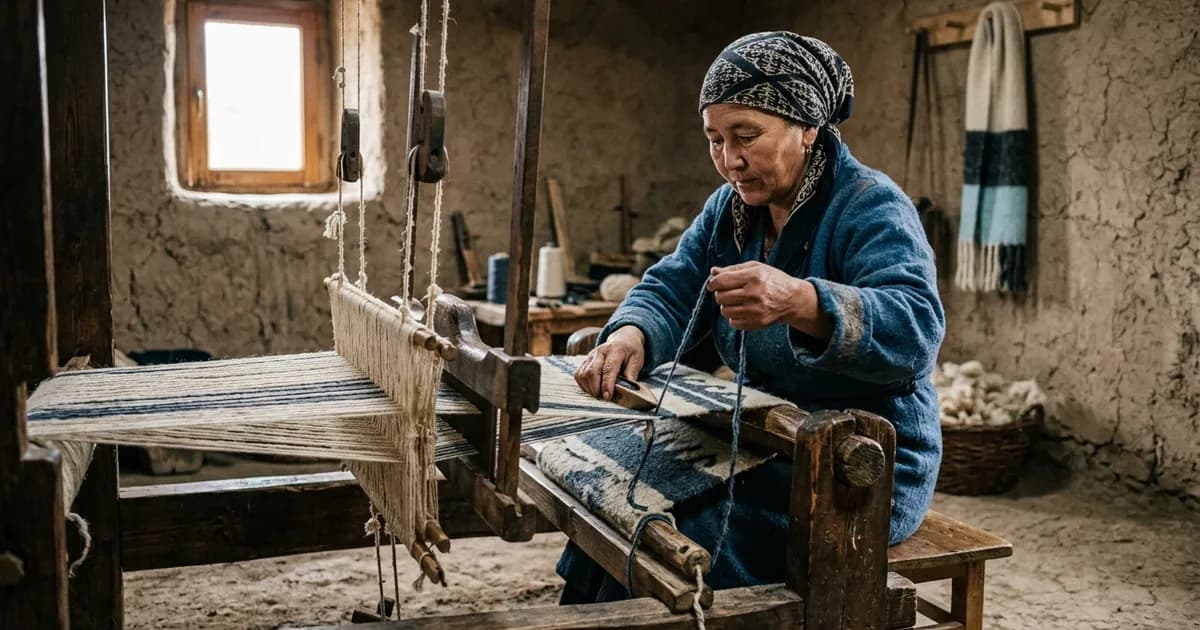
Kyrgyz highland wool for ULU wool scarves comes from sheep grazing between 2,000 and 3,500 metres in the Tian Shan mountains. The extreme temperature swing of up to 70 °C forces an exceptionally dense, lanolin-rich fibre structure. The wool is hand-shorn, dyed with natural colours, and processed using orally transmitted weaving techniques — by named artisans without intermediaries. Kyrgyz felt-making has been on the UNESCO Intangible Cultural Heritage list since 2012 (entry 00695).
From the Hive
Honey knowledge the supermarket skips
Twice a month: varietals, harvest, origin. Plus 10% off your first order.
10% off your first order · No spam. Unsubscribe anytime.