
Conscious Living
Kyrgyz Wool — Why Highland Wool Is Better
Last updated:
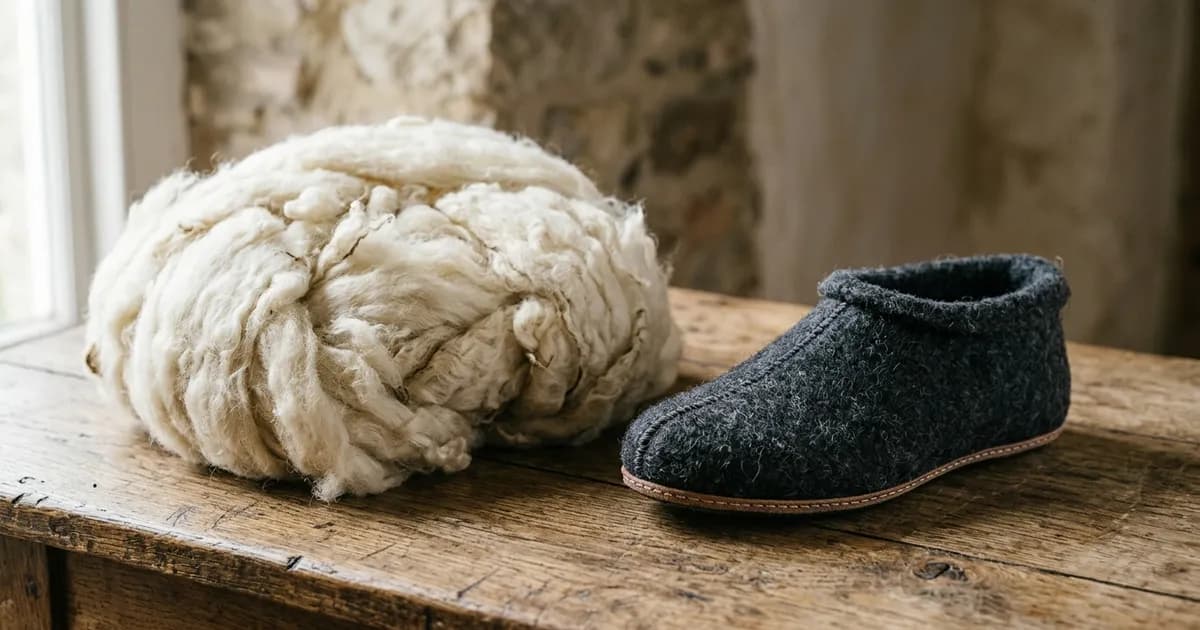
Most people don't know where the wool in their scarf comes from. Not the country. Not the animal. Not the altitude. Kyrgyz wool comes from sheep that survive between -30°C and +40°C — and that changes everything.
In Brief
Kyrgyz highland wool is produced by sheep that graze on pastures between 2,000 and 3,500 metres altitude in the Tian Shan mountains. The extreme temperature swings — up to 70°C annual amplitude — force the animals to develop a denser fleece with more natural lanolin than lowland or industrial sheep. These properties make Kyrgyz wool a natural material that is temperature-regulating, moisture-managing, and inherently more durable. ULU uses Kyrgyz highland wool exclusively for hand-felted products — including the Gulnara felted ballerinas from Naryn (2,036 m) and the wool scarves from the Tian Shan highlands. The Kyrgyz felting tradition has been UNESCO Intangible Cultural Heritage since 2012 (element no. 00695).
Commercially available wool mostly comes from Merino sheep in Australia or New Zealand. The animals live in temperate climates, are bred for maximum fibre production, and are regularly shorn so the fleece grows evenly.
That is well-executed industrial logic. And it produces a neat, predictable material.
Kyrgyz wool is the opposite of predictable.
The sheep of the Kyrgyz highlands — primarily local crossbreeds of the Kyrgyz mountain sheep (Ovis aries) and the robust, compact Karakul — are not optimised for uniform fibre production. They are optimised for survival. And survival in Kyrgyzstan means: summers at 3,500 metres, winters in valleys at -30°C, annual temperature amplitudes of up to 70°C.
Wool produced under these conditions is physically different.
What Makes Kyrgyz Wool Different?
Fibre Density and Crimp
Mountain sheep develop a denser fleece than lowland breeds — with a stronger natural crimp. This crimp is not cosmetic. It is the physical foundation for two properties: feltability and heat retention.
Feltability occurs when wool fibres interlock under friction and moisture. Fibres with stronger crimp have more surface area and more microstructures where interlocking takes place. Kyrgyz highland wool felts faster, denser, and more stably than wool from temperate climates.
This explains why Gulnara in Naryn does not use Australian Merino for her felted ballerinas. Not because she lacks access. But because Kyrgyz wool simply felts better.
Mountain wool with more crimp felts denser and more stably — this is the physical reason why Kyrgyz felting tradition has endured for centuries.
Lanolin Content
Lanolin is the natural fat in wool — a water-repellent, antimicrobial wax that protects the wool fibre from the inside out. Mountain sheep exposed to extreme weather conditions produce more lanolin than sheltered lowland sheep.
What does this mean for the product?
- Moisture management: Wool with higher lanolin content absorbs up to 33% of its own weight in moisture before it feels damp — and releases moisture slowly and in a controlled manner.
- Odour resistance: Lanolin has antimicrobial properties. It inhibits the growth of odour-causing bacteria — without chemicals, without treatment.
- Natural soft hand feel: Lanolin is the reason why untreated mountain wool feels different from chemically degreased industrial wool. Softer. More alive.
When Gulnara makes her felted ballerinas from "untreated mountain wool," that is not a marketing phrase. It describes the exact level of processing: the wool is washed but not chemically degreased. The lanolin is preserved.
Temperature Regulation
Kyrgyz highland wool regulates temperature bidirectionally. In summer, it conducts heat away — the air pockets in the fibre structure serve as insulation cushions that prevent heat build-up. In winter, it retains body heat. This principle is not limited to seasons: it also applies to felted ballerinas that work just as well in a house with underfloor heating as in one without.
The technical reason: wool fibres have a hollow core structure (medulla). Trapped within this hollow structure is still air — the best natural insulator there is.
Synthetic alternatives can retain heat well. What they cannot do is manage moisture while simultaneously regulating temperature.
From the Hive
Honey knowledge the supermarket skips
Twice a month: varietals, harvest, origin. Plus 10% off your first order.
10% off your first order · No spam. Unsubscribe anytime.
Where Does the Wool for ULU Products Come From?
Gulnara lives in Naryn — the provincial capital in the heart of Kyrgyzstan, at 2,036 metres altitude. The sheep whose wool she processes graze in the surrounding high valleys of the Tian Shan mountains. Not on a certified organic farm with GPS tracking. In a highland that is too inhospitable for conventional agriculture — and therefore knows no pesticides, because there is nothing that would need protecting with them.
The wool Gulnara uses comes exclusively from the inner fleece of the sheep — the soft undercoat that lies directly against the skin. The coarser outer fleece is used for carpet backings and yurt felt. This distinction is not documented. It is passed on orally, like all important decisions in Gulnara's craft.
Gulnara has been felting for over 40 years. That means: she made her first slippers in the early 1980s — at a time when the craft was not a lifestyle product but an essential skill in the Kyrgyz highlands.
"Every craftswoman has her own signature. After a few years, you can recognise whose hands made a slipper." — Gulnara, Naryn
Kyrgyz Wool vs. Merino Wool — What Is the Difference?
This is the question we hear most often. It deserves a concrete answer.
| Property | Merino (Australia/NZ) | Kyrgyz Highland Wool |
|---|---|---|
| Fineness (micron) | 17–24 µm (very fine) | 24–32 µm (medium to coarse) |
| Crimp | Uniform, moderate | Stronger, more irregular |
| Lanolin content | Medium (industrially degreased) | Higher (in untreated wool) |
| Feltability | Good | Very good to excellent |
| Temperature amplitude of the animals | Temperate (±20°C) | Extreme (±70°C) |
| Softness | Very soft (clothing, baby products) | Soft to medium (scarves, slippers, carpets) |
| Durability | Medium to high | High to very high |
| Certifications | Mulesing-free, ZQ, RWS widely available | No standardised certifications |
| Origin transparency | Often audited, documented | Often local, direct sourcing |
This isn't a value hierarchy. This is material suitability.
How is Kyrgyz wool processed?
The processing begins in spring — when the sheep are shorn. For Gulnara's products, the wool is not industrially prepared. No chlorine-based washing additives. No chemical degreasing. No machine carding in large-scale facilities.
The steps Gulnara follows:
1. Sorting: The wool is separated by quality — inner fleece (fine, for products) from outer fleece (coarse, for padding). This distinction is not measurable. It's done by hand.
2. Washing: Water, soap, manual labor. The goal is to remove dirt and excess grease — but not the lanolin itself. Industrial wool is often chemically degreased at this step. Gulnara's wool is not.
3. Drying and loosening: The wool is laid out and dried. Then loosened by hand to separate the fibers from each other — the manual-analog replacement for industrial carding.
4. Felting: The loosened wool is built up in layers on a base, wetted with hot water and soap, and worked through intensive physical labor — rolled, pressed, fulled. The felting process takes 4 to 6 hours for a pair of ballerinas.
Every step can be done faster by a machine. No step can be done better by a machine.
What this means for ULU products
Gulnara's felt ballerinas from the Naryn province are made from this wool. The Gulnara and Naryn models — both made from the Kyrgyz highland wool of their region — are not "slippers made from wool." They are slippers made from a specific wool, from a specific animal, from a specific altitude, processed by a specific person who learned the craft from her mother.
That's transparency, not storytelling.
The wool scarves that ULU offers from Kyrgyz yarn follow the same logic: Kyrgyz highland yarn, selected for its robustness and temperature regulation — not for its marketing value.
How to properly care for these products: Washing and caring for wool scarves — the complete guide
UNESCO Heritage: What this has to do with wool
In December 2012, UNESCO added the Kyrgyz felt tradition — Shyrdak and Ala-Kiyiz — to the Representative List of the Intangible Cultural Heritage of Humanity (Element No. 00695). What many don't know: This recognition applies not just to the design. It applies to the entire production chain — from shearing the sheep to finishing the product.
The UNESCO documentation explicitly names knowledge about wool properties and processing grades as part of the intangible knowledge worthy of protection. What Gulnara knows — which wool felts, which doesn't, how long you need to full, how good wool feels — is part of this heritage.
The same applies to the felt ballerinas: A craft passed down through generations includes knowledge about the material itself.
More about the felt tradition and its products: Kyrgyz craftsmanship — Shyrdak, felt, and tradition
The felt ballerinas: Where Kyrgyz wool meets Gulnara's hands
Gulnara has been felting for over 40 years — in Naryn, at 2,036 meters altitude, in the province that was designated a World Craft City for felt carpets by the World Crafts Council in 2019. Her ballerinas are created in 4 to 6 hours of handwork from untreated mountain wool.
The result is a product that feels different from anything a machine produces in this price range.
Not because it's handmade — that's a method, not a quality marker per se. But because the combination of material and craftsmanship produces a specific character: Density without stiffness. Warmth without heaviness. Structure that responds to the foot.
How to properly care for these ballerinas: Washing & caring for felt ballerinas — guide
The Shyrdak carpet: same wool, different form
The same Kyrgyz highland wool that carries Gulnara's ballerinas goes into the Shyrdak carpets. The felt base of a Shyrdak is Kiiz — densely fulled mountain sheep wool that is then cut into mosaic patterns and sewn together.
A Shyrdak measuring 2×3 meters binds the wool of at least five sheep. And with proper care, it can last half a century.
That's the material logic of Kyrgyz wool: Starting quality high enough that the end product endures for generations.
More about Shyrdak carpets and their production: Shyrdak carpet — UNESCO heritage & craftsmanship
Frequently asked questions about Kyrgyz wool
What is Kyrgyz wool?
Kyrgyz wool comes from sheep that graze on highland pastures between 2,000 and 3,500 meters altitude in the Tian Shan mountains of Kyrgyzstan. The extreme temperature fluctuations of the highlands (-30°C to +40°C) cause these sheep to develop a denser fleece with stronger natural crimp and higher lanolin content than lowland breeds. Kyrgyz highland wool is primarily processed into felt products (slippers, carpets) and wool scarves.
Why is Kyrgyz highland wool better suited for felt products?
Kyrgyz highland wool has a stronger natural crimp than wool from temperate climates. This crimp is the physical prerequisite for good felting: The wool fibers interlock under friction and moisture more quickly, densely, and stably. Kyrgyz wool produces a more compact, more resilient felt than flat-crimped industrial wool.
What is lanolin and why is it important in Kyrgyz wool?
Lanolin is a natural fatty substance (wax) produced by the sebaceous glands of sheep. It protects the wool fiber, makes it water-repellent, and has antimicrobial properties — it inhibits odor-causing bacteria without chemicals. Mountain sheep produce more lanolin than sheltered lowland breeds. With untreated Kyrgyz mountain wool — like the kind Gulnara uses for her felt ballerinas — the lanolin is preserved through gentle processing.
How does Kyrgyz wool differ from merino wool?
Merino wool (Australia, New Zealand) is finer (17–24 microns) and is particularly suited for direct skin contact and thin garments. Kyrgyz highland wool is coarser (24–32 microns), felts better, and is suited for mechanically stressed products like slippers, felt carpets, and rugged scarves. Both have their place — it's a question of material suitability for the intended use.
Is Kyrgyz wool organically certified?
No — Kyrgyz highland wool from the Tian Shan mountains is typically not organically certified. Certifications like RWS (Responsible Wool Standard) or EU Organic do not exist in standardised form for this origin. The quality comes from the geography: on highland pastures above 2,000 metres, there is no conventional agriculture, no pesticides, no concentrated feed — not because of a certificate, but because the terrain rules it out. With ULU products, you know the craftswoman by name.
How do I recognise genuine Kyrgyz hand wool?
Untreated Kyrgyz mountain wool can be identified by: a natural, slightly irregular crimp structure (no industrially straightened yarn), a faint lanolin scent (natural, not unpleasant), a dense hand feel after felting (compact, not loosely fluffy), and the robustness of the felt structure. With hand-felted products like Gulnara's ballerinas, slight irregularities in density and surface are not a defect — they are the hallmark.
How do I care for Kyrgyz wool products?
Kyrgyz wool products — felt ballerinas, scarves, Shyrdak carpets — are cleaned by hand washing in lukewarm water (max. 30°C) with mild wool detergent. No tumble dryer, no spin cycle, no direct sunlight when drying. Regular airing is often sufficient for everyday use — the natural lanolin content provides odour resistance. Detailed instructions: Washing & caring for felt ballerinas and Washing a wool scarf.
Wool is not a raw material. It is an archive.
Industrial wool is reproducible. Uniform. Scalable. It is an ingredient.
Kyrgyz highland wool is the result of a specific climate, specific animals, specific pastures, and processing that has been in the same hands for centuries.
When Gulnara in Naryn felts a pair of ballerinas, the product does not begin in her workshop. It begins on a highland pasture in the Tian Shan mountains, with a sheep that has been built for extreme temperatures for generations.
This is not a narrative frame. This is material history.
ULU — handmade, named, direct. All wool products come from named craftswomen in Kyrgyzstan. No middlemen.
Internal links:
- Washing & caring for felt ballerinas — Guide
- Shyrdak carpet — UNESCO heritage & craftsmanship
- Kyrgyz craftsmanship — Shyrdak, felt and tradition
- Washing a wool scarf — The complete guide
Sources:
- UNESCO Intangible Cultural Heritage, Element No. 00695 (2012, extended 2022): Ala-kiyiz and Shyrdak — Art of Kyrgyz traditional felt carpets
- World Crafts Council: Naryn Province — World Craft City for Felt Carpets (2019)
- Central Asian Cultural Institute, Bishkek (2023): Cultural continuity of nomadic craft techniques
- Ryder, M.L.: Wool Growth. Academic Press, London (1969) — Standard work on wool fibre biology
- International Wool Textile Organisation (IWTO): Wool Fibre Properties. Brussels (2020)
- Kyrgyz Research Institute of Animal Husbandry and Pasture (KRIHAP): Characteristics of Kyrgyz Mountain Sheep Breeds (2018)
Share
Kyrgyz mountain sheep survive annual temperature swings of up to 70°C — from -30°C in winter to +40°C in summer. The wool that grows under these conditions is physically different from industrial wool.
Wool fibres absorb up to 33% of their own weight in moisture before feeling damp — and regulate temperature bidirectionally. No synthetic material replicates this combination.
The UNESCO documentation on Kyrgyz felt heritage (element no. 00695, 2012) explicitly names the knowledge of wool properties and processing grades as part of the intangible knowledge worthy of protection.
The province of Naryn in Kyrgyzstan sits at an average altitude of 2,036 metres and was designated a World Craft City for felt carpets by the World Crafts Council in 2019 — the international benchmark for Kyrgyz felt quality.
Hand-felted wool products made from Kyrgyz mountain wool take 4 to 6 hours of handwork per pair of ballerinas — a time investment with no machine equivalent, because the felting process itself requires motor experience knowledge.
Lanolin — the natural fatty substance in wool — has antimicrobial properties and inhibits odour-causing bacteria without chemicals. Mountain sheep produce more lanolin than lowland breeds.
Frequently Asked Questions
Kyrgyz wool comes from sheep grazing on highland pastures between 2,000 and 3,500 metres in the Tian Shan mountains of Kyrgyzstan. The extreme temperature swings of the highlands (-30°C to +40°C) cause these sheep to develop a denser fleece with stronger natural crimp and higher lanolin content than lowland breeds. Kyrgyz highland wool is mainly processed into felt products (slippers, rugs) and wool scarves.
Kyrgyz highland wool has a stronger natural crimp than wool from temperate climates. This crimp is the physical prerequisite for good felting: the wool fibres interlock faster, more densely and more stably under friction and moisture. Kyrgyz wool produces a more compact, more resilient felt than flat-crimped industrial wool.
Lanolin is a natural fatty substance (wax) produced by the sebaceous glands of sheep. It protects the wool fibre, makes it water-repellent and has antimicrobial properties. Mountain sheep produce more lanolin than sheltered lowland breeds. In untreated Kyrgyz mountain wool, the lanolin is preserved through gentle processing and makes the product more resistant to moisture, odours and mechanical wear.
Merino wool (Australia, New Zealand) is finer (17–24 microns) and particularly suited for direct skin contact and thin garments. Kyrgyz highland wool is coarser (24–32 microns), felts better and is suited for mechanically stressed products such as slippers, felt rugs and robust scarves. Both wool types have their place — it is a question of material suitability.
Kyrgyz highland wool from the Tian Shan mountains is typically not organically certified. Standard certifications such as RWS or EU Organic do not exist in standardised form for this origin. The quality comes from geography: on highland pastures above 2,000 metres there is no conventional agriculture and no pesticides — not because of a certificate, but because the terrain rules it out.
Untreated Kyrgyz mountain wool can be recognised by a natural, slightly uneven crimp structure, a faint lanolin scent (natural, not unpleasant), a dense feel after felting (compact, not loosely fluffy) and the robustness of the felt structure. In hand-felted products like Gulnara's ballerinas, slight irregularities in density and surface are not a flaw — they are the hallmark.
Kyrgyz wool products are cleaned by hand washing in lukewarm water (max. 30°C) with a mild wool detergent. No tumble dryer, no spin cycle, no direct sunlight when drying. Regular airing is often sufficient for everyday use — the natural lanolin content provides odour resistance.

Jamilia
Autorin, ULU Magazin
Jamilia schreibt über kirgisisches Handwerk, Honig und die Geschichten hinter den Produkten. Aufgewachsen in Zentralasien, lebt sie zwischen Bischkek und Berlin.
Related Articles

Conscious Living
Honey and Gut Health: What Current Research Actually Shows
Research into honey and gut health is growing rapidly — but the headlines often outrun the actual findings. Here is what the studies say, and what they do not.
Conscious Living
Honey Antioxidants: What the Research Actually Says
Gallic acid . Taxifolin . What these numbers mean — and what they do not promise.
Conscious Living
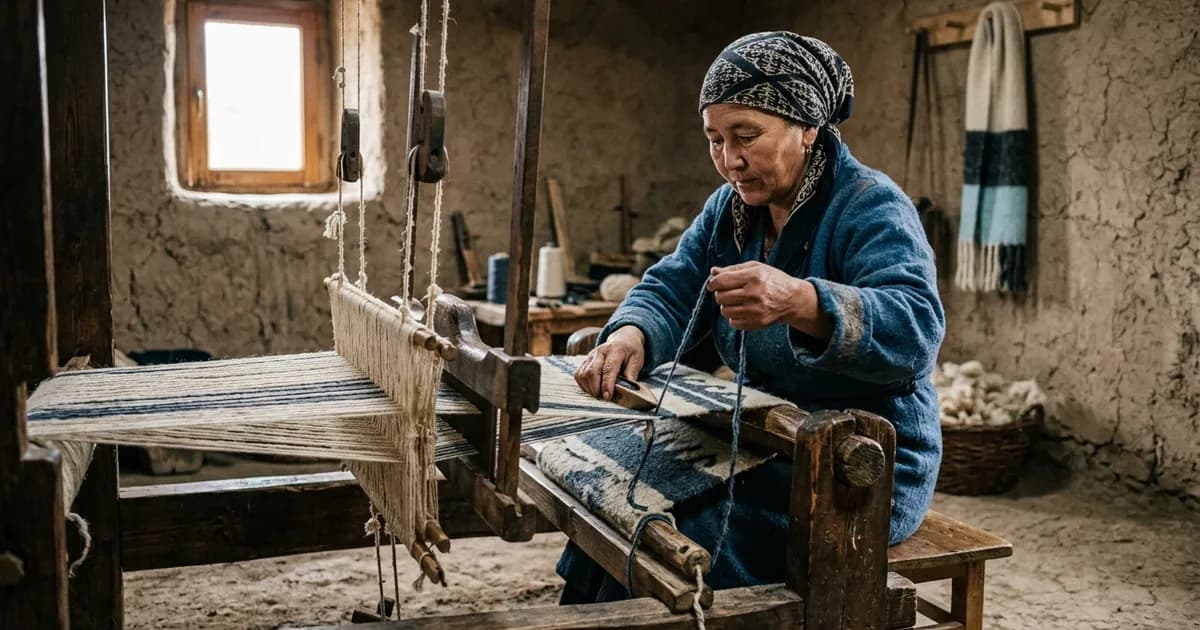
Wool Scarf Origin Kyrgyzstan — Tradition Meets Design
Kyrgyz highland wool for ULU wool scarves comes from sheep grazing between 2,000 and 3,500 metres in the Tian Shan mountains. The extreme temperature swing of up to 70 °C forces an exceptionally dense, lanolin-rich fibre structure. The wool is hand-shorn, dyed with natural colours, and processed using orally transmitted weaving techniques — by named artisans without intermediaries. Kyrgyz felt-making has been on the UNESCO Intangible Cultural Heritage list since 2012 (entry 00695).
From the Hive
Honey knowledge the supermarket skips
Twice a month: varietals, harvest, origin. Plus 10% off your first order.
10% off your first order · No spam. Unsubscribe anytime.