
Conscious Living
Kyrgyz Honey vs. New Zealand Honey — Two Worlds
Last updated:
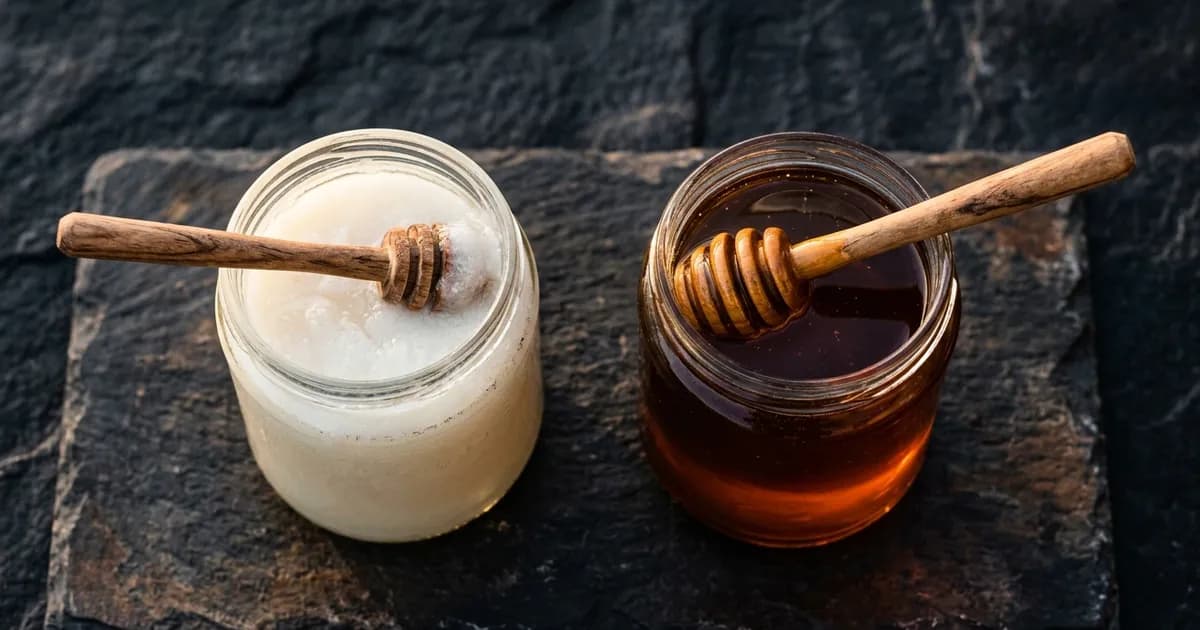
Two honeys. Both from the outermost edges of the honey map. Both with international awards. Both more expensive than what sits on the supermarket shelf — and both with a reason for it.
But the similarities end there.
Manuka comes from the South Pacific, from a single blossom, with a single measurable marker compound at the centre of its marketing machine. Sainfoin honey from the Kyrgyz Tian Shan comes from a different blossom, a different chemistry, a different beekeeping tradition — and from a country most people couldn't find on a map.
This comparison places both worlds side by side — fair, data-driven, and without health claims.
At a Glance
Kyrgyz sainfoin honey (Onobrychis viciifolia, Tian Shan, 2,400–3,500 m) and New Zealand Manuka honey (Leptospermum scoparium) are both monofloral premium honeys with a scientific research history. Manuka is standardised through the UMF/MGO system and globally recognised; its marker compound methylglyoxal (MGO) is well documented. Sainfoin honey has its own polyphenol profile: gallic acid (291.18 µg/g), taxifolin (22.23 µg/g), 60 volatile compounds with a 71.31% terpenoid share (PMC11047671, 2024). The price difference is significant: Manuka UMF 10+ runs at EUR 120–200/kg, our sainfoin honey from Kyrgyzstan at EUR 69.80/kg. Both are genuine premium products. But they tell different stories.
Quick Overview: The Key Differences
| Criterion | Kyrgyz Sainfoin Honey | New Zealand Manuka |
|---|---|---|
| Botanical Source | Sainfoin (Onobrychis viciifolia) — legume | Manuka bush (Leptospermum scoparium) — myrtle family |
| Region of Origin | Tian Shan Mountains, Kyrgyzstan — Naryn, Issyk-Kul, Talas, Osh | New Zealand coastal and mountain regions |
| Altitude | 2,400–3,500 m | 0–800 m (varies widely) |
| Characteristic Compound | Polyphenols: gallic acid 291 µg/g, taxifolin 22 µg/g; terpenoids (hotrienol) | Methylglyoxal (MGO) — sole standardised parameter |
| Colour & Texture | Creamy white after crystallisation; fine, uniform crystals | Dark brown to amber; creamy to firm depending on MGO content |
| Taste | Mild and floral with a delicate caramel note | Intense, earthy, slightly bitter — unmistakable |
| Certification System | None standardised; varietal purity can be checked by pollen analysis | UMF (Unique Manuka Factor) + MGO scale (mg/kg) |
| Price (500 g) | EUR 34.90 (ULU) | EUR 55–90 (UMF 10+), EUR 130–200 (UMF 20+) |
| Price per kg | EUR 69.80 (ULU) | EUR 120–480 |
| Availability DE | Rare — niche suppliers, direct import | Good — health food stores, online, dm |
| Award | Apimondia World Beekeeping Awards – Silver 2019 (Montreal); Kyrgyz beekeepers 3× gold 2013 (Kyiv) | Multiple medals (NZ, Australia) |
| Fraud Potential EU | Low (niche market) | High — more is sold worldwide as "Manuka" than New Zealand produces (PMC6813335) |
From the Hive
Honey knowledge the supermarket skips
Twice a month: varietals, harvest, origin. Plus 10% off your first order.
10% off your first order · No spam. Unsubscribe anytime.
Origin: Two Opposite Ends of the World
The Tian Shan Mountains, Kyrgyzstan
The Tian Shan Mountains stretch over 2,900 kilometres across Central Asia. At altitudes between 2,400 and 3,500 metres, alpine flower meadows grow where sainfoin (Onobrychis viciifolia) blooms in dense stands. At these altitudes there is no industry and no pesticide use.
Kyrgyz beekeeping families have practised seasonal high-altitude beekeeping here for generations. The harvest takes place once a year, in July, when the short alpine growing season reaches its peak.
Our mountain honey took Silver at the 2019 Apimondia World Beekeeping Awards in Montreal. Apimondia is the International Federation of Beekeepers' Associations. Kyrgyz beekeepers had previously won three gold medals at the 2013 Apimondia congress in Kyiv.
2,400–3,500 m — Harvest area for white sainfoin honey in the Tian Shan Mountains
New Zealand and the Manuka Bush
New Zealand is home to Leptospermum scoparium, a native shrub found throughout New Zealand — from coastal regions to subalpine elevations. Manuka honey has undergone an unprecedented marketing journey over the past 30 years: from niche product to globally sold premium product with an annual market volume exceeding EUR 400 million.
That has consequences. New Zealand officially produces around 1,700 tonnes of Manuka honey per year. Estimates suggest that more than 10,000 tonnes are sold worldwide as "Manuka." The difference is explained by counterfeit or adulterated products. The UMF system (Unique Manuka Factor) and MGO labelling were introduced to distinguish real Manuka from counterfeits — they are a quality mark and simultaneously an acknowledgment of a market problem.
Botany: Sainfoin vs. Manuka Bush
The two honeys differ fundamentally from their very botanical basis.
Sainfoin (Onobrychis viciifolia) is a perennial legume, a leguminous plant like clover and alfalfa. It grows at medium to high altitudes. Sainfoin honey crystallises due to its high glucose content into a creamy white mass with fine, uniform crystals.
Manuka (Leptospermum scoparium) is an evergreen shrub from the myrtle family. It produces relatively small amounts of nectar that, however, contain an unusually high concentration of dihydroxyacetone (DHA) — the precursor to methylglyoxal (MGO). Depending on blossom and location, MGO content varies considerably; this explains the broad UMF scale.
Both plants can be used monoflorally — meaning the bees preferentially visit this one blossom during the season. The result is chemically consistent honeys with a recognisable varietal profile.
Chemistry: Different Fingerprints, Different Systems
This is the core of the comparison — and the point where most product descriptions fail. Both honeys have measurable, well-documented chemical profiles. They work differently. This is not a competition.
Sainfoin Honey: Polyphenol Profile
A study of five legume honeys (PMC11047671, 2024) documents the following profile for sainfoin honey:
| Compound | Measurement | Context |
|---|---|---|
| Gallic acid | 291.18 µg/g | Primary phenolic compound |
| Taxifolin | 22.23 µg/g | Flavonoid |
| 5-HMF | 36.52 µg/g | EU freshness indicator (limit 40 mg/kg) |
| Volatile compounds | 60 identified | Aroma profile |
| Terpenoid content | 71.31 % | Hotrienol as marker compound |
Manuka Honey: The MGO System
Manuka honey contains methylglyoxal (MGO) at a concentration found in no other honey. MGO is formed from dihydroxyacetone (DHA), a nectar precursor of the Manuka flower.
The UMF system (Unique Manuka Factor) measures several parameters simultaneously: MGO content, leptosperin (as proof of authenticity), and DHA. A UMF 10+ rating corresponds to at least 263 mg/kg MGO; UMF 15+ corresponds to at least 514 mg/kg MGO.
Taste: A Difference You Won't Forget
Anyone who has tasted both honeys will never confuse them.
Sainfoin honey is mild and floral with a delicate caramel note, and creamy after crystallisation. According to the study, hotrienol is the marker compound of its aroma profile. On bread or on its own, it is a quiet star; in tea, a subtle companion.
Manuka is the opposite. Intense, earthy, slightly bitter, with a finish that lingers. Its taste is so distinctive that many people either love it or avoid it.
For the German palate: those seeking an elegant everyday honey will find it in sainfoin honey. Those seeking a bold aromatic experience reach for Manuka.
Price: What Justifies What?
Both honeys are more expensive than commodity honey — but for different reasons.
| Kyrgyz Sainfoin Honey | Manuka UMF 10+ | Manuka UMF 20+ | |
|---|---|---|---|
| 250 g (DE) | – | EUR 30–50 | EUR 70–120 |
| 500 g (DE) | EUR 34.90 (ULU) | EUR 55–90 | EUR 130–200 |
| Price/kg | EUR 69.80 (ULU) | EUR 120–200 | EUR 280–480 |
Manuka is more expensive — both due to genuine scarcity (limited growing area in NZ) and decades of brand-building costs and certification systems. Those who buy UMF 20+ pay EUR 280–480 per kilogram. Part of that price is real value; part of it is the result of a very successful marketing story.
Certification: UMF vs. Pollen Analysis
The UMF system is a standalone achievement of the New Zealand honey industry. It solves a real problem (authentication under high fraud pressure) through standardised parameters. Those who look for the UMF seal and buy from a verified retailer get what is on the label.
Kyrgyz sainfoin honey has no comparable standardised system, because it does not yet have the problem. The market is too niche for organised fraud. Whether a honey is varietally pure can be checked by pollen analysis.
Availability in Germany: Reality Check
Manuka is widely available in Germany: dm, Alnatura, health food stores, Amazon, numerous specialty shops. The selection is broad — but so is the quality range. Not every product sold as Manuka carries a UMF certification; price comparisons without checking the seal are risky.
Sainfoin honey from Kyrgyzstan is rare in Germany. Some online shops import from similar sources. ULU sells it as mountain honey in its own shop and on Amazon.
Two Worlds — Which One for Whom?
Both honeys have a place in the lives of buyers who do not grab the first jar off the shelf.
Kyrgyz sainfoin honey is the right choice if:
- A clear origin matters
- Creamy texture and a mild, floral aroma are preferred
- Value for money in the premium segment is decisive
- You are looking for a honey that almost no one knows — with a polyphenol profile and an Apimondia story
New Zealand Manuka is the right choice if:
- A unique, unmistakable flavour profile is what you are looking for
- The UMF certification system matters as a quality guarantee
- Decades of research history and worldwide recognition count
- The intense, earthy character of the honey personally appeals to you
Both honeys are real. Both have their story. They come from two different worlds.
Frequently Asked Questions
What is the difference between Kyrgyz honey and Manuka honey?
Kyrgyz sainfoin honey comes from the sainfoin plant (Onobrychis viciifolia) in the Tian Shan mountains (2,400–3,500 m); its profile includes polyphenols (gallic acid 291.18 µg/g, taxifolin 22.23 µg/g). Manuka honey comes from the Manuka bush (Leptospermum scoparium) in New Zealand; its characteristic substance is methylglyoxal (MGO), measured via the UMF system. Both are monofloral, both award-worthy — but chemically, in taste, and logistically different.
Is Sainfoin Honey a Good Manuka Alternative?
That's the wrong question. Sainfoin honey is not a substitute for Manuka — it is a standalone product with a different profile, different taste, and different chemistry. Anyone buying Manuka for its intense flavour or the MGO system should stick with Manuka. Anyone looking for a mild, creamy-white premium honey with alpine origin and a polyphenol profile will find sainfoin honey to be its own, fully valid choice.
How Do I Recognise Genuine Manuka Honey?
Genuine Manuka honey can be identified by the UMF seal (Unique Manuka Factor) or a verified MGO rating. Purchases without UMF certification are risky: estimates suggest that more honey is sold worldwide as "Manuka" than New Zealand actually produces. Trustworthy retailers display the certificate number and batch traceability.
Why Is Manuka Honey So Expensive?
The price of Manuka reflects several factors: limited growing area in New Zealand, the short flowering season of the Manuka bush, elaborate UMF certification, and decades of brand building. At higher UMF grades (UMF 20+, UMF 25+), scarcity is real — these qualities are produced only in small quantities.
Why Is Kyrgyz Honey Less Well Known?
Kyrgyzstan is not a well-known honey-exporting country in Germany — even though Kyrgyz beekeepers won three gold medals at the 2013 Apimondia World Beekeeping Congress in Kyiv. The market has not yet been developed. A lack of recognition does not mean a lack of quality, but discovery potential.
Can I Use Sainfoin Honey and Manuka Side by Side?
Yes. Both have distinct flavour applications. Sainfoin honey works well for breakfast, tea, sourdough bread, and as a gift — its mild character fits into many contexts. Manuka has such a strong flavour profile that it is often eaten on its own. Having both in the household means having two different products — not a contradiction.
Note: All chemical values come from the cited studies. Last updated: 03.11.2026.
More on this topic: White Honey from Kyrgyzstan | Sainfoin Honey — The Complete Guide | Sainfoin Honey vs. Acacia Honey | Kyrgyz Mountain Honey
ULU — Truly sweet is rare.
Share
Kyrgyz sainfoin honey from the Tian Shan contains gallic acid, taxifolin and 60 volatile compounds with 71.31% terpenoid content — that is its chemical fingerprint.
Estimates suggest that more products are sold globally as 'Manuka honey' than New Zealand actually produces — roughly 1,700 tonnes of production versus more than 10,000 tonnes of global market supply.
the cooperative, supplier to ULU, won the silver medal at the 2019 Apimondia World Beekeeping Conference in Canada — the most prestigious honey competition in the world.
Kyrgyz beekeepers won three gold medals at the 2013 Apimondia World Beekeeping Congress in Kyiv — before Manuka reached its market peak.
Frequently Asked Questions
Kyrgyz sainfoin honey comes from the sainfoin plant (Onobrychis viciifolia) in the Tian Shan mountains (2,400–3,500 m); its profile includes polyphenols (gallic acid 291.18 µg/g, taxifolin 22.23 µg/g). Manuka honey comes from the Manuka bush (Leptospermum scoparium) in New Zealand; its characteristic compound is methylglyoxal (MGO), measured via the UMF system. Both are monofloral and premium — but chemically, flavour-wise and logistically different.
Sainfoin honey is not a substitute for Manuka — it is a standalone product with a different profile, different flavour and different chemistry. If you buy Manuka for its intense taste or the MGO system, stick with Manuka. If you are looking for a mild, creamy-white premium honey with alpine origin and a polyphenol profile, sainfoin honey is a standalone, fully worthy choice.
Genuine Manuka honey is identified by the UMF seal (Unique Manuka Factor) or a verified MGO rating. Purchases without UMF certification are risky: estimates suggest that more products are sold globally as 'Manuka' than New Zealand actually produces (PMC6813335). Trustworthy retailers display certificate numbers and batch traceability.
The price reflects limited growing area in New Zealand, a short flowering season, UMF certification costs and decades of brand building. At higher UMF grades (UMF 20+), scarcity is real — these qualities are produced only in small quantities. Manuka UMF 10+ runs at EUR 120–200/kg; UMF 20+ at EUR 280–480/kg.
Kyrgyzstan is not a recognised honey-exporting country in Germany — even though Kyrgyz beekeepers won three gold medals at the 2013 Apimondia World Beekeeping Congress in Kyiv. The market remains untapped. Lack of recognition does not mean lack of quality — it means discovery potential for informed buyers.
Sainfoin honey is significantly milder: creamy, mild and floral with a delicate caramel note. Manuka has a pronounced, earthy, slightly bitter flavour profile that is highly distinctive. If you want a restrained everyday honey, choose sainfoin; if you want an intense taste experience, choose Manuka.

Jamilia
Autorin, ULU Magazin
Jamilia schreibt über kirgisisches Handwerk, Honig und die Geschichten hinter den Produkten. Aufgewachsen in Zentralasien, lebt sie zwischen Bischkek und Berlin.
Related Articles

Conscious Living
Honey and Gut Health: What Current Research Actually Shows
Research into honey and gut health is growing rapidly — but the headlines often outrun the actual findings. Here is what the studies say, and what they do not.
Conscious Living
Honey Antioxidants: What the Research Actually Says
Gallic acid . Taxifolin . What these numbers mean — and what they do not promise.
Conscious Living
Wool Scarf Origin Kyrgyzstan — Tradition Meets Design
Kyrgyz highland wool for ULU wool scarves comes from sheep grazing between 2,000 and 3,500 metres in the Tian Shan mountains. The extreme temperature swing of up to 70 °C forces an exceptionally dense, lanolin-rich fibre structure. The wool is hand-shorn, dyed with natural colours, and processed using orally transmitted weaving techniques — by named artisans without intermediaries. Kyrgyz felt-making has been on the UNESCO Intangible Cultural Heritage list since 2012 (entry 00695).
From the Hive
Honey knowledge the supermarket skips
Twice a month: varietals, harvest, origin. Plus 10% off your first order.
10% off your first order · No spam. Unsubscribe anytime.