
Conscious Living
How to Care for a Shyrdak Rug — Make It Last Decades
Last updated:
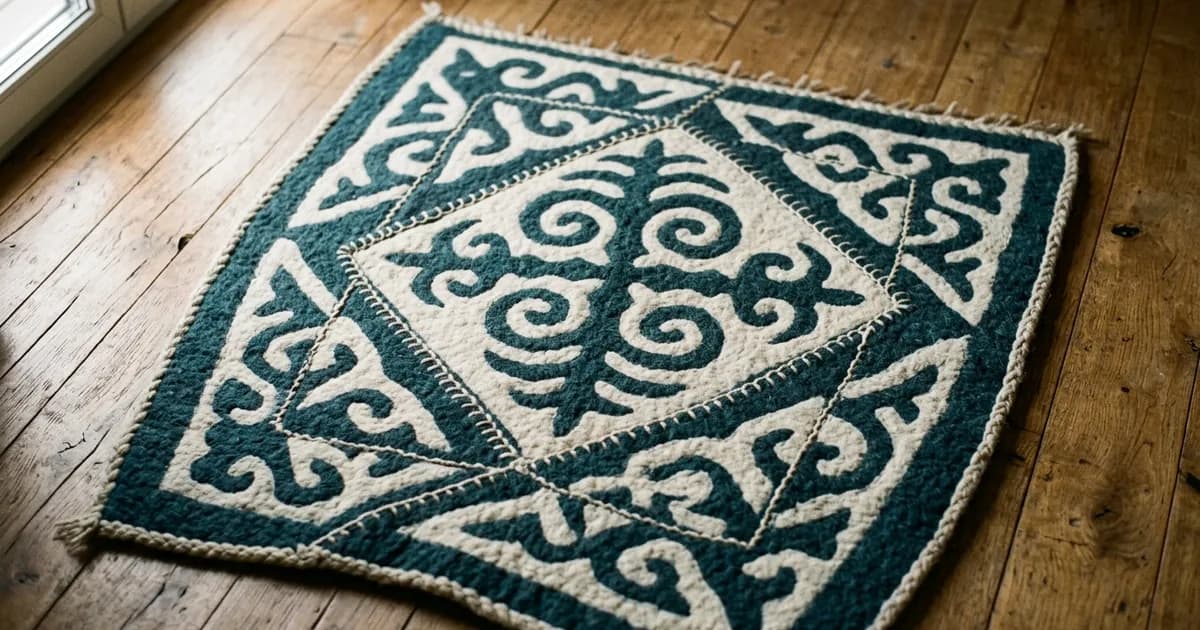
A Shyrdak is not an off-the-rack rug. Aida, from near Bishkek, crafted it with hands that have known this technique since childhood — her mother taught her, and her mother before that. The patterns are older than any alphabet. A piece like this deserves more than indifference. But it doesn't require fear either. With the right care, a Shyrdak lasts decades — sometimes a lifetime.
This guide shows you exactly how to care for your Shyrdak: from the weekly routine to stain removal to moth protection.
In Brief
A Shyrdak rug made from hand-pressed wool felt doesn't need intensive care — it needs the right care. Vacuuming on the lowest setting (maximum level 2 out of 5), rotating quarterly, and consistently protecting it from direct sunlight are enough for everyday maintenance. For stubborn stains, the rule is: cold water, no soap, no heat. Deep cleaning belongs in professional hands. Follow these four rules and you'll enjoy your Shyrdak for decades.
What Is a Shyrdak — and Why Does It Need Special Care?
A Shyrdak (in Kyrgyz: "шырдак") is a traditional Kyrgyz felt rug made from pressed sheep's wool felt. Two colored layers of felt are cut in mirrored patterns, sewn together, and bound with a wool cord — the result is a dense, double-sided textile.
This construction is both its strength and its only requirement: wool felt is naturally moisture-resistant, antibacterial, and very durable — but it reacts sensitively to three things: heat, soap, and mechanical stress when wet.
The UNESCO Intangible Cultural Heritage Register has listed Kyrgyz felt craftsmanship since 2012. What began as a nomadic floor element in yurts is today one of the most long-lasting textiles in the world — if you treat it properly.
From the Hive
Honey knowledge the supermarket skips
Twice a month: varietals, harvest, origin. Plus 10% off your first order.
10% off your first order · No spam. Unsubscribe anytime.
Step-by-Step Guide: How to Properly Care for Your Shyrdak
Step 1: Vacuum Weekly (Low Setting)
Vacuum your Shyrdak once a week. Important: Set the suction power to the lowest level (maximum level 2 out of 5 on devices with adjustable settings). Too much suction pulls individual wool fibers out of the felt and weakens the surface over time.
Always move in the direction of the fibers — for a Shyrdak, this means: parallel to the pattern seams, not across them. Avoid using the brush attachment directly on the pattern; the seam areas are more delicate than the flat surfaces.
Step 2: Rotate Quarterly
Rotate your Shyrdak by 180 degrees every three months. This single step makes a significant difference for longevity.
Why? Because foot traffic wears unevenly: the zone in front of the sofa ages faster than the corner behind the armchair. Rotating distributes wear evenly — and since Shyrdaks are crafted on both sides, you can flip it over entirely after a few years.
Step 3: Treat Stains Immediately — Cold and Gently
Blot liquids as quickly as possible (don't rub). Take a clean, white cotton cloth and press it onto the spot — without scrubbing.
For cleaning, these rules apply:
- No warm or hot water — heat causes wool felt to shrink
- No soap or dish detergent — even mild surfactants disrupt the pH balance of wool fibers and can cause color changes
- No rubbing — mechanical pressure on wet felt further mats the surface and makes stains permanent
Instead: apply cold water to a white cloth and dab from the outside inward toward the center of the stain. Then blot dry thoroughly and let it dry flat, well away from any air currents (no hair dryer, no radiator).
Step 4: UV Protection — Sunlight Is the Silent Enemy
Direct sunlight fades wool colors slowly but reliably — with natural dyes faster than with synthetic ones. Aida's Shyrdaks use traditional dyes from natural sources; they are particularly UV-sensitive.
Therefore, avoid prolonged direct sun exposure. In south-facing rooms: use UV-protective window film or position the rug outside the direct light path. The quarterly rotation also helps reduce one-sided UV exposure.
Step 5: Moth Protection — Preventive, Not Reactive
Wool felt is a natural product and, as such, inherently susceptible to clothes moths (Tineola bisselliella). The good news: moths primarily attack undisturbed, dark areas. A Shyrdak that is regularly used and vacuumed is significantly less at risk than one rolled up in a basement for years.
For active protection:
- Cedar wood blocks placed under the rug or nearby — the essential oil (cedrol) acts as a repellent without chemicals
- Lavender sachets as an alternative or supplement
- No chemical moth treatments applied directly to the rug — naphthalene and similar substances can damage wool fibers and natural dyes
If you suspect a moth infestation: immediately wrap the rug in sealed plastic sheeting and place it in the freezer for 72 hours (if the size permits). The cold reliably kills eggs and larvae.
Step 6: Deep Cleaning — Professionals Only
A Shyrdak should never be washed in a washing machine. Even hand-washing in the bathtub is risky — wool felt absorbs a great deal of water, becomes heavy, and the fibers can warp under their own weight.
For deep cleaning, we recommend a rug cleaner experienced with natural materials. Explain explicitly: hand-pressed wool felt, natural dyes, no machine drying treatment. Frequency: every 5–7 years, or as needed (pet soiling, heavy use).
Step 7: Storage
If you want to store your Shyrdak seasonally:
- Roll loosely (don't fold — folds create permanent creases in felt)
- Wrap in breathable cotton or linen, not in plastic sheeting (condensation moisture)
- Place cedar wood blocks inside the roll
- Storage location: dry, dark, ventilated — not a damp basement
Dos & Don'ts at a Glance
| DO | DON'T |
|---|---|
| Vacuum weekly (level 1–2) | Set suction to maximum |
| Rotate 180° quarterly | Leave the rug unrotated for years |
| Blot stains cold and dry | Use hot water or soap |
| Clean from outside inward | Rub or scrub the stain |
| Use cedar wood for moth protection | Apply chemical moth treatments directly |
| Let it dry flat with airflow | Use a hair dryer or radiator |
| Roll loosely for storage | Fold or seal in plastic |
| Deep cleaning by a specialist | Washing machine or bathtub |
Common Mistakes — and Why They Happen
Mistake 1: Vacuuming too aggressively. Most people set their vacuum to maximum. That makes sense for laminate — but with hand-pressed wool felt, it pulls fibers from the surface. After a few months the rug looks "tired," even though it's structurally still fine.
Mistake 2: Using soap on stains. Instinct says: stain → soap → gone. With wool felt, soap often does the opposite — it bonds to the wool fiber and attracts more dirt over time. Surfactants can also lighten the natural dyes.
Mistake 3: No moth protection because "the rug is still new." Moths lay eggs when conditions are right — not when the owner is "ready." Preventive protection from the start is easier than damage control.
Mistake 4: Constant use without rotating. The area right in front of the sofa wears as much in five years as the rest of the rug does in twenty. Rotating is the simplest measure with the biggest impact on even aging.
How often should you clean a shyrdak?
| Measure | Frequency |
|---|---|
| Vacuuming (low setting) | Weekly |
| Rotating 180° | Quarterly |
| Spot treatment | Immediately as needed |
| Airing (outdoors, in the shade) | Twice a year, spring + fall |
| Professional deep cleaning | Every 5–7 years |
Frequently asked questions
Can you wash a shyrdak rug?
No — at least not in the washing machine and not in the bathtub. Hand-pressed wool felt absorbs a great deal of water, becomes extremely heavy, and the fibers can warp under their own weight. The only safe deep cleaning is by a specialist with experience in natural materials, every 5–7 years or when specifically needed.
What to do when stains land on a shyrdak?
Act immediately: blot the liquid with a white cotton cloth (don't rub). Use only cold water for cleaning — no warm water, no soap, no surfactants. Work from the outside inward toward the center of the stain. Then blot dry thoroughly and let it dry flat without a heat source (no hair dryer, no radiator).
How do I protect my shyrdak from moths?
Place cedarwood blocks under the rug or nearby — the essential oil acts as a natural repellent. As an alternative or supplement: lavender sachets. Regular vacuuming and rotating also reduces the risk, since moths prefer undisturbed, dark areas. If you suspect an infestation: 72 hours in the freezer kills eggs and larvae.
Does a shyrdak fade over time?
Wool felt with natural dyes (like Aida's shyrdaks) is more sensitive to UV light than synthetic dyes. Direct, prolonged sunlight fades the colors over the years. Measures: position the rug outside the direct light path, use UV protection film on windows in south-facing rooms, and rotate quarterly to distribute one-sided UV exposure evenly.
How can I tell if a handmade shyrdak is authentic?
A genuine shyrdak always has a visible seam line between the two mirrored felt color layers — that's not a flaw, it's the hallmark of handcraft. The back shows the mirror pattern of the front in reversed colors. Machine-made versions have uniform edges with no visible hand stitching and a uniform back. Aida's pieces at ULU are certified handmade.
Does a shyrdak work with underfloor heating?
Yes, with one caveat: wool felt is a good thermal insulator — meaning it conducts heat more slowly than synthetic rugs. The heating output of the underfloor system remains fully effective; the felt itself will warm up slightly. Important: the floor temperature should not exceed 28°C continuously, as sustained heat can dry out wool felt over time and make it brittle.
Related articles
- What is a shyrdak? Origin, craft, and history
- Shyrdak vs. felt rug — What's the difference?
- Buying a shyrdak — What you should look for
"Tradition is not a trend."
A shyrdak that is well cared for doesn't age — it matures. The colors grow richer, the texture more familiar, the story deeper. That's exactly what makes it more than a piece of furnishing.
Share
A Shyrdak should never be machine-washed — hand-pressed wool felt absorbs a great deal of water, becomes extremely heavy, and the fibres can warp under their own weight.
Kyrgyz felt craftsmanship has been listed in UNESCO's Register of Intangible Cultural Heritage since 2012 — a Shyrdak is not a souvenir but a design object with a craft tradition spanning millennia.
Wool felt with natural dyes is more sensitive to UV light than synthetic dyes — direct, prolonged sunlight fades the colours over the years if no UV protection is in place.
72 hours in the freezer reliably kills moth eggs and larvae — a chemical-free method suitable for wool felt rugs of all sizes.
Rotating the rug 180 degrees every three months distributes foot traffic evenly — since Shyrdaks are worked on both sides, after a few years you can also flip it over completely.
Frequently Asked Questions
No — at least not in a washing machine or bathtub. Hand-pressed wool felt absorbs a great deal of water, becomes extremely heavy, and the fibres can warp under their own weight. The only safe deep clean is through a specialist with experience in natural materials, every 5–7 years or when specifically needed.
Act immediately: blot the liquid with a white cotton cloth (don't rub). Use only cold water for cleaning — no warm water, no soap, no surfactants. Work from the outside inward toward the centre of the stain. Then blot dry thoroughly and let it dry flat without any heat source (no hairdryer, no radiator).
Place cedar wood blocks under or near the rug — the essential oil acts as a natural repellent. Alternatively, use lavender sachets. Regular vacuuming and rotating further reduces the risk. If you suspect an infestation: 72 hours in the freezer reliably kills eggs and larvae.
Wool felt with natural dyes is more sensitive to UV light than synthetic dyes. Direct, prolonged sunlight fades the colours over the years. Measures: position the rug outside direct light paths, use UV-protective window film in south-facing rooms, and rotate quarterly.
A real Shyrdak always has a visible seam line between the two mirrored felt colour layers — that's not a flaw but the hallmark of handcraft. The reverse side shows the front pattern in inverted colours. Machine-made versions have uniform edges without visible hand-stitching and a plain backing.
Yes, with one caveat: the floor temperature should not consistently exceed 28°C, as prolonged heat can dry out wool felt and make it brittle over time. Wool felt is a good thermal insulator, so the heating performance of the underfloor system is fully retained.
Weekly — but on the lowest suction setting (maximum level 2 of 5). Too much suction pulls individual wool fibres from the felt and weakens the surface over time. Always vacuum in the direction of the fibres, parallel to the pattern seams, never across them.

Jamilia
Autorin, ULU Magazin
Jamilia schreibt über kirgisisches Handwerk, Honig und die Geschichten hinter den Produkten. Aufgewachsen in Zentralasien, lebt sie zwischen Bischkek und Berlin.
Related Articles

Conscious Living
Honey and Gut Health: What Current Research Actually Shows
Research into honey and gut health is growing rapidly — but the headlines often outrun the actual findings. Here is what the studies say, and what they do not.
Conscious Living
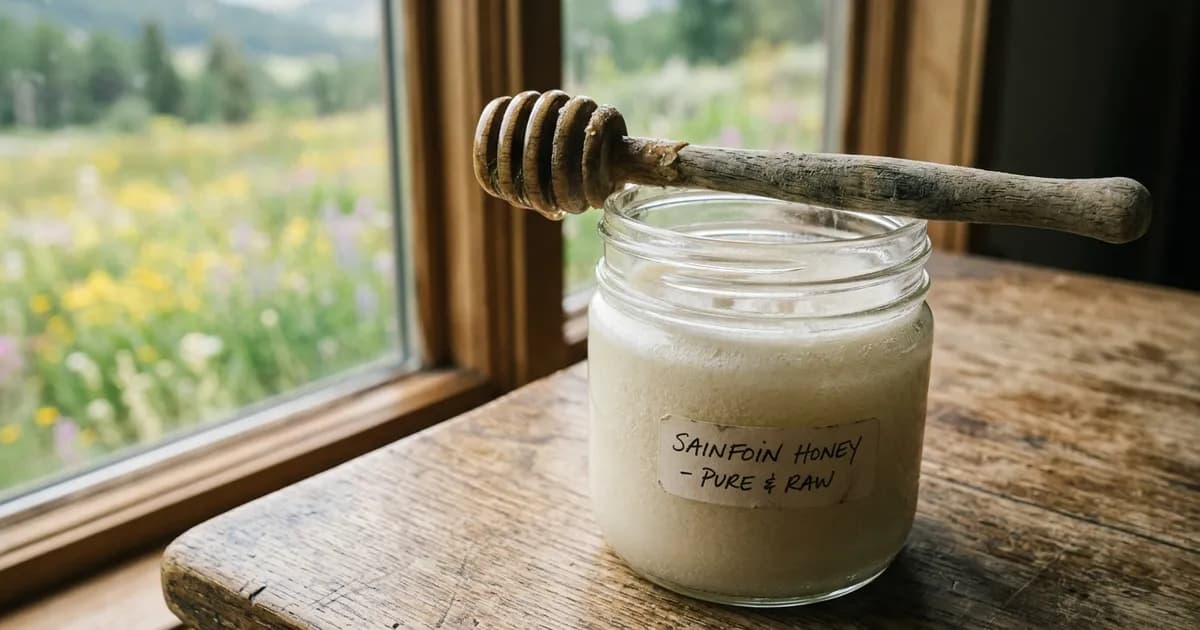
Honey Antioxidants: What the Research Actually Says
Gallic acid . Taxifolin . What these numbers mean — and what they do not promise.
Conscious Living
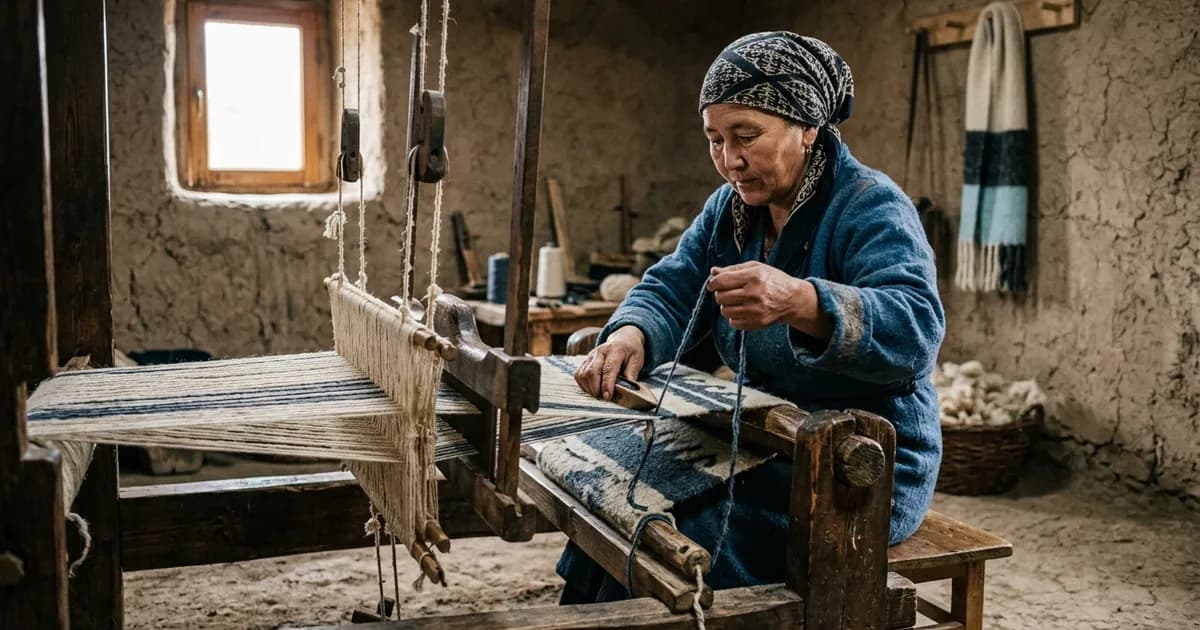
Wool Scarf Origin Kyrgyzstan — Tradition Meets Design
Kyrgyz highland wool for ULU wool scarves comes from sheep grazing between 2,000 and 3,500 metres in the Tian Shan mountains. The extreme temperature swing of up to 70 °C forces an exceptionally dense, lanolin-rich fibre structure. The wool is hand-shorn, dyed with natural colours, and processed using orally transmitted weaving techniques — by named artisans without intermediaries. Kyrgyz felt-making has been on the UNESCO Intangible Cultural Heritage list since 2012 (entry 00695).
From the Hive
Honey knowledge the supermarket skips
Twice a month: varietals, harvest, origin. Plus 10% off your first order.
10% off your first order · No spam. Unsubscribe anytime.