
Conscious Living
Shyrdak Rug — What Is a Shyrdak? UNESCO Heritage & Craft
Last updated:
Primary Keyword: shyrdak rug Word Count Target: 1,600+
In Brief
A Shyrdak rug is a traditional Kyrgyz felt carpet, handcrafted in elaborate mosaic technique from mountain wool and natural dyes. Since 2012, the Shyrdak has been on the UNESCO Intangible Cultural Heritage of Humanity list (entry 00693). A single rug measuring 2×3 meters requires up to a year of handwork — and can then last half a century. Today, Shyrdaks are produced primarily in the Naryn and Issyk-Kul provinces of Kyrgyzstan.
Most rugs in German living rooms come from a factory. They were woven, stamped, and shipped within hours. You know nothing about them — and that's fine, as long as you know what else is out there.
A Shyrdak rug is the opposite of that.
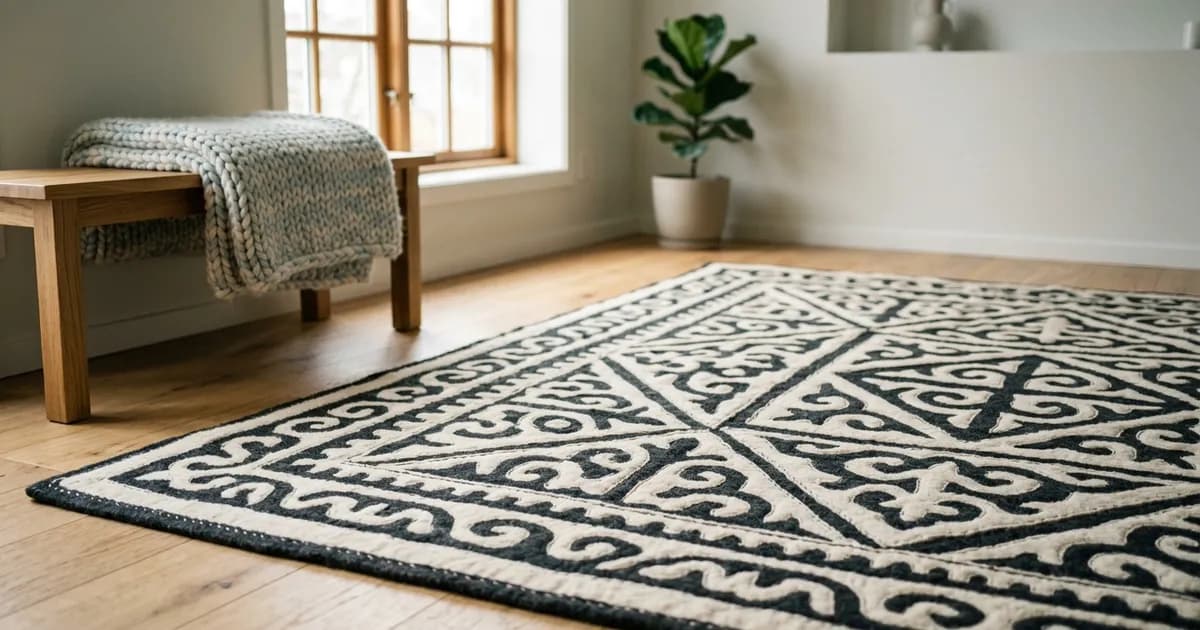
It's not woven. Not knotted. It's felted from the wool of Kyrgyz mountain sheep, cut in mosaic technique, and sewn together by hand. Its patterns speak a language older than any script in Central Asia — horn motifs, spirals, water symbols. And it has been on the UNESCO Intangible Cultural Heritage of Humanity list since 2012.
That's not marketing. That's fact.
What Exactly Is a Shyrdak Rug?
A Shyrdak (Kyrgyz: Шырдак) is a traditional felt carpet from Kyrgyzstan, made using mosaic technique. The name derives from the Kyrgyz word shyr — meaning "to sew." Sewing is indeed one of the central processes in its creation: two colored layers of felt are placed on top of each other, a pattern is drawn in chalk, then cut with a knife — and the positive form of one layer is inserted into the negative form of the other. The result is a precise, symmetrical image in two colors that extends across the entire rug.
This process is called inlay or mosaic technique. It's comparable to the puzzle principle: what is cut from one layer fills the gap in the other. No material is wasted. Everything fits together.
The Shyrdak differs from the Ala-Kiyiz, the second traditional Kyrgyz felt form: with Ala-Kiyiz, patterns are incorporated during the felting process — rolled in, not sewn on. Ala-Kiyiz rugs are simpler to produce and last about 20 years. A high-quality Shyrdak, with careful maintenance, can last at least half a century (UNESCO, 2012).
A Shyrdak is not decorative. It is structural. The patterns are not ornamentation — they are the construction.
From the Hive
Honey knowledge the supermarket skips
Twice a month: varietals, harvest, origin. Plus 10% off your first order.
10% off your first order · No spam. Unsubscribe anytime.
How Is a Shyrdak Made?
No loom. No machine. The production process of a Shyrdak follows the Kyrgyz annual calendar.
Spring: Shearing Mountain sheep are shorn. For a medium-sized Shyrdak (approx. 120×240 cm), the wool of at least five sheep is needed. The wool of Kyrgyz mountain sheep is denser and more robust than lowland Merino wool — a result of the altitude (1,500–3,000 m) and the long winters.
Summer: Felting The washed wool is laid out on reed mats, worked with hot water and soap, and fulled through intensive physical labor. Felting is heavy work — several women work together, rolling, pressing, rolling. The result is Kiiz, the base felt layer. Two Kiiz in contrasting colors form the foundation of a Shyrdak.
Autumn/Winter: Dyeing Traditionally, natural dyes are obtained from plants: onion skins for yellow and orange, walnut shells for brown and black, pomegranate rind for warm reds, plant roots for blue and green. The colors are not garish — they are saturated, warm, earthy. Exactly what works in modern spaces.
Winter: Cutting and Sewing The pattern is designed — often from memory, passed down from mother to daughter. Drawn in chalk, cut with a sharp knife. The fragments of both felt layers are fitted together and sewn with Jeek, a quilted wool band. Finally, border strips are attached.
A Shyrdak measuring 2×3 meters can mean up to a year of work. A smaller rug (80×120 cm) takes several weeks. These are not approximations — this is the actual time required (UNESCO nomination documentation, 2012).
2×3 m Shyrdak = up to 12 months of handwork. A comparable machine-woven rug: a few hours.
Where Do Shyrdaks Come From — and Why Is Naryn Special?
Kyrgyzstan lies in Central Asia, between the Tian Shan mountains to the east and the foothills of the Pamir to the south. The country is roughly the size of Bavaria and North Rhine-Westphalia combined — and 90 percent mountains. This geography has shaped everything: the way of life, the animals, the wool, the patterns.
Shyrdaks were and are produced primarily in two provinces: Naryn and Issyk-Kul. Naryn — the most sparsely populated province in Kyrgyzstan, situated at an average altitude of 2,000 meters — is considered the center of felt art. In 2019, Naryn province was designated a World Craft City for Felt Carpets, an international recognition by UNESCO and the World Crafts Council.
The craftswomen in Naryn are not artisans in the academic sense. Aida, one of the producers ULU works with directly, learned the craft from her mother, who learned it from her mother. The patterns she cuts are the same ones that have hung on the walls of Kyrgyz yurts for centuries. No sketches, no templates — memory and hand.
That's not romanticization. That's knowledge transfer without paper.
What Do the Patterns on a Shyrdak Mean?
The symbolic language of the Shyrdak is part of intangible heritage. The patterns are not arbitrary decoration — they encode relationships with nature, community, and life.
| Symbol | Kyrgyz Motif | Meaning |
|---|---|---|
| Horn motif | Kochkor muiuzu | Ram's horns — prosperity, strength |
| Spiral | Kuş kanaty | Bird's wing — freedom, journey |
| Water | Suu | Water — life, flow of time |
| Mountain form | Ala-Too | Kyrgyz mountains — homeland, protection |
| Hook motif | Ит куйрук | Dog's tail — loyalty, connection |
A Shyrdak in the living room is therefore not just a design object. It is a piece of encoded worldview on the floor.
Since When Has the Shyrdak Been UNESCO Cultural Heritage?
In December 2012, the Art of Kyrgyz traditional felt carpets Ala-Kiyiz and Shyrdak was unanimously inscribed on the UNESCO Intangible Cultural Heritage List (entry 00693, 7th session of the Intergovernmental Committee).
The inscription was made under the "in need of urgent safeguarding" label — meaning: UNESCO recognized that this tradition could disappear without targeted support. The reasons are well known: Young people leave the villages. Synthetic carpets are cheaper. The knowledge of the old master craftswomen dies with them.
Since then, the price of a Shyrdak has changed: from an average of 22 USD per square meter in 2012 to approximately 70 USD per square meter in 2022 (UNESCO Monitoring, 2022). A sign that the world has understood what is at stake here — and is beginning to seek it out.
"The art of the Shyrdak is not in danger because nobody wants it. It is in danger because too few know it exists." — UNESCO Nomination Documentation, 2012
How does a Shyrdak carpet fit into a modern living room?
The answer: better than most other options.
The Shyrdak is a felt carpet — that means: no shedding, no abrasion, no sharp edges. The felt structure is dense and compact, the carpet lies flat, retains warmth, and dampens sound. For hardwood floors and concrete floors, it is ideal.
The modern variants — such as the Shyrdaks made by Aida that ULU offers — are produced in contemporary color tones: anthracite and cream, ice blue and sand, moss green and white. The traditional symbols are preserved, while the color palette is adapted to European interior design styles. The result is a carpet that works just as well in a Bauhaus-inspired living room as in a country house interior.
Where it works particularly well:
- Living rooms with light hardwood floors
- Reading nooks and meditation spaces (sound dampening, warmth)
- Children's rooms (no pile, no pollen, robust)
- Home office (structure without distraction)
What sizes are available? Shyrdaks are typically produced in the following sizes:
| Size | Recommended use |
|---|---|
| 80×120 cm | Entryway, bedside, seating area |
| 120×180 cm | Living room accent, under coffee table |
| 150×200 cm | Living area, under dining table (4 persons) |
| 200×300 cm | Large living room, centerpiece |
How do you care for a Shyrdak carpet?
Felt carpets are low-maintenance — but not maintenance-free. The essentials at a glance:
- Vacuuming: Weekly, low suction setting, always in the direction of the fibers
- Stains: Blot immediately (do not rub), lukewarm water with mild wool detergent
- Washing: Only when necessary, hand wash or gentle cycle, max. 30°C, dry flat
- Do not: Tumble dry, spin dry, expose to direct sunlight for extended periods
- Storage: Rolled up (not folded), dry, protected from light
A high-quality Shyrdak cared for this way will last several generations. That is not an exaggeration — that is how densely felted wool works.
More on caring for Kyrgyz wool products: How to properly care for Kyrgyz craftsmanship
Where can you buy an authentic Shyrdak carpet?
Authentic Shyrdaks come directly from Kyrgyzstan — from craftswomen who received the craft through direct lineage. Not from a factory. Not from a warehouse in Turkey.
At ULU, we work directly with Aida — a craftswoman from the region near Bishkek who learned the Shyrdak from her mother, who learned it from her mother. We know who made the carpet. We know which wool was used. We know which natural dyes were applied.
This is not a certificate. This is a direct relationship.
If you want to know what is available in our collection: Buy Shyrdak carpets
Or if you want to understand what a Kyrgyz product means as a gift: Gift from Kyrgyzstan — meaning and selection
And if you are curious about Gulnara's felt ballerinas — the same craft, the same hands, a different product: Handmade felt ballerinas from Naryn
Frequently asked questions about the Shyrdak carpet
What is a Shyrdak carpet?
A Shyrdak carpet is a traditional Kyrgyz felt carpet, handcrafted in mosaic technique from sheep's wool and natural dyes. Two colored felt layers are cut into each other and sewn together, creating a symmetrical pattern of positive and negative shapes. The Shyrdak has been UNESCO Intangible Cultural Heritage since 2012 (entry 00693) and is produced primarily in the Naryn and Issyk-Kul provinces of Kyrgyzstan.
How long does it take to make a Shyrdak?
The production time of a Shyrdak depends on its size: A smaller carpet (80×120 cm) requires several weeks. A larger Shyrdak (200×300 cm) can mean up to a year of work — from shearing the sheep in spring to sewing on the border strips in winter. The entire production cycle follows the annual calendar of the Kyrgyz mountain regions (UNESCO, 2012).
What material is a Shyrdak made of?
Shyrdaks are made from 100% sheep's wool — traditionally from Kyrgyz mountain sheep that graze at altitudes of 1,500 to 3,000 meters. The wool is washed, felted, and dyed with natural plant-based dyes: onion skins (yellow/orange), walnut shells (brown/black), pomegranate rind (red), and various plant roots (blue/green). No synthetic dyes and no synthetic fiber additives are used.
What do the patterns on a Shyrdak mean?
The patterns on a Shyrdak are symbolically encoded and part of the Kyrgyz nomadic tradition. Typical motifs include: the horn motif (Kochkor muiuzu, ram's horns = prosperity), spirals (Kuş kanaty, bird wings = freedom), water motifs (Suu = life), and mountain forms (Ala-Too = homeland). Historically, Shyrdaks were obligatory wedding gifts and were presented as part of the dowry. The patterns vary by region and family.
How do you care for a Shyrdak carpet?
Shyrdaks are low-maintenance: vacuum weekly on a low setting, blot stains immediately with lukewarm water and mild wool detergent (do not rub). When necessary, it can be washed at 30°C on a gentle cycle and dried flat. No tumble dryer, no spin cycle, no direct sunlight for extended periods. With proper care, a Shyrdak can last several generations.
Is a Shyrdak suitable for modern living rooms?
Yes. Shyrdaks are felt carpets — no pile, no lint, no sharp edges. They lie flat, dampen sound, retain warmth, and are ideal for hardwood and concrete floors. Modern shyrdaks are produced in contemporary colour palettes (anthracite, cream, ice blue, moss green) and fit into minimalist as well as traditional interiors. The traditional symbols are preserved; the colour design is adapted to European interior styles.
Tradition is not a trend. A shyrdak carpet outlasts the home it lies in.
Internal Links:
- Buy a shyrdak — current collection
- Gift from Kyrgyzstan — meaning and selection
- Kyrgyz craftsmanship — background and artisans
- Handmade felt ballerinas from Naryn
Sources:
- UNESCO Intangible Cultural Heritage, Entry 00693 (2012): Ala-kiyiz and Shyrdak, art of Kyrgyz traditional felt carpets
- UNESCO Monitoring Report: Preservation and Promotion of Traditional Kyrgyz Felt Carpets (2022)
- Kyrgyzstan Tourism Board: Kyrgyz Handicrafts — Shyrdak and Ala-Kiyiz
- Trip to Kyrgyzstan: Manufacturing Process of the Kyrgyz National Carpet — Shyrdak
- World Crafts Council: Naryn Province — World Craft City for Felt Carpets (2019)
Share
A Shyrdak rug measuring 2×3 metres can require up to a year of handwork — and with proper care, last half a century.
The art of Kyrgyz felt carpets Ala-Kiyiz and Shyrdak was unanimously added to the UNESCO Intangible Cultural Heritage list in December 2012 — under the protection status 'in urgent need of safeguarding'.
The average price for a Shyrdak rose from 22 USD/m² in 2012 to roughly 70 USD/m² in 2022 — a sign of growing international demand for this UNESCO heritage craft.
A medium-sized Shyrdak (approx. 120×240 cm) requires the wool of at least five sheep; the flock must graze at altitudes of 1,500 to 3,000 metres for the wool to achieve the necessary density and durability.
Naryn Province in Kyrgyzstan was designated a World Craft City for felt carpets by the World Crafts Council in 2019 — international recognition of a tradition passed from mother to daughter there for centuries.
Frequently Asked Questions
A Shyrdak rug is a traditional Kyrgyz felt carpet handcrafted in mosaic technique from sheep wool and natural dyes. Two coloured felt layers are cut into each other and sewn together, creating a symmetrical pattern of positive and negative shapes. The Shyrdak has been UNESCO Intangible Cultural Heritage since 2012 (entry 00693) and is produced mainly in the Naryn and Issyk-Kul provinces of Kyrgyzstan.
Production time depends on size: a smaller rug (80×120 cm) takes several weeks. A larger Shyrdak (200×300 cm) can require up to a year of work — from shearing the sheep in spring to sewing on the border strips in winter. The entire production cycle follows the annual calendar of Kyrgyzstan's mountain regions (UNESCO, 2012).
Shyrdaks are made from 100% sheep wool — traditionally from Kyrgyz mountain sheep grazing at altitudes of 1,500 to 3,000 metres. The wool is washed, felted and dyed with natural plant-based dyes: onion skins (yellow/orange), walnut shells (brown/black), pomegranate rind (red) and plant roots (blue/green). No synthetic dyes are used.
Shyrdak patterns are symbolically coded. Typical motifs include the horn motif (Kochkor muiuzu, ram's horns = prosperity), spirals (bird wings = freedom), water motifs (life) and mountain shapes (homeland). Historically, Shyrdaks were obligatory wedding gifts and part of the dowry of Kyrgyz women. Patterns vary by region and artisan.
Shyrdaks are low-maintenance: vacuum weekly on a low setting, blot stains immediately with lukewarm water and mild wool detergent. If needed, wash at 30°C on a gentle cycle and dry flat. No tumble dryer, no spin cycle, no prolonged direct sunlight. With proper care, a Shyrdak can last several generations.
Yes. Shyrdaks are pile-free felt rugs — no shedding, no sharp edges, good sound dampening. They lie flat and are ideal for hardwood and concrete floors. Modern Shyrdaks are produced in contemporary colour palettes (anthracite, cream, ice blue, moss green) and fit minimalist as well as traditional interiors.

Jamilia
Autorin, ULU Magazin
Jamilia schreibt über kirgisisches Handwerk, Honig und die Geschichten hinter den Produkten. Aufgewachsen in Zentralasien, lebt sie zwischen Bischkek und Berlin.
Related Articles

Conscious Living
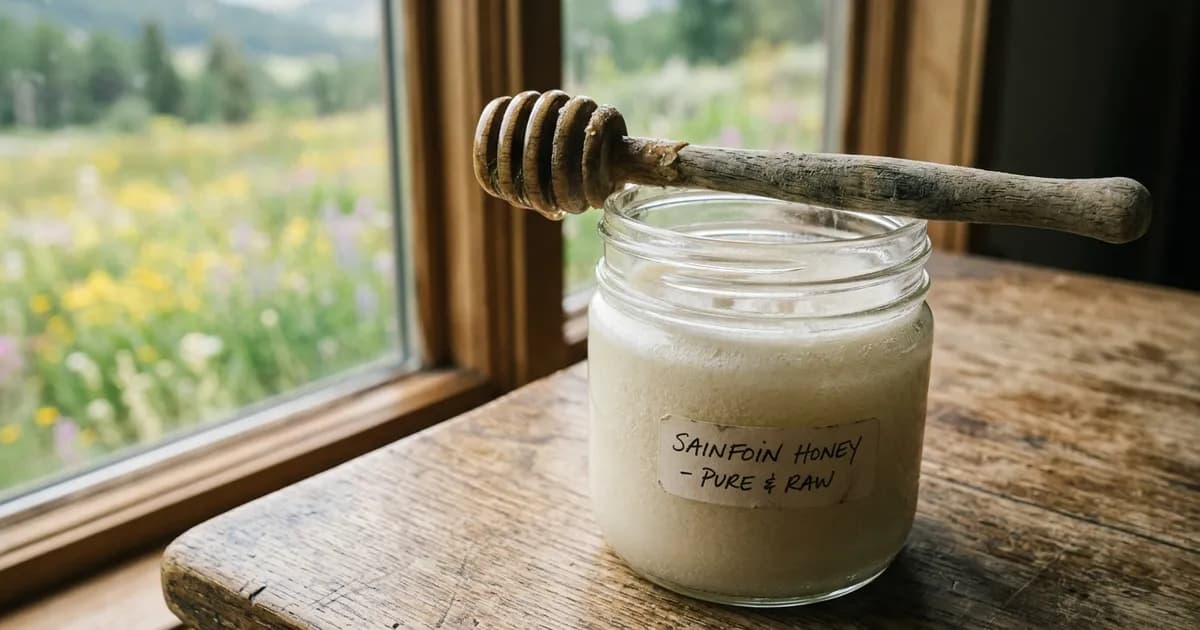
Honey and Gut Health: What Current Research Actually Shows
Research into honey and gut health is growing rapidly — but the headlines often outrun the actual findings. Here is what the studies say, and what they do not.
Conscious Living
Honey Antioxidants: What the Research Actually Says
Gallic acid . Taxifolin . What these numbers mean — and what they do not promise.
Conscious Living
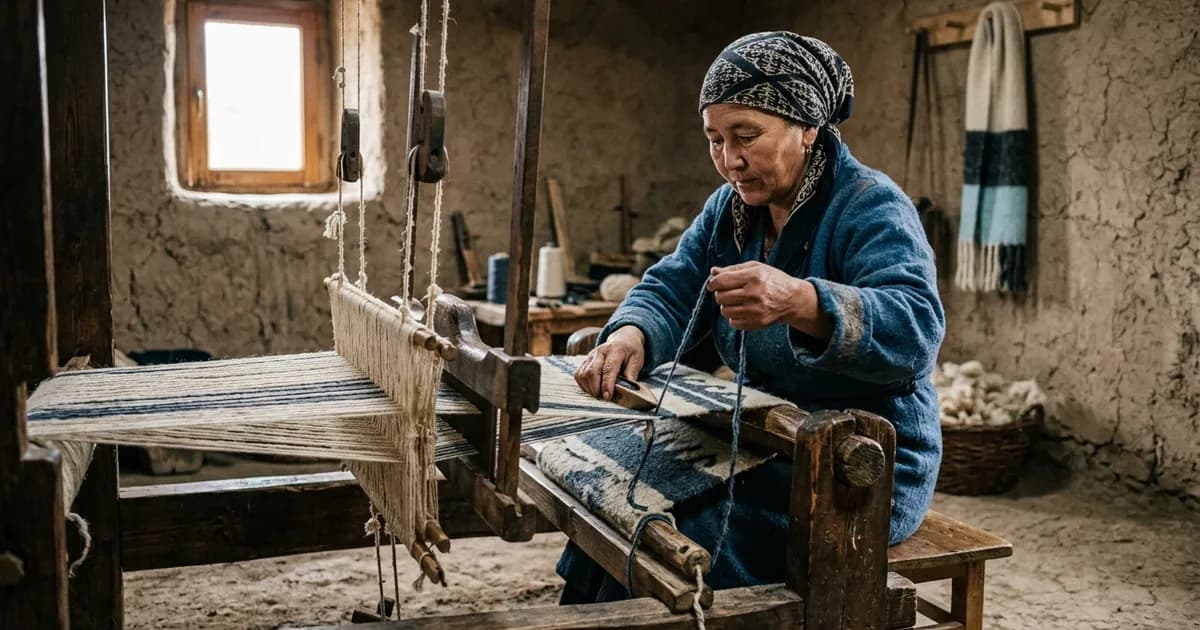
Wool Scarf Origin Kyrgyzstan — Tradition Meets Design
Kyrgyz highland wool for ULU wool scarves comes from sheep grazing between 2,000 and 3,500 metres in the Tian Shan mountains. The extreme temperature swing of up to 70 °C forces an exceptionally dense, lanolin-rich fibre structure. The wool is hand-shorn, dyed with natural colours, and processed using orally transmitted weaving techniques — by named artisans without intermediaries. Kyrgyz felt-making has been on the UNESCO Intangible Cultural Heritage list since 2012 (entry 00695).
From the Hive
Honey knowledge the supermarket skips
Twice a month: varietals, harvest, origin. Plus 10% off your first order.
10% off your first order · No spam. Unsubscribe anytime.