
Conscious Living
How to Wash a Wool Scarf — Keep It Soft and Beautiful
Last updated:
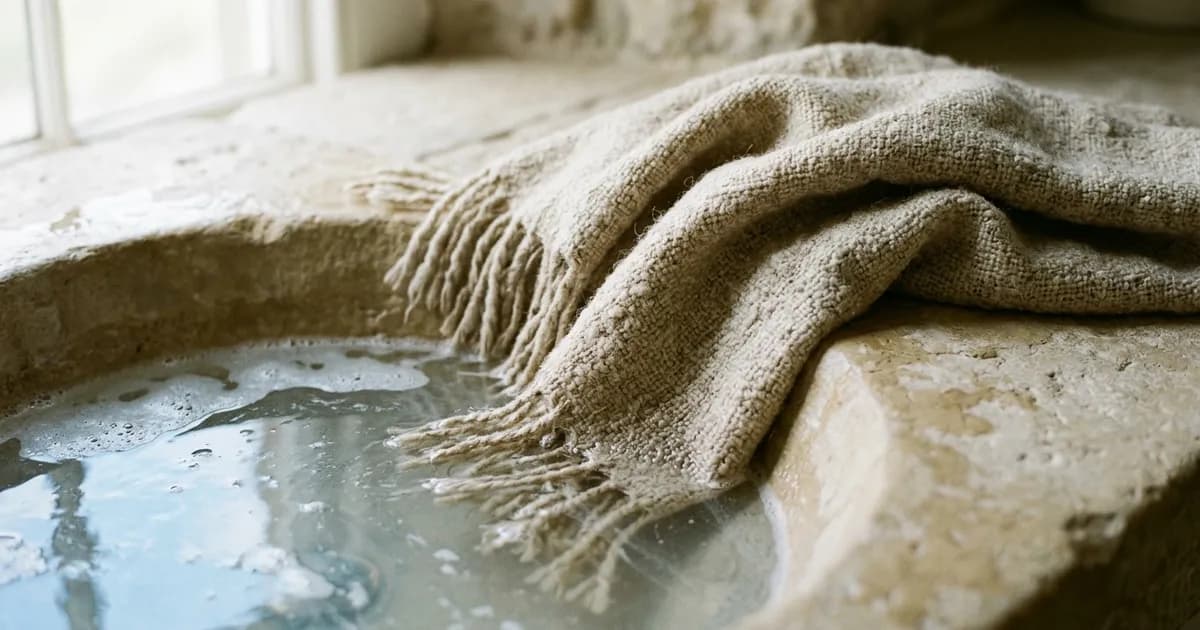
A handmade wool scarf from Kyrgyz highland wool is not a fast-fashion accessory you throw away after one season. It is an object that, with proper care, lasts decades — and actually improves with time. The wool that shepherds shear at 3,000 meters altitude is denser, longer-stapled, and more resilient than industrially processed fibers. It does not forgive washing mistakes. But it rewards care.
This guide shows you how to properly wash, dry, store your wool scarf — and how to deal with pilling.
Quick Summary
Washing a wool scarf means: hand wash at a maximum of 30 °C, wool detergent, no wringing, dry flat. Wool from Kyrgyz highland flocks (3,000 m) naturally contains more lanolin than factory-processed merino wool — it felts more quickly under friction and heat, but remains soft for decades with gentle treatment. Always check your scarf's care label before washing.
Why Kyrgyz Highland Wool Is Different
Your wool scarf was not produced in a factory. The wool comes from sheep that graze year-round in the Tian Shan mountains above 3,000 meters — with short summers, long winters, and no pesticide use. Shepherds like Dzhaksylyk from the Chuy Valley shear their animals once a year, by hand, following traditions passed down orally through generations.
This wool has different properties than industrially processed fibers:
| Feature | Kyrgyz Highland Wool | Industrially Processed Wool |
|---|---|---|
| Lanolin content | Higher (natural protective layer preserved) | Significantly reduced (chemicals during processing) |
| Fiber length | Longer (long-staple wool) | Standardized, often shorter |
| Scale structure | More pronounced | Smoothed through chlorination |
| Felting tendency with heat | Higher | Reduced (Superwash treatment) |
| Durability with care | Very high | Moderately high |
Why this matters: Due to the more pronounced fiber scales, non-industrially treated wool reacts more sensitively to heat, friction, and alkaline detergents. This is exactly what makes hand washing the only safe method.
From the Hive
Honey knowledge the supermarket skips
Twice a month: varietals, harvest, origin. Plus 10% off your first order.
10% off your first order · No spam. Unsubscribe anytime.
Step by Step: Washing a Wool Scarf
Step 1: Cold Rinse and Prepare Water
Fill a sink or large bowl with lukewarm water — maximum 30 °C. Warmer water opens the fiber scales and triggers felting. Test the temperature with your wrist: it should feel neutral, not warm.
Step 2: Work In Wool Detergent
Add a teaspoon of pH-neutral wool detergent to the water and dissolve it before placing the scarf in. Detergents with a high pH (standard all-purpose detergent, soap) attack the keratin fiber and accelerate felting. Recommended: Sonett Wool Detergent, Perwoll Wool & Delicates, or Eucalan (no rinsing required).
Step 3: Soak — Do Not Rub
Place the scarf in the water and gently press it below the surface. Let it soak: 10–15 minutes. Do not rub, do not knead, do not wring between your hands. Friction is the main enemy of wool fiber — it felts through mechanical action, not just temperature.
Step 4: Rinse
Drain the water and refill the basin with clean water at the same temperature. Gently press the water out of the scarf by gathering it together and lightly pressing it against the side of the basin. Repeat the rinsing process until no more foam is visible (typically 2–3 rounds).
Step 5: Remove Water — Never Wring
Lay the scarf on a clean, dry towel and loosely roll both together. Press on the roll from the outside to transfer water into the towel. This is the only mechanically safe method. Never wring or twist.
Step 6: Dry Flat
Lay the scarf on a fresh towel or drying rack and reshape it to its original size. Dry flat, do not hang — wool is heavy when wet and stretches lengthwise when hung. Always dry in the shade, never in direct sunlight or near a heater.
Step 7: Drying Time
At room temperature (20–22 °C), a medium-weight wool scarf needs 12–24 hours to dry completely. Turn it over once after 8 hours so both sides dry evenly.
Dos & Don'ts at a Glance
| DO | DON'T |
|---|---|
| Hand wash, max. 30 °C | Washing machine (even on wool cycle) |
| pH-neutral wool detergent | All-purpose detergent, dish soap, bar soap |
| Soak without rubbing | Kneading, rubbing, scrubbing |
| Towel-roll method for water removal | Wringing or spinning |
| Dry flat (towel or rack) | Hanging while wet |
| Dry at room temperature | Heater, dryer, direct sunlight |
| Cool, dark, airy storage location | Plastic bags for storage |
How Often Should You Wash a Wool Scarf?
Rarely. Wool is naturally dirt-resistant and odor-regulating — both properties that are weakened by frequent washing. General rule:
- After each season (1–2 times per year)
- When visibly soiled — immediately, spot-treat the area
- When odor develops: Air the scarf overnight on a hanger in fresh air (not sunlight) — this is sufficient in 80% of cases
Treat spot stains directly with a damp cloth and a drop of wool detergent, without washing the entire scarf.
Pilling: What It Is and What You Can Do About It
Pilling occurs when short fibers work their way to the surface through friction and clump into small knots. It is not a sign that the wool is losing quality — it shows that the wool is alive.
Why does it happen? Friction from jacket linings, backpacks, neck movements. Kyrgyz wool with longer fibers pills less than short-fiber worsted wool — but after washing, the effect can temporarily appear more pronounced.
What helps:
- Fabric shaver (lint shaver): Gently glide over the surface, against the grain of the wool. Once per season after washing.
- Cashmere brush: Removes knots gently. Can be used daily.
- Not: scissors or tape — both leave sharp cut edges on the fiber.
"Wool that pills is alive. Wool that no longer pills has usually been chemically treated."
Seasonal Storage: Moth Protection Without Chemicals
Moths love wool — more precisely: moth larvae, which feed on keratin fibers. Kyrgyz highland wool without Superwash treatment is particularly vulnerable because its fiber scales are intact.
Preparation for storage:
- Store the scarf clean — moths are attracted to body oils and food residues, not clean wool
- Let it dry completely (moisture encourages moths and mold)
- Fold into a breathable linen pouch, not into plastic
Natural moth protection:
- Cedar wood rings or blocks (scent-displacing)
- Lavender sachets (fresh, replace every 3 months)
- Rosemary, peppermint as dried bundles
Important: Chemical mothballs (naphthalene, paradichlorobenzene) damage wool fibers long-term and are restricted for home use in Germany. Not recommended.
Ideal storage location: Cool, dry, dark compartment. Not in the basement (too humid), not in the attic (too hot and temperature fluctuations).
Frequently Asked Questions
Can I wash a wool scarf in the washing machine?
Not recommended, even with the wool cycle. The washing machine's wool cycle does reduce temperature and spin speed, but the mechanical movement of the drum creates exactly the friction that causes wool to felt. With industrially treated superwash wool, it sometimes works — with hand-spun Kyrgyz highland wool without chlorine treatment, the risk is too high.
At what temperature can you wash a wool scarf?
Maximum 30 °C, ideally 20–25 °C (lukewarm water). Above 30 °C, the fiber scales begin to open and interlock — this is the mechanism behind felting. Once felted, the process is irreversible.
How do I remove grease stains from a wool scarf?
Treat grease stains immediately while they are fresh: apply dry starch (potato starch or cornstarch) to the stain, let it work for 30 minutes, gently shake off. The powder draws fat out of the fiber. Then dab with a damp cloth and a drop of gall soap — do not rub. Rinse with cold water.
How often should I wash a wool scarf?
Wool scarves need to be washed far less frequently than clothing made from cotton or synthetics. The rule of thumb: once per season, immediately at the affected area if visibly soiled. For everyday use, airing out in fresh air (shade, not sun) for 4–8 hours is sufficient.
What to do if the wool scarf is already felted?
Light felting can be reversed: soak the scarf in a solution of lukewarm water and hair conditioner (30 minutes), gently stretch while still damp, and dry flat. Hair conditioner contains similar softeners as wool detergent and loosens the fiber bond. With heavy felting, the process is usually irreversible.
When should I take my wool scarf to the cleaners?
For stubborn stains you couldn't remove yourself, or if the scarf is very valuable: dry cleaning is gentle on wool. Tell the cleaner explicitly that it is an unchlorinated handwoven scarf. No steam treatment without prior agreement.
Your Scarf Has a Story — Care for It
The shepherds in the Chuy Valley and the foothills of the Tian Shan shear their sheep by hand, sort the wool by quality, and sell it directly. The fiber in your scarf was not industrially treated, not chlorinated, not impregnated with anti-felting agents. That makes it more delicate and at the same time more authentic.
Washing a wool scarf is not a complicated process — it just requires patience instead of machines. Cold water, gentle detergent, no friction, plenty of time to dry. That's how it was done in Naryn. And it still works today.
If you don't yet own a scarf made from Kyrgyz highland wool: View all handwoven wool scarves at ULU →
More about the craftsmanship and the people behind it: Kyrgyz Craftsmanship — Tradition That Endures for Generations →
Looking for a gift with a story: Gift from Kyrgyzstan — Craftsmanship That Tells a Tale →
ULU Editorial — 13.04.2026
Share
Kyrgyz highland wool from sheep grazing above 3,000 metres has a higher lanolin content and longer fibres than industrially processed merino wool — it felts faster with improper handling, but with proper care lasts decades.
Friction is wool fibre's main enemy: wool felts through mechanical action, not just temperature — which is why wringing is forbidden and the washing machine's wool cycle is no safe substitute for hand washing untreated highland wool.
Wool scarves need washing far less often than cotton or synthetics: once per season is usually enough. Airing outdoors for 4–8 hours (in shade, not sun) replaces a wash in 80% of cases.
Light felting can be reversed: soak the scarf in lukewarm water with hair conditioner (30 minutes), gently stretch, dry flat. Severe felting, however, is irreversible.
Chemical mothballs (naphthalene, paradichlorobenzene) damage wool fibres over time and are restricted for home use in Germany — more reliable protection comes from cedar wood rings, lavender sachets, and clean storage in breathable linen bags.
Frequently Asked Questions
Not recommended, even on a wool cycle. The wool programme reduces temperature and spin speed, but the mechanical drum movement creates friction — the main trigger for felting. With hand-spun Kyrgyz highland wool that has not been chlorine-treated, the risk is too high. Hand washing is the only safe method.
30 °C maximum, ideally 20–25 °C (lukewarm water). Above 30 °C the fibre scales open and interlock — that is the mechanism behind felting. Once felted, the process is irreversible.
Treat immediately while fresh: apply potato starch or cornstarch to the stain, leave for 30 minutes, shake off. The powder draws grease out of the fibre. Then dab with a damp cloth and a drop of gall soap — do not rub. Rinse with cold water.
Once per season is usually enough. Wool is naturally dirt-resistant and odour-regulating — frequent washing weakens these properties. For everyday freshening, air it outdoors (in shade, not sun) for 4–8 hours.
Light felting can be reversed: soak the scarf in lukewarm water with hair conditioner (30 minutes), gently stretch while still damp, dry flat. The conditioner loosens the fibre bonds. Severe felting is usually irreversible.
For stubborn stains or very valuable pieces: dry cleaning is gentle on wool. Let the cleaner know it is an unchlorinated handwoven scarf. No steam treatment without prior agreement.

Jamilia
Autorin, ULU Magazin
Jamilia schreibt über kirgisisches Handwerk, Honig und die Geschichten hinter den Produkten. Aufgewachsen in Zentralasien, lebt sie zwischen Bischkek und Berlin.
Related Articles

Conscious Living
Honey and Gut Health: What Current Research Actually Shows
Research into honey and gut health is growing rapidly — but the headlines often outrun the actual findings. Here is what the studies say, and what they do not.
Conscious Living
Honey Antioxidants: What the Research Actually Says
Gallic acid . Taxifolin . What these numbers mean — and what they do not promise.
Conscious Living
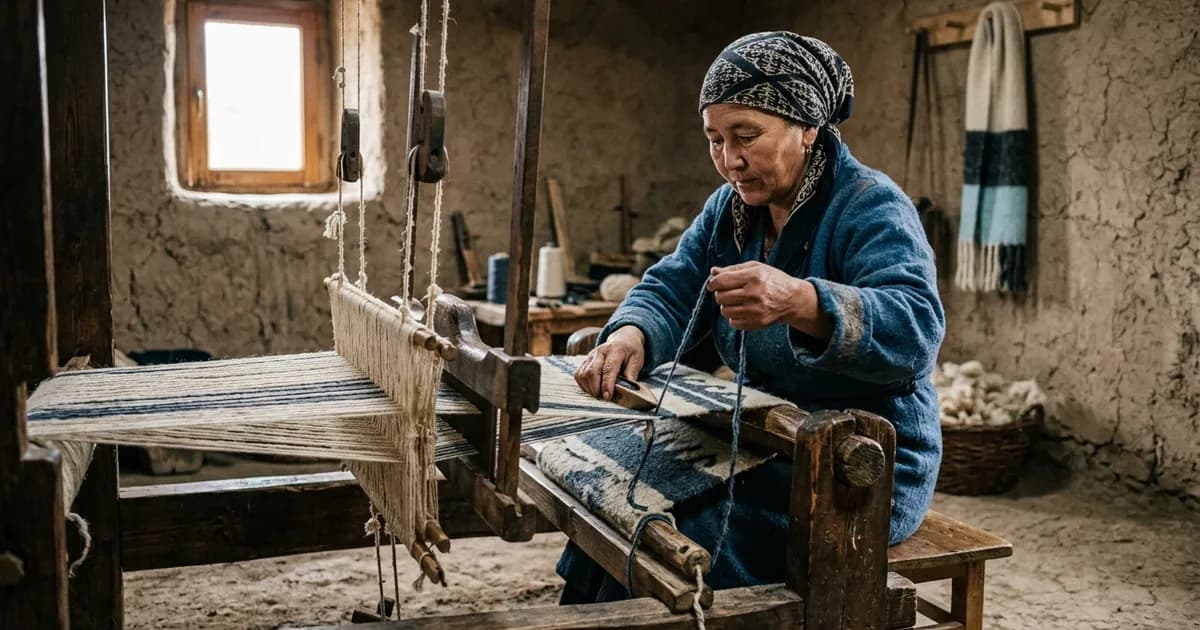
Wool Scarf Origin Kyrgyzstan — Tradition Meets Design
Kyrgyz highland wool for ULU wool scarves comes from sheep grazing between 2,000 and 3,500 metres in the Tian Shan mountains. The extreme temperature swing of up to 70 °C forces an exceptionally dense, lanolin-rich fibre structure. The wool is hand-shorn, dyed with natural colours, and processed using orally transmitted weaving techniques — by named artisans without intermediaries. Kyrgyz felt-making has been on the UNESCO Intangible Cultural Heritage list since 2012 (entry 00695).
From the Hive
Honey knowledge the supermarket skips
Twice a month: varietals, harvest, origin. Plus 10% off your first order.
10% off your first order · No spam. Unsubscribe anytime.