
Conscious Living
Kyrgyz Honey — Everything You Need to Know
Last updated:
In Brief
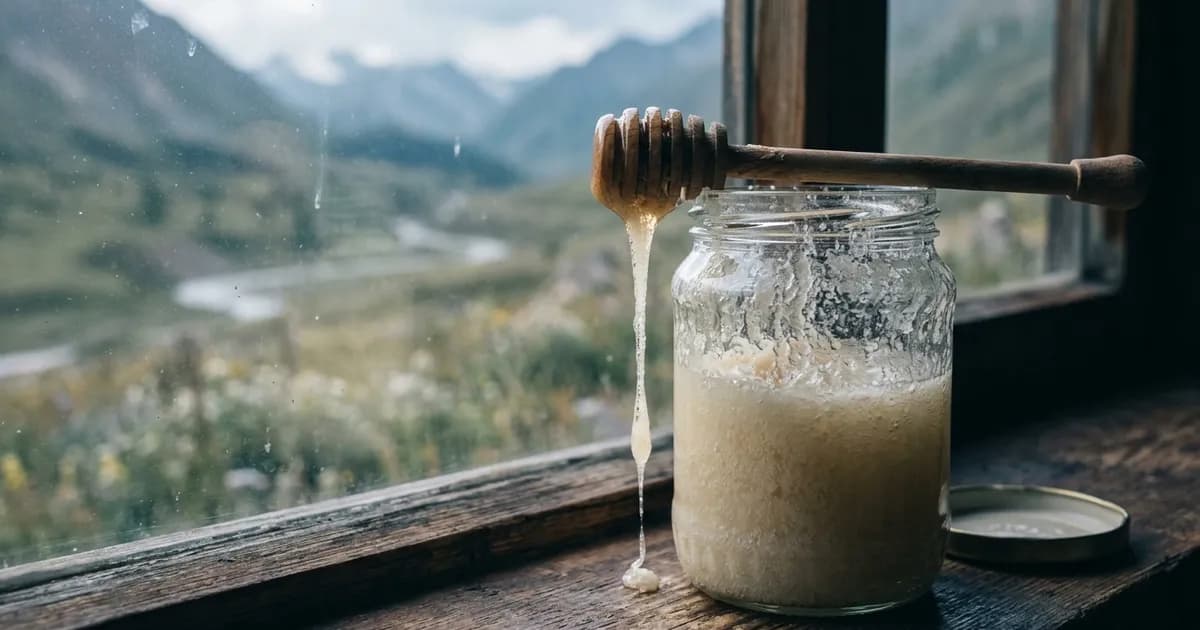
Kyrgyz honey comes from the high-mountain meadows of the Tian Shan, at 2,400 to 3,500 metres, where sainfoin grows wild. Our honey comes from four regions of these highlands: Naryn, Issyk-Kul, Talas and Osh. White honey from Kyrgyzstan has won several awards at Apimondia.
Before you read on: this article makes no promises. It describes geography, chemistry, and history — and leaves the conclusions to you.
Most honey in the supermarket comes from a blend of countries not named on the label. It was heated, filtered, and homogenised so it stays liquid and doesn't crystallise. What's lost along the way, no one counts.
Kyrgyz honey is the opposite. It comes from the Tian Shan highlands. From an altitude where industry reaches no bees.
Here's everything you need to know.
Why Kyrgyzstan? The Country That Makes the Honey
Kyrgyzstan is more than 90 percent covered by mountains. It borders Kazakhstan to the north, China to the east, Tajikistan to the south, and Uzbekistan to the west. Most people can't point to it on a map. That's no accident — and it's one of the reasons the honey there is what it is.
The Tian Shan range, "Mountains of Heaven" in Chinese, stretches over more than 2,500 kilometres. The high plateaus at 2,400 to 3,500 metres are inaccessible to factory farming, out of reach for agricultural chemistry, unattractive to industrial beekeeping. At this altitude there is no industry (UNDP Kyrgyzstan).
What that means:
- No pesticides. No herbicides. No neonicotinoids.
- Over 2,500 wild plant species on the high plateaus
- Barely any human interference in the vegetation cycles
- Bee flight in an environment that has hardly changed in centuries
2,400–3,500 m altitude — apiary altitude in the Tian Shan mountains, Kyrgyzstan
From the Hive
Honey knowledge the supermarket skips
Twice a month: varietals, harvest, origin. Plus 10% off your first order.
10% off your first order · No spam. Unsubscribe anytime.
What Grows There? The Plants Behind the Honey
Kyrgyz mountain honey is no one-size honey. Depending on valley, altitude, and season, different varieties emerge, each with its own aroma profile.
Sainfoin honey — the white rarity
Sainfoin (Onobrychis viciifolia) is a legume that grows wild in the high-mountain meadows of the Tian Shan.
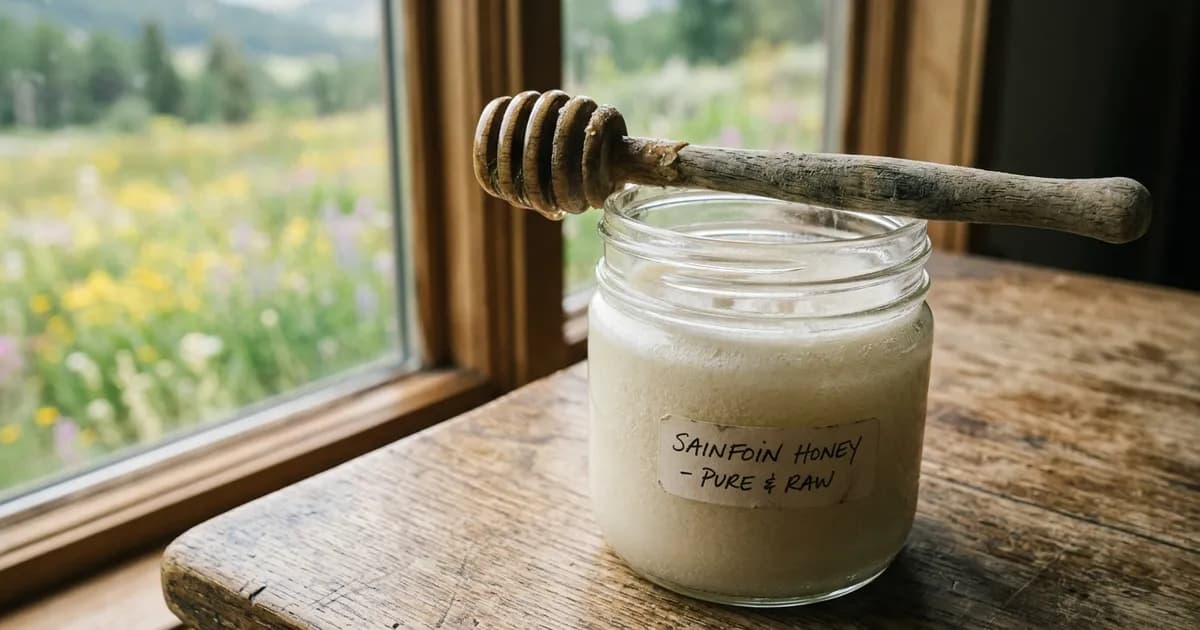
The nectar of sainfoin is naturally so colourless that the honey made from it turns white when it crystallises. This natural crystallisation is no quality defect — it's the mark of genuine purity. Heated or filtered honey crystallises differently, often coarse-grained and uneven. Our sainfoin honey is creamy white and naturally crystallised.
Chemical profile:
| Component | Value | Meaning |
|---|---|---|
| Gallic acid | 291.18 µg/g | Main phenolic compound |
| Taxifolin | 22.23 µg/g | Flavonoid component |
| Volatile compounds | 60 identified; 71.31% terpenoids | Hotrienol-dominated |
| 5-HMF | 36.52 µg/g | Quality marker |
Mountain honey — the polyfloral classic
The Naryn region also produces polyfloral mountain honey from wildflowers: valerian, clover species, mountain mint, mallow plants, and other herbs that grow between 2,000 and 3,000 metres. The aroma profile is more complex, slightly spicy-herbal, darker than sainfoin honey.
Wildflower honey — the seasonal character
Depending on the harvest time (July to August), the wildflower honey of the Tian Shan varies widely. Early harvests contain more sainfoin; later harvests more mountain clover and lemon balm. This seasonal character is a mark of quality — not in spite of the variability, but because of it.
How Good Is Kyrgyz Honey Really? The Apimondia Story
Apimondia is the International Federation of Beekeepers' Associations. Honeys are judged at its world congresses. Since 2013, Kyrgyzstan has been no stranger there.
The Apimondia record of Kyrgyz honey:
| Year | Location | Result |
|---|---|---|
| 2013 | Kyiv, Ukraine | 3 gold medals, 2 silver medals; Display Grand Prix "Sodruzhestvo Shield" for the best honey stand. White creamed honey from At-Bashi/Naryn won gold. |
| 2019 | Montreal, Canada | Silver at the Apimondia World Beekeeping Awards for our sainfoin honey |
Our sainfoin honey took Silver at the 2019 Apimondia World Beekeeping Awards in Montreal. Apimondia is the International Federation of Beekeepers' Associations. The three gold medals of 2013 went to the Kyrgyz beekeeping union — not to our beekeeping partner directly, but they show which honey ecosystem our product comes from.
Apimondia World Beekeeping Awards – Silver 2019, Montreal
How Is Our Sainfoin Honey Made?
Our honey comes from the Tian Shan highlands, at 2,400 to 3,500 metres, from four regions: Naryn, Issyk-Kul, Talas and Osh.
The process:
- Location: apiaries at 2,400–3,500 m in the Tian Shan
- Harvest: Once a year, July to August, after the main bloom
- Processing: Gently processed at max. 40 °C, not pasteurised
- Texture: creamy white, naturally crystallised
- Storage: 20 °C maximum, otherwise the fine crystal structure changes irreversibly
What sets it apart from supermarket honey:
| Feature | Industrial honey | Our sainfoin honey (ULU) |
|---|---|---|
| Origin | Country blend, often not declared | Tian Shan highlands: Naryn, Issyk-Kul, Talas, Osh |
| Origin | Anonymous, industrial | Tian Shan, four regions |
| Heating | Yes (to keep it liquid) | max. 40 °C, not pasteurised |
| Crystallisation | Often prevented or coarse | Naturally fine-creamy |
| Storage temperature | Not stated | Max. 20°C (texture preservation) |
| Apiary altitude | Mostly lowland | 2,400–3,500 m |
What Characterises Kyrgyz Honey Chemically?
Sainfoin honey from the Tian Shan has an unusual chemical profile. An independent study by an Italian university examined five legume honeys — alfalfa, astragalus, carob, indigo, and sainfoin — and compared their composition systematically.
The result for sainfoin honey:
- 60 identified aroma compounds, 71.31% of them terpenoids with hotrienol as the lead compound — which gives Kyrgyz sainfoin honey its typical, gently floral-fresh aroma
- Gallic acid: 291.18 µg/g — the dominant phenolic compound
These figures come from a scientific study, not from ULU's own tests. They describe composition, not an effect.
Sainfoin Honey, Mountain Honey, Wildflower Honey — What's the Difference?
| Variety | Botany | Colour | Aroma | Crystallisation |
|---|---|---|---|---|
| Sainfoin honey | Onobrychis viciifolia (sainfoin), monofloral | White-creamy | Mild, gently floral, sweet without sharpness | Fine, creamy, even |
| Mountain honey | Polyfloral: clover species, valerian, mountain mint | Pale yellow to amber | Complex, slightly spicy-herbal | Medium, slightly coarser |
| Wildflower honey | Polyfloral: seasonally variable | Yellow to light brown | Changing with the season, floral-fresh | Variable |
Kyrgyz Honey vs Manuka — A Comparison Without Marketing
Manuka honey from New Zealand is considered a premium honey and sells for prices between 30 and 120 euros per 250 grams. Its key value is methylglyoxal (MGO), which forms from dihydroxyacetone (DHA) in manuka nectar; manuka is graded by it.
A direct comparison:
| Dimension | Manuka | Kyrgyz sainfoin honey |
|---|---|---|
| Grading system | UMF / MGO (standardised) | None standardised |
| Price | €30–120 per 250 g (depending on UMF grade) | ULU: €34.90 / 500 g |
| Origin | New Zealand (1 country) | Kyrgyzstan, Tian Shan |
| Scientific studies | 1,000+ | 5–10 |
| Apimondia | Several awards | Silver 2019 (Apimondia World Beekeeping Awards, Montreal); Kyrgyz beekeepers: 3× gold 2013 (Kyiv) |
Take a look at our Sainfoin Honey Guide for the full profile — and the white honey from Kyrgyzstan guide for the colour and crystallisation questions.
Where to Buy? What to Watch for When Buying Kyrgyz Honey
Kyrgyz honey is rare in German retail. Most offers come from France, Britain, or via Amazon direct imports with no brand ties.
What marks out a good product:
- A clear origin statement — not just "Kyrgyzstan," but also the region (e.g. Naryn, Issyk-Kul, Talas, Osh)
- A transparent supply chain — importer and region of origin named
- A monofloral declaration — sainfoin honey requires >45% sainfoin pollen share (a common guideline)
- Gentle processing — max. 40 °C, not pasteurised
- A storage note of max. 20°C — decisive for preserving the creamy texture
Our sainfoin honey from the Tian Shan highlands meets these five criteria. For mountain-honey alternatives: buy mountain honey.
Frequently Asked Questions About Kyrgyz Honey
What is Kyrgyz honey and where does it come from?
Kyrgyz honey comes from the high-mountain meadows of the Tian Shan range in Central Asia, at altitudes between 2,400 and 3,500 metres. The best-known varieties are sainfoin honey and polyfloral mountain honey. Kyrgyzstan is over 90% covered by mountains and is among the least industrialised beekeeping regions in the world.
Why is Kyrgyz sainfoin honey white?
The white colour comes from natural crystallisation. The nectar of the sainfoin plant (Onobrychis viciifolia) is naturally almost colourless. At temperatures below 20°C it crystallises evenly fine into a white to cream-coloured consistency. This is a natural process.
Has Kyrgyz honey won awards?
Yes. Kyrgyz honey has won several awards at the Apimondia World Beekeeping Congress: in 2013 in Kyiv, Kyrgyz beekeepers won three gold medals and the Display Grand Prix. Our sainfoin honey took Silver at the 2019 Apimondia World Beekeeping Awards in Montreal. Apimondia is the International Federation of Beekeepers' Associations.
What sets Kyrgyz honey apart from German honey?
The main difference lies in the altitude and isolation of the apiaries. At 2,400–3,500 metres in the Tian Shan there is no conventional agriculture and therefore no risk of pesticide drift from neighbouring fields. European lowland honey is more exposed to this risk. Add to that a plant diversity of over 2,500 wild plant species in the Tian Shan.
How do I store Kyrgyz sainfoin honey properly?
Cool and dry at 20°C maximum. Above 20°C the fine crystal structure changes irreversibly: the honey can liquefy or turn coarse. Don't store it in the fridge (too cold, condensation), but in a cool pantry or cellar.
Is Kyrgyz honey a manuka alternative?
Kyrgyz sainfoin honey is no substitute for manuka — it's a category of its own. Manuka has a standardised MGO grading system. It costs considerably less than manuka and has a shorter transport route to Europe.
Conclusion
Kyrgyz honey is the result of its geography: altitude, biodiversity, beekeeping tradition. Sainfoin honey is the best-known product of this region — white, creamy, mild.
Its origin can be named: the Tian Shan highlands, Kyrgyzstan, 2,400 to 3,500 metres.
Real sweetness is rare.
Further reading:
Share
Kyrgyz beekeepers won three gold medals at the 2013 Apimondia World Beekeeping Congress in Kyiv.
60 volatile aroma compounds were identified in sainfoin honey, 71.31% of them terpenoids; the dominant compound is hotrienol — responsible for the characteristic floral-fresh aroma.
Over 90% of Kyrgyzstan's territory is covered by mountains; the Tian Shan high plateaus at 2,400–3,500 m are completely isolated from conventional agriculture and were documented by the UNDP Kyrgyzstan programme as a purity reserve.
Frequently Asked Questions
Kyrgyz honey comes from the high-mountain meadows of the Tian Shan range at altitudes between 2,400 and 3,500 metres. The best-known varieties are sainfoin honey and polyfloral mountain honey. Kyrgyzstan is over 90% covered by mountains and is among the least industrialised beekeeping regions in the world.
The white colour comes from natural crystallisation. The nectar of the sainfoin plant (Onobrychis viciifolia) is naturally almost colourless. At temperatures below 20°C it crystallises evenly fine into a white to cream-coloured consistency. This is a natural process.
Yes. Kyrgyz honey has won several awards at the Apimondia World Beekeeping Congress: in 2013 in Kyiv, Kyrgyz beekeepers won three gold medals. Our sainfoin honey took Silver at the 2019 Apimondia World Beekeeping Awards in Montreal. Apimondia is the International Federation of Beekeepers' Associations.
The main difference lies in the altitude and isolation of the apiaries. At 2,400–3,500 metres in the Tian Shan there is no conventional agriculture and therefore no risk of pesticide drift from neighbouring fields. European lowland honey is more exposed to this risk. Add to that a plant diversity of over 2,500 wild plant species in the Tian Shan.
Cool and dry at 20°C maximum. Above 20°C the fine crystal structure changes irreversibly: the honey can liquefy or turn coarse. Don't store it in the fridge (too cold, condensation), but in a cool pantry or cellar.
Kyrgyz sainfoin honey is no substitute for manuka — it is a category of its own. Manuka has a standardised MGO grading system. It costs considerably less than manuka and has a shorter transport route to Europe.

Jamilia
Autorin, ULU Magazin
Jamilia schreibt über kirgisisches Handwerk, Honig und die Geschichten hinter den Produkten. Aufgewachsen in Zentralasien, lebt sie zwischen Bischkek und Berlin.
Related Articles

Conscious Living
Honey and Gut Health: What Current Research Actually Shows
Research into honey and gut health is growing rapidly — but the headlines often outrun the actual findings. Here is what the studies say, and what they do not.
Conscious Living
Honey Antioxidants: What the Research Actually Says
Gallic acid . Taxifolin . What these numbers mean — and what they do not promise.
Conscious Living
Wool Scarf Origin Kyrgyzstan — Tradition Meets Design
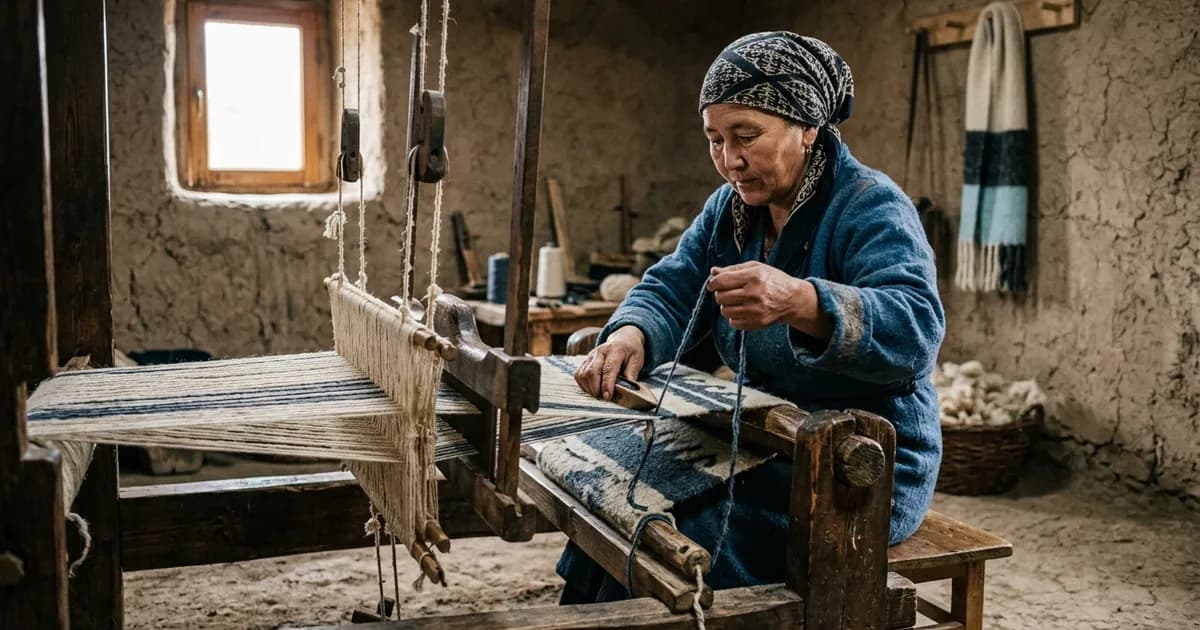
Kyrgyz highland wool for ULU wool scarves comes from sheep grazing between 2,000 and 3,500 metres in the Tian Shan mountains. The extreme temperature swing of up to 70 °C forces an exceptionally dense, lanolin-rich fibre structure. The wool is hand-shorn, dyed with natural colours, and processed using orally transmitted weaving techniques — by named artisans without intermediaries. Kyrgyz felt-making has been on the UNESCO Intangible Cultural Heritage list since 2012 (entry 00695).
From the Hive
Honey knowledge the supermarket skips
Twice a month: varietals, harvest, origin. Plus 10% off your first order.
10% off your first order · No spam. Unsubscribe anytime.