
Conscious Living
Sainfoin Honey — The Complete Guide
Last updated:
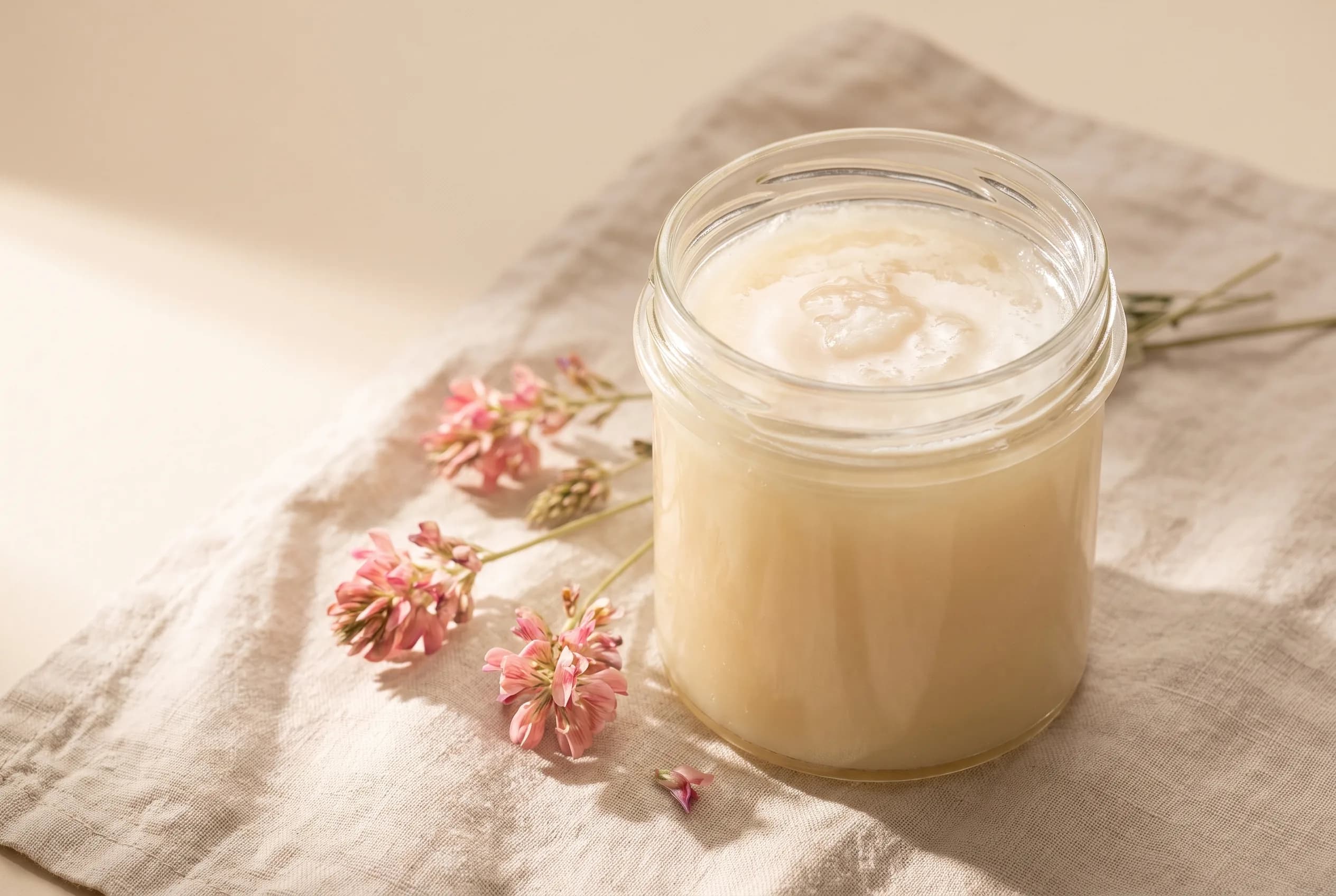
Before you read on: sainfoin honey is not a trend product and not a marketing term. It's a botanical name for honey made exclusively from the nectar of sainfoin (Onobrychis viciifolia) — a wildflower that grows high in the Tian Shan mountains, at altitudes between 2,400 and 3,500 metres.
This guide explains what sainfoin honey actually is, why it's white, how it tastes, how to spot the real thing — and why almost everything sold as "white honey" in the supermarket has nothing to do with it.
Real sweetness is rare.
In Brief
Sainfoin honey is a monofloral mountain honey made from the nectar of the sainfoin blossom (Onobrychis viciifolia), harvested mainly in the Kyrgyz highlands of the Tian Shan. Its characteristic creamy-white colour comes from natural crystallisation. At ULU, our sainfoin honey comes through our beekeeping partner from four regions of the Tian Shan. Our mountain honey took Silver at the 2019 Apimondia World Beekeeping Awards in Montreal. Apimondia is the International Federation of Beekeepers' Associations.
What Is Sainfoin Honey?
Sainfoin honey is a monofloral honey — meaning it's made predominantly from the nectar of a single plant: sainfoin (Onobrychis viciifolia). A common benchmark for monofloral honey is at least 45% pollen from the lead plant species; with sainfoin, thanks to its pollen-rich blossom, that share can reach 70% and more.
The plant itself is no exotic: sainfoin grows across large parts of Europe and Central Asia. It belongs to the legume family (Leguminosae) and was, until well into the 19th century, one of Europe's most important forage crops. Today it's still widespread in the mountain regions of Kyrgyzstan — in an ecosystem that modern agriculture has largely left untouched.
What sets sainfoin honey apart from other honeys is the combination of origin, phenolic profile, and crystallisation behaviour:
| Property | Sainfoin honey | Acacia honey | Blossom honey (mixed) |
|---|---|---|---|
| Colour | Pearl-white to cream | Pale yellow, clear | Yellow to amber |
| Consistency | Creamy, finely crystalline | Liquid, thin | Liquid to firm |
| Crystallisation | Medium, very fine (natural cream) | Slow | Varies |
| Taste | Mild-floral, delicate caramel note, gently sweet | Neutral-sweet, flowery | Varies widely |
| Origin | Mainly Tian Shan, Kyrgyzstan; also Uzbekistan, Turkey, the Balkans | Europe, China | Worldwide |
| Rarer than | — | Widely available | Widely available |
From the Hive
Honey knowledge the supermarket skips
Twice a month: varietals, harvest, origin. Plus 10% off your first order.
10% off your first order · No spam. Unsubscribe anytime.
Where Does Real Sainfoin Honey Come From?
The short answer: mainly from the highlands of Kyrgyzstan. Uzbekistan, Turkey's Black Sea coast and parts of the Balkans also produce sainfoin honey.
Sainfoin does bloom here and there in Europe — in Switzerland, in Austria, in the mountain regions of southern France — in stands large enough for monofloral honey production it grows mainly in Central Asia, for example in the Tian Shan. This range at the heart of Central Asia stretches across Kyrgyzstan, Kazakhstan, and China, and its Kyrgyz highlands between 2,400 and 3,500 metres are among the most species-rich ecosystems in the region — with over 2,500 documented plant species (UNDP Kyrgyzstan biodiversity report).
One example is the Suusamyr Valley: a broad high valley ringed by snow-capped peaks, with short, intense summer blooms and a bee forage exposed to no synthetic plant-protection agents whatsoever — simply because at this altitude no conventional agriculture takes place.
Our beekeeping partner's apiaries are in the Naryn region and other Kyrgyz highlands (Issyk-Kul, Talas, Osh). Our mountain honey took Silver at the 2019 Apimondia World Beekeeping Awards in Montreal. Apimondia is the International Federation of Beekeepers' Associations. The Kyrgyz Union of Beekeepers, which represents the At-Bashi/Naryn honey, won three gold medals at the 2013 Apimondia congress in Kyiv.
2,400 – 3,500 m — the growing altitude of sainfoin in the Tian Shan, Kyrgyzstan
What Does Sainfoin Honey Taste Like?
This is the question most new customers ask — and the simplest, most honest answer is: mild, creamy, gently floral, with a delicate caramel note.
Sainfoin honey is not a pushy honey. It tastes mild and floral with a delicate caramel note, without aggressive sweetness and without an intense aroma forcing its way to the front. That makes it the ideal honey for people who thought they didn't like honey — because the honey they knew was too intense, too dominant, too sweet.
The aroma profile in detail:
- Base character: Mild-flowery, gently sweet, creamy
- Mid notes: delicate caramel note
- Finish: Soft, no bitter aftertaste
- Texture: Melting, velvety — no gritty crystals, but an even cream
A study (PMC11047671, 2024) identified 60 volatile aroma compounds in sainfoin honey, 71.31% of them terpenoids. The dominant compound is hotrienol — a compound typical of legume blossom honeys, which gives the honey its characteristic floral notes.
60 identified volatile aroma compounds, 71.31% of them terpenoids — hotrienol as the lead compound
On bread: sainfoin honey melts evenly and doesn't run. Paired with salted butter, it turns into something you don't forget. In yoghurt: it dissolves slowly and lends a gentle honey note without dominating. In tea: it dissolves well, tints the colour slightly (from the cream), and refines without overpowering.
How Is Sainfoin Honey Harvested and Processed?
Producing real sainfoin honey takes patience — in several places.
The bloom: Sainfoin blooms in the Kyrgyz high mountains briefly and intensely, typically in July. The harvest window is three to six weeks, depending on weather and altitude. Colonies are moved to the flowering areas (migratory beekeeping) or kept year-round at fixed sites in blossom-rich valleys.
The harvest: Honey is only harvested once the capping is at least 80% complete — the natural sign that the water content has dropped below 20% (the EU minimum standard).
Crystallisation: After the harvest, the honey begins to crystallise. Sainfoin honey crystallises at a medium pace into a relatively fine, pale-yellow granulate. To create the characteristic creamy-white cream, the honey is stirred under control: fine seed crystals from an already crystallised honey are worked in, then it's stored at no more than 20°C. The result after a few weeks: an even, velvety white cream with a crystal grain so fine it's no longer noticeable on the tongue.
Storage from the producer: After harvest and crystallisation, the honey must never be stored above 20°C. Above that temperature the fine crystal structure starts to degrade irreversibly — the honey separates, turns grainy or liquid, and cannot be returned to its original creamy texture (producer's statement).
What Does Sainfoin Honey Contain?
Honey is primarily a sugar concentrate — no surprise there. What sets sainfoin honey apart from industrial mass honey are its secondary constituents: the phenolic profile and the aroma fraction.
A study published in 2024 (PMC11047671) examined five legume honeys (alfalfa, tragacanth, carob, indigo plant, sainfoin) for their chemical composition.
| Constituent / property | Measured value | Source |
|---|---|---|
| Gallic acid (main phenol) | 291.18 µg/g | PMC11047671 (2024) |
| Taxifolin (flavonoid) | 22.23 µg/g | PMC11047671 (2024) |
| 5-HMF (quality marker) | 36.52 µg/g | PMC11047671 (2024) |
| Volatile aroma compounds | 60 identified; 71.31% terpenoids | PMC11047671 (2024) |
| Polyphenol metabolites | 7 identified | PMC11047671 (2024) |
These study data are suited to information purposes in editorial articles — not to product labels or medical statements.
How Do I Recognise Real Sainfoin Honey?
That's the most important question — and the honest answer: with the naked eye, barely.
The market for "white honey" is small, but not untainted. Some sellers offer crystallised, white rapeseed or phacelia honey as "white honey" without declaring the botanical origin. That isn't illegal in itself, but it's misleading when no origin designation is given. Whether a honey really is sainfoin honey can be confirmed by pollen analysis — which requires an accredited laboratory.
The identifying features at a glance:
- Botanical origin declared: Real sainfoin honey carries the name "sainfoin honey" (or "Esparsettenhonig") with a reference to the botanical species (Onobrychis viciifolia). A description like "white honey from Kyrgyzstan" alone is not enough.
- Pollen-analysis evidence: Reputable sellers can produce a melissopalynology report documenting the sainfoin pollen share (common guideline: at least 45%, better 70%+).
- Proof of origin: Kyrgyzstan is currently the most relevant producing country. A specific region or valley (Suusamyr, Naryn, At-Bashi) raises credibility.
- Storage note max. 20°C: High-quality creamed sainfoin honey needs cool storage. If this note is missing from the seller, that's a quality signal.
- Colour and texture: Real, matured sainfoin honey is pearl-white to very pale cream — even, with no grey zones or layer separation. Freshly spun sainfoin honey may be faintly amber at first and only crystallise to white later.
- Price: Sainfoin honey is a niche variety and costs more than supermarket rapeseed or blossom honey. Our mountain honey costs €34.90 for 500 g.
Why Does Sainfoin Honey Crystallise White?
Crystallisation is the most natural sign that honey is genuine — and yet many customers send crystallised honey back, believing it's spoiled.
Honey crystallises because it's a supersaturated solution of two main sugars: glucose and fructose. When glucose molecules cluster into crystals, the consistency shifts from liquid to solid. The speed of crystallisation depends on the glucose-to-fructose ratio: a high glucose share speeds it up, a high fructose share slows it down.
Sainfoin honey has a medium glucose-to-fructose ratio — it crystallises neither very fast (like rapeseed) nor very slow (like acacia). The special part: the crystals that form are extremely fine. That comes from the combination of sainfoin's nectar profile and the controlled stirring/seed-crystal method many Kyrgyz beekeepers use.
The white colour comes from light refraction: when glucose crystals are very fine and evenly distributed, they reflect light much like white paper — from the overlay of many small reflections comes optical white. No bleach, no additive.
Proper storage during crystallisation: If your sainfoin honey feels firm, that's not a fault — it's the normal state. Store it below 20°C, dry and shielded from light. You can't "repair" it once it's been warmed above 20°C. For a deeper look: → Why does white honey crystallise?
Sainfoin Honey vs Other Honeys
A direct comparison helps to place sainfoin honey better within the honey spectrum.
| Criterion | Sainfoin honey | Manuka honey | Acacia honey | Forest honey |
|---|---|---|---|---|
| Colour | Pearl-white, creamy | Brown-amber | Pale yellow, clear | Dark brown |
| Taste | Mild-floral, creamy | Intense, tart, earthy | Mild, neutral-sweet | Robust, spicy |
| Origin | Kyrgyzstan (Tian Shan) | New Zealand | Europe, China | Europe, North America |
| Scientific studies | 5–10 (strong results) | 1,000+ | Few | Few |
| Level of recognition | Niche product | Very high | High | Medium |
| Apimondia | Our mountain honey: Apimondia World Beekeeping Awards – Silver 2019; Kyrgyz beekeepers' union: 3× gold 2013 (Kyiv) | Several NZ awards | — | — |
For the full comparison: → Sainfoin honey vs manuka: the honest comparison
How Do You Store Sainfoin Honey Properly?
Creamed sainfoin honey has a specific storage requirement that isn't as critical for other honeys.
Temperature: 20°C maximum. That's not a recommendation — it's a product-integrity rule. Above 20°C the fine crystal structure begins to degrade: the honey separates into liquid and solid fractions, the cream turns grainy or liquid, and this process is irreversible. Once stored above 20°C, the honey never returns to its original velvety texture (producer's statement).
Recommended storage spots:
- Cellar (15–18°C) — ideal
- Pantry out of direct sun
- Cool external wall near the fridge in summer
- Not: right next to the stove, on the windowsill, in the car
Humidity: Below 65% relative humidity. Too damp an environment can encourage mould on the honey's surface. Close the lid immediately after each opening.
Light: Dark, or at least shielded from light. UV radiation breaks down aroma compounds and phenolic constituents.
Shelf life: Stored correctly, honey keeps practically indefinitely — archaeological finds have turned up 3,000-year-old honey from Egyptian tombs. The best-before date on the label is a legal convention; it isn't an expiry date.
For all the detail on honey storage: → Storing honey properly
Where Can I Buy Real Sainfoin Honey?
The market is small. That's part of the problem — and part of the value.
Sainfoin honey isn't a product you find in the supermarket. The few sellers who offer sainfoin honey share a niche market.
What you should check when buying:
- Is the blossom variety named? "Sainfoin honey" or "Sainfoin" — not just "white mountain honey"
- Is Kyrgyzstan given as the origin? And if possible: which region?
- Is there pollen evidence? Ask for it
- What's the storage recommendation? Max. 20°C should be mentioned
- Who is the beekeeper or supplier? Transparency is a quality signal
Our sainfoin honey comes through our beekeeping partner — sourced from four Kyrgyz regions (Naryn, Issyk-Kul, Talas, Osh), Silver at the 2019 Apimondia World Beekeeping Awards and a maximum storage temperature of 20°C on the label.
Frequently Asked Questions About Sainfoin Honey
What exactly is sainfoin honey?
Sainfoin honey is a monofloral honey made from the nectar of the sainfoin blossom (Onobrychis viciifolia). It comes mainly from the Kyrgyz highlands of the Tian Shan (2,400–3,500 m) and is marked by its creamy-white colour and mild, floral taste. The white colour comes from natural fine crystallisation , without additives.
Why is sainfoin honey white?
The white colour comes from the reflection of light off very finely distributed glucose crystals. When honey with a high glucose share crystallises slowly and under control, microscopically small crystals form that scatter light so that the mass appears white — much like white paper or snow. It's a physical phenomenon.
Is sainfoin honey the same as white honey?
Not necessarily. "White honey" is a colour description, not a botanical term. Rapeseed, phacelia, and lavender honey can also appear white after crystallisation. Real sainfoin honey is a botanically defined monofloral honey with a specific origin. Look for the name "sainfoin honey" or "Sainfoin" on the label.
What does sainfoin honey taste like?
Mild, creamy, gently floral, and softly sweet — with a delicate caramel note. It's one of the least pushy honeys and suits people who find more intense honeys like forest honey or manuka too dominant. The texture is velvety and melting, not grainy.
How does sainfoin honey differ from manuka?
Both are premium honeys with scientifically documented constituent profiles, but they differ: manuka is graded by its methylglyoxal (MGO) content, while sainfoin honey has no such rating system. Manuka is considerably pricier and comes from New Zealand, sainfoin honey from Central Asia. For the full comparison: → Sainfoin honey vs manuka
How do you store creamed sainfoin honey?
20°C maximum, dark and dry. Above 20°C the fine crystal structure degrades irreversibly — the honey loses its creamy texture for good. A cool cellar or a light-shielded pantry is ideal. Stored correctly, honey keeps practically indefinitely.
Related Guides & Articles
- White honey from Kyrgyzstan — origin & tradition
- Sainfoin honey vs manuka — the honest comparison
- Why does white honey crystallise?
- Buy sainfoin honey
- About us — our beekeeping partner
All scientific statements in this article come from peer-reviewed publications and serve information purposes only. They do not constitute health claims within the meaning of EU Regulation 1924/2006.
Last update: 13.04.2026 | Author: ULU editorial team
Share
Sainfoin honey contains 60 identified volatile aroma compounds, 71.31% of them terpenoids; hotrienol is the dominant compound and responsible for the floral aroma.
The white colour of sainfoin honey comes not from processing but from light refraction off extremely finely distributed glucose crystals — a physical effect that only occurs in unprocessed, slowly crystallised honey.
Real creamed sainfoin honey may be stored at 20°C maximum; exceeding this temperature leads to irreversible degradation of the fine crystal structure.
Frequently Asked Questions
Sainfoin honey is a monofloral honey made from the nectar of the sainfoin blossom (Onobrychis viciifolia). It comes mainly from the Kyrgyz highlands of the Tian Shan at 2,400–3,500 m and is marked by its creamy-white colour and mild, floral taste. The white colour comes from natural fine crystallisation, without additives.
The white colour comes from light refraction off extremely finely distributed glucose crystals. When honey with a high glucose share crystallises slowly and under control, microscopically small crystals scatter the light so that the mass appears optically white. It is a purely physical phenomenon.
No. 'White honey' is a colour description. Rapeseed, phacelia, and lavender honey can also appear white after crystallisation. Real sainfoin honey is a botanically defined monofloral honey with a specific origin. Look for the name 'sainfoin honey' or 'Sainfoin' on the label.
Mild, creamy, gently floral, and softly sweet — with a delicate caramel note. It is one of the least pushy honeys and suits people who find more intense honeys like forest honey or manuka too dominant. The texture is velvety and melting, not grainy.
Both are premium honeys with scientifically documented constituent profiles, but they differ: manuka is graded by its methylglyoxal (MGO) content, while sainfoin honey has no such rating system. Manuka is considerably pricier and comes from New Zealand, sainfoin honey from Central Asia.
20°C maximum, dark and dry. Above 20°C the fine crystal structure degrades irreversibly — the honey permanently loses its creamy texture. A cool cellar or a light-shielded pantry is ideal. Stored correctly, honey keeps practically indefinitely.

Jamilia
Autorin, ULU Magazin
Jamilia schreibt über kirgisisches Handwerk, Honig und die Geschichten hinter den Produkten. Aufgewachsen in Zentralasien, lebt sie zwischen Bischkek und Berlin.
Related Articles

Conscious Living
Honey and Gut Health: What Current Research Actually Shows
Research into honey and gut health is growing rapidly — but the headlines often outrun the actual findings. Here is what the studies say, and what they do not.
Conscious Living
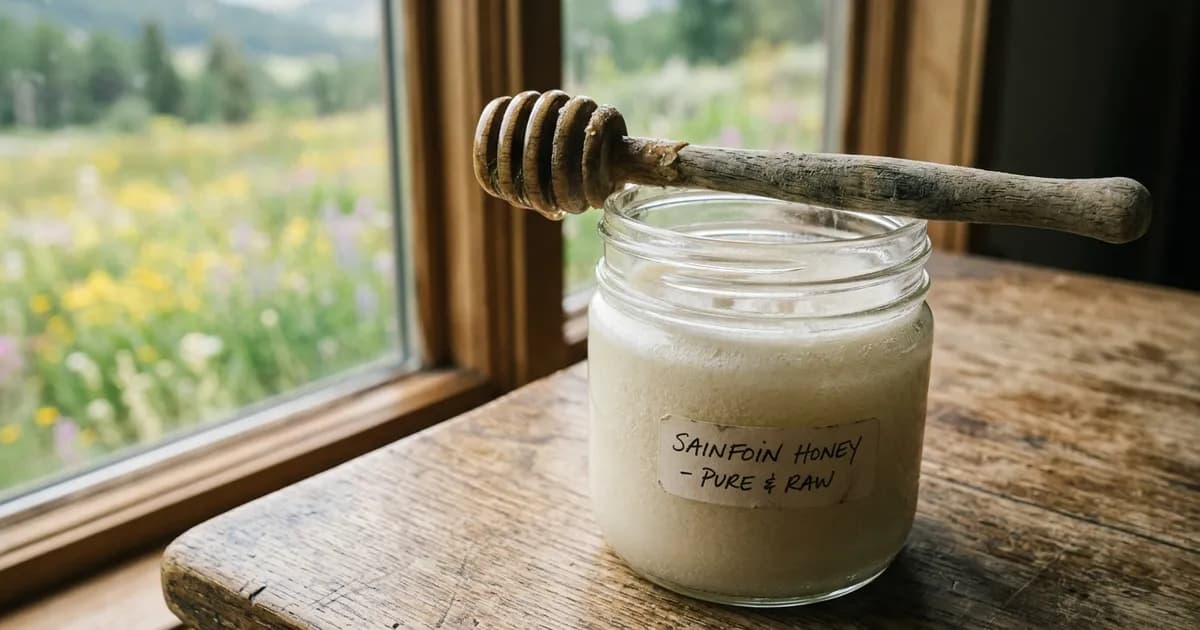
Honey Antioxidants: What the Research Actually Says
Gallic acid . Taxifolin . What these numbers mean — and what they do not promise.
Conscious Living
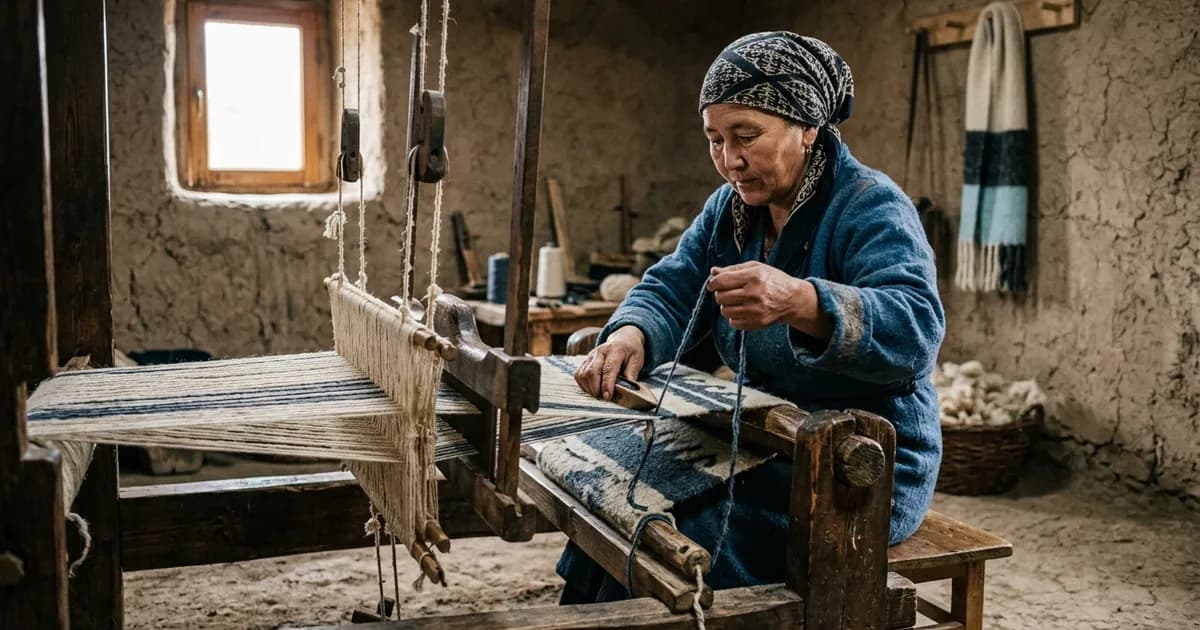
Wool Scarf Origin Kyrgyzstan — Tradition Meets Design
Kyrgyz highland wool for ULU wool scarves comes from sheep grazing between 2,000 and 3,500 metres in the Tian Shan mountains. The extreme temperature swing of up to 70 °C forces an exceptionally dense, lanolin-rich fibre structure. The wool is hand-shorn, dyed with natural colours, and processed using orally transmitted weaving techniques — by named artisans without intermediaries. Kyrgyz felt-making has been on the UNESCO Intangible Cultural Heritage list since 2012 (entry 00695).
From the Hive
Honey knowledge the supermarket skips
Twice a month: varietals, harvest, origin. Plus 10% off your first order.
10% off your first order · No spam. Unsubscribe anytime.