
The Makers
The Complete Flavour Profile of Sainfoin Honey
Last updated:
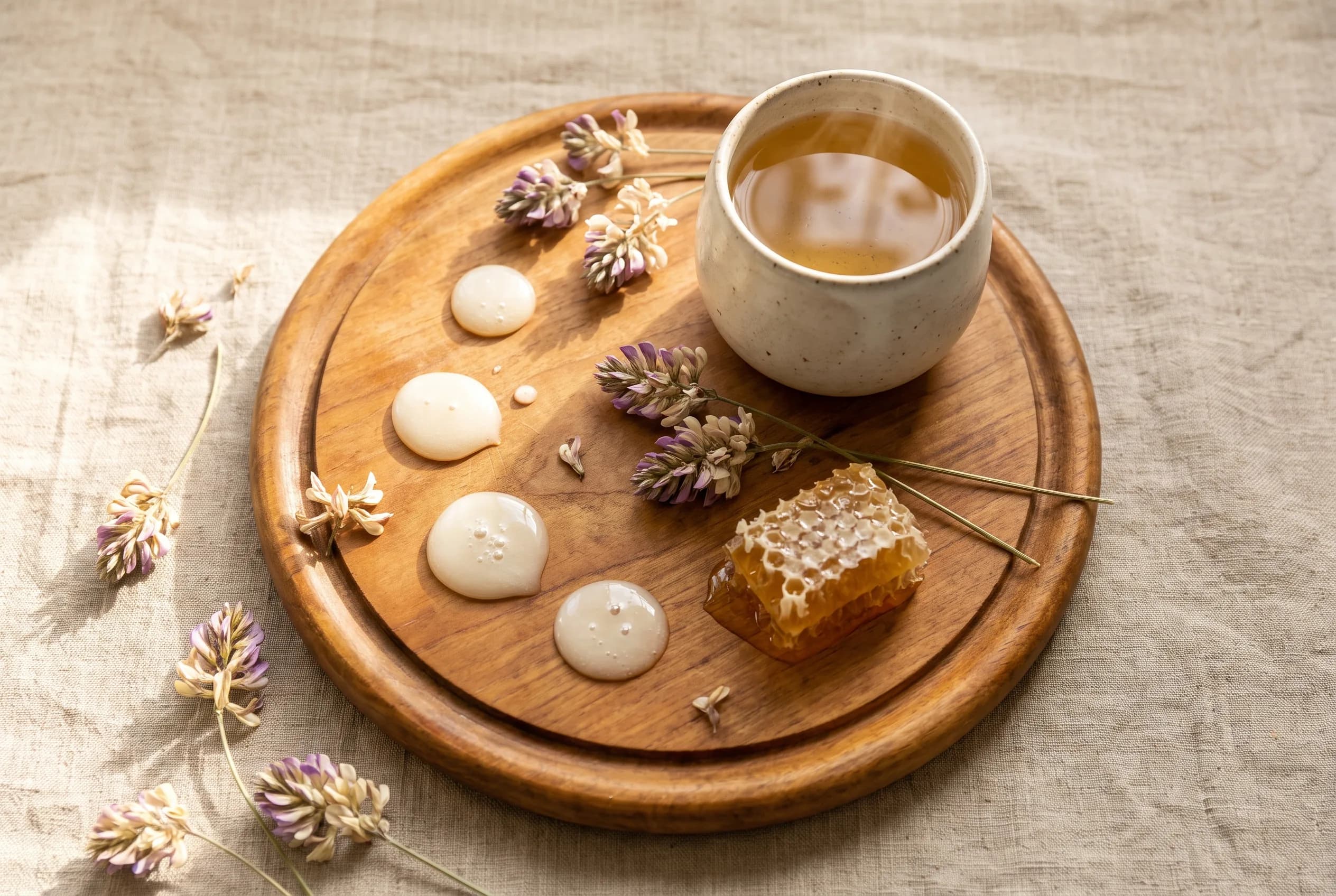
Have you ever tasted a spoonful of honey and simply thought: "sweet"? That's a common experience. But what if I told you that a single spoonful holds an entire story? A story of high-altitude mountain meadows, of the work of tireless bees, and of a sensory complexity that goes far beyond mere sweetness.
Sainfoin honey, also known as Esparsette honey, is the perfect example of such a hidden masterpiece. Many describe it as mild, but that mildness is deceptive. It is the quiet prelude to a multi-layered experience that only reveals itself to those who know what to look for. This guide is your invitation to transform from a passive taster into an active connoisseur. Together, we embark on a journey of discovery that will change the way you perceive honey forever.
More Than Just "Sweet": The Foundations of Honey Sensory Analysis
Before we dive deep into the world of Sainfoin honey, let us briefly examine the toolkit of a honey connoisseur. Professional tasters, such as those of the German Agricultural Society (DLG), evaluate honey not just by its taste. They analyse it across several dimensions that together form a complete picture:
- Appearance & Consistency: The first encounter. Is the honey clear or cloudy, liquid or creamy? The colour can range from nearly white to dark brown and offers first clues about its origin.
- Aroma (Smell): The scent that rises from the jar before you have even tasted the honey. This is called the orthonasal aroma. It can be floral, fruity, spicy, or earthy.
- Taste & Mouthfeel: This is where the magic happens. On the tongue, the basic taste sensations unfold (primarily sweet, sometimes with a light acidity). At the same time, we experience the texture — is it silky-smooth, finely crystalline, or coarse-grained?
- Finish (Aftertaste): What remains after the honey has been swallowed. A high-quality honey leaves a pleasant, often complex impression that differs from the initial taste. This is the retronasal aroma, which rises through the throat to the nose.
With this knowledge, we are ready to decode the sensory portrait of Sainfoin honey.
The Sensory Portrait of Sainfoin Honey: A Journey in Four Acts
Imagine you are opening a jar of our White Gold Mountain Honey. The journey begins.
Act 1: A Feast for the Eyes — Colour and Consistency
The first thing that strikes you is its extraordinary colour. High-quality Sainfoin honey is often pearl-white to ivory. This light hue is a quality marker, not a cause for concern. Its consistency is typically fine-creamy and spreadable, almost like silky butter. This texture does not happen by chance. It is the result of a high glucose content, which leads to rapid, fine crystallisation. Careful, slow stirring during this process prevents the formation of large, coarse crystals and creates that luxurious, melt-on-the-tongue sensation.
![]()
Act 2: The First Impression — The Aroma in the Nose
Lean over the opened jar and breathe in deeply. The scent of Sainfoin honey is neither intrusive nor overwhelming. It is subtle and elegant. You will detect delicate floral notes reminiscent of blooming sainfoin fields at altitudes above 3,000 metres. Sometimes a hint of fresh hay or dried fruits blends in — a promise of the complexity still to come.
Act 3: The Crescendo — Taste and Mouthfeel on the Palate
Now take a small spoonful and let the honey dissolve slowly on your tongue. Close your eyes. The first sensation is a mild, clear sweetness that never feels intrusive. As the honey coats your palate, something fascinating happens: the texture. The silky-creamy mouthfeel is unmistakable. It feels like eating a cloud — gentle, enveloping, and incredibly soft.
At this very moment, as the creaminess fills the mouth, the deeper aromas unfold. The initial floral note gives way to a subtle, nutty character often reminiscent of fresh walnuts or almonds. Some connoisseurs even detect a delicate fruitiness that brings dates or ripe apricots to mind. This is the secret of Sainfoin honey: its complexity is not loud — it whispers.
Act 4: The Finish — What Lingers
The true character of an exceptional honey often reveals itself only in the finish. After you have swallowed the Sainfoin honey, pay attention to what remains. Instead of a sticky, overly sweet heaviness, it leaves a remarkably clean and refreshing feeling. The creamy sensation lingers for a moment, accompanied by those delicate nutty-fruity notes. It is an unobtrusive yet lasting impression that makes you reach for the next spoonful.
From the Hive
Honey knowledge the supermarket skips
Twice a month: varietals, harvest, origin. Plus 10% off your first order.
10% off your first order · No spam. Unsubscribe anytime.
Common Misconceptions About Sainfoin Honey — Debunked
The subtle nature of Sainfoin honey often leads to false assumptions. Let us clear up the most common ones to sharpen your understanding.
- Myth 1: "White honey is adulterated or of poor quality." The truth: Quite the opposite. The light, almost white colour and creamy consistency are signs of pure, unprocessed Sainfoin honey. They result from the high glucose content of the sainfoin blossom, which promotes a natural and very fine crystallisation. A quality hallmark, not a defect!
- Myth 2: "It is only mild and therefore not particularly interesting." The truth: Its mildness is its strength. It creates a canvas on which the fine nuances of walnut, date, and dried flowers can unfold. Unlike bold honeys such as chestnut or forest honey, which dominate the palate, Sainfoin honey invites you to explore.
- Myth 3: "All Sainfoin honey tastes the same." The truth: Much like fine wine, terroir, harvest timing, and processing play a decisive role. The soil, altitude, and companion flora of the Kyrgyz mountains give our honey from Kyrgyzstan its unique profile. Our honey is gently processed at max. 40 °C, not pasteurised, which preserves these fragile aromas.
How to Taste Like a Pro: A Simple Tasting Guide
Want to put what you have learned into practice? With this simple 4-step method, inspired by professional sensory tests, you can consciously analyse any honey:
- Look: Take a spoonful of honey and hold it up to the light. Assess the colour, clarity, and consistency. Is it creamy, liquid, finely or coarsely crystalline?
- Smell: Bring the spoon to your nose and breathe in the aroma. Try to name the scents: Floral? Fruity? Spicy?
- Taste: Take a small amount into your mouth, but do not swallow immediately. Let the honey dissolve slowly on your tongue and spread it across your entire palate. Breathe gently through your nose as you do so to perceive the retronasal aromas. What flavour notes do you discover? How does the texture feel?
- Aftertaste: Swallow the honey. Focus on the finish. How long does it last? Which aromas linger? Is the sensation pleasant and clean?
This mindful approach transforms a simple tasting into a true sensory experience.
Frequently Asked Questions (FAQ)
Why is Sainfoin honey so creamy?
The creaminess comes from natural crystallisation. Sainfoin honey has a high proportion of glucose, which quickly forms fine crystals. Through slow and gentle stirring during this process, the honey becomes wonderfully creamy and melt-in-the-mouth, instead of turning hard.
What does "Sainfoin" or "Esparsette" mean?
Sainfoin is the French name for the Esparsette plant, a forage crop with pink-purple flowers. Its name derives from "sain foin," meaning "healthy hay," as it has been valued for centuries as nutritious livestock feed. Bees love its nectar, from which they produce this special honey.
How should I store Sainfoin honey to protect its aroma?
Store it in a cool, dry, dark place at a consistent temperature (ideally around 15°C). A kitchen cupboard is perfect. The refrigerator is too cold and can alter the crystal structure. Always seal the jar tightly, as honey absorbs moisture and foreign odours from the air.
Does Sainfoin honey pair well with cheese?
Beautifully! Its mild sweetness and nutty notes make it the ideal partner for a wide range of cheeses. It pairs especially well with mild goat's cheese, creamy Brie, or a medium-aged mountain cheese, without masking their own flavours.
Your Path to Becoming a Mindful Connoisseur
You have now seen that honey is far more than a sweet spread. It is a complex natural product, a mirror of its origin, and a feast for the senses. Sainfoin honey is the perfect invitation to explore this world — with its approachable mildness and its hidden depth.
We hope this guide has awakened your curiosity not just to taste, but to truly savour. By learning to pay attention to texture, aroma development, and finish, you open the door to a deeper understanding and a greater appreciation for nature's treasures. Discover the world of authentic, artisan-crafted products that tell a story.
Share
Sainfoin honey: 60 volatile compounds, 71.31% terpenoids, hotrienol dominant — the most complex aroma profile among leguminous honeys (PMC11047671).
Fine-crystallized honey releases aromas more slowly — creating the layered taste experience connoisseurs prize.
Professional tasters evaluate honey across appearance, aroma, taste, mouthfeel and finish — just like wine.
Frequently Asked Questions
Natural crystallization from high glucose (fructose-glucose ratio 0.79). Slow stirring under 40°C creates the melt-in-your-mouth texture.
French name for Esparsette (Onobrychis viciifolia), a legume with pink-purple flowers. From 'sain foin' = 'healthy hay'. Grows wild at 2,000–3,000 meters in Kyrgyzstan.
Cool, dry, dark at ~15°C. Kitchen cupboard is perfect. Not the fridge. Always seal tightly.
Excellently. Its mild sweetness and nutty notes complement goat cheese, Brie, and mountain cheese. The 60 volatile compounds (71% terpenoids) enhance dairy fat aromas without overpowering them.
PMC11047671 (2024): 60 identified volatile compounds — twice as many as typical lowland honey. 71.31% terpenoids with hotrienol as dominant component, creating the characteristic floral-nutty profile.

Jamilia
Autorin, ULU Magazin
Jamilia schreibt über kirgisisches Handwerk, Honig und die Geschichten hinter den Produkten. Aufgewachsen in Zentralasien, lebt sie zwischen Bischkek und Berlin.
Related Articles

The Makers
What Is Sainfoin Honey? The Complete Guide to a Rare Honey
Some honeys you find in every supermarket. Then there is sainfoin honey.

The Makers
Luxury Honey: What Premium Honey Actually Means
The gap between a €3 supermarket honey and a €40 specialty jar is bigger than most people think. What real quality comes down to.
The Makers
Best Honey in Germany 2026
The best honey varieties in Germany 2026: From forest honey to acacia to Manuka — an honest comparison with ratings.
From the Hive
Honey knowledge the supermarket skips
Twice a month: varietals, harvest, origin. Plus 10% off your first order.
10% off your first order · No spam. Unsubscribe anytime.