
The Makers
What Is Sainfoin Honey? The Complete Guide to a Rare Honey
Last updated:
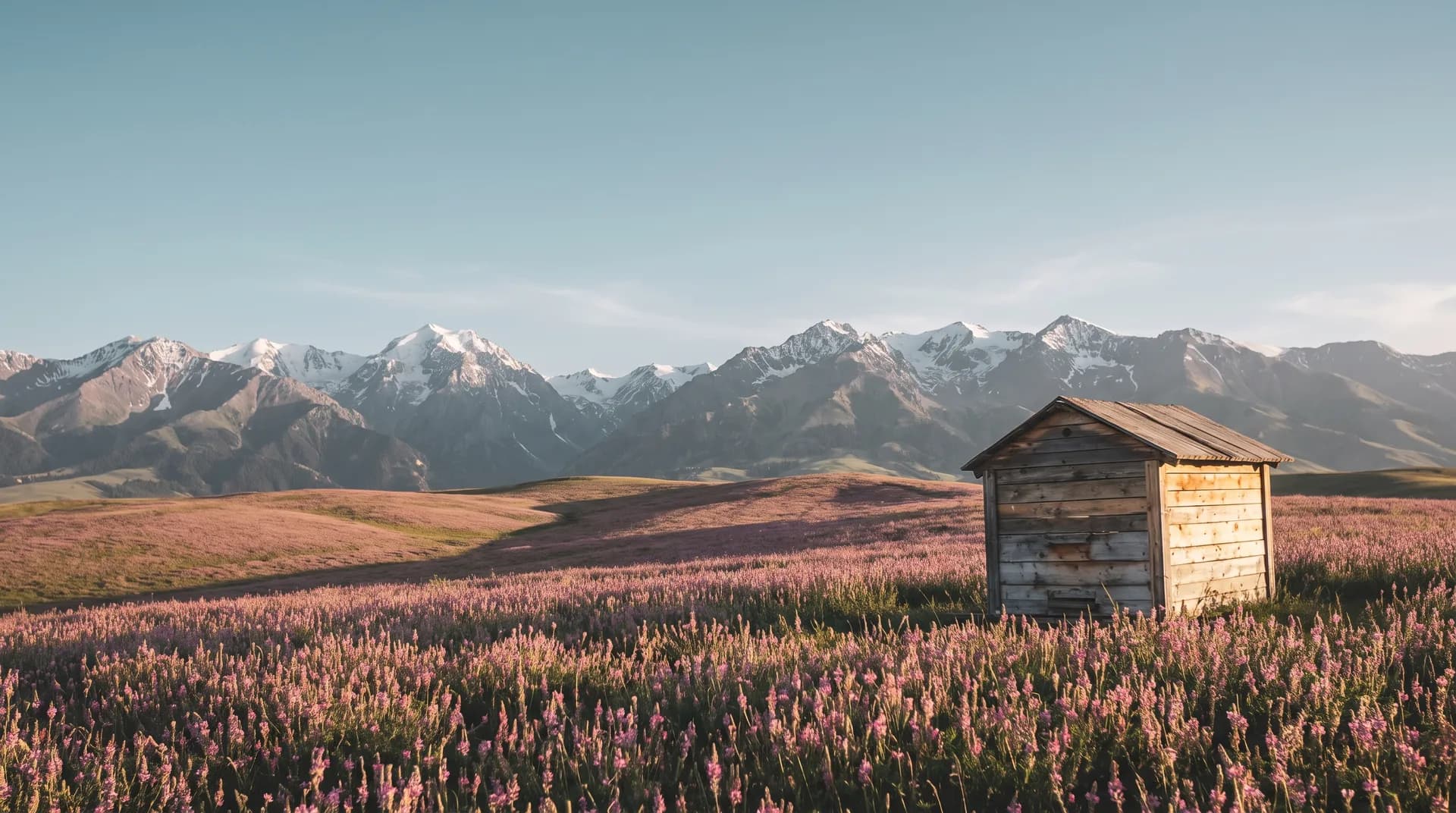
Some honeys you find in every supermarket. Then there is sainfoin honey.
Anyone hearing that name for the first time often assumes it is a marketing invention — an exotic-sounding label for some ordinary wildflower honey. The opposite is true. Sainfoin honey is underrated, and it is rare. Most beekeepers in Europe have never produced it. Most consumers have never tasted it.
This article explains what sainfoin honey is, where it comes from, what science knows about its composition — and what to look for when buying it.
Sainfoin: The Plant Behind the Honey
To understand sainfoin honey, you first have to understand the plant that makes it possible.
Sainfoin (Onobrychis viciifolia) is a perennial legume from the pea family. For centuries it was one of the most important fodder plants in Europe and Central Asia — for sheep, goats, and cattle — before modern high-yield varieties like alfalfa and red clover displaced it. Today it has almost disappeared from intensively farmed land.
What sets sainfoin apart:
Growing requirements: Sainfoin grows exclusively on dry, calcareous soils. It does not tolerate waterlogging or acidic ground. This immediately rules out most of Europe's intensively farmed lowland regions.
Altitude preference: It thrives at elevations between 1,000 and 3,500 metres — in rocky alpine meadows, steppe valleys, and high mountain slopes. In the Tian Shan mountains of Central Asia it grows in large stands.
Seasonal flowering window: Sainfoin flowers for only four to six weeks per year, typically between May and July. The exact timing depends on altitude and weather. A late frost or a dry spell can shorten the season dramatically.
No cultivation: Sainfoin can scarcely be cultivated industrially. Attempts to grow it in monoculture have consistently failed because the plant is extremely sensitive to soil chemistry and does not compete well with aggressive grasses when fertilised.
The result: sainfoin honey can only be produced where sainfoin grows naturally — and that means remote, near-pristine mountain regions with calcareous soils.
Taste and Appearance: What Makes Sainfoin Honey Different
Sainfoin honey is unmistakable at first glance — and at first taste.
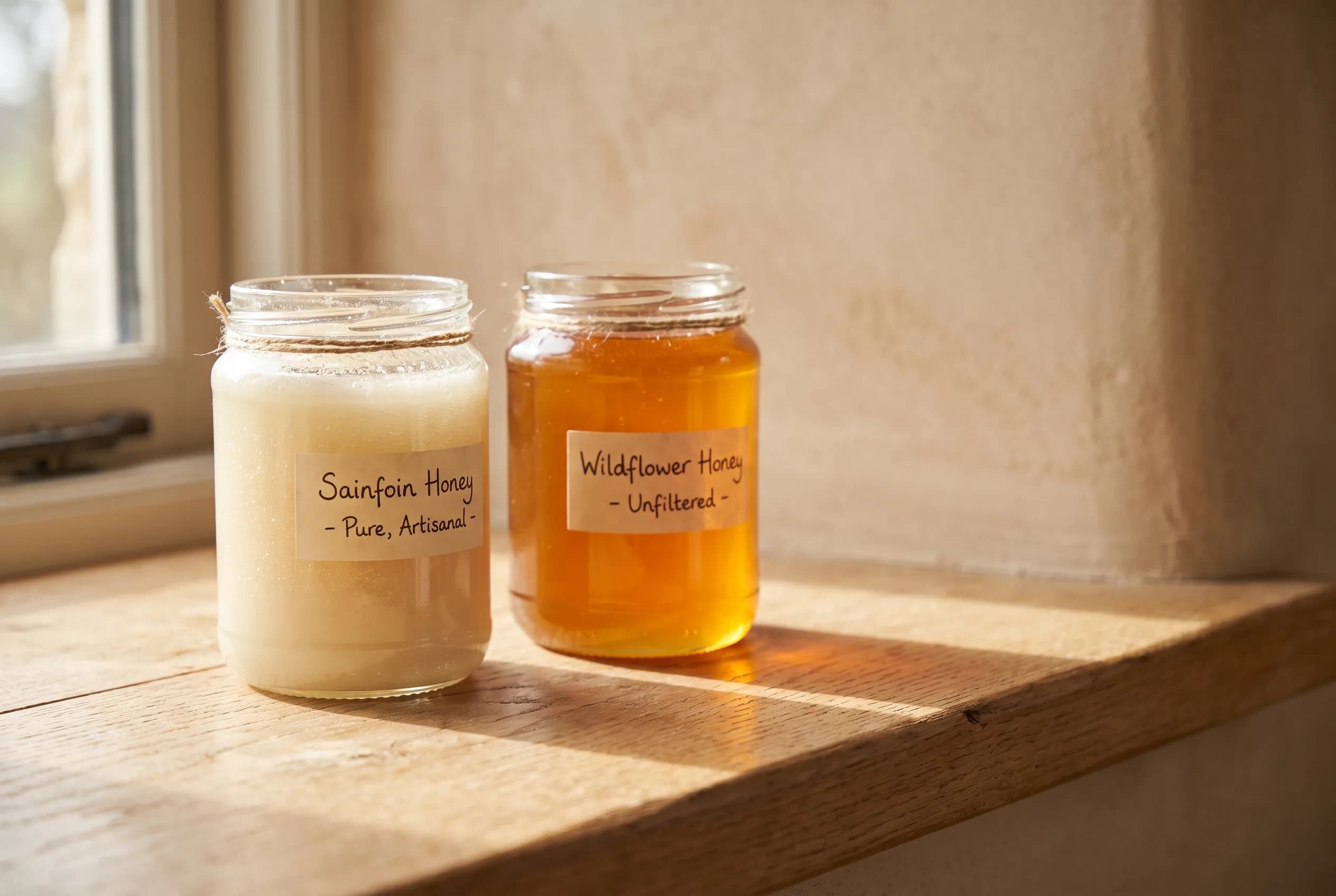
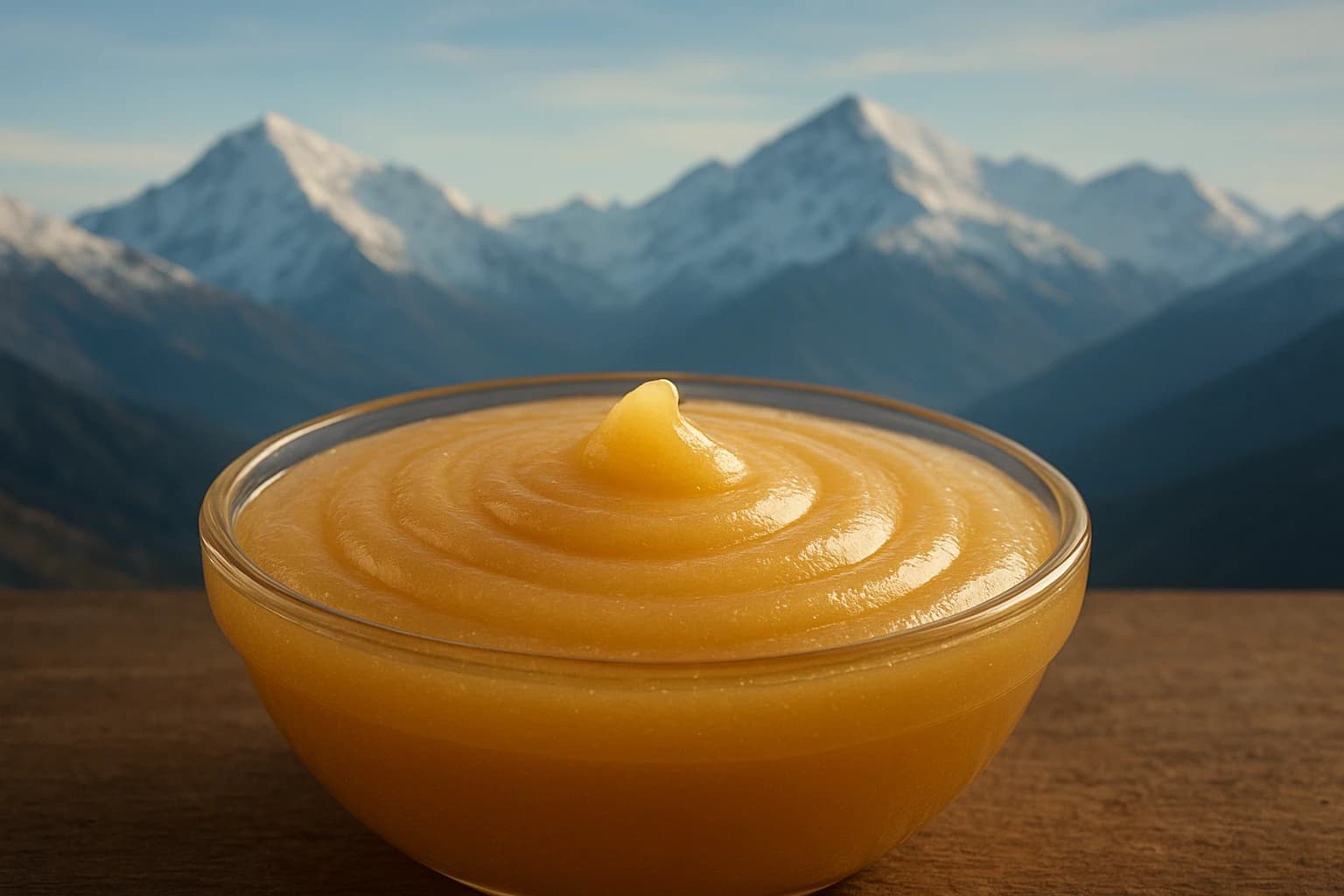
Colour: Fresh sainfoin honey is almost water-white to very pale golden. This is unusual: most honeys are amber to dark brown. The pale colour is the first visual indicator of low tannin content and a particular sugar composition.
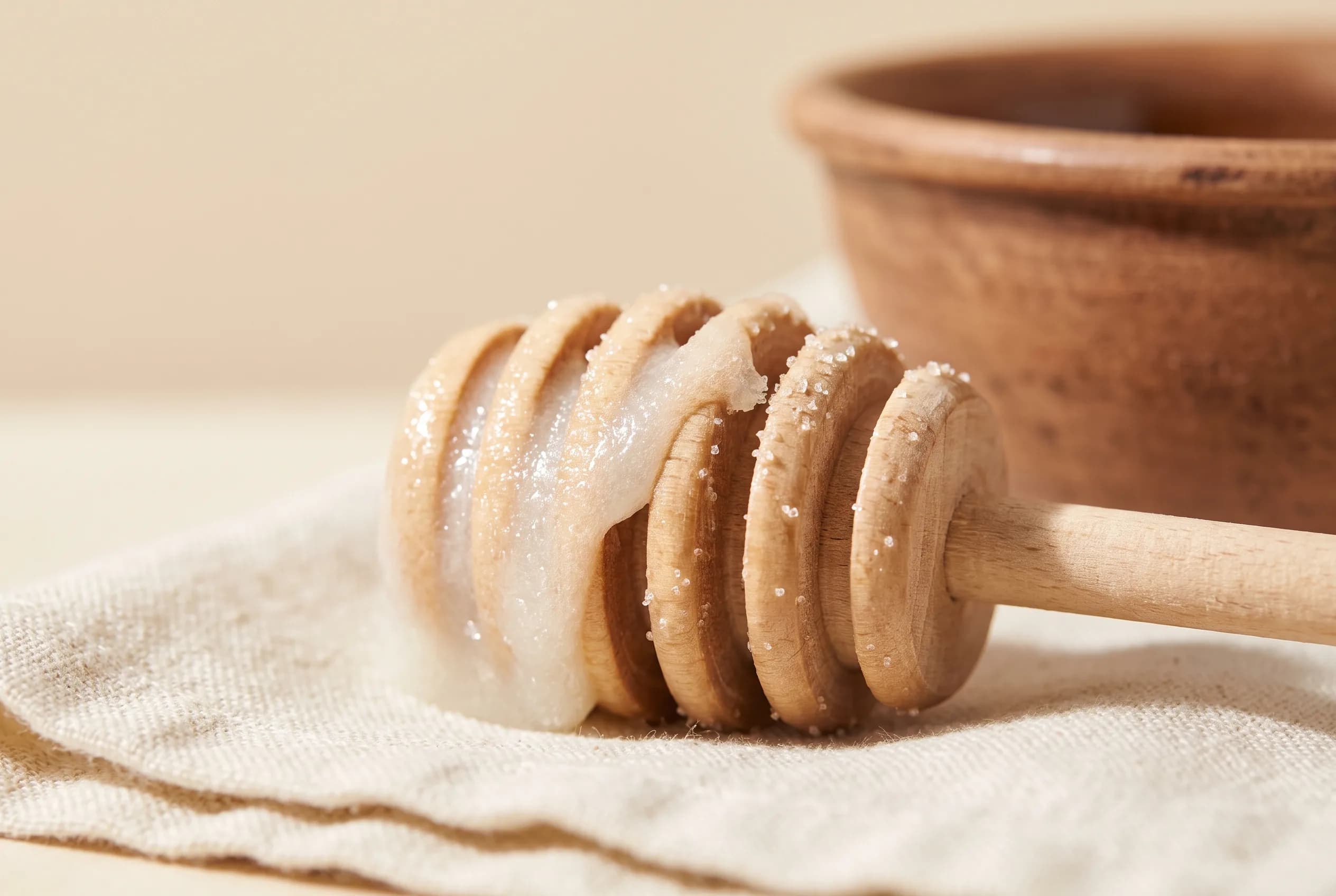
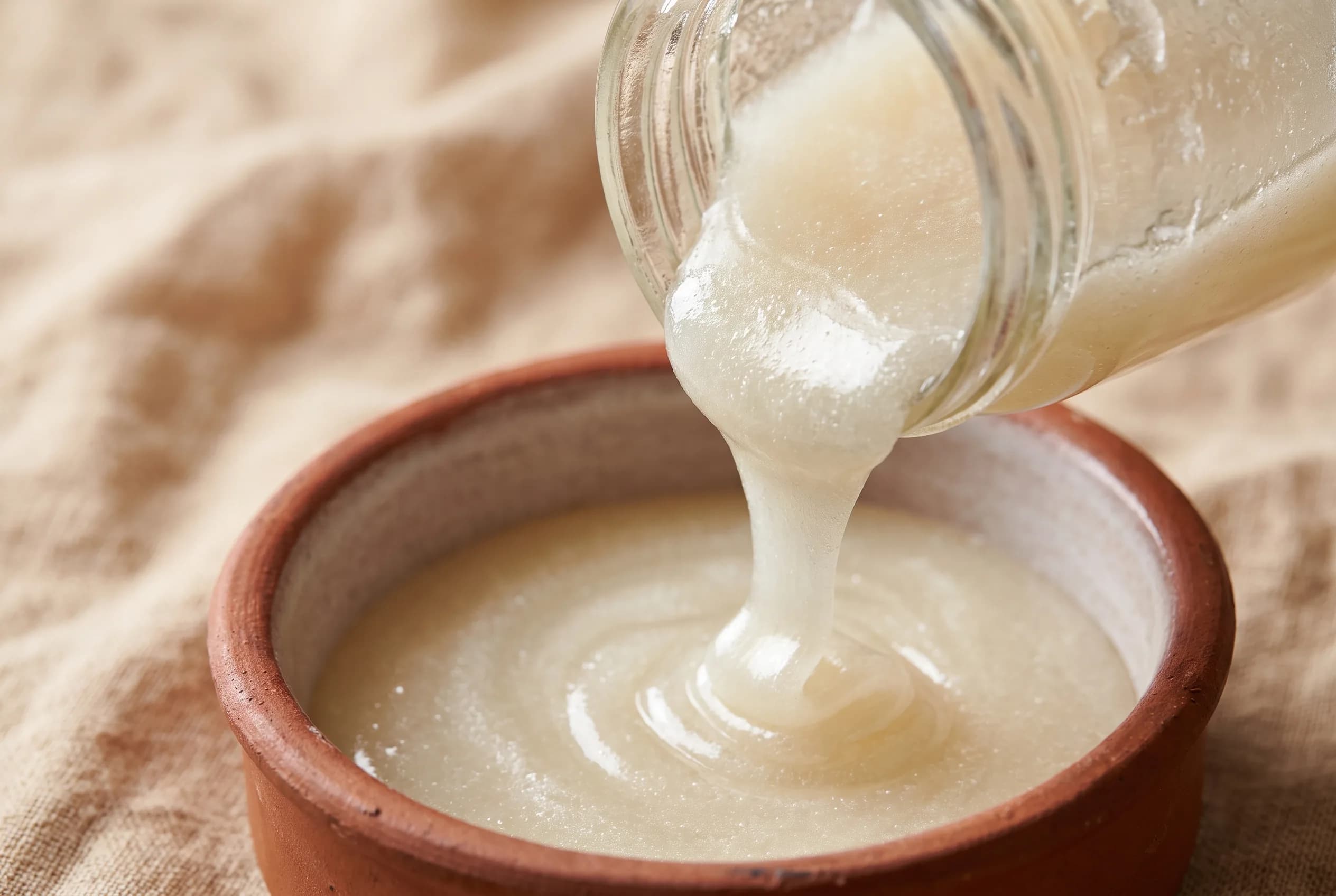
Consistency: Sainfoin honey crystallises relatively quickly because of its high glucose content. The crystals are fine-grained, almost creamy — not the coarse, grainy texture of rapeseed honey, but a smooth, spreadable consistency.
Aroma: Subtle, floral, clean — with a light herbal note. No dominant caramel or resinous undertone as in darker honeys.
Taste: Delicate sweetness, almost neutral on the palate with a soft lingering finish. No sharp acidity, no bitterness.
This neutrality is not a weakness — it is a characteristic. Sainfoin honey does not overpower other flavours, which makes it ideal for use in cooking, tea, and desserts.
From the Hive
Honey knowledge the supermarket skips
Twice a month: varietals, harvest, origin. Plus 10% off your first order.
10% off your first order · No spam. Unsubscribe anytime.
Chemistry: What Science Says About Sainfoin Honey
The exceptional status of sainfoin honey is not just a matter of taste — it has a measurable scientific basis.
Sugar Composition
Honey consists primarily of fructose and glucose. The ratio determines consistency, sweetness intensity, and crystallisation speed. In sainfoin honey, the glucose crystallises into very fine crystals, which gives it its creamy texture.
Phenolic Profile
Researchers have identified a distinctive phenolic compound profile in sainfoin honey. A study of five leguminous honeys found gallic acid at 291.18 µg/g in sainfoin honey (PMC11047671, 2024). Gallic acid belongs to the hydroxybenzoic acid family and is one of the most studied plant polyphenols in food chemistry.
Origin: Where Does Sainfoin Honey Come From?
Genuine sainfoin honey in meaningful quantities comes from only a handful of regions globally:
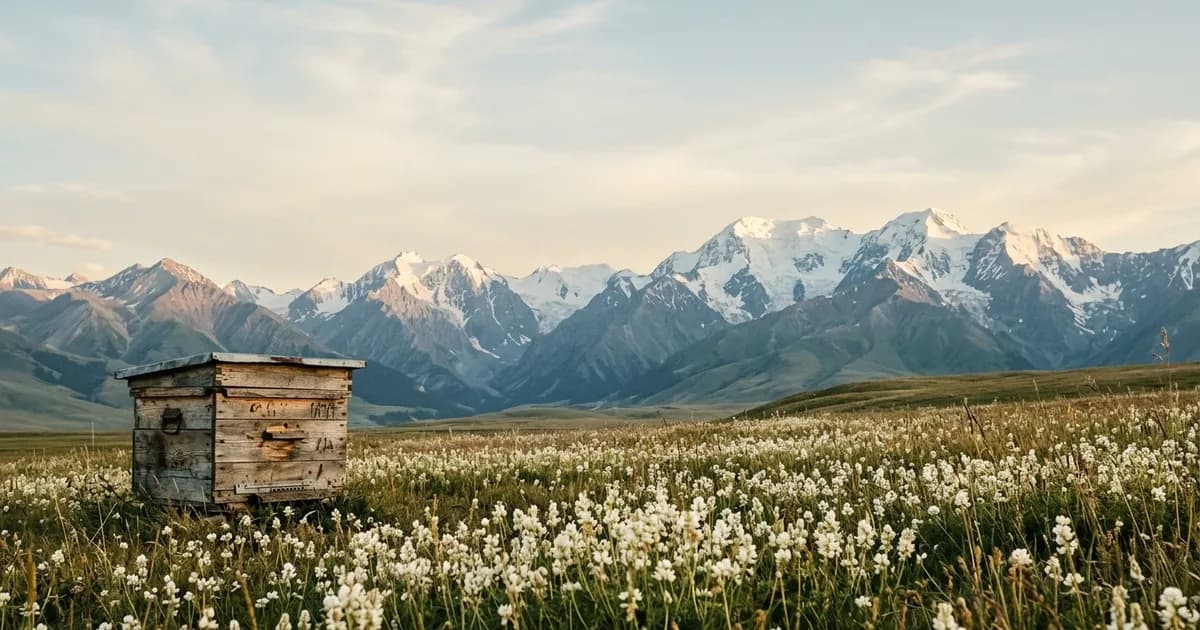
Tian Shan, Kyrgyzstan: In the Tian Shan mountains of Central Asia, at altitudes of 2,400 to 3,500 metres, the plant grows across vast unfarmed meadows. The cold winters, short summers, and alkaline mountain soils create ideal conditions. ULU's honey comes from four regions of the Tian Shan (Naryn, Issyk-Kul, Talas, Osh).
Atlas Mountains, Morocco: Smaller sainfoin populations exist at higher elevations. Production volumes are limited and inconsistent.
Apennines, Italy: Isolated meadows in the high Apennines still have sainfoin stands, but commercial honey production is negligible.
Pyrenees, France/Spain: Similar to the Italian situation — small populations, no notable commercial production.
Kyrgyzstan, Uzbekistan, the Turkish Black Sea coast and parts of the Balkans all produce sainfoin honey. Not every jar labelled sainfoin is monofloral: some are mixed-flora mountain honeys with a share of sainfoin.
How Can You Recognise Genuine Sainfoin Honey?
The market for speciality honeys is not without its pitfalls. Here is what to look for:
Colour: Water-white to very pale golden. If a honey described as sainfoin is amber-coloured, it is most likely not monofloral sainfoin.
Crystallisation: Fine-grained, smooth, uniform. Coarse or grainy crystallisation indicates a different botanical source.
Origin declaration: A serious producer can name the specific region, altitude, and beekeeper. "Sainfoin honey from Kyrgyzstan, Tian Shan, 2,400–3,500 m" names a specific origin. "Sainfoin honey, origin: various countries" is not.
Certifications: Look for independent quality certifications or awards. Our mountain honey took Silver at the 2019 Apimondia World Beekeeping Awards in Montreal. Apimondia is the International Federation of Beekeepers' Associations.
Pollen analysis: A professional melissopalynological analysis (pollen analysis) can confirm whether a honey truly comes from sainfoin. Serious producers have this analysis done and make it available.
Sainfoin Honey vs. Other White Honeys
White honey is not automatically sainfoin honey. Several other botanical sources can produce very pale honeys:
| Honey type | Origin | Colour | Taste profile |
|---|---|---|---|
| Sainfoin honey | Onobrychis viciifolia, mountain meadows | Water-white to pale gold | Delicate, floral, neutral |
| Acacia honey | Robinia pseudoacacia, lowland | Almost water-clear | Very sweet, very mild, liquid |
| Linden honey | Linden, lowland/forest edges | Pale to golden | Herbal-minty, strong |
| Phacelia honey | Phacelia, cultivated crop | Very pale | Mild, slightly herbaceous |
| Sidr honey | Ziziphus, desert regions | Amber-gold | Caramel-sweet, strong |
ULU Sainfoin Honey: What You Need to Know
ULU sources white sainfoin honey through our beekeeping partner in Kyrgyzstan, from four regions of the Tian Shan (Naryn, Issyk-Kul, Talas, Osh) at 2,400 to 3,500 metres.
What distinguishes this honey:
- Monofloral: The apiaries are located in remote mountain valleys where sainfoin is the dominant blooming plant during the harvest season. No intensive farming, no monoculture agriculture in the surrounding area.
- Not pasteurised: The honey is gently processed at max. 40 °C, not pasteurised, and strained — but not fine-filtered.
- Origin: Naryn, Issyk-Kul, Talas and Osh, four regions of the Tian Shan.
- Award-winning source: Our mountain honey took Silver at the 2019 Apimondia World Beekeeping Awards in Montreal. Apimondia is the International Federation of Beekeepers' Associations.
FAQ: Sainfoin Honey
What does sainfoin honey taste like? Delicate, floral, and mild — with a clean sweetness and almost no bitter or acidic notes. It is one of the most neutral monofloral honeys and pairs extremely well with tea, yoghurt, and mild cheeses.
Why is sainfoin honey so rare? Sainfoin grows only on calcareous, dry mountain soils and cannot be cultivated commercially. The flowering season lasts only four to six weeks per year. The combination of specific growing conditions, limited geographic distribution, and short harvest window makes large-scale production impossible.
Is sainfoin honey better than acacia honey? "Better" depends on what you are looking for. Acacia honey is milder and stays liquid longer. Sainfoin honey has a more complex phenolic profile and forms a characteristic creamy consistency.
How should I store sainfoin honey? At room temperature, sealed and away from direct sunlight. Honey never spoils, but heat and UV light degrade the enzyme profile. Do not store in the refrigerator — cold accelerates crystallisation and makes the honey difficult to spread.
Does sainfoin honey contain pesticides? Sainfoin only grows naturally in unfertilised, near-pristine mountain areas. There is no intensively farmed agriculture at 2,400–3,500 metres.
What is the difference between sainfoin honey and mountain honey? Mountain honey is a geographic designation — honey produced at elevation. It can come from many botanical sources. Sainfoin honey is a monofloral designation — it must come predominantly from sainfoin blossom. All genuine sainfoin honey is mountain honey, but not all mountain honey is sainfoin honey.
Where can I buy genuine sainfoin honey? Sainfoin honey is not available in supermarkets. kein Problem When buying, always ask for origin declaration, altitude, and ideally a pollen analysis certificate.
Share
Articles in The Makers
The Makers
Luxury Honey: What Premium Honey Actually Means
The gap between a €3 supermarket honey and a €40 specialty jar is bigger than most people think. What real quality comes down to.
The Makers
Best Honey in Germany 2026
The best honey varieties in Germany 2026: From forest honey to acacia to Manuka — an honest comparison with ratings.
The Makers
Buying White Honey — What to Look For
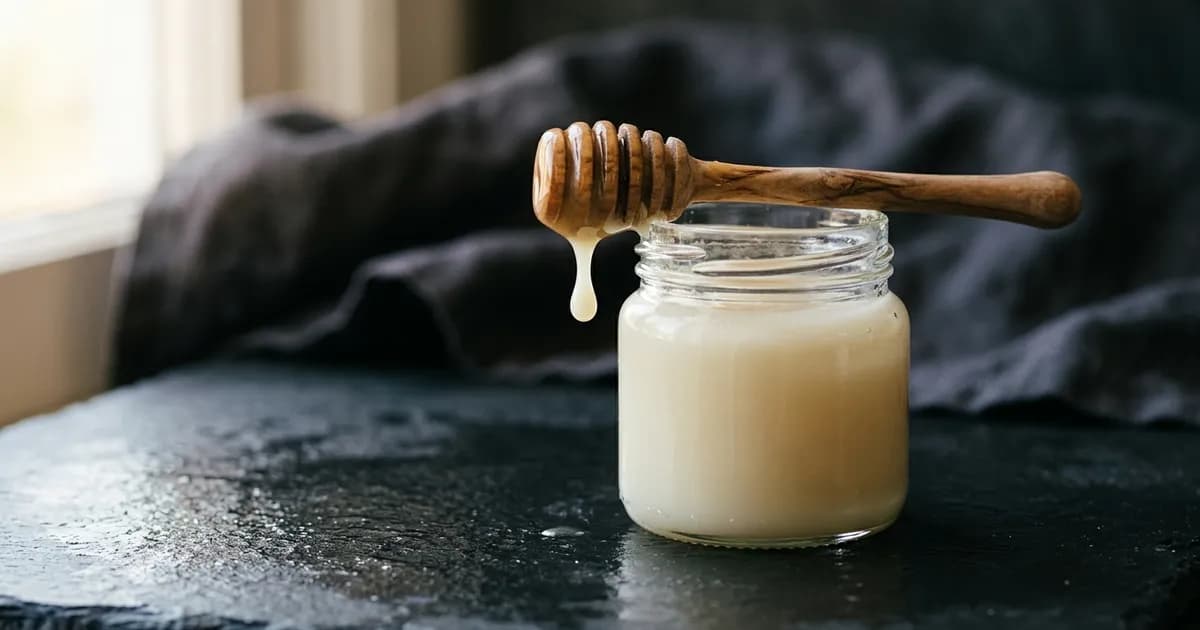
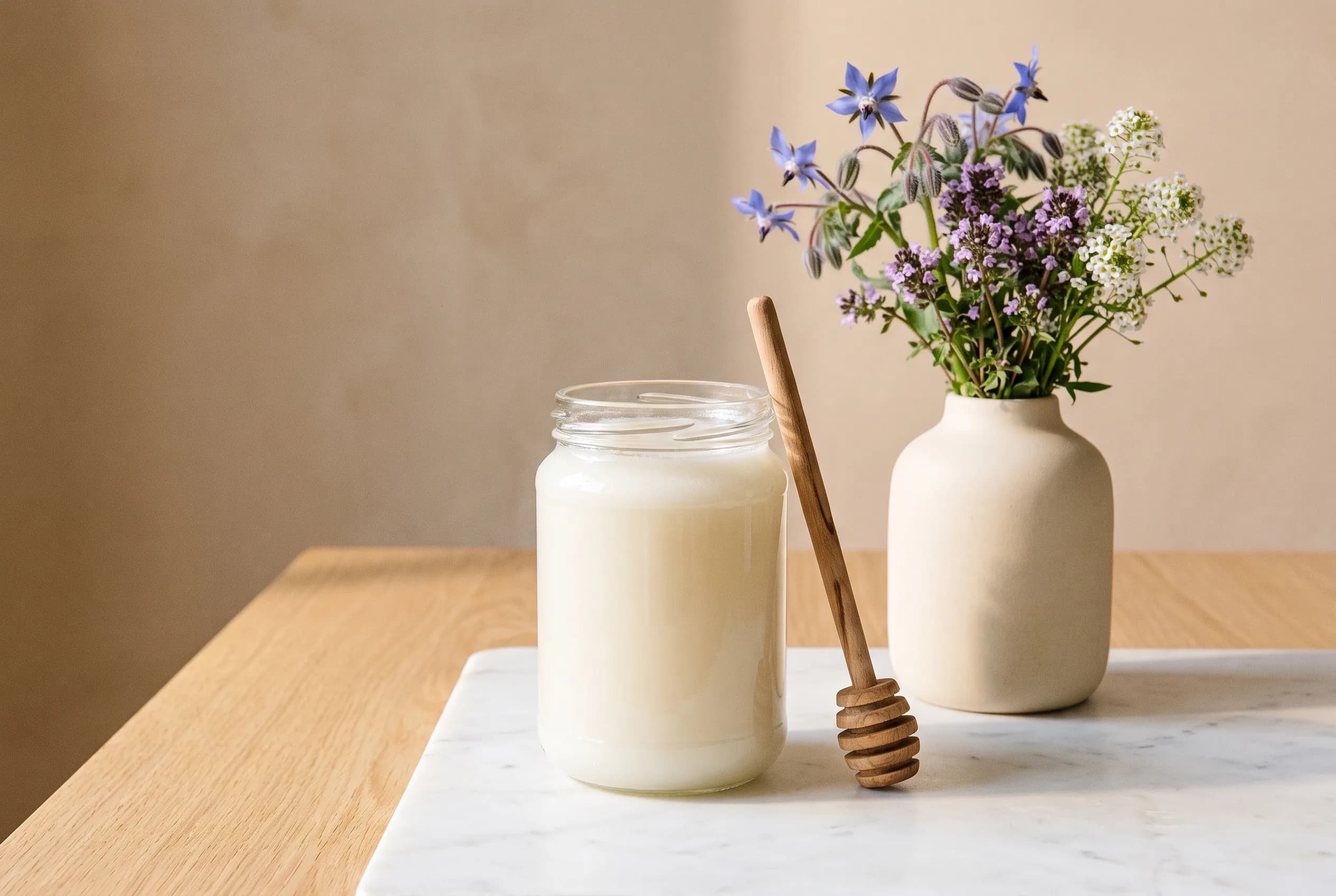
White honey forms through natural crystallisation of high-glucose honey varieties — no bleaching, no additives. Genuine white sainfoin honey comes almost exclusively from Kyrgyzstan (Tian Shan, 2,400–3,500 m). Five criteria matter when buying: varietal name on the label (sainfoin honey), specific origin region with altitude, available pollen analysis, storage note max. 20 °C, and a price of EUR 20–40 per 250 g for documented quality. ULU's Sky Nectar comes from the cooperative, Apimondia Silver 2019 (Canada), from four Kyrgyz highland regions with available 2025 lab reports.
The Makers
Manuka Honey Alternative: Why Sainfoin Honey Might Be the Better Choice
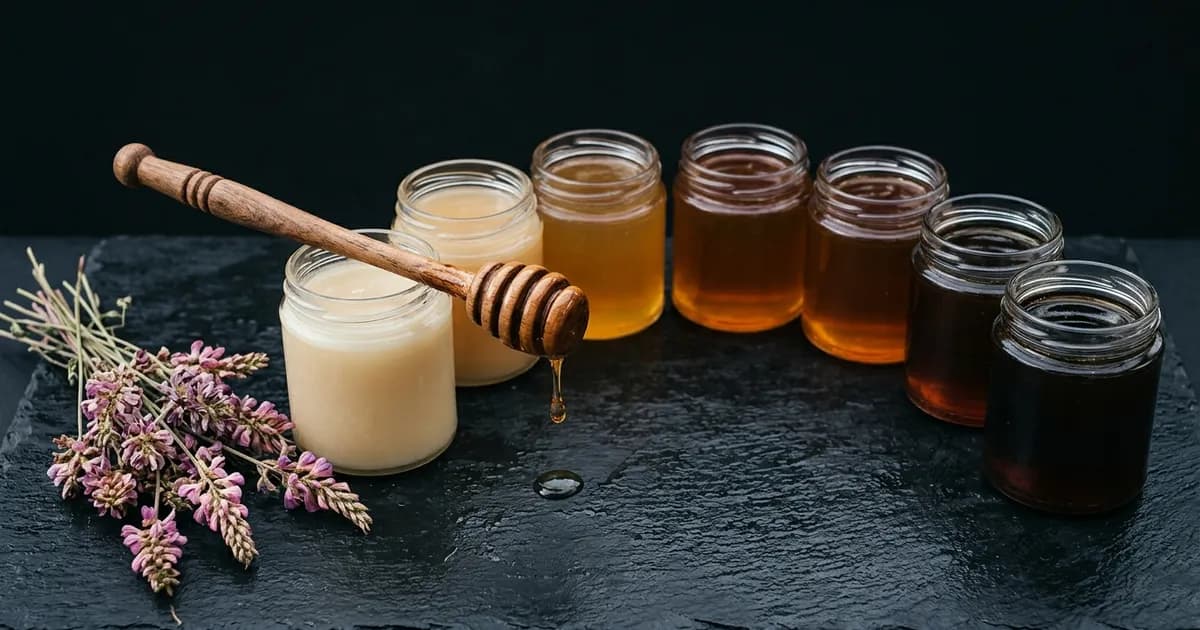
Manuka honey has dominated the premium honey market for years. But a closer look at the science raises a question: is there a better alternative?
The Makers
Rare Honey Varieties — Premium Honey Compared
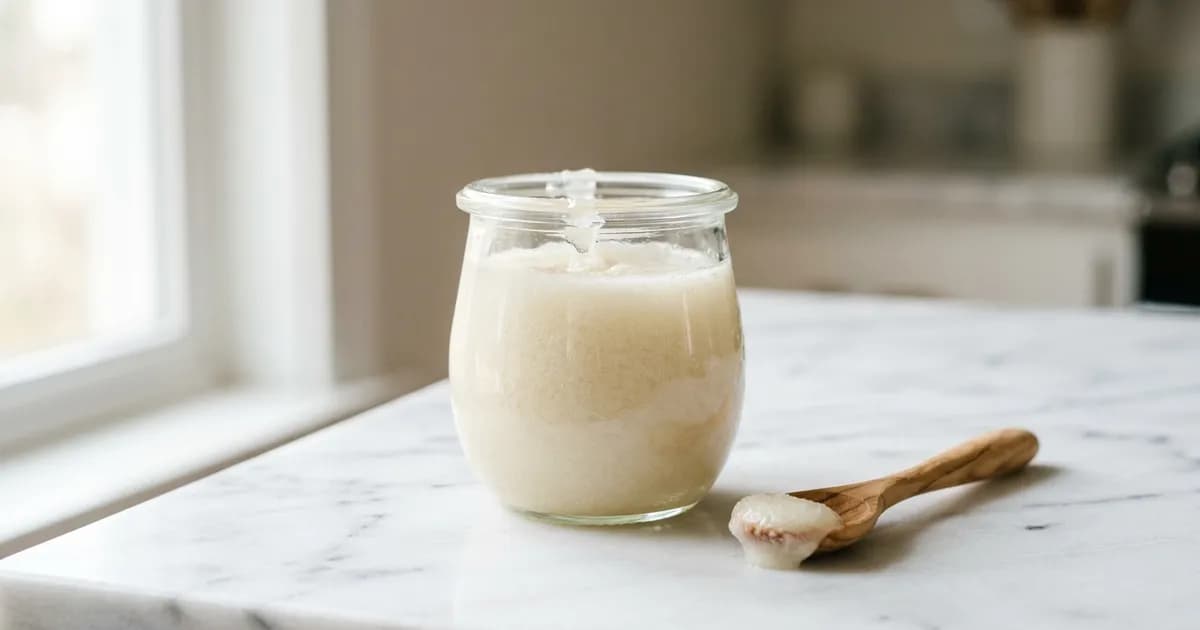
The rarest honeys in the world: sainfoin honey, Manuka, Sidr and more. What makes them special and which is worth it?
The Makers
Esparsettenhonig: Aussehen, Geschmack, Herkunft
Esparsettenhonig im Detail: Aussehen, Geruch, Geschmack, Textur und Herkunft, beschrieben von ULU an unserem eigenen Honig.
The Makers
Shyrdak Carpet: The Kyrgyz Felt Rug You Don't Buy, You Inherit
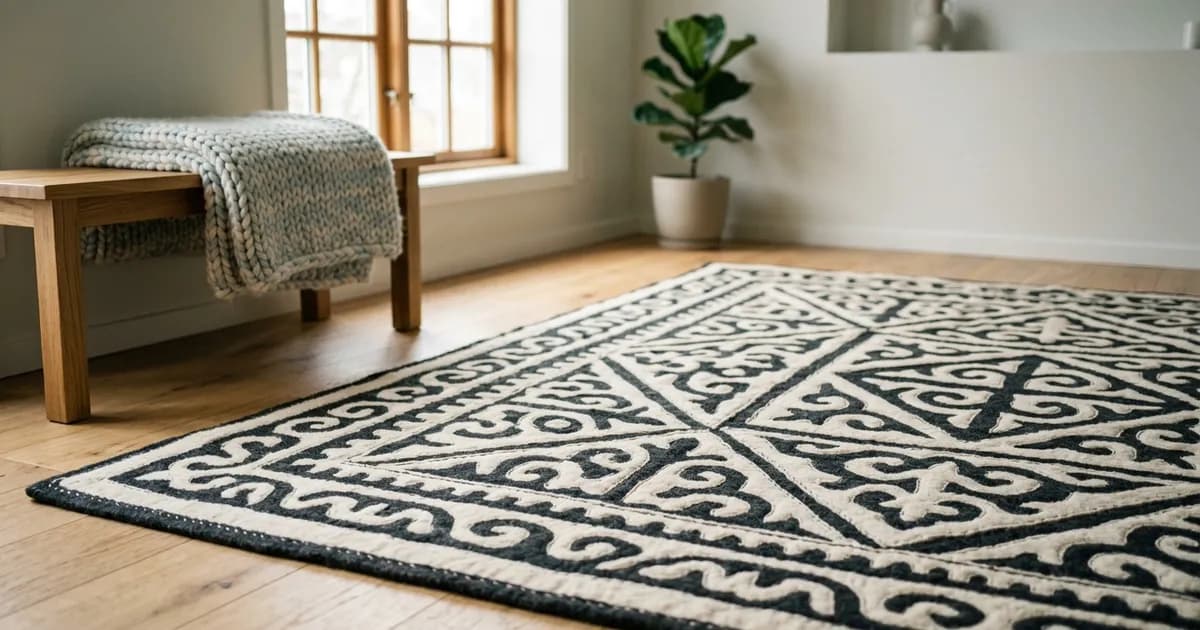
A carpet can be bought. A Shyrdak is inherited. UNESCO cultural heritage since 2012, every Kyrgyz felt carpet takes 200 to 300 hours of pure handwork.
The Makers
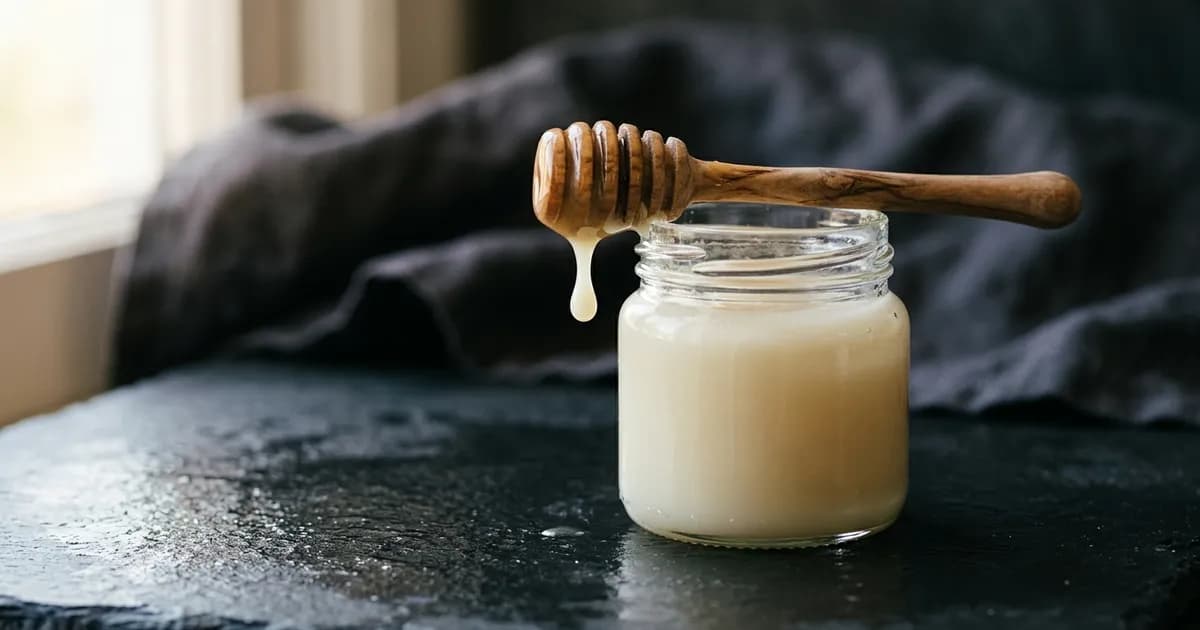
White honey: what it is, where it comes from and where to buy it
White honey is honey whose glucose has crystallised into very fine crystals. The crystals reflect light, which is why it looks creamy white. Which varieties do this, where they come from and how to recognise good white honey.
The Makers
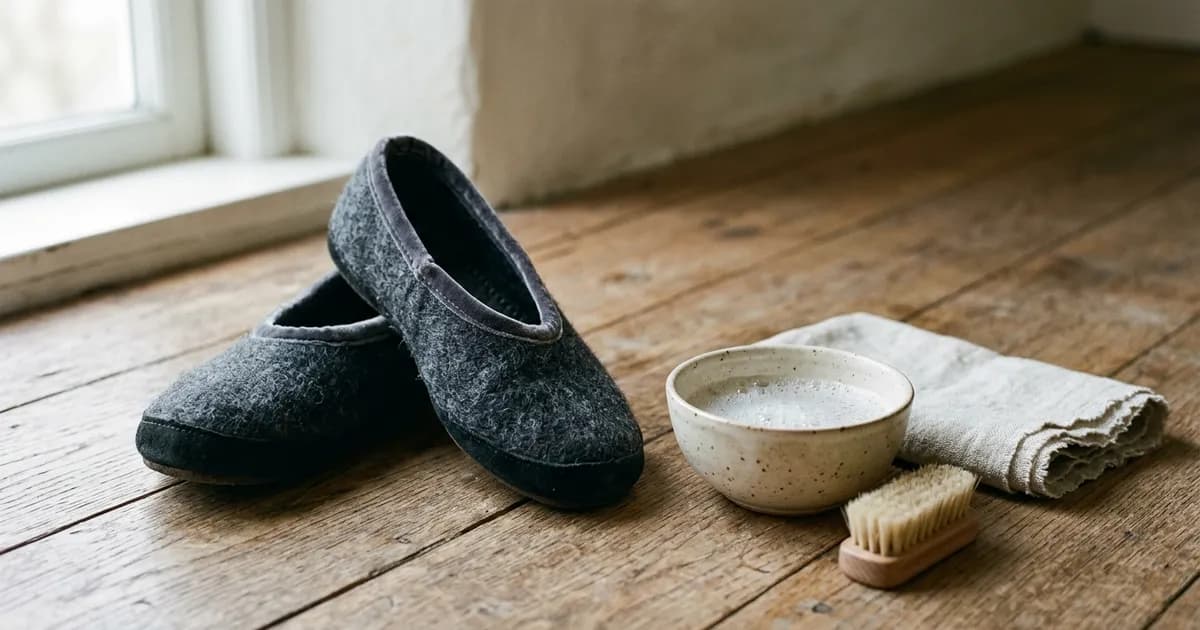
Handmade Felt Slippers: What Kyrgyz Craftsmanship Really Means
Anyone who has worn truly handmade felt slippers understands the difference immediately. No machine pressure, no uniform material — just living felt that breathes and warms.

The Makers
Who Makes Our Felt Slippers? A Visit to Gulnara in Naryn
In a small workshop in Naryn, Gulnara has been making felt slippers by hand for over 40 years. Her technique has been passed down from generation to generation — and today it lives in every pair of ULU Ballerinas. A visit to the master craftswoman.

The Makers
Shyrdak Patterns Tell Stories
Every Shyrdak rug carries patterns older than the written word. Ram's horns for prosperity, waves for water, spirals for eternity — a guide to reading Kyrgyz felt art.
The Makers
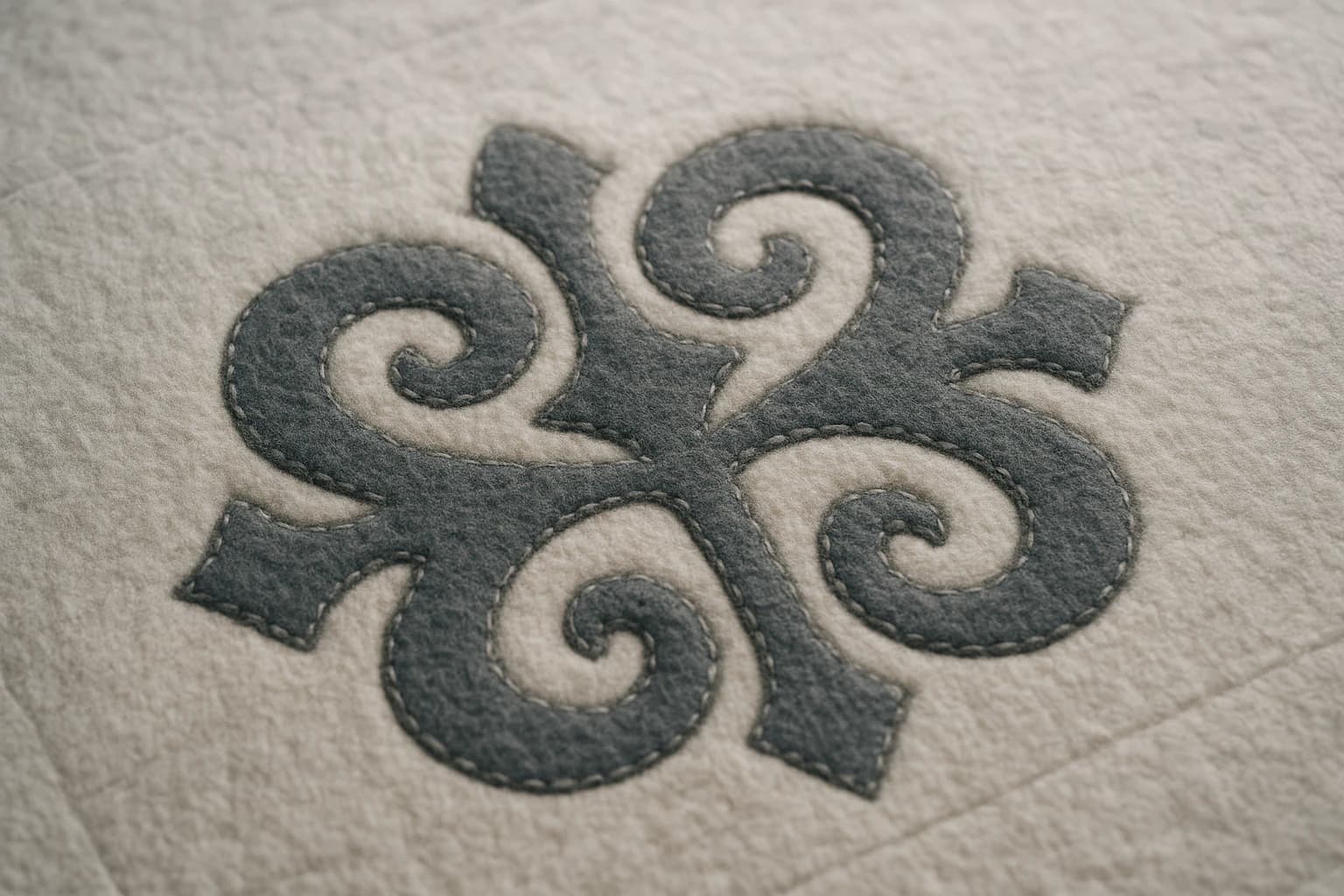
The Symbolism of Kyrgyz Patterns & Motifs
Have you ever admired a handcrafted rug or scarf and felt the patterns were telling a story you couldn't quite understand? In Kyrgyz textiles, that feeling is not imagination — it is the truth. This guide is your key to decoding them.
The Makers
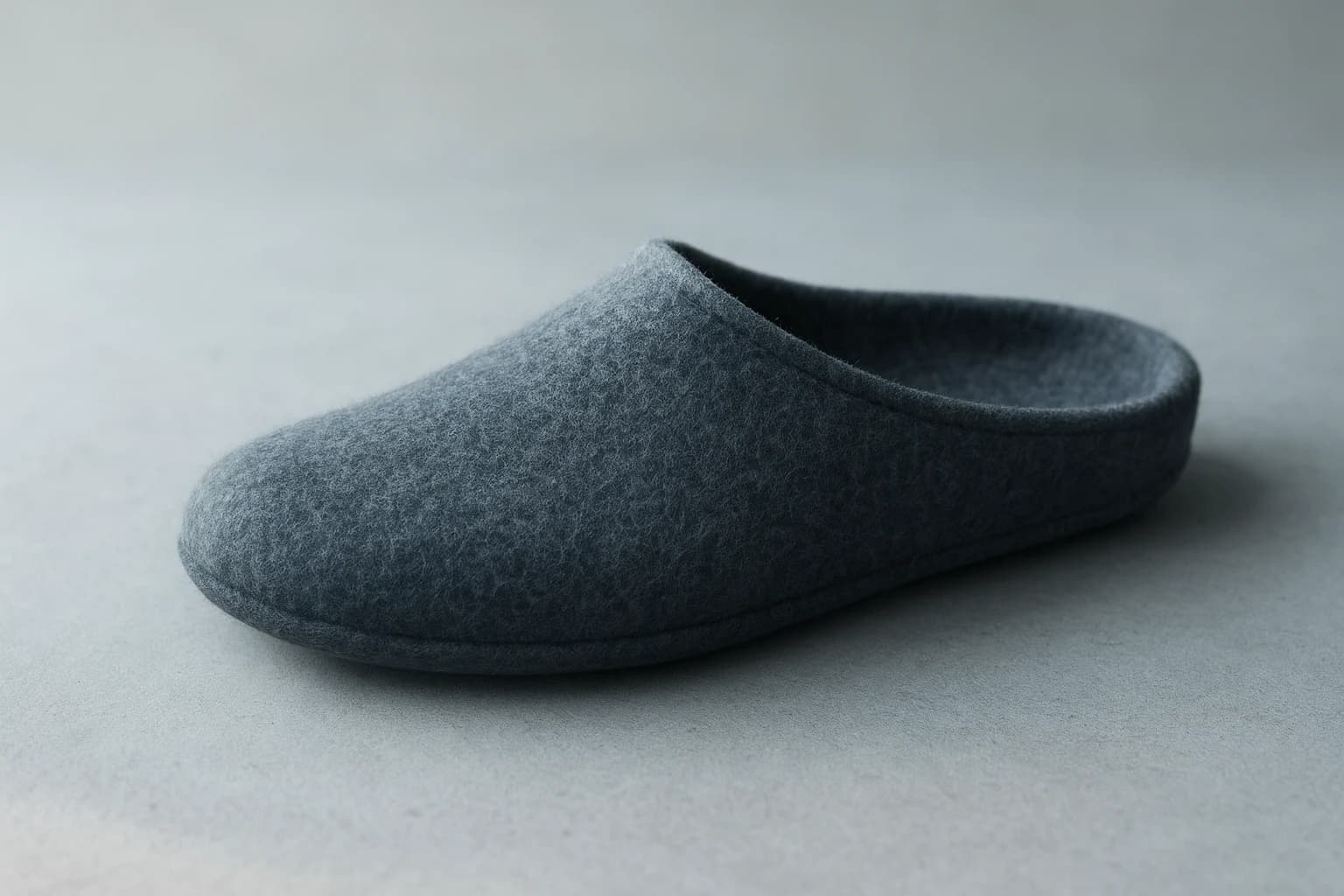
Wool Felt Slippers: Year-Round Comfort
The thought of wool in summer conjures a clear image for many: scratchy jumpers, thick socks, and the feeling of too much warmth. The question of whether slippers made from wool felt — the epitome of winter cosiness — are also a good choice on a mild July evening is more than justified.
The Makers
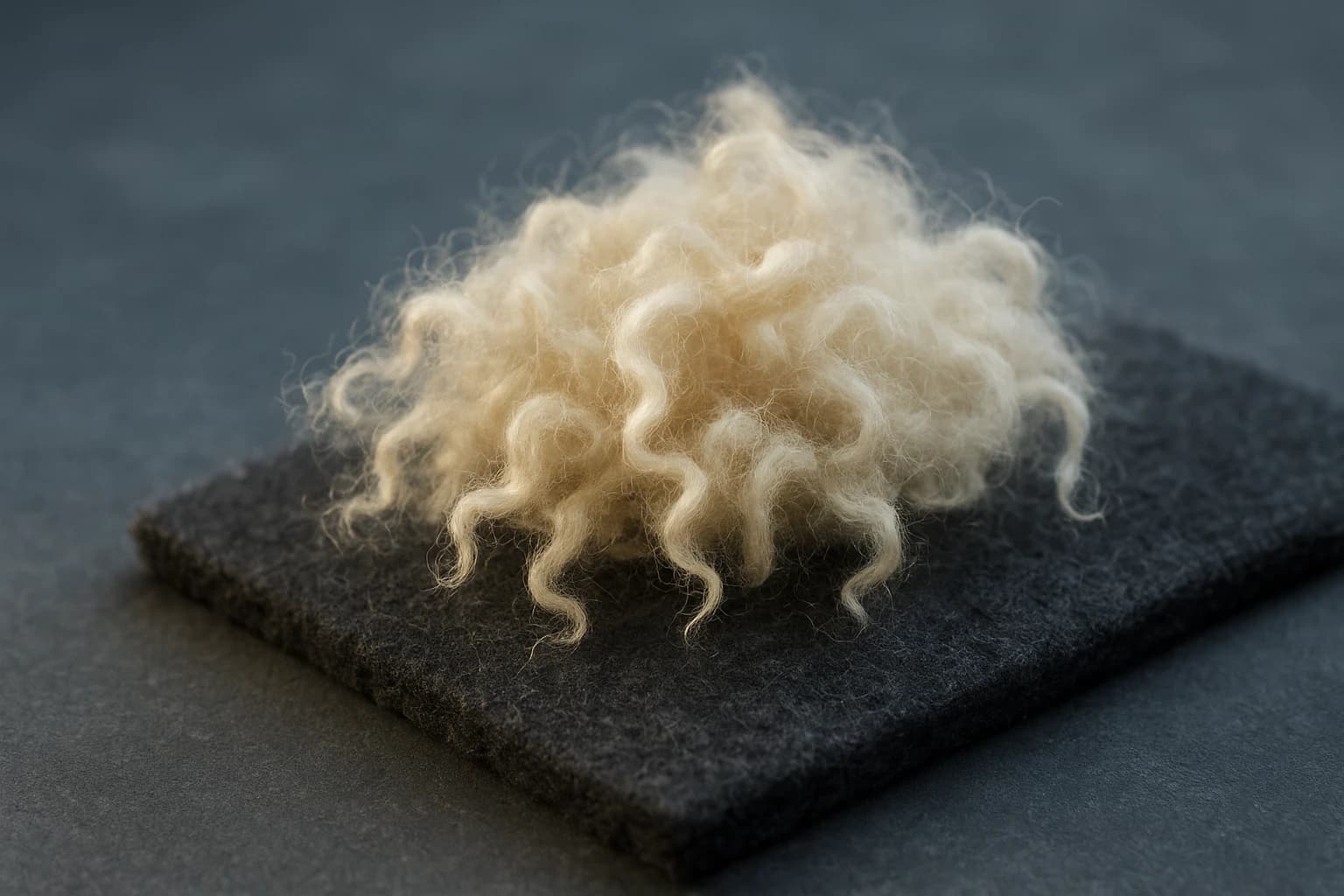
The Science Behind Highland Wool & Felt Fibres
Have you ever wondered how a traditional Kyrgyz yurt effortlessly withstands temperature swings from -30 °C in the depths of winter to +40 °C at the height of summer? The nomads' answer to these unforgiving forces of nature is as simple as it is brilliant: pure highland wool.
The Makers
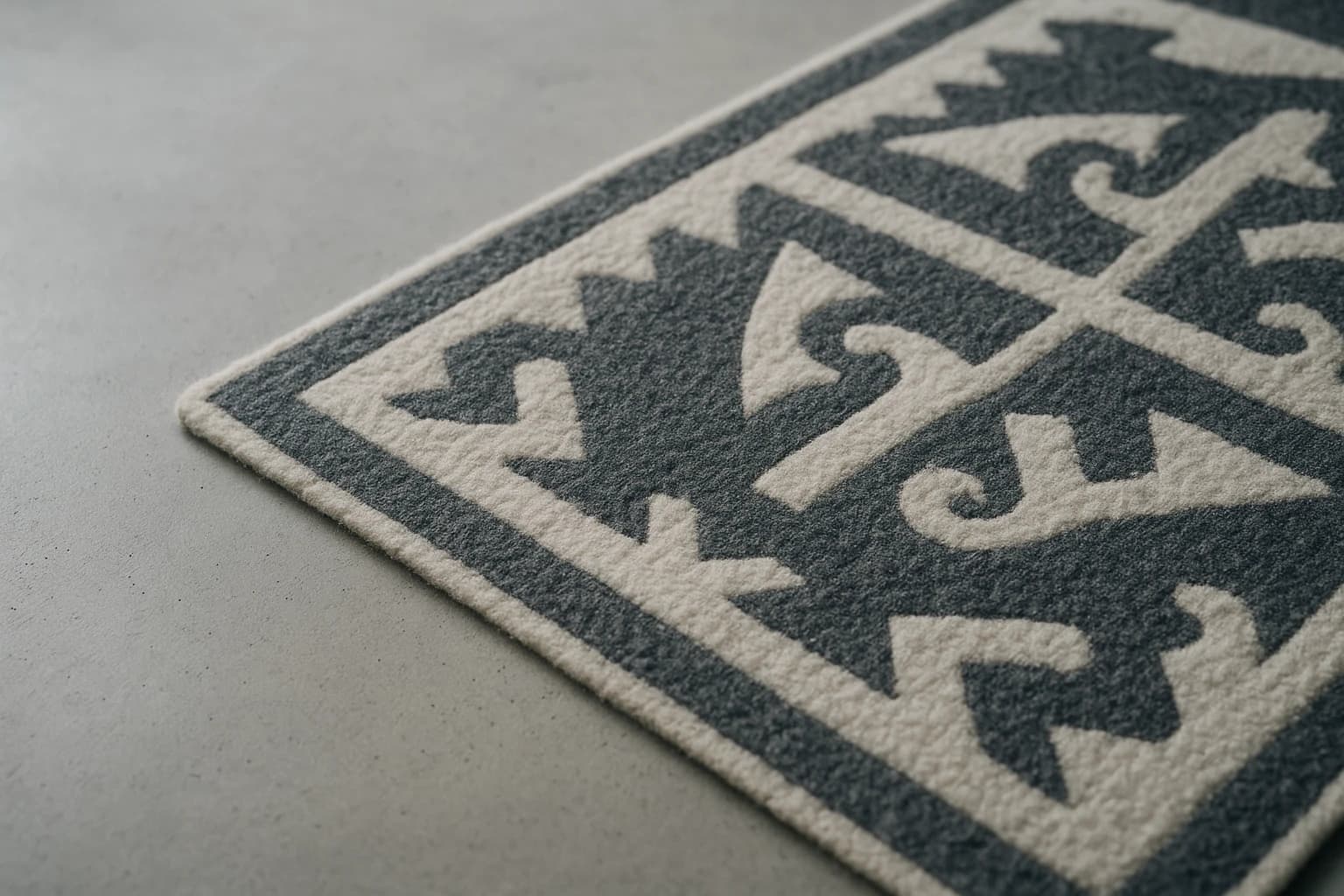
Timeless Design Principles of Kyrgyz Patterns and Their Enduring Appeal
If you're in the process of choosing interiors for your home, you're probably facing a familiar dilemma: you want pieces that bring warmth, character, and a story into your rooms. At the same time, you want to avoid losing elegance to overloaded or mass-produced ethno decoration.
The Makers
The ULU Philosophy: What Drives Us and What You Get Out of It
In a world of fast-moving trends and interchangeable products, you are right to ask: what does a brand truly stand for? Is its commitment to values just a marketing facade, or the actual foundation of every decision? At ULU, we have made this question our core.
The Makers
How to Spot Synthetic Dyes in Textiles: A Simple Guide
Imagine standing in front of a rack of vibrantly coloured T-shirts. But have you ever wondered where that perfectly radiant colour comes from? This guide is your personal compass for telling synthetic from natural dyes — no chemistry degree required.
The Makers
Quality Markers & Authenticity of Kyrgyz Highland Honey
When you open a jar of genuine Kyrgyz highland honey for the first time, you will probably pause for a moment. The color is not amber-gold or dark brown, but milky-white to pearlescent. The texture is more reminiscent of delicate butter than viscous syrup.
The Makers
Das weiße Gold Kirgistans Was Sainfoin-Honig auszeichnet
Sie haben von ihm gehört oder ihn vielleicht sogar schon gesehen: diesen fast mythisch anmutenden, cremeweißen Honig. In einer Welt voller goldgelber Sorten sticht er sofort heraus. Doch was steckt wirklich hinter dem "weißen Gold" aus den Hochgebirg
The Makers
The Philosophy of Slow Living: Finding Calm in Everyday Life
Do you sometimes feel like you're on a hamster wheel that keeps spinning faster? This guide is an invitation to understand the principles of slowing down and discover how to anchor them in your life — for more calm, more meaning, and more joy.
The Makers
Shyrdak Rugs in the Modern Home
You know the feeling: you discover a unique, handcrafted piece that tells a story — like a traditional Shyrdak rug from Kyrgyzstan. You're captivated by the bold colours and the meaningful patterns. But then a quiet voice asks: "Will such a statement piece really fit in my modern, perhaps even minimalist home?"
The Makers
Slow Fashion & The Ethical Wardrobe: Your Path to Conscious Style
Ready to ditch the overflowing closet full of "nothing to wear" moments? This guide walks you through building an ethical wardrobe system — from capsule wardrobes to natural fibre care — with a special focus on the unmatched qualities of pure highland wool.
The Makers
Sainfoin Honey and Other Highland Honeys Discovering the Differences
Have you ever wondered what turns a spoonful of honey into more than just a sweet treat? Imagine standing in front of a shelf of different honeys. One is almost snow-white and creamy, another glows like liquid gold. Both are labelled "highland honey," yet their worlds could hardly be more different.
The Makers
Unpasteurised vs. commercial honey: a guide to purity and origin
Do you sometimes stand in front of the honey shelf at the supermarket feeling lost? The selection is vast: liquid, creamy, local or from distant lands. But the most important distinction, the one that decides flavour and quality, is often overlooked: unpasteurised or industrially processed?
The Makers
Elegance at Home: How Stylish Felt Ballerinas Perfect Your Home Look
The home has transformed. It is no longer just a retreat, but our office, our cafe, and often the place where the most important moments of the day unfold. Discover how handcrafted felt ballerinas bring effortless style to your everyday.
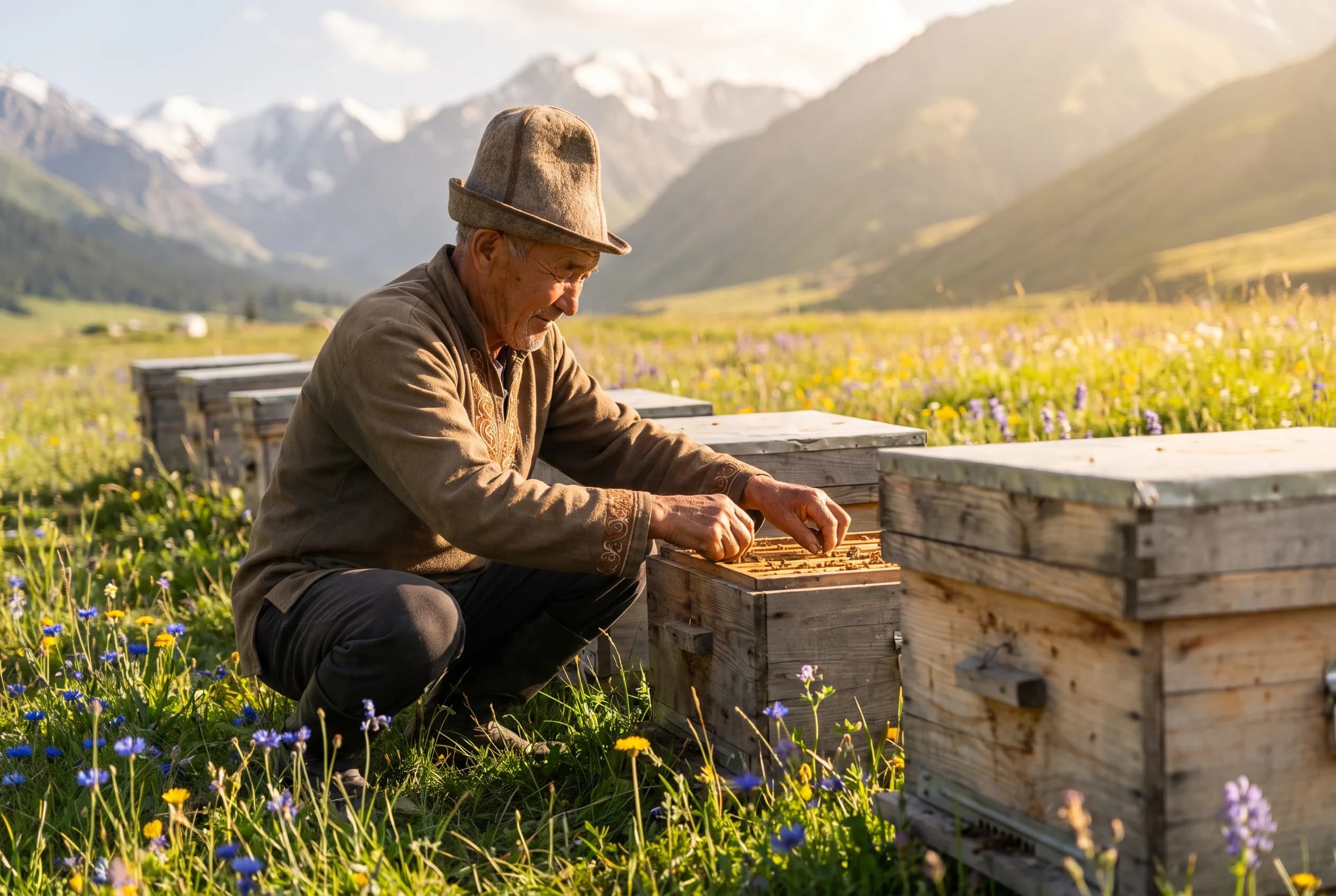
The Makers
Raw Material Sourcing in the Kyrgyz Highlands
You are looking for products with soul. Products where \"sustainable\" and \"ethical\" are not empty marketing promises but lived reality. In a world full of greenwashing, the crucial question is: How do I know if the story behind a product is genuine?
The Makers
The Psychology of Mindful Consumption
Do you sometimes feel caught in a strange contradiction? On the one hand, we know we want to live more sustainably. On the other, the consumer world lures us with the promise that the next product, the next bargain, will finally make us happier.

The Makers
Nomadic Pedagogy: Learning in Harmony with Nature
Picture a classroom. Perhaps you see desks, chairs, a blackboard, and books. Now picture a different classroom: one without walls, whose ceiling is the endless sky and whose floor is the vast steppe of Central Asia.
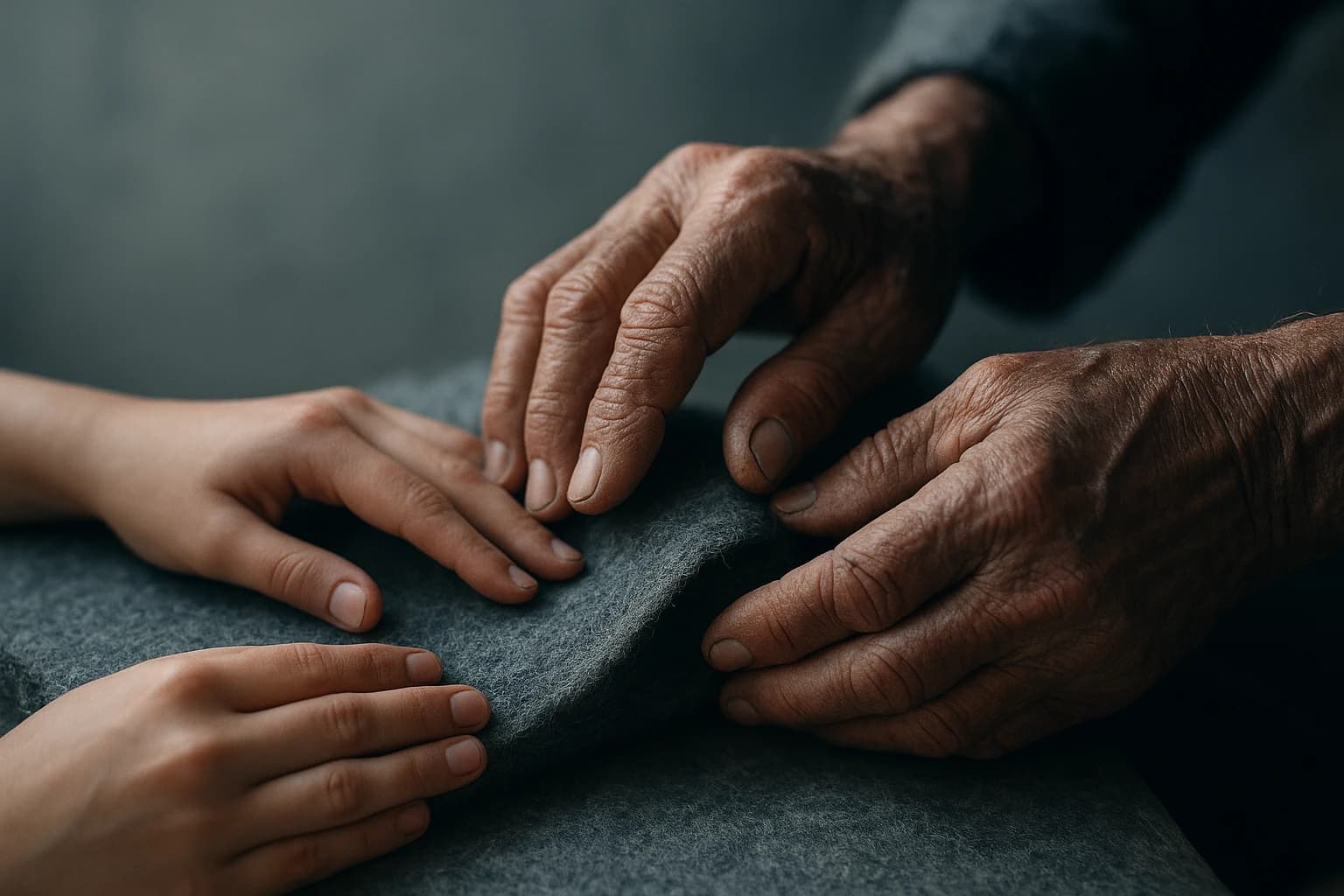
The Makers
Kyrgyz Textile Art: Weaving, Felting, and the Language of Patterns
Kyrgyz textile art is among the oldest and richest in the world. From wet felting to band weaving to embroidery — every technique has its roots in nomadic life. An overview of crafts that remain alive to this day.
The Makers
The Philosophy of Slow Living & Mindful Consumption
We live in an age of constant acceleration. Our closets are full, our calendars are bursting at the seams, yet many of us feel a deep inner restlessness. If you find yourself questioning your buying decisions and searching for things with real staying
The Makers
How to Identify Handwoven Scarves Your Guide to Authentic Craftsmanship and Quality
In a world of fast-moving trends and mass production, we long for things with soul. A handwoven scarf is more than just an accessory — it is a promise. The promise of time, care, and a direct connection to a centuries-old tradition.
The Makers
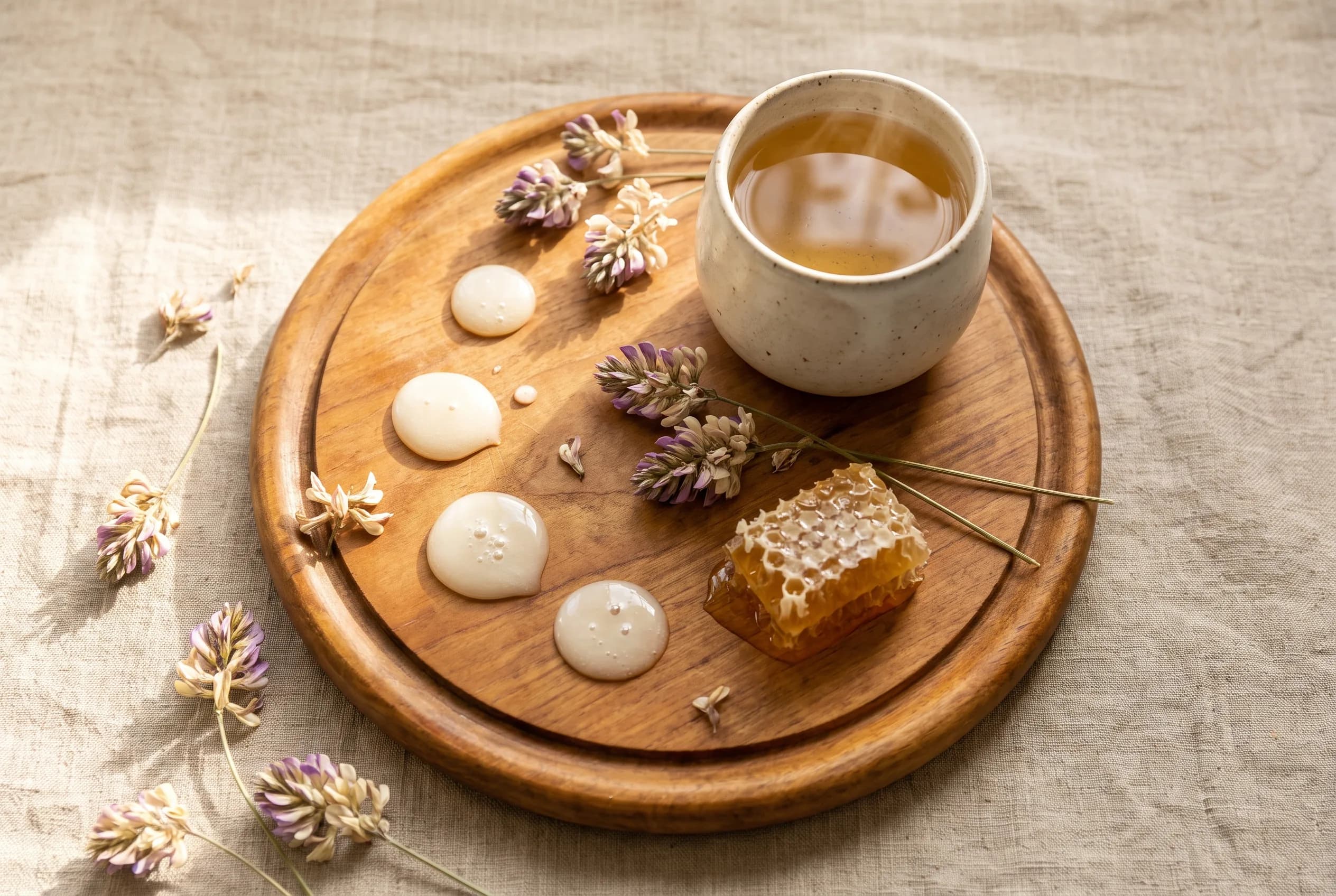
The Complete Flavour Profile of Sainfoin Honey
Have you ever tasted a spoonful of honey and simply thought: "sweet"? That's a common experience. But what if I told you that a single spoonful holds an entire story? A story of high-altitude mountain meadows, of the work of tireless bees, and of a sensory complexity that goes far beyond mere sweetness.
The Makers
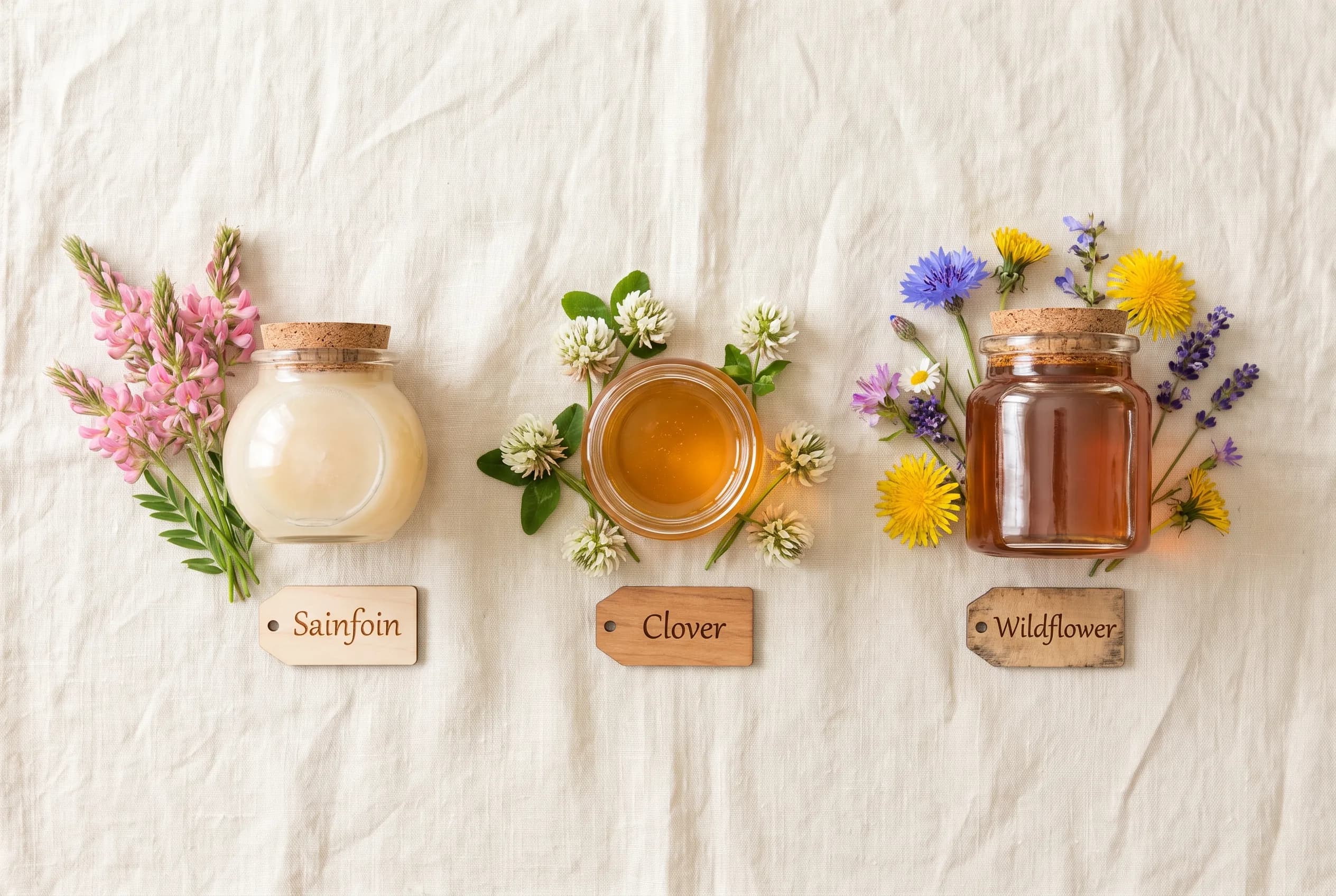
Why Honey Varieties Taste So Different
Have you ever stood at the honey shelf wondering why one jar is mild and golden while the one next to it is bold, dark, and almost spicy? Is it just the flower on the label? The answer is far more fascinating and takes us into a world
The Makers
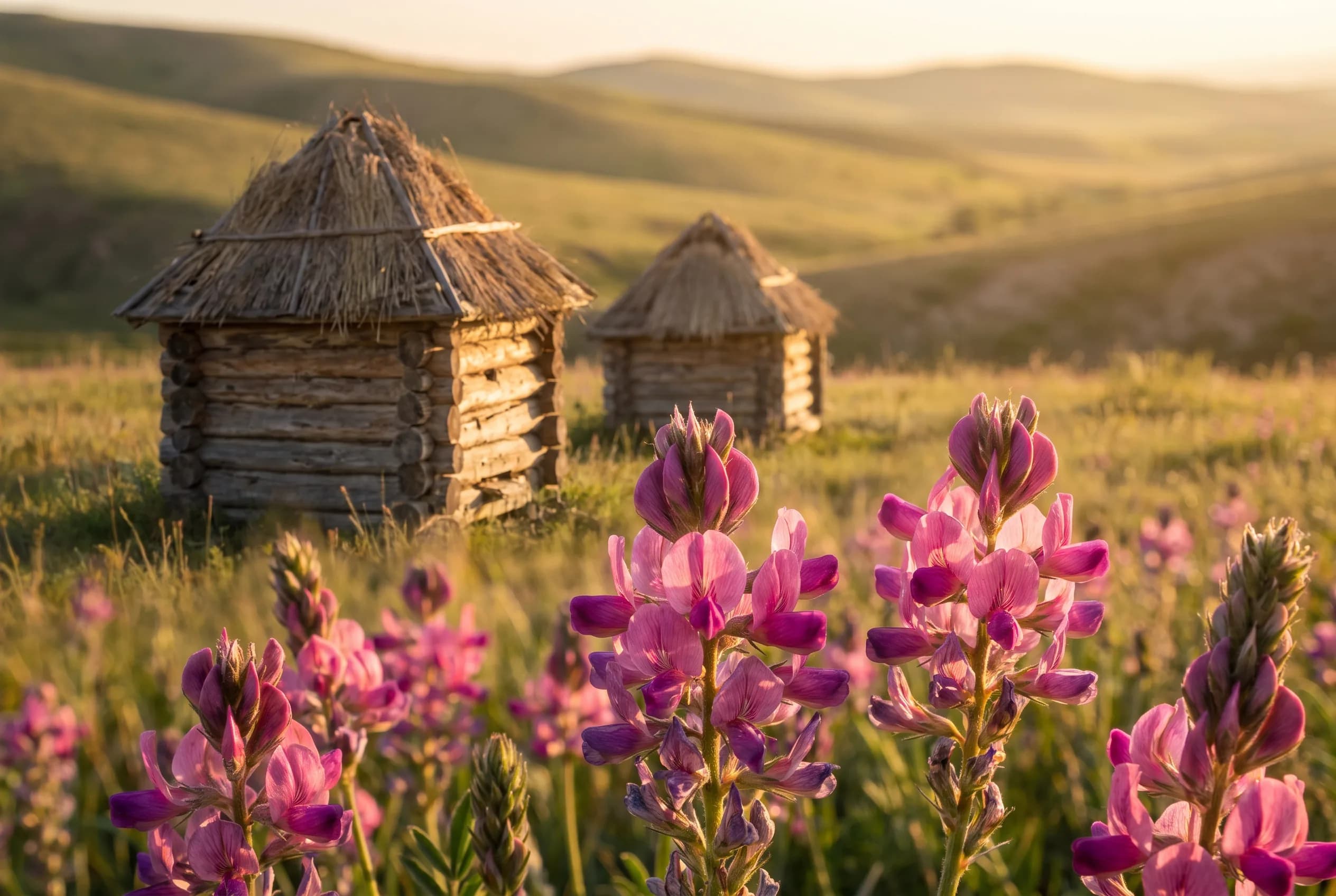
How Origin and Blossoms Shape the Taste of Honey
Have you ever stood in front of the honey shelf at the supermarket, wondering why one jar is golden and liquid while the one next to it is creamy-white and firm? Why one tastes delicately floral while another is bold and malty? The price difference
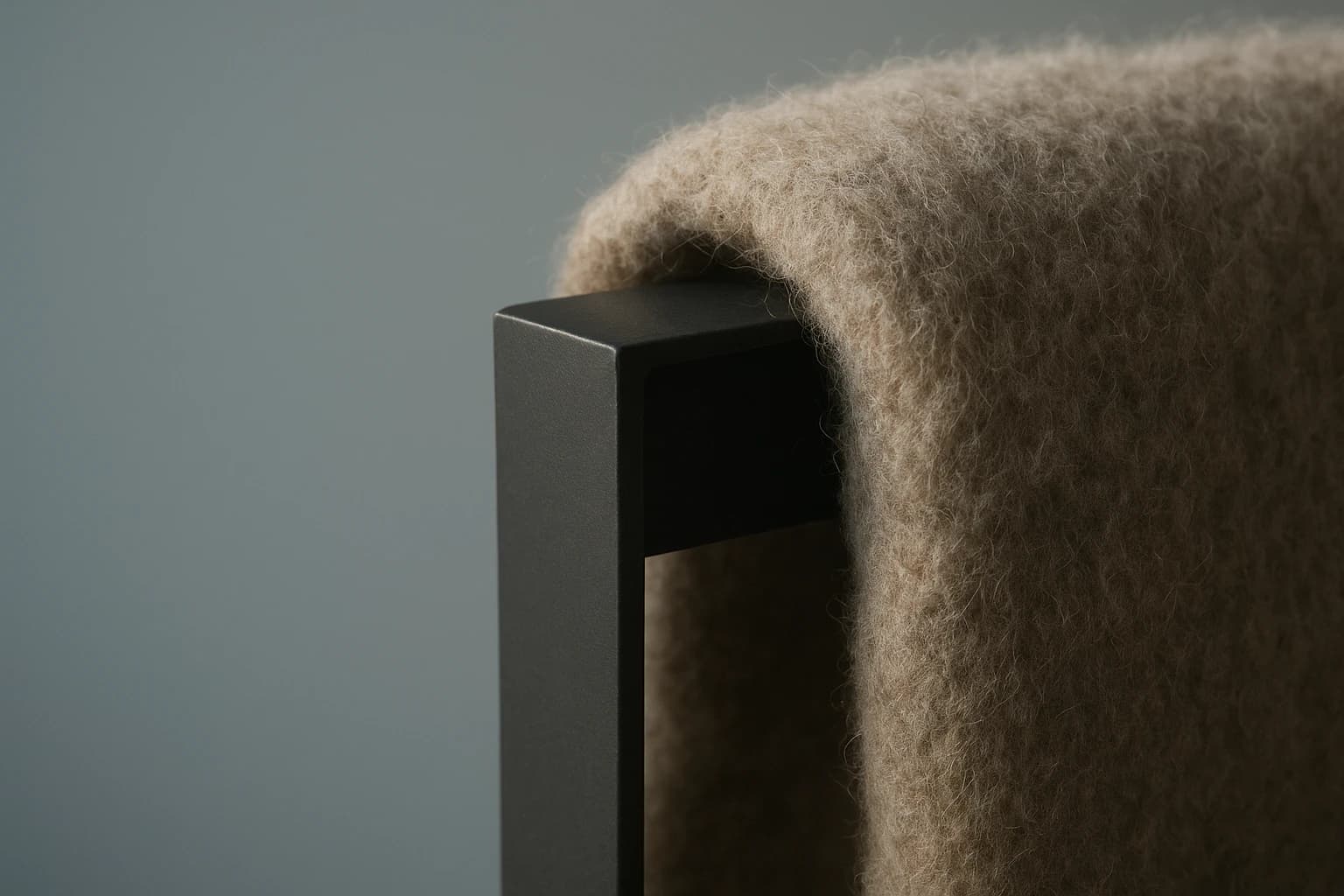
The Makers
Kyrgyz Felt Art: Shyrdak — A Masterpiece of Wool and Colour
Shyrdak rugs are more than decoration — they are Kyrgyz identity woven into felt. Every pattern tells a story, every colour carries meaning. A glimpse into a craft that has endured for centuries.
The Makers
Handmade vs Mass Production: Why Quality Is Worth It
Sound familiar? You're delighted by a bargain — a new jacket, a stylish pair of shoes, a decorative piece — only to find a broken zip, a split seam, or fading colours just weeks later.
The Makers
Esparsette-Honig vs gängige Honigsorten Ein Leitfaden für Kenner
Stehen Sie auch manchmal vor dem Honigregal und fühlen sich von der Auswahl fast ein wenig überfordert? Rapshonig, Akazienhonig, Blütenhonig – die Unterschiede sind oft nicht sofort klar. Sie suchen nicht einfach nur etwas Süßes, sondern ein besonder
The Makers
Dressing Consciously: ULU Scarves as an Expression of Style and Appreciation
A glance into the wardrobe often tells a story of impulse purchases and fleeting trends. Countless accessories, yet only a few that truly hold meaning. With scarves in particular, this pattern repeats: you buy a new colour for a new coat, only to find next year that the material scratches, the shape sags, or the style no longer fits.

The Makers
The Philosophy of the Conscious Home
Perhaps you know this moment: you stand in your living room, your gaze sweeping over full shelves, countless decorative objects, and furniture. Instead of finding calm, you feel a subtle restlessness. You are not alone — according to a recent survey, 53 percent of Germans see their home primarily as a desperately needed retreat from hectic everyday life.
The Makers
Understanding Mountain Honey: Quality from 3,000 Metres Altitude
On the shelves of delicatessens and online shops you'll find countless types of honey. Every jar promises "pure nature" and "the finest quality." But look closer and the promises often remain vague. What exactly does "mountain honey" mean? And why should honey from the highlands of Mexico or Spain be better than a local blossom honey?
Frequently Asked Questions
Delicate, floral, and mild — with a clean sweetness and almost no bitter or acidic notes. It is one of the most neutral monofloral honeys and pairs extremely well with tea, yoghurt, and mild cheeses.
Sainfoin grows only on calcareous, dry mountain soils and cannot be cultivated commercially. The flowering season lasts only four to six weeks per year. The combination of specific growing conditions, limited geographic distribution, and short harvest window makes large-scale production impossible.
"Better" depends on what you are looking for. Acacia honey is milder and stays liquid longer. Sainfoin honey has a more complex phenolic profile and forms a characteristic creamy consistency.
At room temperature, sealed and away from direct sunlight. Honey never spoils, but heat and UV light degrade the enzyme profile. Do not store in the refrigerator — cold accelerates crystallisation and makes the honey difficult to spread.
Sainfoin only grows naturally in unfertilised, near-pristine mountain areas. There is no intensively farmed agriculture at 2,400–3,500 metres.
Mountain honey is a geographic designation — honey produced at elevation. It can come from many botanical sources. Sainfoin honey is a monofloral designation — it must come predominantly from sainfoin blossom. All genuine sainfoin honey is mountain honey, but not all mountain honey is sainfoin honey.
Sainfoin honey is not available in supermarkets. kein Problem When buying, always ask for origin declaration, altitude, and ideally a pollen analysis certificate.

ULU Redaktion
Redaktion
Das ULU Team recherchiert und schreibt zu Honig, Herkunft und bewusstem Genuss.
Related Articles
The Makers
Manuka Honey Alternative: Why Sainfoin Honey Might Be the Better Choice
Manuka honey has dominated the premium honey market for years. But a closer look at the science raises a question: is there a better alternative?
The Makers
White honey: what it is, where it comes from and where to buy it
White honey is honey whose glucose has crystallised into very fine crystals. The crystals reflect light, which is why it looks creamy white. Which varieties do this, where they come from and how to recognise good white honey.
The Land
3,000 Metres: Why Genuine Mountain Honey Comes from the Tian Shan
Most honey labelled "mountain honey" comes from valleys at a few hundred metres elevation. Genuine mountain honey from the Tian Shan is something entirely different — and the difference starts at 2,400 metres.
From the Hive
Honey knowledge the supermarket skips
Twice a month: varietals, harvest, origin. Plus 10% off your first order.
10% off your first order · No spam. Unsubscribe anytime.