
The Makers
Best Honey in Germany 2026
Last updated:
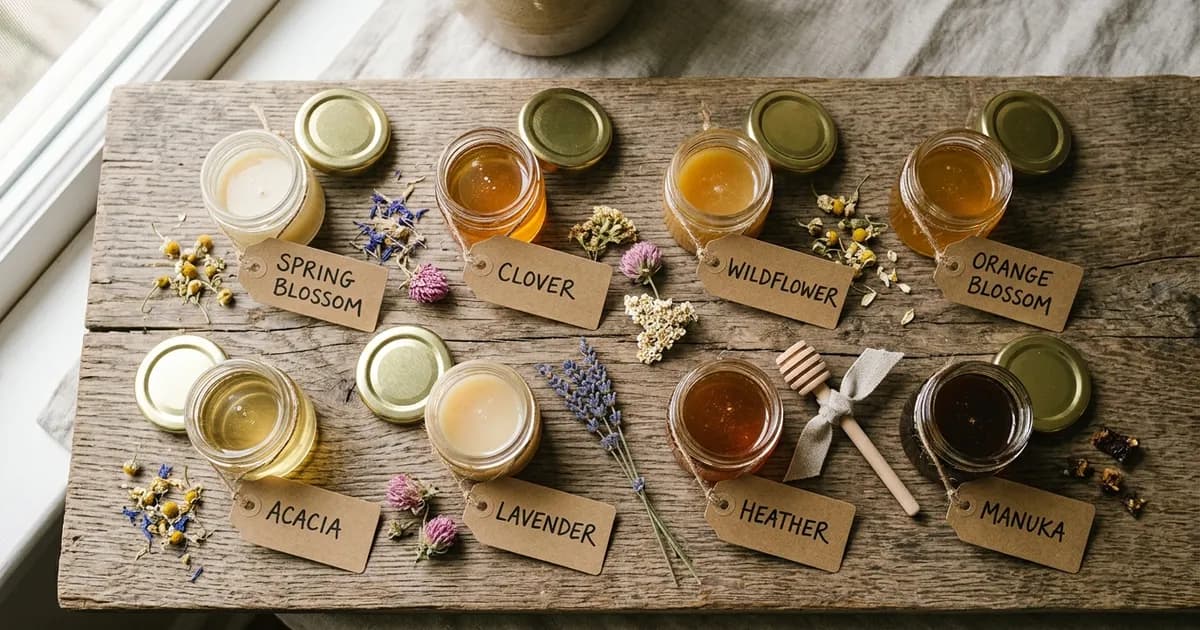
TL;DR: The best honey isn't necessarily the most expensive. Manuka is good — but expensive, frequently adulterated, and solves only one problem. German forest honey remains an insider tip for those who prefer local. The full ranking follows below.
What actually makes a honey good?
When someone asks "What is the best honey in Germany?" they usually mean three different things at once: good taste, high quality, and some kind of health benefit. The answer is more complicated than any marketing packaging would suggest.
Three measurable quality criteria make a honey objectively better:
| Criterion | Why it matters | What is measured |
|---|---|---|
| Polyphenol content | Plant compounds that are intensively studied in research | DPPH assay (IC50 value), GAE concentration |
| HMF value | Freshness indicator — lower = better processed and stored | mg/kg (EU limit: 40, DIB standard: 15) |
| Moisture content | Below 18% prevents fermentation and quality loss | Percent |
| Botanical purity | Monofloral honey has a defined flavor and nutrient profile | Pollen analysis (>45% of the dominant plant species) |
The 7 best honey varieties compared 2026
Overview table
| Rank | Honey variety | Origin | Price range (250 g) | Polyphenols | Special feature |
|---|---|---|---|---|---|
| 1 | Manuka Honey (UMF 10+) | New Zealand | €30–55 | High (MGO-based) | Well-known, expensive, fraud risk |
| 2 | German Forest Honey | Germany | €8–14 | High (honeydew) | Local, mineral, dark |
| 3 | Acacia Honey | Germany/Hungary | €7–13 | Medium | Mild, stays liquid for a long time |
| 4 | Lavender Honey | France/Spain | €10–18 | Medium-high | Aromatic, fine-crystallized |
| 5 | Chestnut Honey | Italy/Spain | €9–16 | Medium-high | Bitter, strong, for cheese |
| 6 | Buckwheat Honey | Poland/Germany | €6–11 | High | Dark, intense, rare |
| 7 | Silver Fir Honey | Black Forest/Bavaria | €8–15 | High (honeydew) | German original |
#1 — Manuka Honey (New Zealand)
Quick verdict: Deservedly famous — but expensive, frequently adulterated, and primarily solves one specific problem.
Manuka honey has its own key value: methylglyoxal (MGO). This is not a marketing invention but well-documented biochemistry. Over 1,000 studies have examined Manuka, and the UMF/MGO grading system (e.g., UMF 10+ = MGO 263+) gives buyers clear guidance.
What buyers should know:
- Price: 250 g of UMF 10+ typically costs €30–55 in Germany. UMF 15+ costs €60–120. Per kilogram, that's €120–480.
- Fraud risk: Demand structurally exceeds production from New Zealand. Only buy products with a verifiable MGO certificate.
- Use case: As a table honey for daily enjoyment, Manuka is overkill.
For whom: Those specifically looking for an MGO grading and willing to dig deep into their pockets for a verified product.
Manuka vs. Sainfoin Honey: An Honest Comparison
#2 — German Forest Honey
Quick verdict: The underrated classic — dark, complex, rich in mineral compounds.
Forest honey is not blossom honey. It comes from honeydew — excretions from aphids and scale insects that tap tree sap. That sounds less appetizing than it is: honeydew honeys typically have a significantly higher mineral content than blossom honeys, a low glucose ratio (crystallizes more slowly), and a complex, slightly malty aroma.
What makes it more special than its price suggests:
- Deep, resinous-malty flavor profile — ideal for strong cheese, sourdough bread, marinades
- Higher natural mineral content due to honeydew origin
- Produced in Germany, short supply chains, known beekeepers
Weaknesses: Quality varies significantly by region and beekeeper. The EU Honey Directive does not require origin labeling at the varietal level — "forest honey" on the label says nothing about the forest.
Buying tip: Direct from beekeepers, specialist shops with verified origin, or certified brands with DIB quality testing.
#3 — Acacia Honey
Quick verdict: The reliable all-rounder — mild, long-lasting liquid, ideal for beginners.
Acacia honey (botanically from the black locust, Robinia pseudoacacia) is the best-selling varietal honey in Germany — and for good reason. The high fructose ratio (70–80% fructose) prevents it from crystallizing quickly. It stays liquid for months to years, has a subtle flavor, and pairs with almost everything.
What to know: "Acacia honey" from German supermarkets frequently comes from Hungary, Romania, or other Eastern European countries. That's not a problem per se — the black locust grows there in large quantities — but origin and quality control should be checked.
For whom: Everyday honey, sweetener, uncomplicated entry into varietal honeys.
#4 — Lavender Honey (France/Spain)
Quick verdict: The most elegant table honey — aromatic, finely crystallized, Southern European.
Real lavender honey from Haute-Provence or Spain is a delicacy. The honey smells and tastes unmistakably of lavender, crystallizes quickly into a fine, creamy consistency, and has a light yellow to amber hue.
What to watch for: Real lavender honey is expensive and rare. Cheap "lavender honeys" are often flavored or blossom blends with a lavender component. Monofloral declaration and origin labeling at the regional level are mandatory for genuine lavender honey.
For whom: Cheese platters, breakfast tables, hostess gifts, gourmets.
#5 — Chestnut Honey (Italy/Spain)
Quick verdict: Bitter and intense — a honey for people who don't want sweet stuff.
Chestnut honey tastes nothing like most other honeys. It is bitter-tart, almost tannic, dark brown, and more reminiscent of molasses than blossom honey. It naturally contains a higher polyphenol content than most blossom honeys.
For whom: Cheese (Pecorino, Gorgonzola), game marinades, whiskey cocktails. Not for children who want something sweet.
#6 — Buckwheat Honey
Quick verdict: One of the darkest and most polyphenol-rich honeys in Europe — barely known in Germany.
Buckwheat honey (from Fagopyrum esculentum) is intense, almost spicy-bitter, very dark (almost black), and crystallizes quickly. It has one of the highest measured polyphenol content s among European honeys and is widely available in Poland and Ukraine.
Why it's rare in Germany: Buckwheat farming is marginal in Germany. Real buckwheat honey usually comes from Poland or the Baltic states.
For whom: Adventurous honey buyers, people who like it intense, and anyone who wants to explore the range of European honey varieties.
Rarest honey varieties at a glance
#7 — Fir Honey (Black Forest/Bavaria)
Quick verdict: The German original among honeydew honeys — mineral, dark, regional.
Fir honey, like forest honey, comes from honeydew — here specifically from aphids on silver firs (Abies alba) in the Black Forest, Bavaria, or the Alps. It is considered one of the most distinctive German varietal honeys, crystallizes very slowly, and has a long finish.
What distinguishes it from forest honey: Strict regional origin (fir regions) and a more pronounced mineral note. Genuine fir honey from the Black Forest is a regional quality product.
Our honey: sainfoin honey from Kyrgyzstan
Not part of the ranking — ULU sells this honey itself.
ULU sources its sainfoin honey through our beekeeping partner from four regions of the Kyrgyz Tian Shan (Naryn, Issyk-Kul, Talas, Osh), at 2,400 to 3,500 metres.
- Texture: creamy white, naturally crystallised
- Processing: gently processed at max. 40 °C, not pasteurised
- Price: €34.90 per 500 g (€6.98 per 100 g)
- Award: Our mountain honey took Silver at the 2019 Apimondia World Beekeeping Awards in Montreal. Apimondia is the International Federation of Beekeepers' Associations.
More about sainfoin honey | Buy ULU sainfoin honey
From the Hive
Honey knowledge the supermarket skips
Twice a month: varietals, harvest, origin. Plus 10% off your first order.
10% off your first order · No spam. Unsubscribe anytime.
Which honey is the best in the world?
There is no world ranking for honey, and taste can't be weighed. The one you can name is the most expensive. Guinness World Records lists Centauri Honey from Turkey as the most expensive honey, sold in Istanbul on 16 February 2021 for €10,000 per kilogram. It comes from caves at 2,500 m, 10 to 15 kg a year.
Price tells you little about the jar on your breakfast table. Three measures from the table above do: water content, HMF, and a pollen analysis for botanical purity. They work the same for honey from Germany, New Zealand or Kyrgyzstan.
Which honeys count as rare, and what they cost, is in The 8 rarest honeys in the world.
Frequently Asked Questions
Which honey has the highest polyphenol content?
Among the varieties available in Germany, buckwheat honey often ranks at the top, followed by chestnut honey, forest honey, and fir honey.
Is Manuka honey worth the money?
It depends on the purpose. As an everyday honey for sweetening or daily enjoyment, the price-performance ratio is far worse than comparably high-quality alternatives. Anyone buying Manuka should insist on a verified MGO certificate.
What does "best honey" mean — taste or composition?
Both are legitimate criteria, but they measure different things. Taste is subjective and depends on the intended use. Composition is measurable — polyphenol content, HMF value, water content, botanical purity are objective quality parameters. A good honey should be solid in both dimensions.
Which honey is best for daily use?
For daily use at breakfast, sweetening, or as an ingredient, acacia honey (mild, stays liquid long), sainfoin honey (creamy, mildly sweet), and forest honey (more intense, regional) are good options. The right honey depends on personal taste and intended use.
What is the difference between blossom honey and honeydew honey?
Blossom honey comes from the nectar of flowers — acacia honey, lavender honey, sainfoin honey, and most varietal honeys fall into this category. Honeydew honey (forest honey, fir honey) comes from the excretions of insects that tap tree sap. Honeydew honeys are typically darker, richer in minerals, and have a more complex flavor note.
Why does honey crystallize?
Crystallisation is a natural process and a quality indicator — not a sign that the honey has gone bad. Honey crystallises because glucose precipitates out of solution. Varieties with a high fructose ratio (acacia honey) crystallise slowly or not at all. Varieties with a high glucose content (rapeseed honey, sainfoin honey) crystallise quickly into a creamy texture. Sainfoin honey develops particularly fine, uniform crystals.
Where can I buy real German honey?
Directly from the beekeeper is the most reliable source. In addition, specialist retailers and brands with traceable origin information are recommended. The DIB quality seal (German Beekeepers' Association) guarantees minimum standards. Supermarkets often carry blends or imported goods without precise origin declarations.
What makes Kyrgyz sainfoin honey a rare variety?
Sainfoin honey (Onobrychis viciifolia) is largely unknown in Europe. Sainfoin is an old European fodder plant that nearly disappeared with the rise of modern agriculture. In Kyrgyzstan, it still grows in large quantities on high alpine meadows between 2,400 and 3,500 metres — without pesticide use, because there is no intensive agriculture at this altitude.
The result is a honey with a clearly defined polyphenol profile (gallic acid 291 µg/g, taxifolin 22 µg/g, 60 identified aroma compounds with 71% terpenoids) and a mild, creamy-sweet flavour.
More about sainfoin honey and its compounds | Kyrgyz honey — origin and quality
Comparison: ULU sainfoin honey vs. Manuka
| Property | ULU sainfoin honey | Manuka UMF 10+ |
|---|---|---|
| Origin | Tian Shan, Kyrgyzstan (2,400–3,500 m) | New Zealand |
| Price | €34.90 / 500 g (€6.98 / 100 g) | €30–55 / 250 g |
| Grading system | No standardised scale | UMF/MGO scale |
| Scientific studies | 5–10 | 1,000+ |
| Apimondia | Silver 2019 (Apimondia World Beekeeping Awards, Montreal) | Multiple (NZ/Australia) |
| Crystallisation | Fine-creamy, fast | Mostly liquid |
| Distinctive angle | Origin, creamy texture | MGO grading |
Buying guide: What to look for when purchasing honey
5 things that indicate a good honey:
- Origin declaration: Country and ideally region — "EU/non-EU blend" is a red flag.
- HMF value: Not always on the label, but available on request from the beekeeper. Below 15 mg/kg is the premium standard.
- Pollen analysis: Monofloral honey should document the dominant pollen type with a percentage.
- Crystallisation: Liquid honey in winter is an indication of heating or filtration. Real honey crystallises.
- Beekeeper transparency: A beekeeper who discloses their operations, harvest years, and lab reports has nothing to hide.
Conclusion: The best honey is the one that suits you
There is no single "best honey" — but the quality of information available at the point of purchase varies dramatically.
For everyday enjoyment without overthinking: acacia honey or forest honey. If you want an MGO grading: verified Manuka with MGO certification. For regional connection: fir honey or forest honey from German beekeepers.
ULU sainfoin honey — buy now | Sainfoin honey review: What does the data say?
References
- Apimondia World Beekeeping Awards 2019, Montreal — Silver (verified on the physical medal, 15.06.2026)
- UNDP Kyrgyzstan — Honey export data
- EU Directive 2001/110/EC — Honey standards
- EU Regulation 1924/2006 — Health claims
EU Disclaimer
Under EU food law (Regulation EC No. 1924/2006), general health claims for food products without reference to a specifically authorised nutrient are not permitted. The laboratory values mentioned in this article describe the chemical composition of the honey based on independent scientific studies. They do not constitute a health claim within the meaning of EU Regulation 1924/2006 and are not to be understood as therapeutic promises.
Share

Jamilia
Autorin, ULU Magazin
Jamilia schreibt über kirgisisches Handwerk, Honig und die Geschichten hinter den Produkten. Aufgewachsen in Zentralasien, lebt sie zwischen Bischkek und Berlin.
Related Articles

The Makers
What Is Sainfoin Honey? The Complete Guide to a Rare Honey
Some honeys you find in every supermarket. Then there is sainfoin honey.

The Makers
Luxury Honey: What Premium Honey Actually Means
The gap between a €3 supermarket honey and a €40 specialty jar is bigger than most people think. What real quality comes down to.
The Makers
Buying White Honey — What to Look For
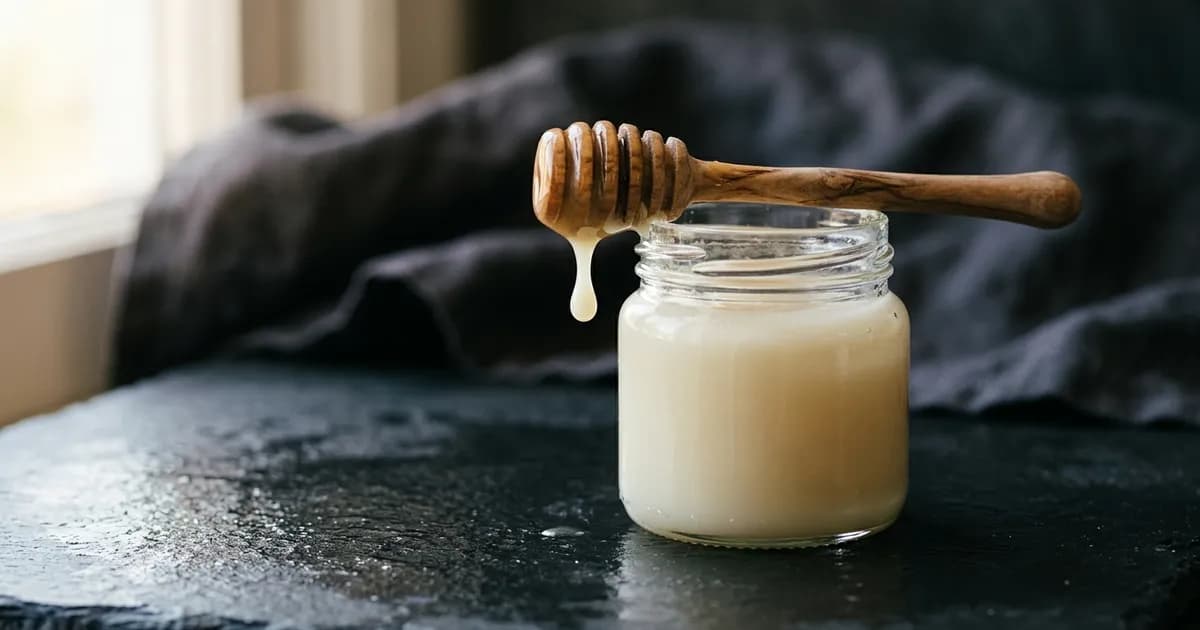
White honey forms through natural crystallisation of high-glucose honey varieties — no bleaching, no additives. Genuine white sainfoin honey comes almost exclusively from Kyrgyzstan (Tian Shan, 2,400–3,500 m). Five criteria matter when buying: varietal name on the label (sainfoin honey), specific origin region with altitude, available pollen analysis, storage note max. 20 °C, and a price of EUR 20–40 per 250 g for documented quality. ULU's Sky Nectar comes from the cooperative, Apimondia Silver 2019 (Canada), from four Kyrgyz highland regions with available 2025 lab reports.
From the Hive
Honey knowledge the supermarket skips
Twice a month: varietals, harvest, origin. Plus 10% off your first order.
10% off your first order · No spam. Unsubscribe anytime.