
The Makers
Handmade vs Mass Production: Why Quality Is Worth It
Last updated:
Sound familiar? You're delighted by a bargain — a new jacket, a stylish pair of shoes, a decorative piece — only to find a broken zip, a split seam, or fading colours just weeks later. In that moment, the low price suddenly becomes very expensive. You haven't just lost money — you've gained yet another useless product destined for the landfill.
This experience forces us to confront a fundamental question: what is a product truly worth to us? Is it the short-lived thrill of a cheap purchase, or the lasting satisfaction of enduring quality?
The choice between handmade products and industrially mass-produced goods is more than a matter of taste. It is a choice about values, longevity, and the kind of world we want to live in. This article is not a manifesto against modern industry — it is a clear, evidence-based guide to help you understand the true costs and the immeasurable value behind every product. We dig deep to give you the facts you need for a mindful and confident purchase decision.
Quality You Can Feel: The Materials and Durability Check
The most striking difference between a handcrafted piece and a mass-produced product often comes down to materials. While mass production relies on cost-optimisation through synthetic fabrics like polyester and acrylic, traditional artisan workshops draw on the proven quality of natural materials.
The facts speak for themselves:
- A growing market: Sustainable products are growing 2.7 times faster than conventional goods in Germany, a clear signal of a consumer mindset shift (NielsenIQ).
- A conscious choice: Nearly half of German consumers (49%) consider sustainability in fashion important and are willing to pay more for products that align with their values (Mintel).
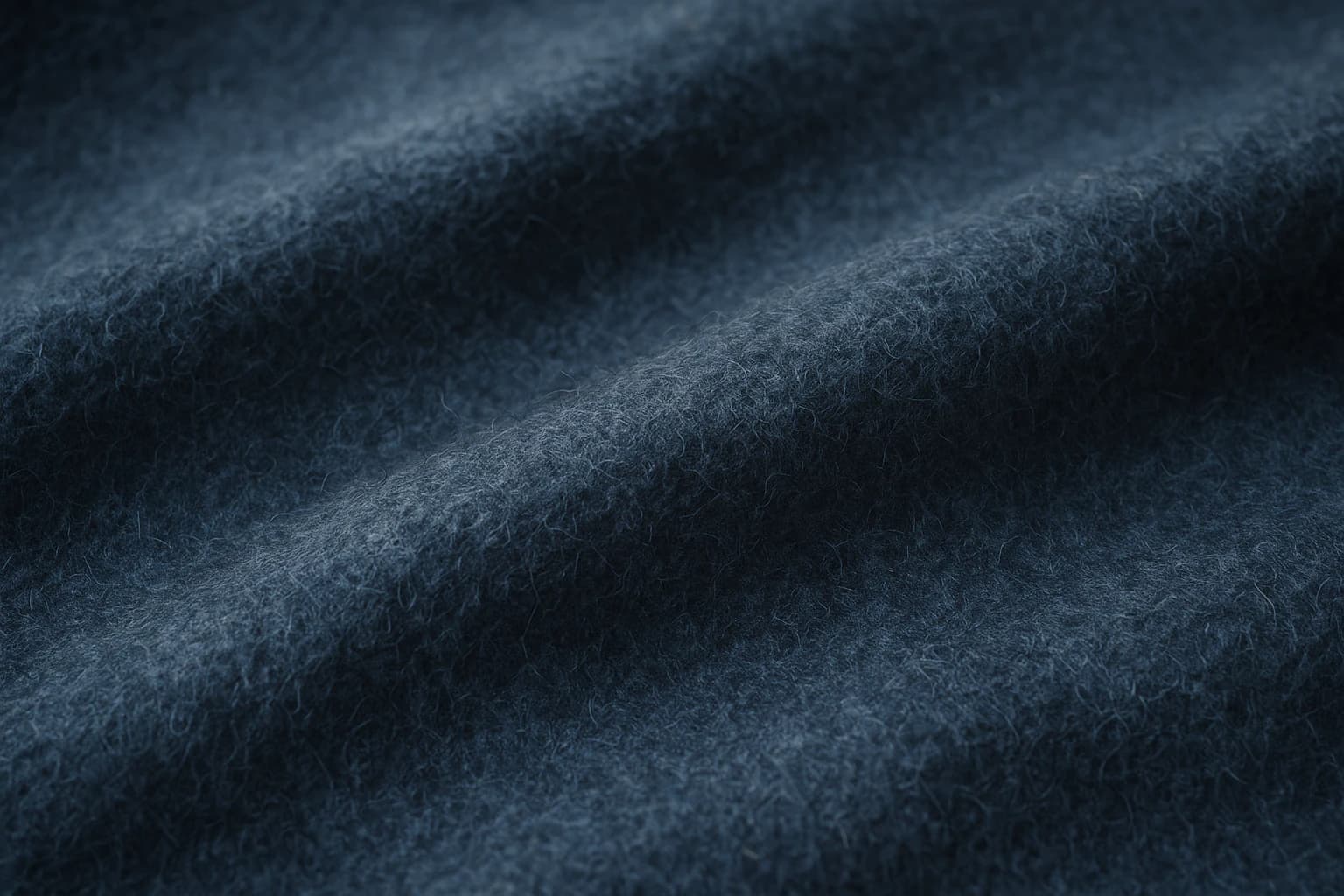
But what does this mean in practical terms for durability? Synthetic fibres may seem robust in the short term, but their weaknesses often only emerge over time. They are prone to pilling, lose their shape, and their colours wash out. Natural fibres like the Kyrgyz highland wool used for our hand-woven wool scarves possess a natural elasticity and resilience. They age with grace and, with proper care, often grow more beautiful over the years.
The True Cost: A Simple Calculation
Imagine you buy an acrylic scarf for 20 euros. It barely survives one season without losing its shape. The next year, you buy another. After five years, you've spent 100 euros and gone through five scarves.
Compare that with a hand-woven wool scarf for 90 euros that accompanies you for a decade or longer with proper care. Your cost per year? Just 9 euros. Investing in quality is not only a matter of sustainability — it is also sound economics. It is the difference between a disposable item and a lifelong companion.
[IMAGE: A detailed macro photo showing the dense, high-quality texture of a hand-woven wool scarf from ULU-Style.]
The Ecological Footprint: Less Is the New More
Every product has a life cycle — from raw material extraction through production to disposal. This is where the contrasts between handcraft and mass production become most stark.
The fast fashion industry relies on an endless stream of new collections, leading to enormous resource consumption and waste. Synthetic materials, derived from petroleum, have a devastating long-term impact: with every wash, they release microplastics into our water, which enter the oceans and burden ecosystems for centuries. Natural materials like wool or wood, by contrast, are fully biodegradable and leave no permanent damage.
A handcrafted product stands for a different philosophy: quality over quantity. Instead of five cheap jumpers, you own one that truly keeps you warm, holds its shape, and whose production did not unnecessarily burden the environment. This conscious reduction is not deprivation — it is a gain in value and an active contribution to protecting our resources.
From the Hive
Honey knowledge the supermarket skips
Twice a month: varietals, harvest, origin. Plus 10% off your first order.
10% off your first order · No spam. Unsubscribe anytime.
The Hands Behind the Product: Social Value Creation Instead of Anonymous Factories
Do you know who sewed your clothes? Who knotted your rug? With mass-produced goods, these questions almost always go unanswered. Supply chains are long, opaque, and working conditions often questionable.
Artisan production, by contrast, puts people at the centre. It tells a story — the story of the person whose talent, experience, and passion went into your product. At ULU-Style, we know our partners personally. We work directly with herding families and artisan women in the highlands of Kyrgyzstan.
[IMAGE: An authentic photo of a Kyrgyz artisan woman working with focus and a smile on a felt product. The setting is traditional and bright.]
This direct-trade model has profound advantages:
- Fair pay: By cutting out middlemen, we ensure that a fair wage reaches the families who create these unique products.
- Preservation of traditions: Your purchase decision actively supports the preservation of centuries-old craft techniques that would otherwise be lost.
- Transparency and trust: You are not buying an anonymous product — you are buying a piece of living culture. Our philosophy is built on this deep connection between maker and customer.
By choosing a handcrafted product, you invest not only in a material good, but also in the wellbeing and cultural future of communities.
The Beauty of Uniqueness: Why Perfection Lies in Imperfection
Mass production strives for absolute uniformity. Every piece must be exactly like the next. Handcraft celebrates the opposite: uniqueness. No hand-woven scarf, no hand-felted Steppe Ballerinas are 100% identical. Slight variations in the thread, minimal differences in the pattern — these are not flaws, but the signature of craft. They are proof that your product was made by a person, not a machine.
This individual beauty gives objects a soul. A handcrafted item becomes a personal statement that stands apart from the conformity of the masses. Our modern Shyrdak rugs are the perfect example: each rug is a one-of-a-kind piece that translates ancient Kyrgyz symbolism into a contemporary design language, becoming a work of art for your home.
[IMAGE: A modern Shyrdak rug in a stylish, minimalist living room. Light falls on the unique patterns and the texture of the felt.]
Frequently Asked Questions (FAQ)
Why is handmade often more expensive?
The higher cost is a direct reflection of fair value. It covers higher-quality natural raw materials, time-intensive handwork, and above all, a fair wage for the artisans. As the German Federal Centre for Nutrition (BZfE) notes, mass-produced prices often fail to reflect the true ecological and social costs. Your higher price is therefore an investment in ethics and quality.
Does handmade really always last longer?
In most cases, yes — provided high-quality natural materials are used and the product is properly cared for. A handcrafted product is designed for a long life, not for quick replacement. It is about the entire life cycle — from robust construction to biodegradability.
How can I be sure a product is truly fairly made?
Look for transparency. Brands that are proud of their ethical principles will share the stories of their producers with you. Direct-trade models like ULU-Style's are a strong indicator, as they eliminate middlemen and maintain a direct, fair relationship with the makers.
Your Decision: A Purchase or an Investment?
The choice between handmade and mass-produced is ultimately the choice between a short-lived consumer good and a lasting object of value. It is the decision whether to use our money to support short-term trends or long-term quality, anonymous corporations or real people and their traditions.
If you are ready not just to understand the difference but to feel it yourself, we invite you.
Discover the collections of ULU-Style — where every piece tells a story and your choice makes a real difference.
Share
Sustainable products are growing 2.7 times faster than conventional goods in Germany.
A hand-woven wool scarf for 90 euros costs just 9 euros per year with proper care — an acrylic scarf for 20 euros costs 100 euros after five seasons.
Nearly half of German consumers (49%) consider sustainability in fashion important and are willing to pay more for products that align with their values.
Frequently Asked Questions
The higher cost is a direct reflection of fair value. It covers higher-quality natural raw materials, time-intensive handwork, and above all, a fair wage for the artisans. As the German Federal Centre for Nutrition (BZfE) notes, mass-produced prices often fail to reflect the true ecological and social costs. Your higher price is therefore an investment in ethics and quality.
In most cases, yes — provided high-quality natural materials are used and the product is properly cared for. A handcrafted product is designed for a long life, not for quick replacement. It is about the entire life cycle — from robust construction to biodegradability.
Look for transparency. Brands that are proud of their ethical principles will share the stories of their producers with you. Direct-trade models like ULU-Style's are a strong indicator, as they eliminate middlemen and maintain a direct, fair relationship with the makers.

Jamilia
Autorin, ULU Magazin
Jamilia schreibt über kirgisisches Handwerk, Honig und die Geschichten hinter den Produkten. Aufgewachsen in Zentralasien, lebt sie zwischen Bischkek und Berlin.
Related Articles

The Makers
What Is Sainfoin Honey? The Complete Guide to a Rare Honey
Some honeys you find in every supermarket. Then there is sainfoin honey.

The Makers
Luxury Honey: What Premium Honey Actually Means
The gap between a €3 supermarket honey and a €40 specialty jar is bigger than most people think. What real quality comes down to.
The Makers
Best Honey in Germany 2026
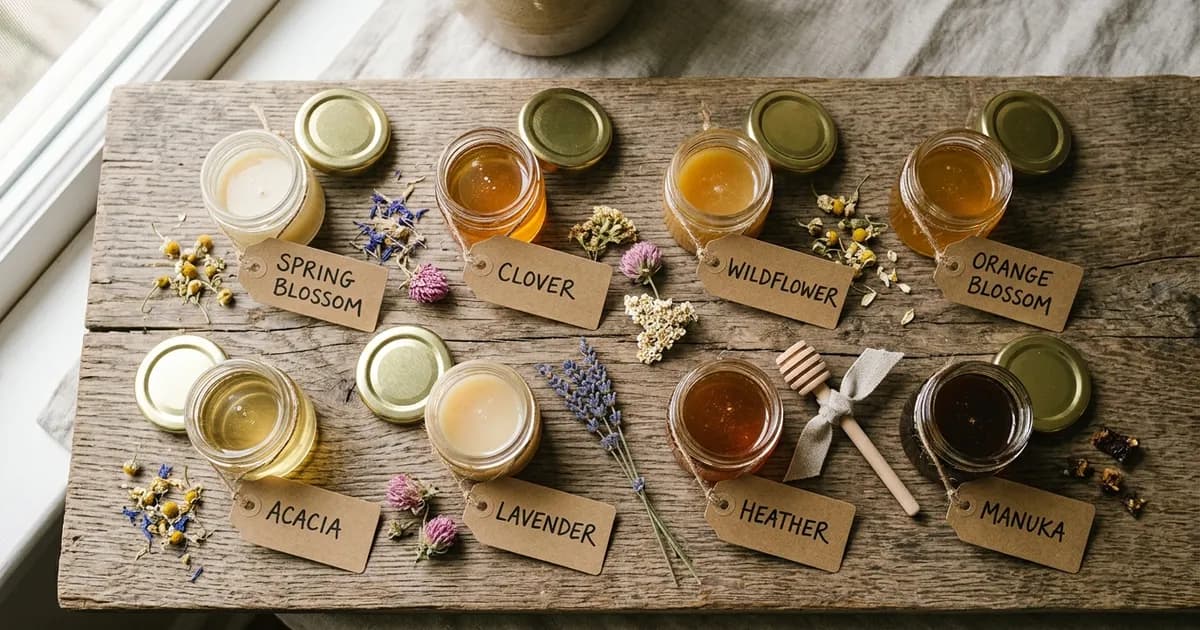
The best honey varieties in Germany 2026: From forest honey to acacia to Manuka — an honest comparison with ratings.
From the Hive
Honey knowledge the supermarket skips
Twice a month: varietals, harvest, origin. Plus 10% off your first order.
10% off your first order · No spam. Unsubscribe anytime.