
The Makers
How to Identify Handwoven Scarves Your Guide to Authentic Craftsmanship and Quality
Last updated:
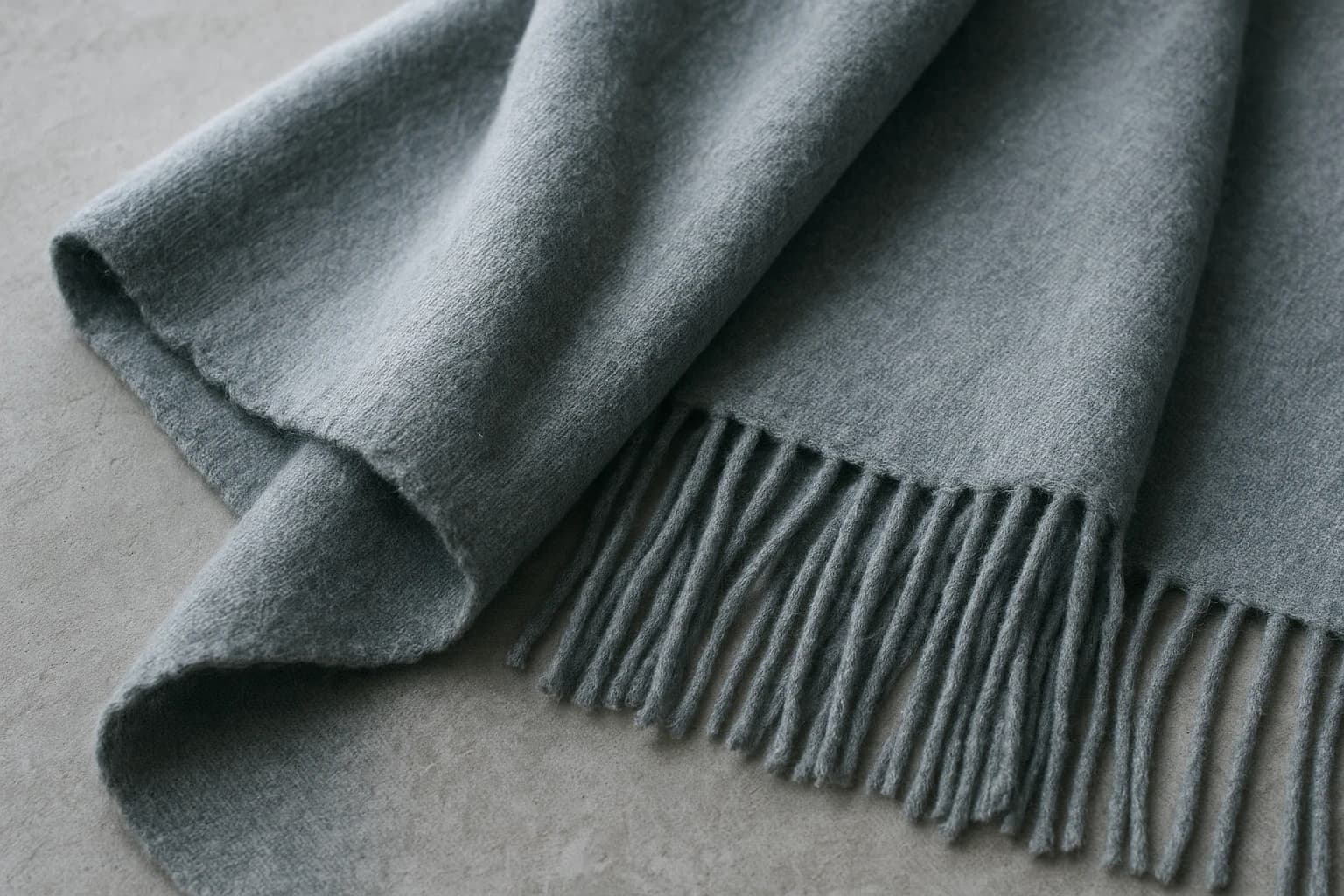
In a world of fast-moving trends and mass production, we long for things with soul. A handwoven scarf is more than just an accessory — it is a promise. The promise of time, care, and a direct connection to a centuries-old tradition. But how do you tell real craftsmanship from a cleverly marketed industrial product? How can you recognise whether a scarf was truly created through hours of devoted work at the loom?
Many brands talk about handmade quality, but few give you the knowledge to verify that claim for yourself. This guide is different. It is your personal advisor, teaching you to see and feel with the eyes and hands of a connoisseur. We will show you the subtle but telltale signs that distinguish an authentic, handwoven masterpiece from a machine-made copy.
The Promise of Handmade: What Does "Handwoven in 3-4 Days" Really Mean?
When we say that every scarf in our [Highland Wool Collection] is handwoven in three to four days, we are not simply describing a production step. We are describing a ritual. In the highlands of Kyrgyzstan, artisan weavers sit at traditional looms whose techniques have been passed down through generations. Every single thread is guided through the fabric by hand, row by row.
This process is the opposite of industrial efficiency. It is slow, deliberate, and requires a deep understanding of the material. The time that goes into every scarf is the first and most important indicator of its value. It is the time it takes to transform pure wool into not just a product, but a piece of wearable history.
Your Eye for Authenticity: The 4 Signs of a Genuine Handwoven Scarf
An expert needs only a brief touch or a careful glance to recognise the truth. With this checklist, so can you. Look for these four characteristics that together form the unmistakable testimony of true handwork.
1. The Selvedge: The Honest Signature of the Hand
The edge of a scarf is like handwriting. On a machine-made scarf, the edge is often perfectly straight, almost ruler-drawn, or it is sewn or finished by machine after the fact.
A handwoven scarf, on the other hand, has an authentic selvedge. It is created directly on the loom and is never flawlessly straight. It has a subtle, organic waviness. These small irregularities are not a flaw — they are direct proof that human hands repeatedly adjusted the thread tension at the edge of the fabric.
Expert Tip: Lay the scarf flat and examine the lengthwise edge closely. Look for the gentle, wave-like line — the honest signature of the hand.
2. Thread Tension: The Living Fabric
A machine works with relentless, mathematical precision. Every thread is woven at exactly the same tension, producing a perfectly uniform, almost lifeless surface.
Human hands cannot replicate this perfection — and that is a good thing. A weaver intuitively adjusts the thread tension, sometimes tighter, sometimes slightly looser. The result is a fabric with subtle, almost imperceptible variations in density. It has a "living" texture. If you hold the fabric against the light, you may see tiny differences in how the light passes through.
Expert Tip: Slowly run your fingers over the surface of the scarf with your eyes closed. Can you feel the tiny, organic variations in the weave? That is the feeling of real handwork.
3. "Perfect Imperfections": A Seal of Authenticity
In mass production, any deviation is considered a defect. In the world of craftsmanship, small "imperfections" are a coveted seal of authenticity. The trend towards "imperfect, handmade design" celebrates exactly this: the traces of the human creative process.
A tiny, hand-knotted thread in an inconspicuous spot, a minimal colour variation where a new yarn was joined, or a barely visible thickening in the thread — these are not defects. They are the stories your scarf tells about its creation. They are proof that your scarf is a true one-of-a-kind piece, with no identical counterpart anywhere in the world.
4. The Fringe: The Handmade Finish
The fringe is often the final step and a clear indicator. Machine-made fringes are often simply cut from the fabric or knotted by a machine, resulting in perfectly identical, often thin bundles. Hand-knotted fringes, however, are individual. The knots are firm, but each one is slightly different. The bundles of thread feel fuller and more substantial.
From the Hive
Honey knowledge the supermarket skips
Twice a month: varietals, harvest, origin. Plus 10% off your first order.
10% off your first order · No spam. Unsubscribe anytime.
Feel the Difference: Touch as the Ultimate Quality Marker
After examining with your eyes, let your hands make the final judgment. High-quality natural wool, like the kind used for our [Modern Shyrdak Carpets] and scarves, has an unmistakable feel. It is soft but has substance. It feels warm and breathable, never clammy or artificially smooth like synthetic fabrics. The weight of the scarf should feel reassuring — not heavy, but not featherlight and fleeting either. This organic feel is the result of natural fibres processed with care by experienced hands.
Frequently Asked Questions (FAQ)
Why is a handwoven scarf more expensive?
The price reflects the time invested (3-4 days per scarf), the high skill of the weavers, and the fair wages we guarantee directly, without middlemen. You are not just paying for a product — you are paying for the preservation of a cultural heritage and the sustainable support of artisan families.
Is a small irregularity in the weave a defect?
Quite the opposite. As explained in our guide, a tiny irregularity, a small knot, or a slight variation in thread tension is the surest sign of authenticity. It is proof that your scarf is a one-of-a-kind piece created by human hands.
Will my scarf look exactly like the product photo?
It will come very close, but it will never be 100% identical. Since every scarf is individually handwoven, there are minimal variations that make it your very own unique piece. That is the special charm and value of true handwork.
Wear a Story, Not Just a Scarf
You are now equipped with the knowledge to recognise true craftsmanship. You can read the selvedge, feel the texture, and appreciate "perfect imperfections" for what they are: a seal of authenticity.
A scarf from ULU-Style is a conscious choice against the anonymity of mass-produced goods and in favour of valuing time, tradition, and human connection. It is an investment in quality that will accompany you for years to come.
Discover the [Highland Wool Collection] now and put your new knowledge to use. Find the piece whose story you want to carry forward.
Share
Every scarf in the Highland Wool Collection is handwoven in three to four days — row by row, thread by thread.
The authentic selvedge of a handwoven scarf has a subtle, organic waviness — the honest signature of the hand.
The small irregularities in thread tension are not a flaw but direct proof that human hands repeatedly adjusted the tension at the loom.
Frequently Asked Questions
The price reflects the time invested (3-4 days per scarf), the high skill of the weavers, and the fair wages we guarantee directly, without middlemen. You are not just paying for a product — you are paying for the preservation of a cultural heritage and the sustainable support of artisan families.
Quite the opposite. As explained in our guide, a tiny irregularity, a small knot, or a slight variation in thread tension is the surest sign of authenticity. It is proof that your scarf is a one-of-a-kind piece created by human hands.
It will come very close, but it will never be 100% identical. Since every scarf is individually handwoven, there are minimal variations that make it your very own unique piece. That is the special charm and value of true handwork.

Jamilia
Autorin, ULU Magazin
Jamilia schreibt über kirgisisches Handwerk, Honig und die Geschichten hinter den Produkten. Aufgewachsen in Zentralasien, lebt sie zwischen Bischkek und Berlin.
Related Articles

The Makers
What Is Sainfoin Honey? The Complete Guide to a Rare Honey
Some honeys you find in every supermarket. Then there is sainfoin honey.

The Makers
Luxury Honey: What Premium Honey Actually Means
The gap between a €3 supermarket honey and a €40 specialty jar is bigger than most people think. What real quality comes down to.
The Makers
Best Honey in Germany 2026
The best honey varieties in Germany 2026: From forest honey to acacia to Manuka — an honest comparison with ratings.
From the Hive
Honey knowledge the supermarket skips
Twice a month: varietals, harvest, origin. Plus 10% off your first order.
10% off your first order · No spam. Unsubscribe anytime.