
Good to Know
Crystallized Honey: Why Real Honey Turns Solid
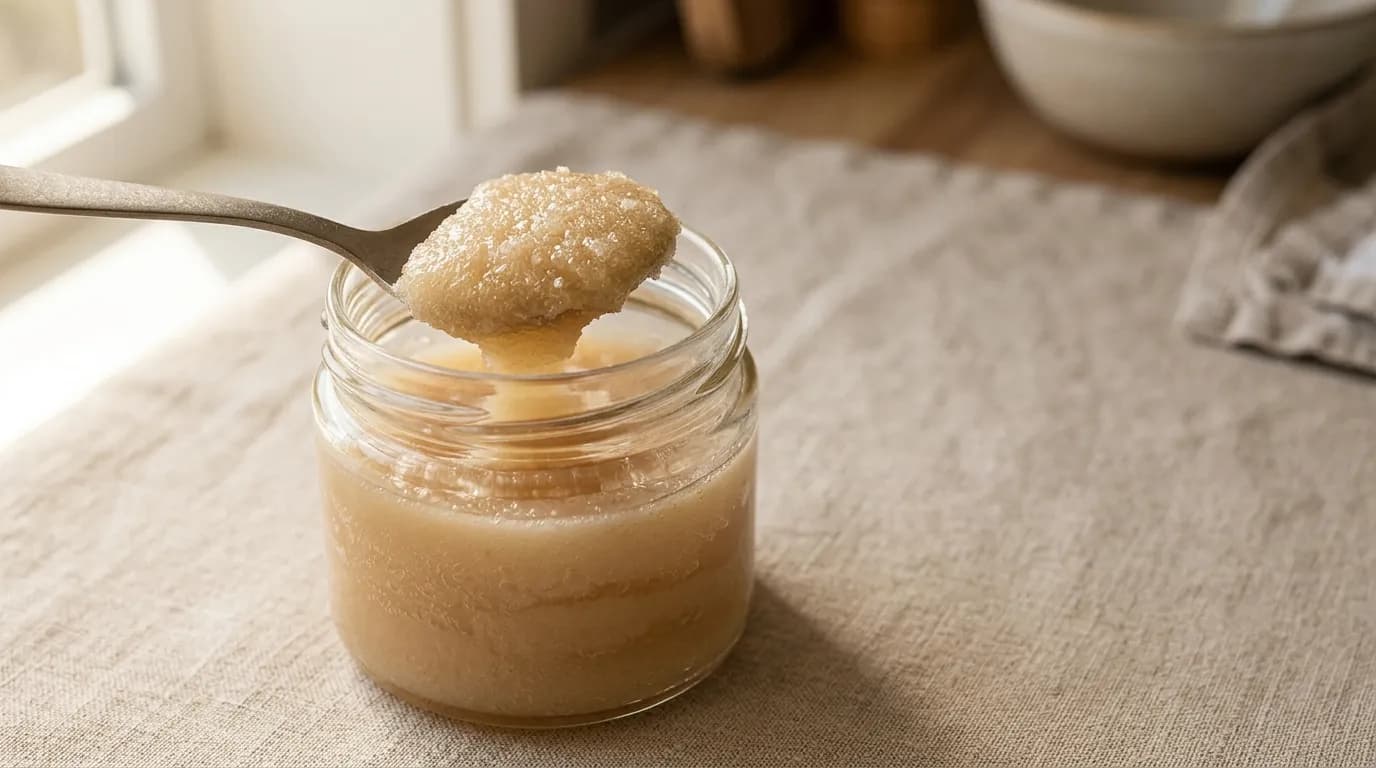
A jar that has turned thick and grainy has not gone off. Glucose, one of the two main sugars in honey, is far harder to keep dissolved than fructose, so over weeks it leaves the solution and builds crystals. This runs fastest at a storage temperature between 10 and 15 °C, which is exactly what a cool pantry gives you. Nothing is lost on the way. Work published in Foods that tracked glucose through the whole process reports that crystallization does not alter the nutritional or chemical characteristics of honey.
Why does honey crystallize?
Honey is a supersaturated sugar solution. Most of its weight is sugar, glucose and fructose above all, and the water left over cannot keep every bit of it dissolved.
The two sugars behave differently. Fructose stays in solution for a long time. Glucose does not, because it dissolves far less readily in water, so it drops out and starts building crystals around whatever it can find: a speck of pollen, a trace of wax, a scratch inside the glass.
Which of the two dominates sets the pace. A honey heavy in glucose can go solid within weeks, while a honey heavy in fructose can sit runny for years on the same shelf. Rapeseed and sunflower are at the fast end of that scale. Acacia is at the other.
Cold pushes it along too, and so does anything solid already floating in the jar. Crystals need something to start on. Pollen grains, fragments of wax and air bubbles all work, which is why a honey that still carries a little of the hive in it rarely stays clear for long.
Time is the fourth factor, and the one nobody can hurry. A jar can look untouched for three months and then turn cloudy in a fortnight.
Is crystallized honey bad?
No.
The crystals are glucose, the same sugar that was dissolved a minute earlier. The National Honey Board answers it in a single line: naturally crystallized honey is safe to eat. What changes is the mouthfeel, and plenty of people prefer the result. Crystallized honey spreads rather than runs. It sits on the bread instead of soaking through it, and it stops dripping off the spoon halfway to the tea.
Two things are worth knowing.
Crystal size decides whether the texture reads as cream or as sand, and that depends mostly on the temperature the honey sat at while it set. And a jar with a firm pale layer at the bottom and softer honey above it is not spoiled either. Stir it through. The one real warning sign is a yeasty smell or a fizz on the tongue, which points to fermentation, a different problem with a different cause.
From the Hive
Honey knowledge the supermarket skips
Twice a month: varietals, harvest, origin. Plus 10% off your first order.
10% off your first order · No spam. Unsubscribe anytime.
How do I make crystallized honey liquid again, and should I?
You can. Most of the time there is no reason to.
If you want it liquid, heat is the only route, and heat costs something. Stand the closed jar in a bowl of water at a temperature of around 38 °C, leave it ten minutes, stir, repeat until the crystals are gone. Keep the water temperature under 40 °C throughout.
The microwave is the one method to avoid. It heats unevenly and drives parts of the jar far past that line while other parts are still cold. Boiling water does much the same from the outside in. Both cost aroma, and both raise HMF, the marker food inspectors use to spot honey that has been overheated or stored too long. EU law caps HMF at 40 mg/kg.
Then it will crystallize again, because nothing about the sugar ratio has changed. Warming buys weeks, not a cure.
There is a shortcut worth mentioning. If the honey is going into tea, porridge or a cake, the crystals dissolve on their own the moment they meet warmth or moisture, so there is nothing to fix in the first place. The only case that genuinely calls for a liquid jar is a squeeze bottle, and that is a packaging problem rather than a honey problem.
Why does some honey never crystallize?
Three explanations, and only one of them is about the flower.
The sugar ratio. A nectar rich in fructose yields a honey that can stay liquid for years. Acacia is the textbook case, and nothing was done to it.
Heat and fine filtration. Warming honey dissolves the tiny seed crystals already in it, and filtration removes the particles that new crystals would grow on. Together those two steps buy a long clear shelf life. Most honey sold in a squeeze bottle has been through both.
Syrup. Honey stretched with cheap sugar syrup carries a different sugar profile, and it can behave differently in the jar.
None of this works as a kitchen test for authenticity. Liquid does not prove a fake and firm does not prove purity. The ratio of the two sugars explains both ends of the scale on its own.
Creamed honey: crystallization done on purpose
Crystals will form regardless. The only open question is how large they get.
Left to itself in a cold room, honey grows coarse crystals that feel gritty on the tongue. Guided instead, at a low and steady temperature while it sets, it grows crystals so small that the tongue reads the whole jar as cream. That is all creamed honey is: the same process, kept fine on purpose, which is why it behaves like a spread and not like a syrup.
It is also why some honey arrives pale and dense. The lighter colour comes from countless small crystals scattering the light rather than from anything added, and there is a separate guide for that question.
What that means for a jar of ULU
Our mountain honey comes from sainfoin nectar (Onobrychis viciifolia) in the Tian Shan highlands of Kyrgyzstan, harvested between 2,400 and 3,500 m. It reaches you creamy white and naturally crystallized, which is the state this honey is meant to be in, not a fault that slipped past us. A storage temperature below 20 °C keeps it that way. Warmer than that and the fine crystal structure coarsens, and a coarse jar does not find its way back to fine.
If you want the botany behind the texture, start with what sainfoin honey is. For light, containers and what a radiator does to a jar over a summer, we wrote the rules down in storing honey properly.
Crystallization is simply what honey does when nobody stops it.
Share
Frequently Asked Questions
Yes. The crystals are glucose that has left the solution. Measurements of glucose published in Foods found that crystallization does not alter the nutritional or chemical characteristics of honey, and the National Honey Board states that naturally crystallized honey is safe to eat.
Stand the closed jar in a bowl of water at a temperature of around 38 °C, wait ten minutes, stir, repeat. Never let the water temperature pass 40 °C, and never use the microwave, which heats unevenly and cooks parts of the jar.
You can, but it speeds crystallization up rather than stopping it. Cold pushes the crystals along, so chilled honey sets sooner rather than later.
Warming dissolves the tiny seed crystals in honey and fine filtration removes the particles that new crystals grow on. Honey treated that way stays clear on a shelf far longer. The sugar ratio of the nectar does the rest.
No, and neither does staying liquid prove the opposite. A fructose-rich nectar such as acacia can stay runny for years without anything being done to it. Crystallization tells you about the sugar ratio, not about quality.
Usually not. Crystallization often starts at the bottom and leaves the upper layer softer. Stir it through. The one real warning sign is a yeasty smell or fizz, which points to fermentation rather than crystallization.

ULU Redaktion
Redaktion
Das ULU Team recherchiert und schreibt zu Honig, Herkunft und bewusstem Genuss.
Related Articles
Conscious Living
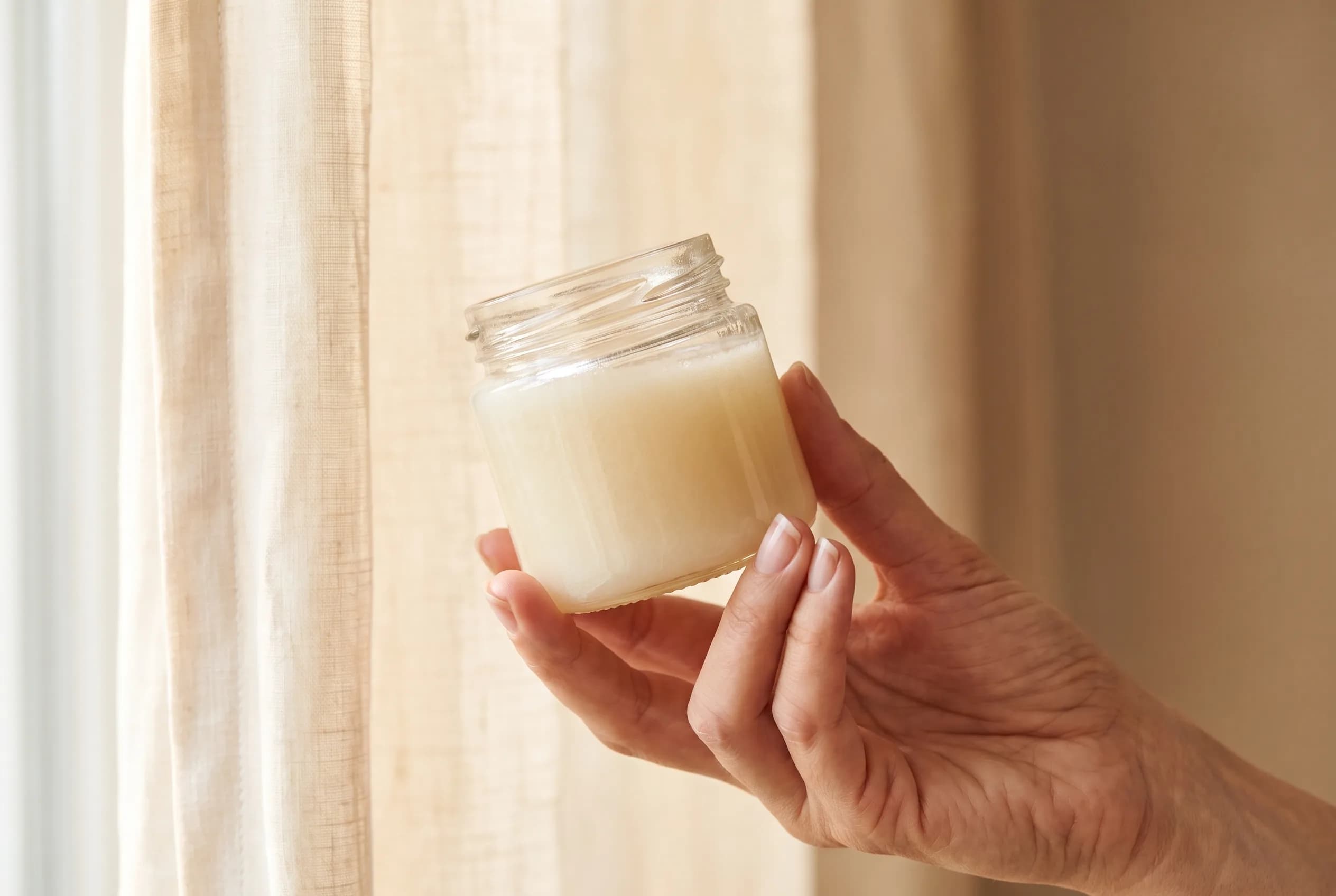
How to Store Honey — Understanding Crystallization
Storing honey properly means: cool (below 20 °C), dark, dry, airtight — and in glass, not plastic. For creamed sainfoin honey, the 20 °C limit is absolute, as above this temperature the fine crystal structure is irreversibly damaged (the cooperative, 2026). Crystallized honey is not a quality defect — it is a chemical sign of unpasteurised honey. Reliquefying must be gentle: maximum 40 °C water bath, no microwave, no direct heat.

The Makers
What Is Sainfoin Honey? The Complete Guide to a Rare Honey
Some honeys you find in every supermarket. Then there is sainfoin honey.
The Makers
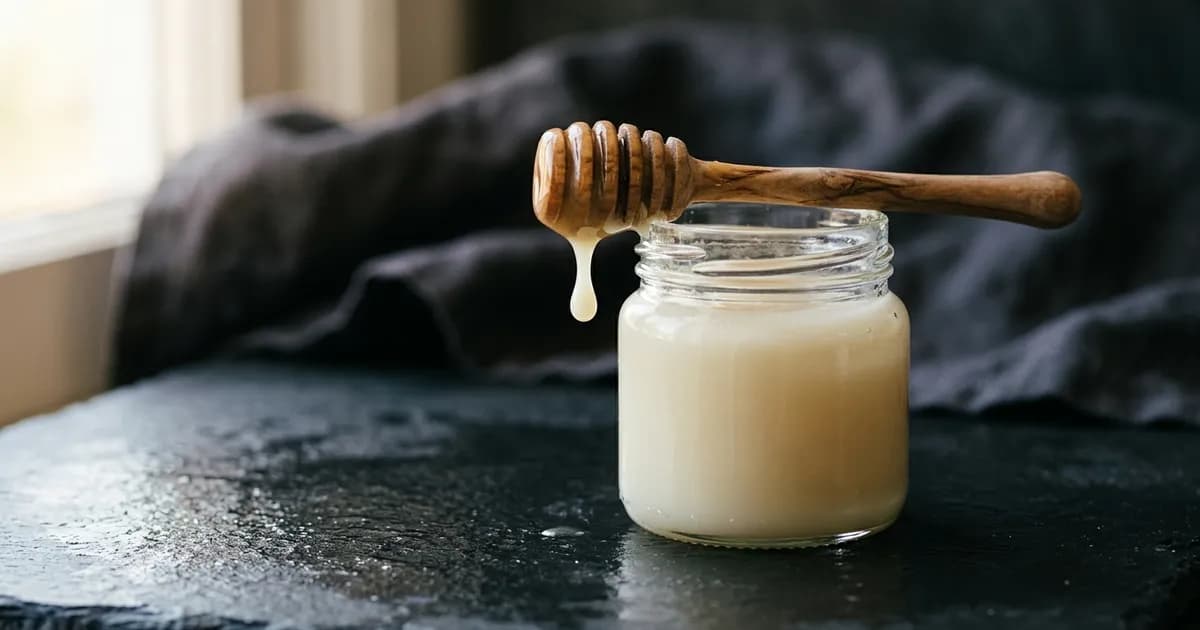
White honey: what it is, where it comes from and where to buy it
White honey is honey whose glucose has crystallised into very fine crystals. The crystals reflect light, which is why it looks creamy white. Which varieties do this, where they come from and how to recognise good white honey.
From the Hive
Honey knowledge the supermarket skips
Twice a month: varietals, harvest, origin. Plus 10% off your first order.
10% off your first order · No spam. Unsubscribe anytime.