
The Makers
White honey: what it is, where it comes from and where to buy it
Last updated:
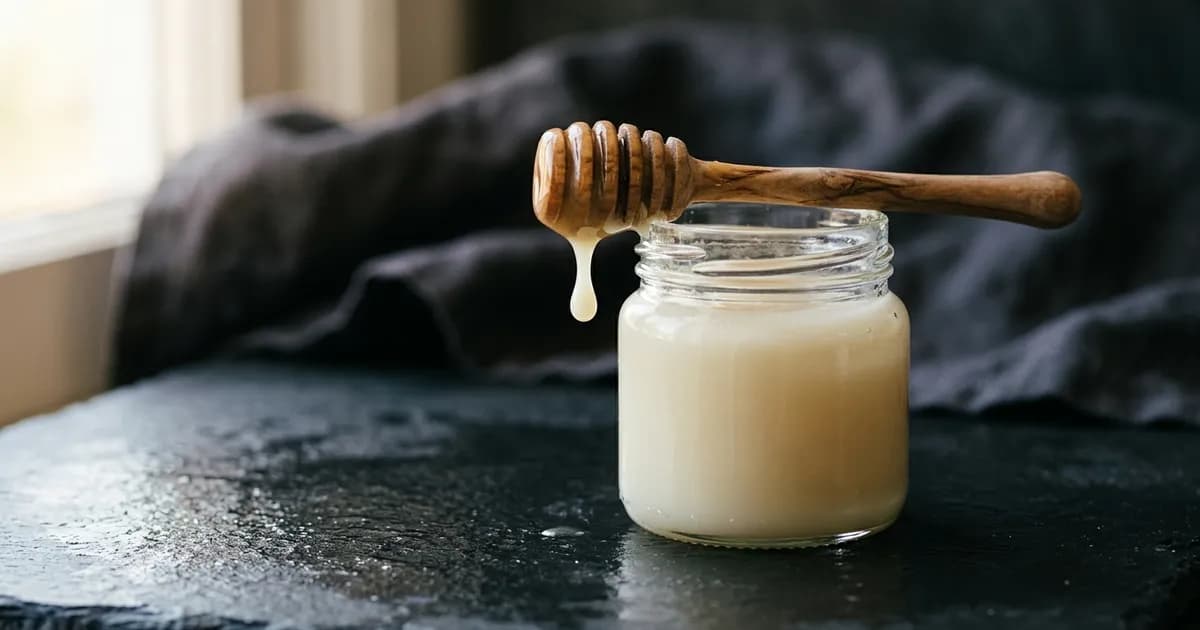
White honey is honey whose glucose has crystallised into very fine crystals: the tiny crystals reflect light, which is why it looks creamy white. It is not bleached and nothing is added. Honeys with a lot of glucose turn white, in Germany usually rapeseed honey. ULU sells white sainfoin honey from the Tian Shan in Kyrgyzstan as its mountain honey, €34.90 for 500 g.
What is white honey?
The name describes a state that many honeys reach. Every honey is a supersaturated sugar solution, mostly fructose and glucose, and over time the glucose comes out of that solution as crystals, slowly in some honeys, quickly in others. An article on CORDIS, the EU's research information service, sums it up: the more glucose a honey contains, the faster it crystallises, and fructose slows the process down.
The colour comes from the crystals. At the Aristotle University of Thessaloniki, researchers measured how honey grows lighter day by day as it crystallises, until the values stop rising after just under two weeks, and they attribute this to light reflected by the glucose crystals.
Crystallisation is a natural process and not a sign of spoilage. The honey stays the same. Only its texture changes.
How is white honey made?
Honey turns white when its glucose crystallises into very fine crystals that reflect light. In glucose-rich honeys this happens naturally. Beekeepers can also steer it by stirring in a small amount of finely crystallised honey as a starter. Either way it is still real honey, and nothing is bleached.
Whether and how fast a honey sets can be read from its ratio of fructose to glucose. Food science groups honeys like this:
| Fructose to glucose | Crystallisation |
|---|---|
| below 1.11 | fast |
| 1.11 to 1.33 | medium |
| above 1.33 | slow or not at all |
Craft plays a part too. Beekeepers can steer crystallisation: they add a small amount of already finely crystallised honey as a starter and stir. In the Thessaloniki study that was 10 g per 100 g of honey. The result is creamed honey with very fine crystals. Whether a white honey became this fine by itself or was stirred is rarely on the label. Both are real honey.
From the Hive
Honey knowledge the supermarket skips
Twice a month: varietals, harvest, origin. Plus 10% off your first order.
10% off your first order · No spam. Unsubscribe anytime.
Which honey varieties turn white?
| Variety | Crystallisation | When set | Source |
|---|---|---|---|
| Rapeseed honey | particularly fast, about 41 % glucose to 39 % fructose | light beige to white | Utopia |
| Sainfoin honey | fine and creamy | creamy white | ULU, product information |
| Acacia honey | almost never | stays liquid | CORDIS |
Where does white sainfoin honey come from?
ULU's mountain honey comes from the Tian Shan in Kyrgyzstan, from highlands between 2,400 and 3,500 metres. It is harvested once a year and gently processed at max. 40 °C, not pasteurised.
At the 2019 Apimondia World Beekeeping Awards in Montreal it took Silver. Apimondia is the International Federation of Beekeepers' Associations.
More about the plant: What is sainfoin honey? And about the altitude: Mountain honey from the Tian Shan.
Does white honey have a special effect?
White honey is a food. We make no claim about any effect on the body, and the colour alone says nothing about that.
What can be measured is the flavour. An Italian study comparing five leguminous honeys found 60 volatile aroma compounds in sainfoin honey (Fratianni et al., 2024). That explains why it does not taste flat despite its mildness.
How do you recognise good white honey?
Colour alone is not a mark of quality. Five points help more:
- The variety is on the label. "Sainfoin honey" or "rapeseed honey" says more than "white honey".
- The origin is specific. One country of origin, better a region and an altitude, rather than "blend of EU and non-EU honeys".
- The seller answers questions. For example about a pollen analysis that shows the share of the named plant.
- There is a storage note. Creamy honey needs max. 20 °C.
- The price fits the variety. White sainfoin honey from the highlands is a niche product and costs more than rapeseed honey.
How do you store white honey?
Store cool and dry, max. 20 °C, and keep it dark and well closed. If it gets warmer, the fine creamy texture can be lost and cannot be fully brought back afterwards. The fridge is not necessary. More: How to store honey.
Where can you buy white honey?
Rapeseed honey is sold in supermarkets and by local beekeepers. ULU sells white sainfoin honey from Kyrgyzstan as mountain honey in the ULU shop, 500 g for €34.90, which is €6.98 per 100 g (as of 03.11.2026). The same honey is also available on Amazon.
If you want to compare white honey with Manuka, the prices per 100 g are here: Manuka alternative compared.
Frequently asked questions
Is white honey bleached? No. The white colour appears when the glucose in honey crystallises finely. The crystals reflect light. Nothing is bleached and nothing is added.
Where does white honey come from? Honeys with a lot of glucose turn white. In Germany that is mostly rapeseed honey. White sainfoin honey comes, among other places, from the Tian Shan in Kyrgyzstan, from altitudes of 2,400 to 3,500 metres.
Does white honey have a special effect? White honey is a food, and we make no claim about any effect on the body. What can be measured is something else: a 2024 study found 60 volatile aroma compounds in sainfoin honey.
How much does white sainfoin honey cost? ULU's mountain honey costs €34.90 per 500 g jar, which is €6.98 per 100 g (as of 03.11.2026). Rapeseed honey is cheaper. A different variety.
Where can I buy white honey? Rapeseed honey is sold in supermarkets and by local beekeepers. ULU sells white sainfoin honey from Kyrgyzstan, in its own shop and on Amazon, as mountain honey in a 500 g jar.
How should I store white honey? Store cool and dry, max. 20 °C. If it gets warmer, the fine creamy texture can be lost.
Share
Frequently Asked Questions
No. The white colour appears when the glucose in honey crystallises finely. The crystals reflect light. Nothing is bleached and nothing is added.
Honeys with a lot of glucose turn white. In Germany that is mostly rapeseed honey. White sainfoin honey comes, among other places, from the Tian Shan in Kyrgyzstan, from altitudes of 2,400 to 3,500 metres.
White honey is a food, and we make no claim about any effect on the body. What can be measured is something else: a 2024 study found 60 volatile aroma compounds in sainfoin honey.
ULU's mountain honey costs €34.90 per 500 g jar, which is €6.98 per 100 g (as of 03.11.2026). Supermarket rapeseed honey is much cheaper, but it is a different variety.
Rapeseed honey is sold in supermarkets and by local beekeepers. ULU sells white sainfoin honey from Kyrgyzstan in its own shop and on Amazon.
Store cool and dry, max. 20 °C. If it gets warmer, the fine creamy texture can be lost.

ULU Redaktion
Redaktion
Das ULU Team recherchiert und schreibt zu Honig, Herkunft und bewusstem Genuss.
Related Articles

The Makers
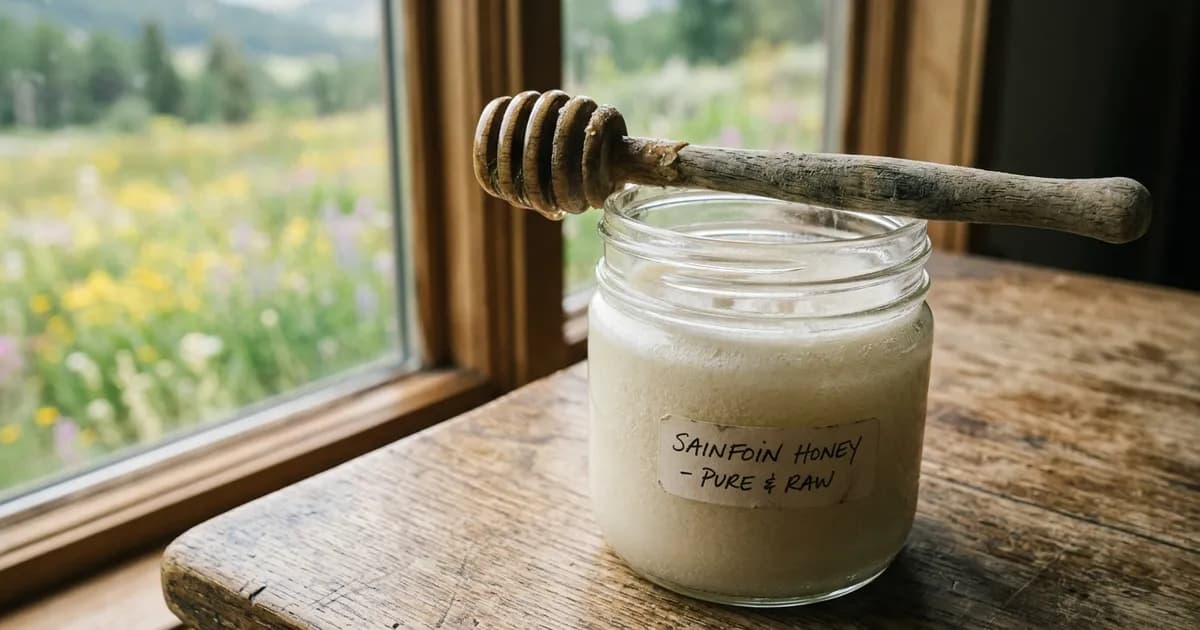
What Is Sainfoin Honey? The Complete Guide to a Rare Honey
Some honeys you find in every supermarket. Then there is sainfoin honey.
Conscious Living
Why Does Honey Crystallise White? The Science Behind It
Honey crystallises because glucose is less water-soluble than fructose and separates out of the supersaturated sugar solution at room temperature. The finer the glucose crystals, the whiter and creamier the honey — a physical phenomenon, not a quality defect. Sainfoin honey from the Tian Shan mountains (2,400–3,500 m) naturally forms especially fine crystals and turns characteristically white-creamy. Crystallised honey is fully edible and contains the same constituents as liquid honey.
Conscious Living
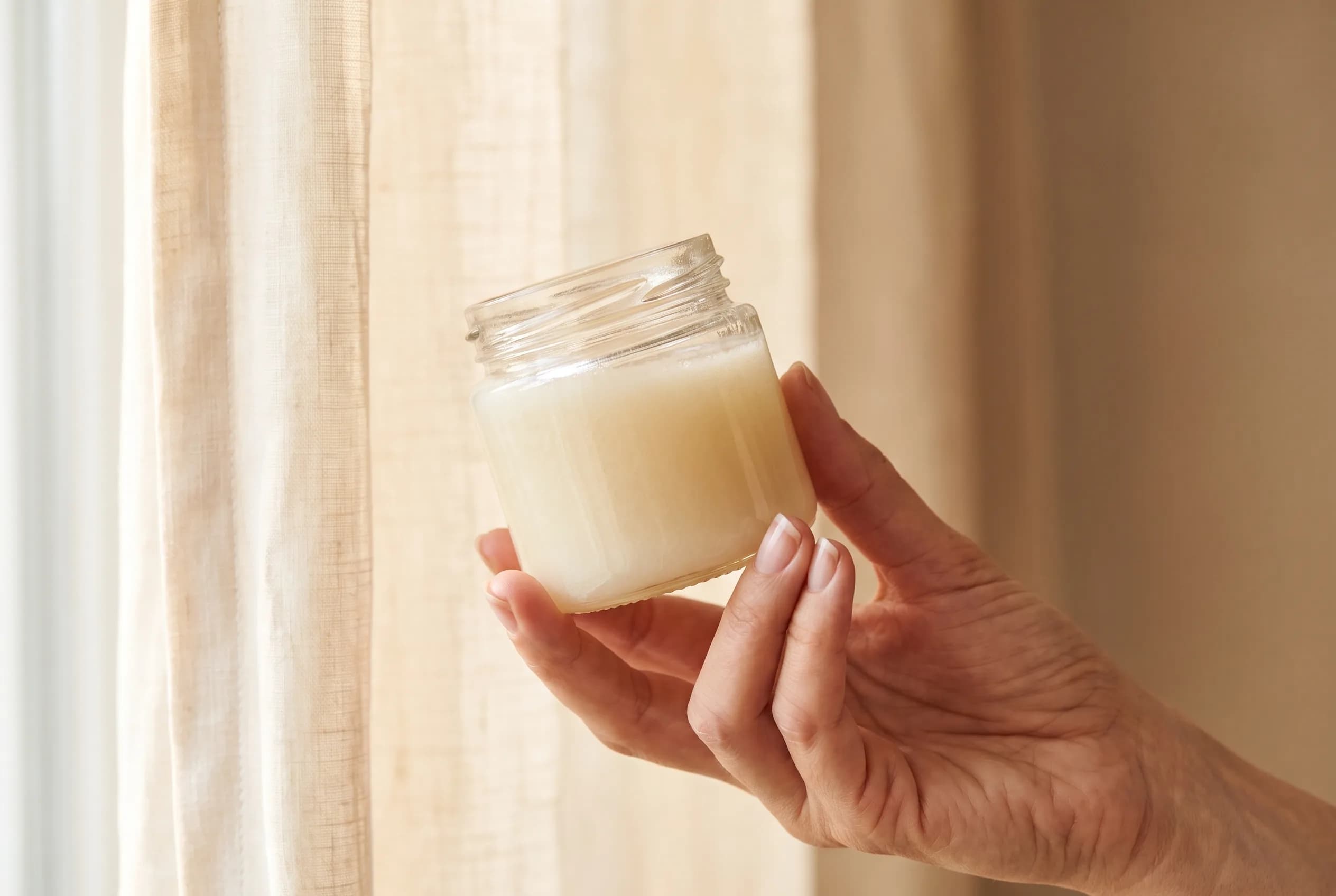
How to Store Honey — Understanding Crystallization
Storing honey properly means: cool (below 20 °C), dark, dry, airtight — and in glass, not plastic. For creamed sainfoin honey, the 20 °C limit is absolute, as above this temperature the fine crystal structure is irreversibly damaged (the cooperative, 2026). Crystallized honey is not a quality defect — it is a chemical sign of unpasteurised honey. Reliquefying must be gentle: maximum 40 °C water bath, no microwave, no direct heat.
From the Hive
Honey knowledge the supermarket skips
Twice a month: varietals, harvest, origin. Plus 10% off your first order.
10% off your first order · No spam. Unsubscribe anytime.