
Conscious Living
Beekeeping in Kyrgyzstan — How Nursultan Keeps His Bees
Last updated:
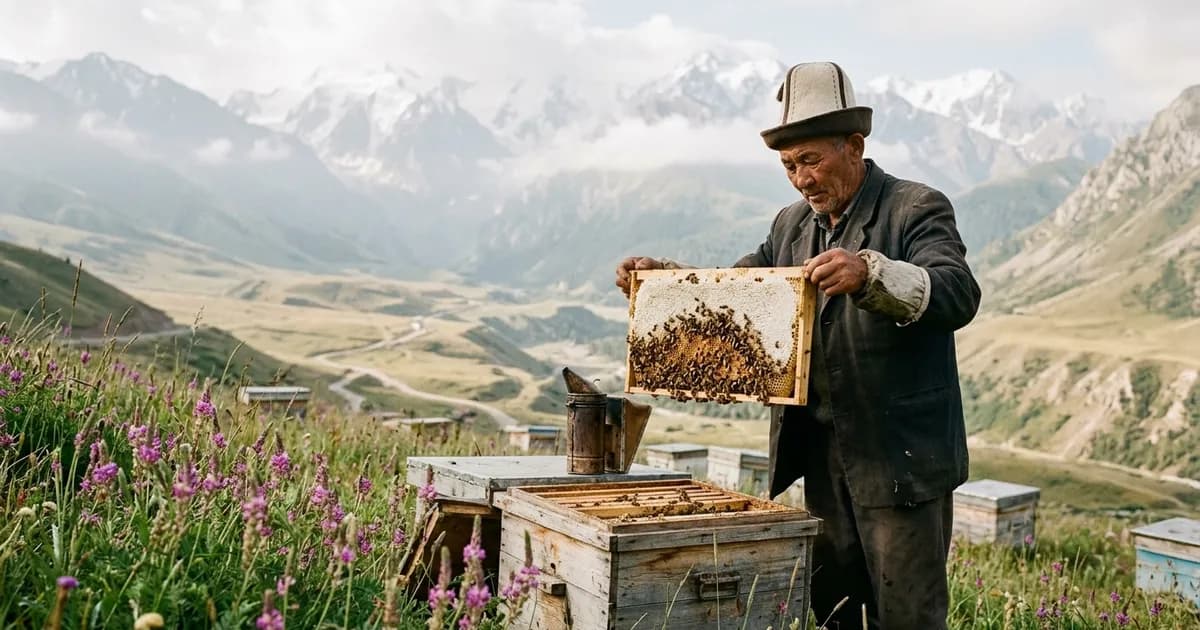
Most people can't find Kyrgyzstan on a map. Nursultan doesn't need a map — he knows every rock, every blossom, and every wind shadow of the Suusamyr Valley. Here, at 2,500 meters in the Tian Shan mountains, he practices beekeeping that looks like it did a hundred years ago: no chemicals, no electricity, no rush. The result is a white, creamy sainfoin honey.
This article explains how beekeeping in Kyrgyzstan works, why the highlands of the Tian Shan are so special, and what sets Nursultan's beekeeping apart from industrial mass production.
Key Facts
Beekeeping in Kyrgyzstan takes place in the high altitudes of the Tian Shan — Suusamyr Valley, Naryn, Issyk-Kul, Talas — at 2,400 to 3,500 m elevation, a documented pesticide-free environment (UNDP Kyrgyzstan). Nursultan's bees forage sainfoin (Onobrychis viciifolia), a legume that grows almost exclusively at these altitudes. Harvesting happens once a year by hand, the honey is gently processed at max. 40 °C, not pasteurised, and stored at a maximum of 20 °C. ULU's honey comes from four regions of the Tian Shan: Naryn, Issyk-Kul, Talas and Osh. Our mountain honey took Silver at the 2019 Apimondia World Beekeeping Awards in Montreal. Apimondia is the International Federation of Beekeepers' Associations.
What Makes Beekeeping in Kyrgyzstan So Special?
Kyrgyzstan has no intensive agriculture in its highlands. That's not a virtue — it's geography. The Suusamyr Valley sits at an altitude where conventional farming simply doesn't work. Pesticides aren't used because there are no fields to protect. UNDP Kyrgyzstan documents these highlands as de facto pesticide-free zones — not because of regulatory requirements, but because of natural isolation.
2,400–3,500 m — altitude range of the cooperative's apiaries in the Tian Shan
Nursultan's bees fly within a radius of about three kilometers. What they find is almost exclusively sainfoin — a violet-pink flowering wild plant. No rapeseed, no sunflowers, no imported seed stock. The monofloral quality of the honey doesn't come from human control but from the ecosystem's natural scarcity of alternative nectar plants.
This fundamentally distinguishes Kyrgyz beekeeping from German or Austrian conditions, where bees fly in a cultivated landscape permeated by decades of pesticide residues.
From the Hive
Honey knowledge the supermarket skips
Twice a month: varietals, harvest, origin. Plus 10% off your first order.
10% off your first order · No spam. Unsubscribe anytime.
Who Is Nursultan — and Why Do We Use His Name?
Nursultan is a beekeeper in the Suusamyr Valley. His father was a beekeeper. His grandfather was a beekeeper. The methods he uses don't come from a textbook — they were passed down through generations and adapted to the highlands.
He works with the cooperative, an association of Kyrgyz beekeepers that consolidates harvests from four regions: Naryn, Issyk-Kul, Talas, and Osh. the cooperative is a member of Apimondia, the world federation of beekeepers, and markets the honey internationally. In 2019, they won Silver at the Apimondia World Beekeeping Conference in Canada.
Why do we use his name? Because beekeeping in the highlands becomes more tangible through a person than through a statistic. Nursultan is a person with a story and a place — an example of how beekeepers in the Tian Shan work.
How Does Seasonal Beekeeping Work in the Tian Shan?
Beekeeping in the Suusamyr Valley follows the rhythm of the mountains. Spring arrives late — often not until May, when the last snow melts. The sainfoin blooms for about six weeks, from mid-June to late July. During this time, the bees collect what the highlands offer.
The Annual Cycle:
- May / Early Start: Check bee colonies after winter, assess losses. In harsh winters, not all colonies survive — that's not a failure, that's nature.
- June: Sainfoin begins to bloom. Foraging flights begin. No supplemental feeding.
- July: Main nectar flow. Combs fill with creamy white honey.
- August: Harvest. Once per season, by hand.
- September–April: Winter preparation, dormancy.
The short season isn't a disadvantage — it's the reason for the concentration. The honey contains what six weeks of highland bloom produce. Nothing more, nothing less.
How Is the Honey Harvested and Processed?
Harvesting is physical work with no shortcuts. Nursultan opens the hives, removes the combs, and transports them to a small extraction facility. No assembly line, no automated filling.
The honey is gently processed at max. 40 °C, not pasteurised.
The finished honey is filled into containers and stored at a maximum of 20 °C. That's not a precaution — it's a technical necessity: above 20 °C, the creamy crystal structure of white honey changes irreversibly. The fine crystals coarsen, the honey separates, and the texture that sainfoin honey is known for cannot be restored.
Max. 20 °C — storage temperature that preserves the creamy crystal structure of sainfoin honey
No pasteurization, no filtration. What comes out of the extractor goes into the jar.
What Is Sainfoin — and Why Does It Grow Here?
Sainfoin (Onobrychis viciifolia) is a forage plant from the legume family. It was cultivated for centuries in Europe as a pasture plant — today it has largely been displaced by alfalfa. In the highlands of the Tian Shan, it still grows wild.
The plant is robust enough for soils that are too barren and dry for other crops. It fixes nitrogen, stabilizes slopes, and blooms reliably at altitudes where other nectar plants have given up. For bees, it's an ideal food source: nectar-rich, densely populated, without competition.
The honey that bees produce from sainfoin is naturally light — almost white to slightly amber. It crystallizes into a fine, creamy texture that you don't break with a spoon but spread.
How does Kyrgyz beekeeping differ from industrial honey production?
A direct comparison shows what's different about Nursultan's approach:
| Feature | Industrial honey production | Nursultan |
|---|---|---|
| Location | Agricultural lowlands | Suusamyr Valley, 2,500 m |
| Forage plant | Rapeseed, sunflower, mixed | Sainfoin, almost exclusively |
| Pesticides | Possible from neighboring fields | None (documented, UNDP) |
| Harvest | Multiple times per season | Once per year |
| Processing | Often heated | max. 40 °C, not pasteurised |
| Storage | Variable | Max. 20 °C |
| Transparency | Country of origin | Beekeeper, region, altitude, method |
| Award | — | Apimondia Silver 2019 (Canada) |
What does Apimondia mean — and what does Silver signify?
Apimondia is the International Federation of Beekeepers' Associations. Since 1895, it has held a World Congress every two years featuring a honey quality competition. The judges evaluate origin, purity, forage source, and sensory quality — no marketing materials, no packaging.
In 2019, the Congress took place in Montreal, Canada. the cooperative entered — and won Silver. This is the first confirmed international award for a Kyrgyz beekeeper working with ULU.
We write Silver, not Gold. Because it was Silver. Honesty is not a weakness in brand communication — it is the only currency that doesn't depreciate.
The Kyrgyz beekeeping community has a strong Apimondia track record: in 2013, Kyrgyz beekeepers won three gold medals in Kyiv. Those medals belong to the association, not to the cooperative. But they show that honey from this region has been rated as exceptional by international experts for over a decade.
Frequently asked questions about beekeeping in Kyrgyzstan
What bees does Nursultan keep in the Suusamyr Valley?
In the Kyrgyz highlands, the predominant breeds are Caucasian honey bees (Apis mellifera caucasica) and local landraces — both known for their winter hardiness and adaptability to alpine conditions. They survive at altitudes that would be too cold and too short in season for Western European breeding lines.
How much honey does a colony in the Suusamyr Valley produce per year?
Due to the short foraging period of roughly six weeks, the annual yield per colony is significantly lower than in the lowlands — typically 10–20 kg per colony per season, compared to 30–50 kg in intensively managed regions of Germany. This scarcity is one of the reasons for the honey's higher price.
Why is Kyrgyz sainfoin honey white?
The white color results from two factors: the naturally light color of sainfoin nectar and the natural crystallization of the honey. Sainfoin honey contains a high fructose-to-glucose ratio with a tendency toward fine crystallization. The result is a creamy-white texture — no bleaching.
How is beekeeping in Kyrgyzstan certified?
the cooperative holds complete lab reports for the white sainfoin honey (2025), including moisture content, diastase activity, HMF value, veterinary drug residues, pesticide residues, and heavy metals — the standard EU panel. Apimondia membership has been held for several years.
What is the difference between sainfoin honey and regular mountain honey?
"Mountain honey" describes the origin (altitude), not the forage plant. Sainfoin honey is a monofloral honey: more than 45% of the pollen comes from sainfoin (Onobrychis viciifolia). This determines not only the color and texture but also the aroma profile — with 60 identified compounds, including 71.31% terpenoids with hotrienol as the lead terpene. Mountain honey from other regions can taste and be composed entirely differently.
Where can I buy sainfoin honey from Kyrgyzstan?
Sky Nectar — sainfoin honey from the Tian Shan — is available through ULU. Read more on the product page: Buy sainfoin honey.
Further reading
- Sainfoin honey — The complete guide
- Kyrgyz honey — Origin, tradition, quality
- Mountain honey from Kyrgyzstan — What makes it special
- Buy Sky Nectar sainfoin honey
Truly sweet is rare.
Note: The information on antioxidant properties and polyphenol content of sainfoin honey comes from independent scientific studies. This information serves as a factual description of the product's characteristics and does not constitute a health claim within the meaning of EU Regulation 1924/2006.
Share
In the Suusamyr Valley at 2,500 metres, Nursultan's bees forage almost exclusively on sainfoin — a plant that grows at this altitude because no other crops exist there.
the cooperative won Silver at the 2019 Apimondia World Beekeeping Conference in Canada — the world's most important honey competition — with white sainfoin honey from the Tian Shan.
Above 20 °C, the creamy crystal structure of white sainfoin honey changes irreversibly — therefore: store at a maximum of 20 °C.
Kyrgyz beekeepers won three gold medals at the 2013 Apimondia congress in Kyiv — the At-Bashi / Naryn region has been a benchmark for white mountain honey for over a decade.
Sainfoin honey from the Tian Shan contains 60 identified aroma compounds, of which 71.31% are terpenoids with hotrienol as the dominant compound — a chemical fingerprint profile that no mass-produced product can replicate.
Frequently Asked Questions
In the Kyrgyz highlands, primarily Caucasian honey bees (Apis mellifera caucasica) and local landraces are kept — both known for their winter hardiness and adaptability to alpine conditions. They survive at altitudes that would be too cold and too short in season for Western European breeding lines.
Due to the short foraging period of approximately six weeks, the annual harvest per colony is significantly lower than in lowland areas — typically 10–20 kg per colony per season, compared to 30–50 kg in intensively managed regions of Germany.
The white colour results from two factors: the naturally light colour of sainfoin nectar and the natural fine crystallisation of the honey. Sainfoin honey contains a fructose-glucose ratio that tends towards fine crystallisation — the result is a creamy-white texture without any processing.
Mountain honey describes the origin (altitude), not the forage plant. Sainfoin honey is a monofloral honey: more than 45% of the pollen comes from sainfoin (Onobrychis viciifolia). This determines colour, texture and aroma profile — with 60 identified compounds, including 71.31% terpenoids (PMC11047671, 2024).
the cooperative holds complete laboratory reports for the white sainfoin honey (2025), including moisture content, diastase activity, HMF value, veterinary drug residues, pesticide residues and heavy metals. Apimondia membership has been maintained for several years.

Jamilia
Autorin, ULU Magazin
Jamilia schreibt über kirgisisches Handwerk, Honig und die Geschichten hinter den Produkten. Aufgewachsen in Zentralasien, lebt sie zwischen Bischkek und Berlin.
Related Articles

Conscious Living
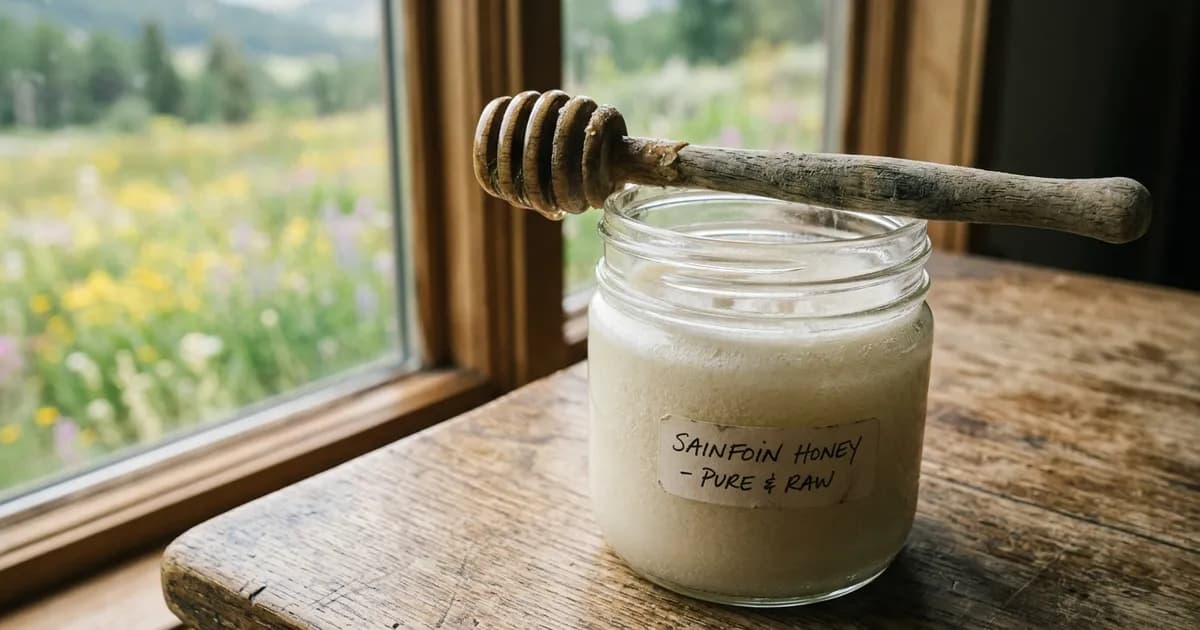
Honey and Gut Health: What Current Research Actually Shows
Research into honey and gut health is growing rapidly — but the headlines often outrun the actual findings. Here is what the studies say, and what they do not.
Conscious Living
Honey Antioxidants: What the Research Actually Says
Gallic acid . Taxifolin . What these numbers mean — and what they do not promise.
Conscious Living
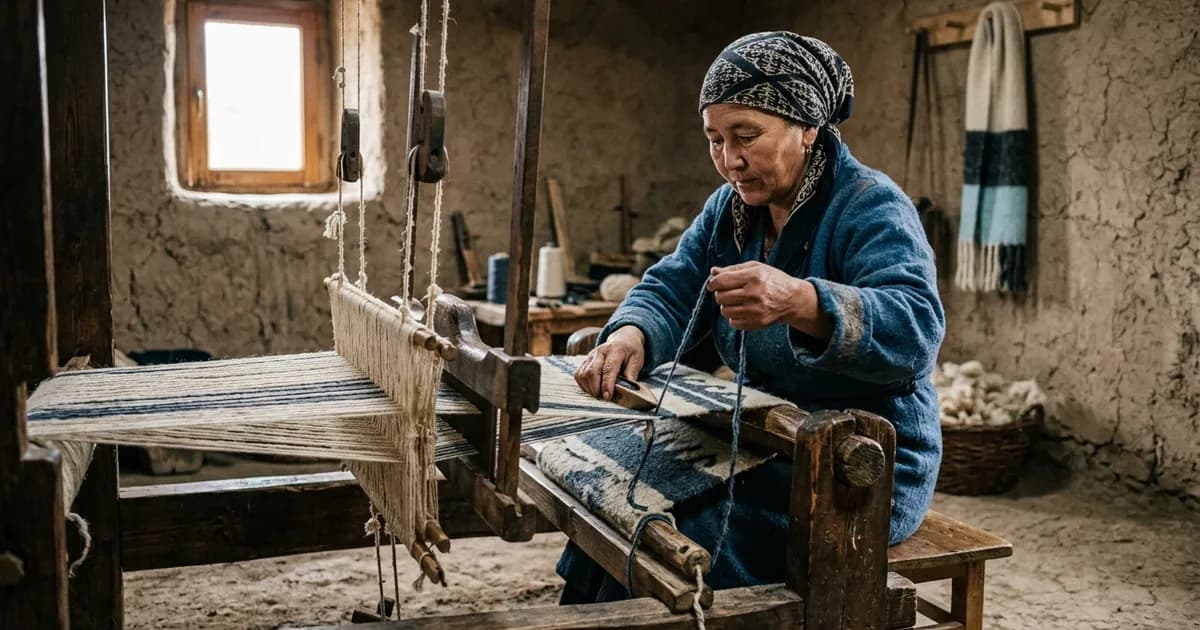
Wool Scarf Origin Kyrgyzstan — Tradition Meets Design
Kyrgyz highland wool for ULU wool scarves comes from sheep grazing between 2,000 and 3,500 metres in the Tian Shan mountains. The extreme temperature swing of up to 70 °C forces an exceptionally dense, lanolin-rich fibre structure. The wool is hand-shorn, dyed with natural colours, and processed using orally transmitted weaving techniques — by named artisans without intermediaries. Kyrgyz felt-making has been on the UNESCO Intangible Cultural Heritage list since 2012 (entry 00695).
From the Hive
Honey knowledge the supermarket skips
Twice a month: varietals, harvest, origin. Plus 10% off your first order.
10% off your first order · No spam. Unsubscribe anytime.