
The Land
Kyrgyz Nomads and Yurt Culture: Life Between Sky and Steppe
Last updated:
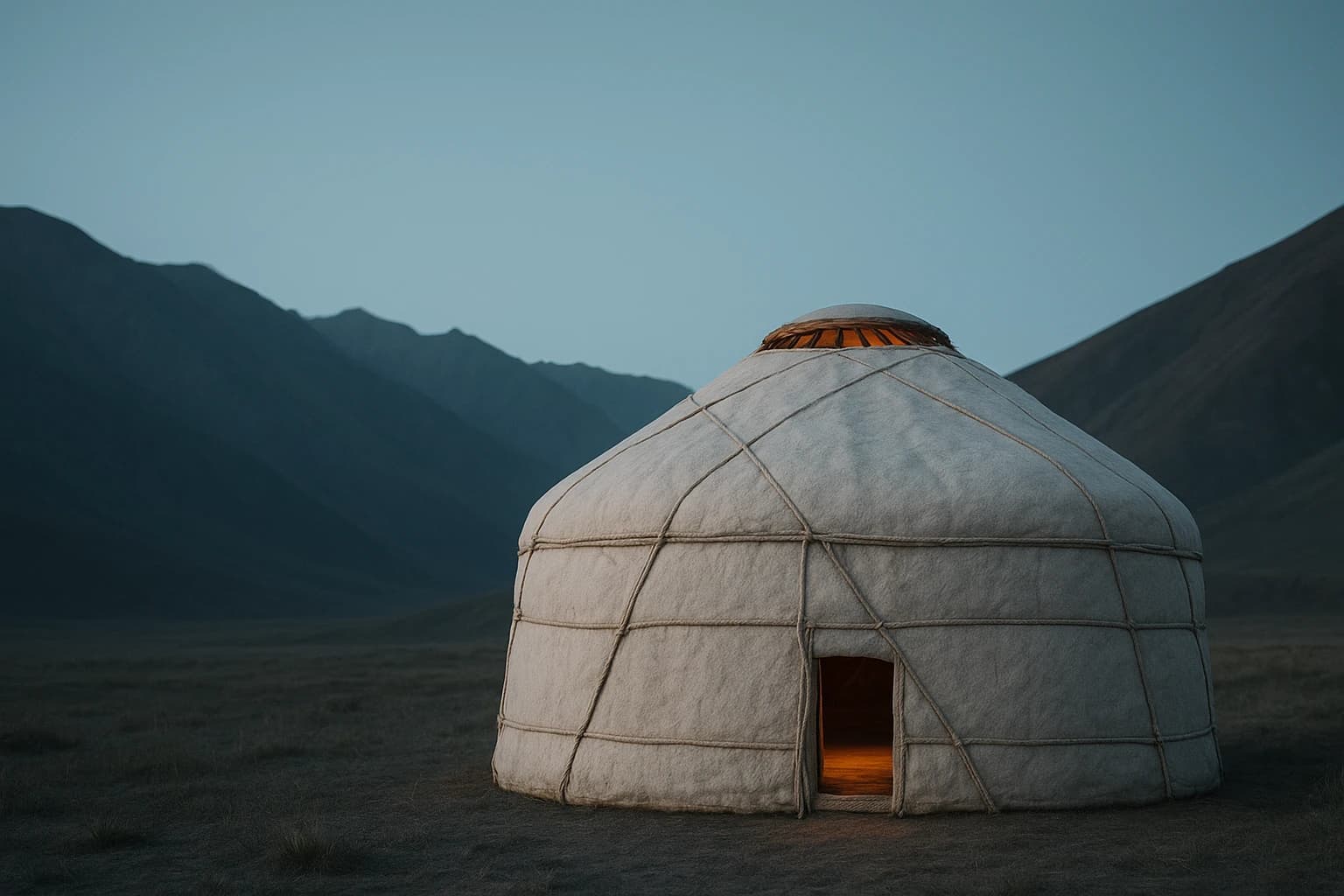
What Is a Yurt?
A yurt — in Kyrgyz "Boz Uy" (Grey House) — is a round, portable dwelling that has been used by the nomadic peoples of Central Asia for at least 3,000 years. The construction is ingeniously simple: a collapsible wooden lattice forms the wall, curved poles shape the roof, and several layers of felt provide insulation.
An average yurt can be assembled or dismantled by two to three people in about two hours. Everything is transported on horses or yaks — the entire house weighs between 250 and 500 kilograms.
The yurt is one of the most efficient structures in human history: fully recyclable, perfectly insulated, and assembled in two hours.
The Anatomy of a Yurt
Every part of the yurt has a name and a meaning:
- Kerege: The wall lattice made of willow wood, which folds like a concertina.
- Uuk: The roof poles that run from the wall lattice to the central ring.
- Tunduk: The crown ring — the heart of the yurt. It lets in light and air and is so significant that it adorns the Kyrgyz national flag.
- Tush Kiyiz: Embroidered wall hangings that provide both insulation and decoration.
From the Hive
Honey knowledge the supermarket skips
Twice a month: varietals, harvest, origin. Plus 10% off your first order.
10% off your first order · No spam. Unsubscribe anytime.
The Yurt as an Ordering System
The yurt is not just living space — it is a reflection of the Kyrgyz worldview. The entrance traditionally faces south. The left side belongs to the men, the right to the women. The place of honour opposite the entrance is reserved for guests. The Tunduk in the centre symbolises the connection between earth and sky.
This order is not a rigid rule but an organic system that makes communal living in the tightest of spaces harmonious.
Nomadic Life Today
Even in the 21st century, many Kyrgyz families still live at least partly nomadic lives. In summer, herders move with their flocks to the high pastures — the so-called Jailoos. There, yurts are set up, cheese is made, horses are trained, and felt is produced.
This seasonal migration is no romantic relic. It is a proven form of sustainable land use: the pastures recover while the herds move on. Overgrazing — a massive problem in industrial animal farming — is virtually absent.
Nomadic pastoralism is one of the oldest forms of sustainable land use — developed millennia before the word sustainability existed.
What Does This Have to Do with ULU?
The artisans we work with live in and between both worlds: the modern town and the traditional yurt. Many spend the summer on the high pastures, where they felt, weave, and process wool — just as their grandmothers did. This connection between tradition and the present lives in every ULU product.
Share
The yurt is one of the most efficient structures in human history: fully recyclable, perfectly insulated, and assembled in two hours.
An average yurt can be assembled by two to three people in about two hours — the entire house weighs between 250 and 500 kilograms.
The Tunduk, the yurt's crown ring, is so significant that it adorns the Kyrgyz national flag.
Frequently Asked Questions
A yurt (Boz Uy) is a round, portable dwelling made from a collapsible wooden lattice, curved roof poles, and several layers of felt. It can be assembled or dismantled in two hours and has been used in Central Asia for over 3,000 years.
The Tunduk is the central crown ring of the yurt and symbolises the connection between earth and sky. As the most important architectural element of nomadic culture, it represents unity, family, and the nomadic identity of Kyrgyzstan on the national flag.
Yes, many families live seasonally nomadic lives. In summer, herders move to the high pastures (Jailoos), where they live in yurts, tend livestock, and practise traditional crafts. This way of life is a proven form of sustainable land use.

Jamilia
Autorin, ULU Magazin
Jamilia schreibt über kirgisisches Handwerk, Honig und die Geschichten hinter den Produkten. Aufgewachsen in Zentralasien, lebt sie zwischen Bischkek und Berlin.
Related Articles
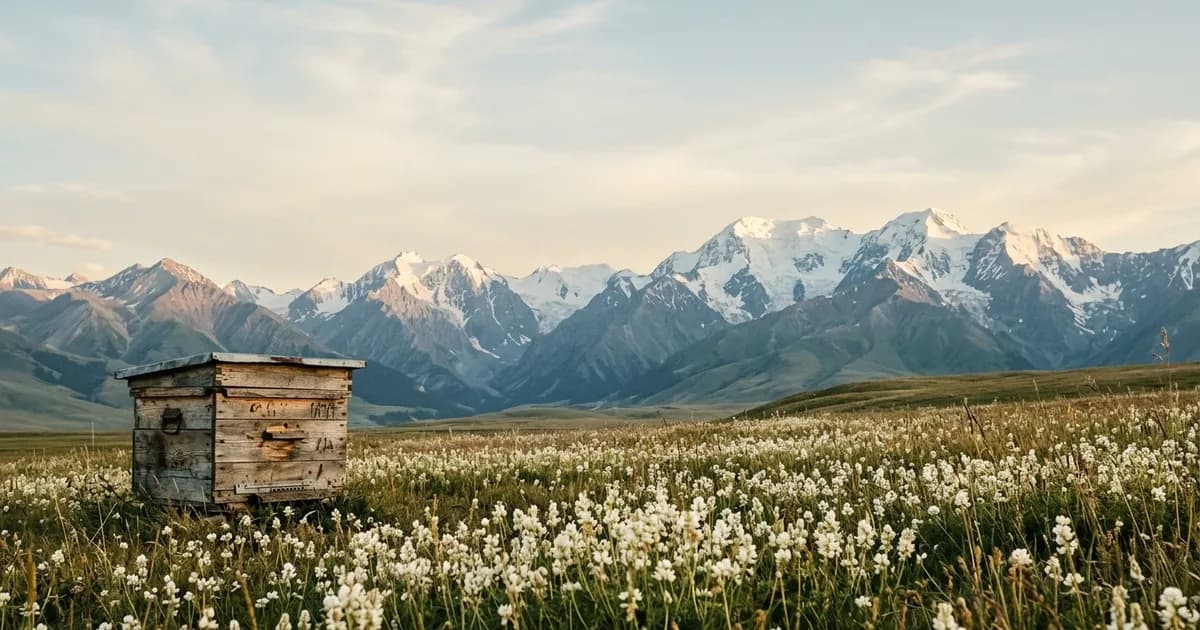
The Land
3,000 Metres: Why Genuine Mountain Honey Comes from the Tian Shan
Most honey labelled "mountain honey" comes from valleys at a few hundred metres elevation. Genuine mountain honey from the Tian Shan is something entirely different — and the difference starts at 2,400 metres.
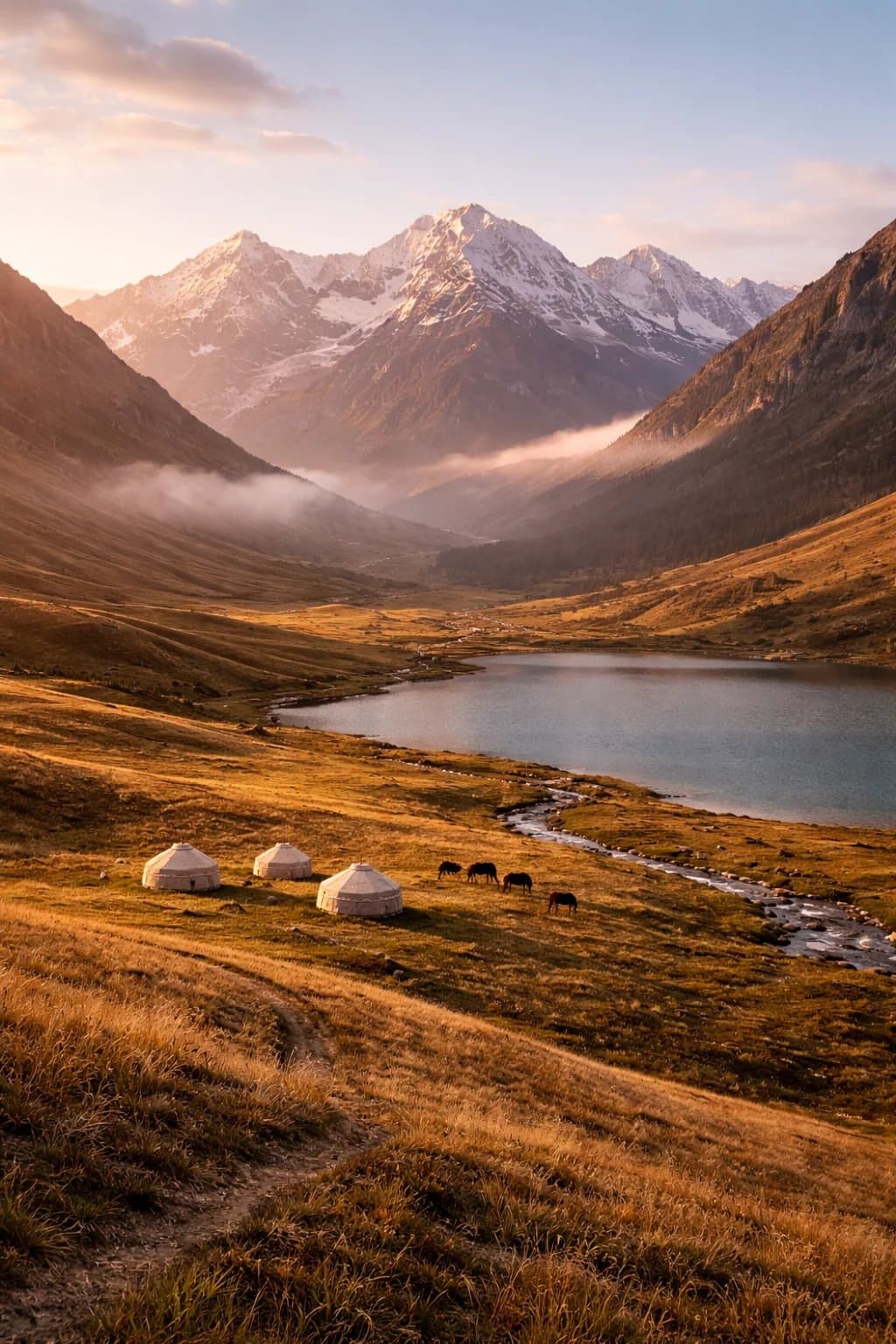
The Land
Kyrgyzstan — The Land Behind Our Products
Kyrgyzstan lies at the heart of Central Asia — a land of towering mountains, endless steppes, and a vibrant nomadic culture. This is where the materials and artisan traditions that define ULU come to life.
The Land
How Altitude Shapes Wool Quality
At 3,000 metres, the air is thin, the winters long, and the sheep have adapted. The result: a wool that is denser, warmer, and more resilient than anything grown in the lowlands.
From the Hive
Honey knowledge the supermarket skips
Twice a month: varietals, harvest, origin. Plus 10% off your first order.
10% off your first order · No spam. Unsubscribe anytime.