
The Makers
Kyrgyz Textile Art: Weaving, Felting, and the Language of Patterns
Last updated:
Textiles as Language
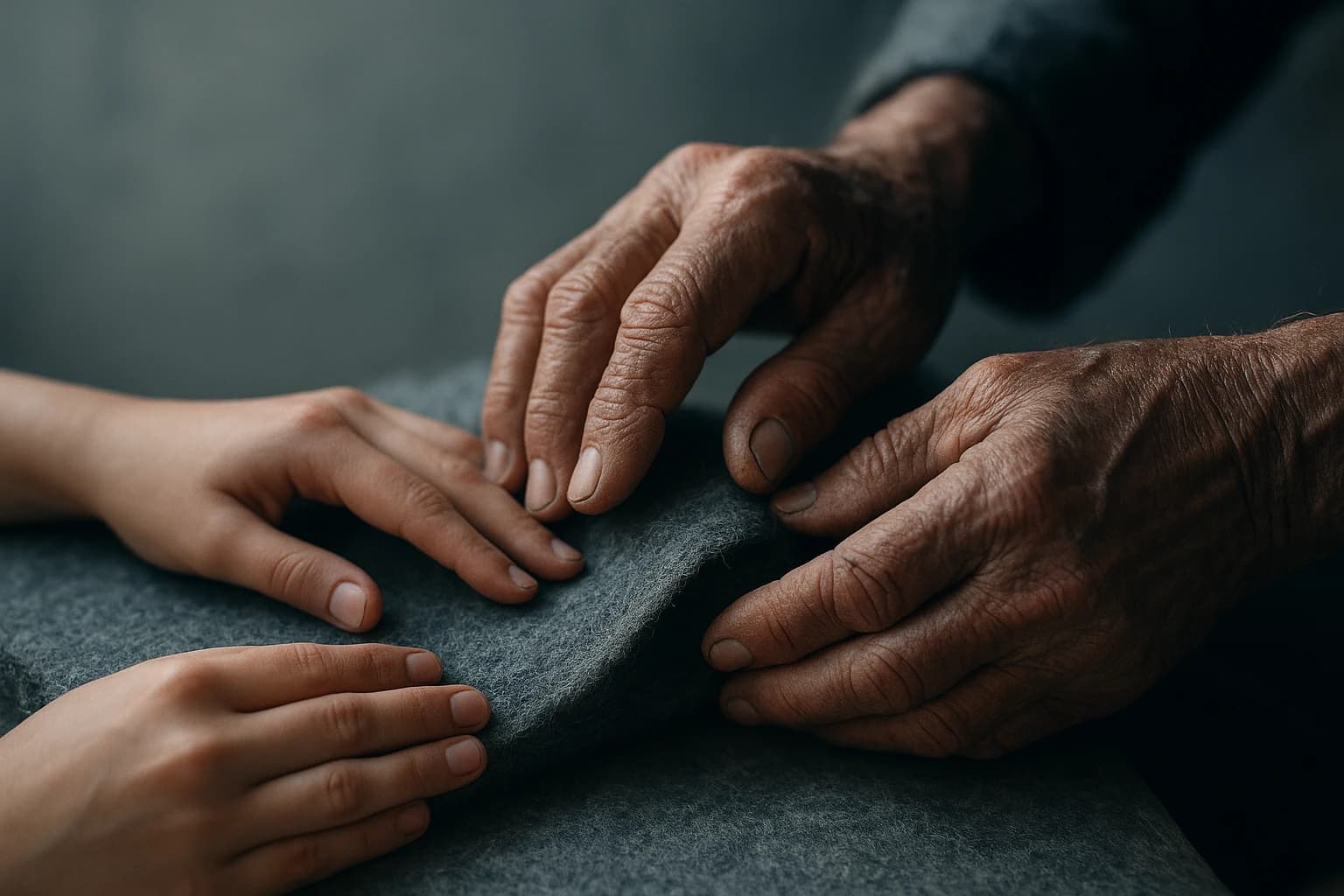
In a culture that lived nomadically for millennia and had no written language, textiles became carriers of meaning. Patterns on felt rugs, woven edges, and embroideries tell of family belonging, wishes, and worldview. To read Kyrgyz textiles is to read history.
The three great textile traditions of Kyrgyzstan are felting, weaving, and embroidery. Each has its own materials, techniques, and functions — and all are still practised by hand today.
Kyrgyz textile art is not folklore — it is a living language that has been telling stories for centuries.
Felting: The Oldest Textile Technique
Felting is the foundation of Kyrgyz textile culture. The technique exploits a property of sheep's wool: under the influence of moisture, heat, and pressure, the fibres mat together into a dense, stable material.
In wet felting, the wool is laid out in layers, doused with hot water, and then rolled — traditionally in a reed mat that is moved by several people. This process can take several hours and demands considerable strength.
Felt is used to make:
- Shyrdaks: Felt rugs with mosaic applique
- Ala Kiyiz: Felt rugs with rolled-in patterns
- Tush Kiyiz: Wall hangings for the yurt
- Kalpaks: Traditional men's hats
- And of course: felt shoes, like the ULU ballerinas
From the Hive
Honey knowledge the supermarket skips
Twice a month: varietals, harvest, origin. Plus 10% off your first order.
10% off your first order · No spam. Unsubscribe anytime.
Weaving: Bands and Straps
Weaving in Kyrgyzstan is not cloth weaving in the European sense. Instead, mainly narrow bands, straps, and trimmings are woven — on portable looms that can be taken along on any migration.
The woven bands serve practical purposes: they hold the yurt together, decorate horse harnesses, and secure luggage on the backs of yaks. At the same time, they are small works of art whose patterns signal regional identity.
Embroidery: The Fine Art
Embroidery is the youngest of the three traditions and is used primarily for wall hangings (Tush Kiyiz) and cushion covers. The motifs are often botanical — blossoms, vines, leaves — and are stitched in bold colours on a dark background.
An elaborate Tush Kiyiz can take months to complete. It is traditionally made as a wedding gift and accompanies a woman throughout her life.
What Makes Kyrgyz Textile Art So Special?
Three things set Kyrgyz textile art apart from other craft traditions:
- Functionality: Every piece has a practical purpose — there is no purely decorative tradition.
- Community: Many techniques require collaboration — neighbours are often invited to help with felting.
- Sustainability: All materials are natural, locally available, and fully biodegradable.
In a Kyrgyz workshop, there is no waste. Wool scraps become small felt balls for children, weaving offcuts become cords.
At ULU, we bring this tradition to Europe — not as a museum piece, but as a living craft that unites contemporary design with centuries-old technique.
Share
In a culture that lived nomadically for millennia and had no written language, textiles became carriers of meaning.
In a Kyrgyz workshop, there is no waste — wool scraps become small felt balls for children, weaving offcuts become cords.
Kyrgyz textile art is not folklore — it is a living language that has been telling stories for centuries.
Frequently Asked Questions
The three main techniques are felting (wet felting for rugs, shoes, and hats), weaving (narrow bands and straps on portable looms), and embroidery (elaborate wall hangings and cushion covers with botanical motifs).
Both are felt rugs, but the techniques differ: for a Shyrdak, two differently coloured felt sheets are cut and assembled as a mosaic. For an Ala Kiyiz, coloured wool strands are rolled into the still-wet felt.
Yes, all three techniques are actively practised. Felting in particular is experiencing a renaissance, as international demand and fair trade relationships provide the artisans with a reliable income.

Jamilia
Autorin, ULU Magazin
Jamilia schreibt über kirgisisches Handwerk, Honig und die Geschichten hinter den Produkten. Aufgewachsen in Zentralasien, lebt sie zwischen Bischkek und Berlin.
Related Articles

The Makers
What Is Sainfoin Honey? The Complete Guide to a Rare Honey
Some honeys you find in every supermarket. Then there is sainfoin honey.

The Makers
Luxury Honey: What Premium Honey Actually Means
The gap between a €3 supermarket honey and a €40 specialty jar is bigger than most people think. What real quality comes down to.
The Makers
Best Honey in Germany 2026
The best honey varieties in Germany 2026: From forest honey to acacia to Manuka — an honest comparison with ratings.
From the Hive
Honey knowledge the supermarket skips
Twice a month: varietals, harvest, origin. Plus 10% off your first order.
10% off your first order · No spam. Unsubscribe anytime.