
The Land
Kyrgyzstan: Natural Landscapes Between Glacier Peaks and Mountain Lakes
Last updated:
A Land of Mountains
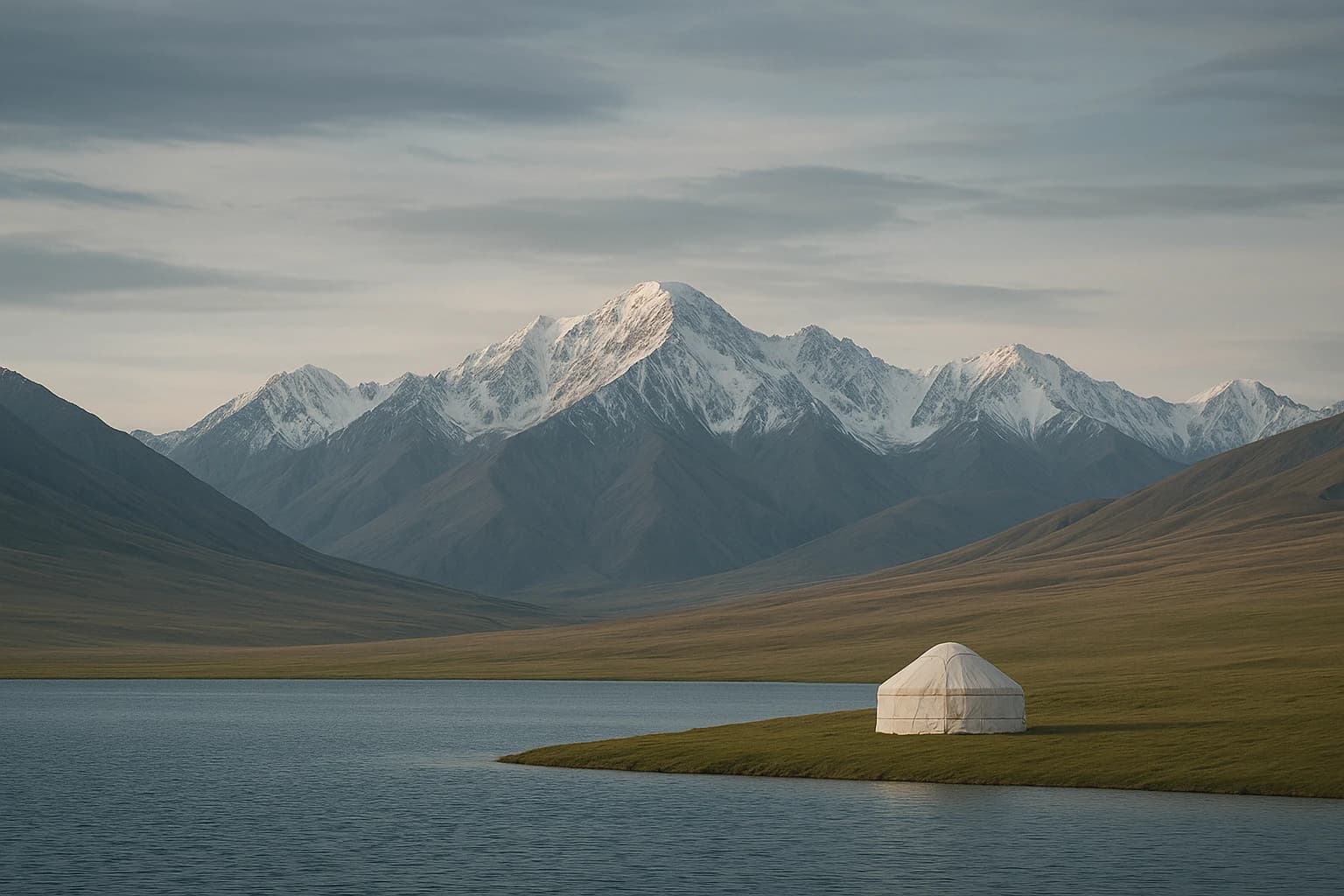
Kyrgyzstan sits in the heart of Central Asia, nestled between the mountain ranges of the Tian Shan and the Pamir-Alay. 94 percent of the country lies above 1,000 metres, and its highest peak — Jengish Chokusu — reaches 7,439 metres. There are over 40,000 rivers and roughly 2,000 lakes.
For a country the combined size of Saxony, Bavaria, and Baden-Wuerttemberg, this concentration of natural wonders is remarkable. And it is the reason why products are created here that simply don't exist anywhere else.
94 percent of Kyrgyzstan lies above 1,000 metres — the country is literally closer to the sky than almost any other.
Tian Shan: The Celestial Mountains
The name Tian Shan means "Celestial Mountains" in Chinese. The range stretches over 2,500 kilometres through Central Asia and forms the backbone of Kyrgyzstan. Here you find glaciers larger than entire Swiss cantons, valleys where thousands of wildflowers bloom in summer, and high plateaus where nomads graze their herds.
The vegetation changes with altitude: walnut forests in the valleys, juniper groves on the slopes, alpine meadows with edelweiss and gentian on the high pastures, and finally bare rock and eternal ice.
From the Hive
Honey knowledge the supermarket skips
Twice a month: varietals, harvest, origin. Plus 10% off your first order.
10% off your first order · No spam. Unsubscribe anytime.
Issyk-Kul: The Jewel of Central Asia
Lake Issyk-Kul is the second-largest mountain lake in the world. It sits at 1,607 metres, stretches 182 kilometres in length, and despite its altitude, never freezes — its name means "warm lake." The water colour shifts between turquoise and deep blue depending on the light.
Around the lake, craft traditions have developed over millennia: in the villages along the southern shore, felt carpets are made; on the northern shore, wool processing dominates.
Alpine Meadows: The Jailoos
The jailoos are the summer highland pastures that are central to nomadic life. From June to September, families move with their herds to these meadows, which sit at 2,500 to 3,500 metres. Here grow the grasses and herbs that give the sheep their distinctive wool and the bees their unique honey.
The jailoos are also where much of the craft takes place: women felt while the men tend the herds. The combination of fresh mountain air, abundant wool, and time makes summer the most important production season.
Why the Landscape Shapes the Products
Every ULU product is a result of this landscape. The wool comes from sheep grazing on the alpine meadows. The honey comes from bees pollinating wild mountain flowers. The colours of the Shyrdak carpets reflect the contrasts: the green of the pastures, the blue of the sky, the red of the hillsides in autumn.
Kyrgyzstan's landscape is not just a backdrop — it is raw material, inspiration, and quality guarantee all in one.
To understand Kyrgyzstan is to understand why ULU products are different. They don't come from a factory. They come from one of the last places on Earth where nature remains untouched.
Share
94 percent of Kyrgyzstan lies above 1,000 metres — the country is literally closer to the sky than almost any other.
Lake Issyk-Kul is the second-largest mountain lake in the world, stretching 182 kilometres in length, and despite sitting at 1,607 metres altitude, it never freezes.
Kyrgyzstan has over 40,000 rivers and roughly 2,000 lakes — a concentration of natural wonders remarkable for a country of this size.
Frequently Asked Questions
Kyrgyzstan sits in the heart of Central Asia, nestled between the mountain ranges of the Tian Shan and the Pamir-Alay. It borders Kazakhstan, China, Tajikistan, and Uzbekistan. 94 percent of the country lies above 1,000 metres.
Issyk-Kul is the second-largest mountain lake in the world, 182 kilometres long and sitting at 1,607 metres. Despite its altitude, it never freezes — its name means "warm lake." It is a centre of Kyrgyz craft culture.
Jailoos are the summer highland pastures at 2,500 to 3,500 metres where Kyrgyz nomads move with their herds from June to September. Here, high-quality wool, honey, and traditional crafts are produced.

Jamilia
Autorin, ULU Magazin
Jamilia schreibt über kirgisisches Handwerk, Honig und die Geschichten hinter den Produkten. Aufgewachsen in Zentralasien, lebt sie zwischen Bischkek und Berlin.
Related Articles
The Land
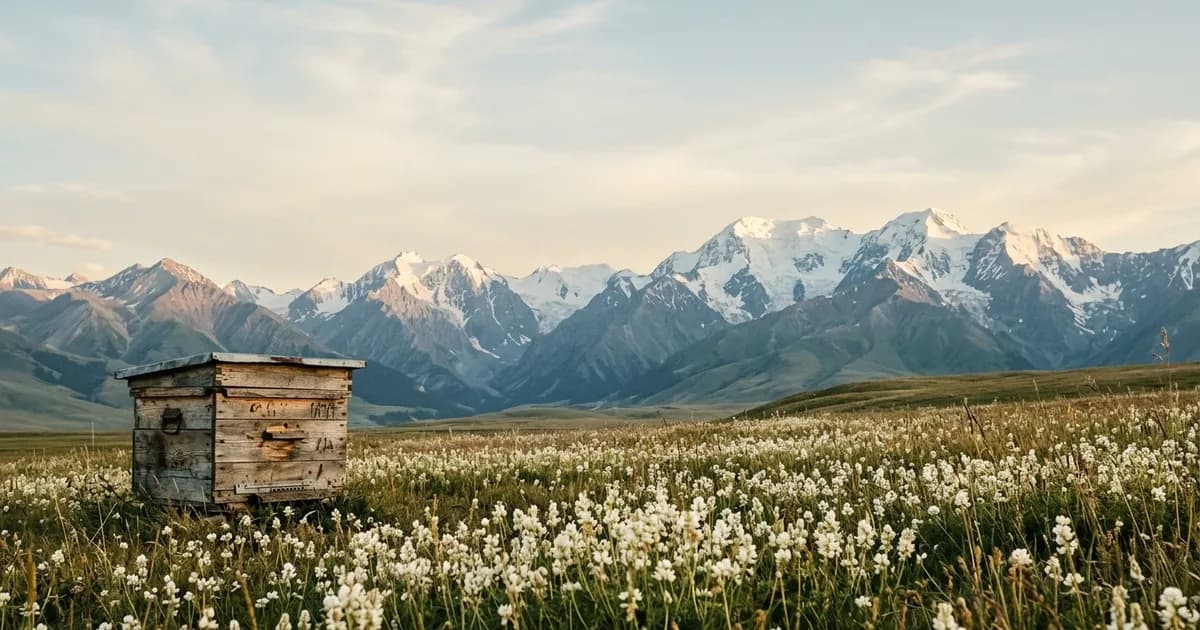
3,000 Metres: Why Genuine Mountain Honey Comes from the Tian Shan
Most honey labelled "mountain honey" comes from valleys at a few hundred metres elevation. Genuine mountain honey from the Tian Shan is something entirely different — and the difference starts at 2,400 metres.
The Land
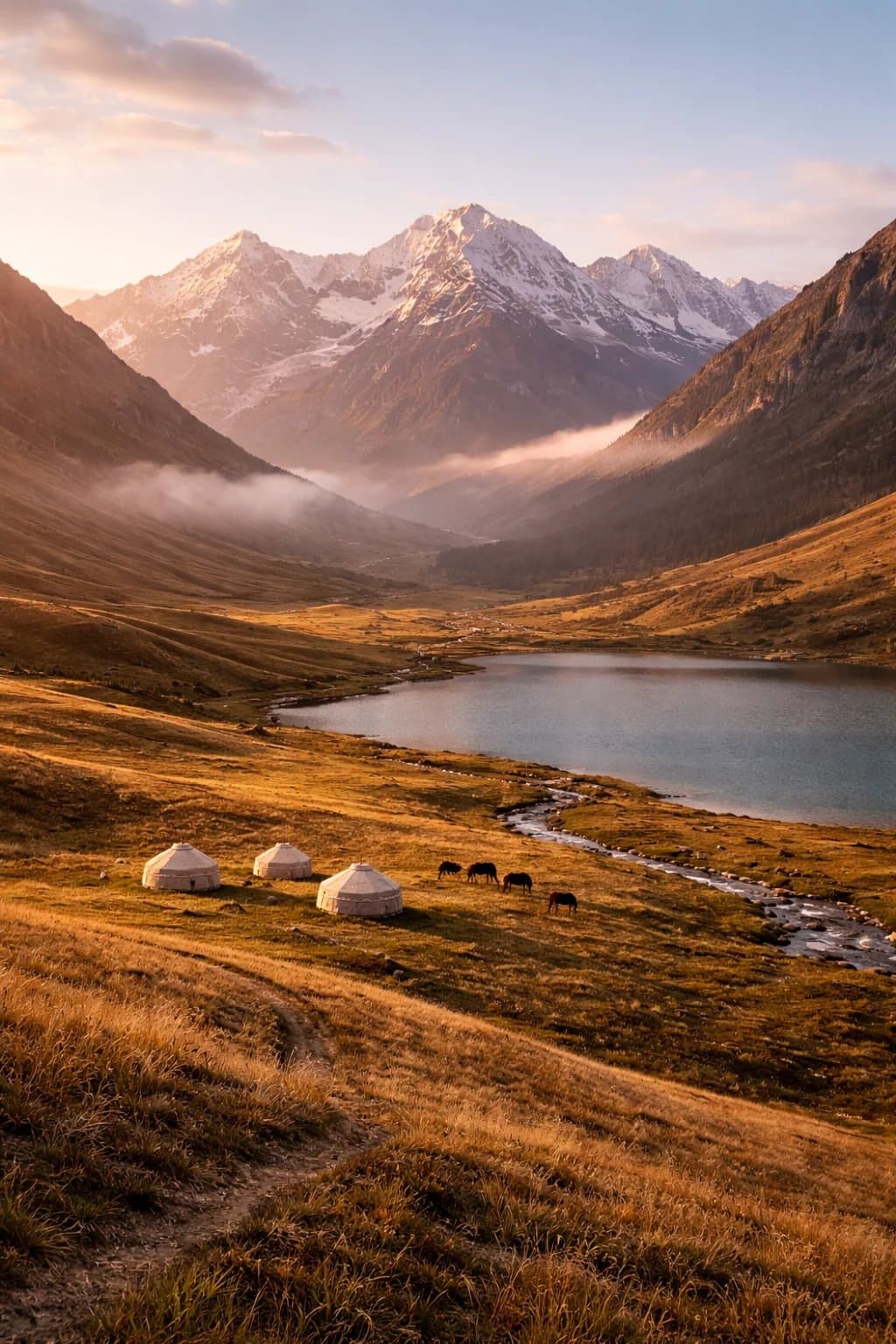
Kyrgyzstan — The Land Behind Our Products
Kyrgyzstan lies at the heart of Central Asia — a land of towering mountains, endless steppes, and a vibrant nomadic culture. This is where the materials and artisan traditions that define ULU come to life.
The Land
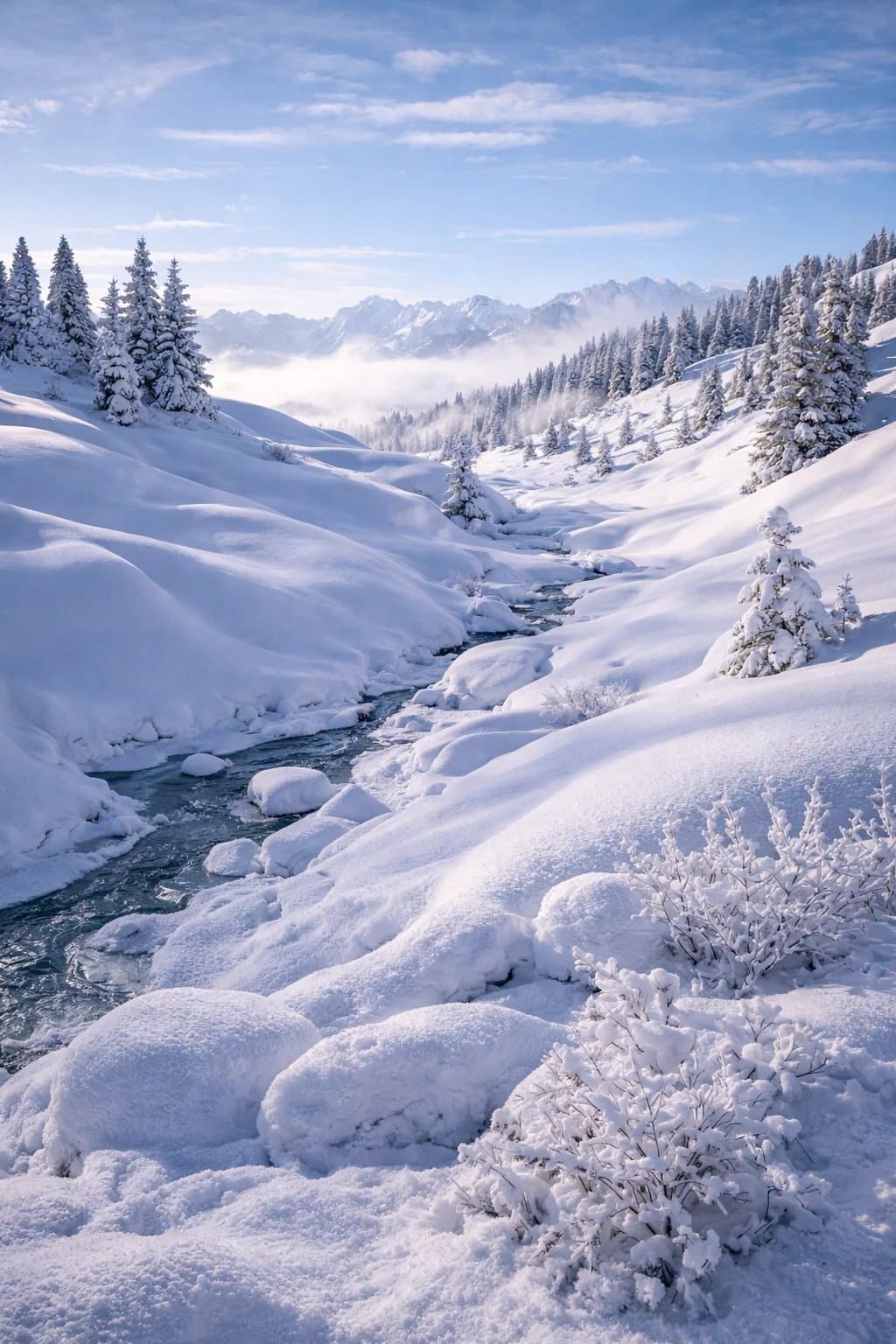
How Altitude Shapes Wool Quality
At 3,000 metres, the air is thin, the winters long, and the sheep have adapted. The result: a wool that is denser, warmer, and more resilient than anything grown in the lowlands.
From the Hive
Honey knowledge the supermarket skips
Twice a month: varietals, harvest, origin. Plus 10% off your first order.
10% off your first order · No spam. Unsubscribe anytime.