
The Makers
Unpasteurised vs. commercial honey: a guide to purity and origin
Last updated:
In short
- Unpasteurised honey is heated to no more than 40 °C and is not pasteurised, so it keeps heat-sensitive enzymes such as diastase and invertase. Commercial honey loses them through pasteurisation.
- The HMF value (hydroxymethylfurfural) rises with heating and storage time, which makes it a measurable quality indicator.
- Since June 2026, EU honey blends must list every country of origin with its percentage share. Honey from a single country of origin is now recognisable at a glance.
At the honey shelf, one question tells you more about flavour and origin than colour or price: is the honey unpasteurised or industrially processed? Commercial honey is often heated strongly and ultra-filtered. Both change heat-sensitive enzymes and remove pollen, and without pollen the origin can hardly be determined.
What is unpasteurised honey? A clear definition
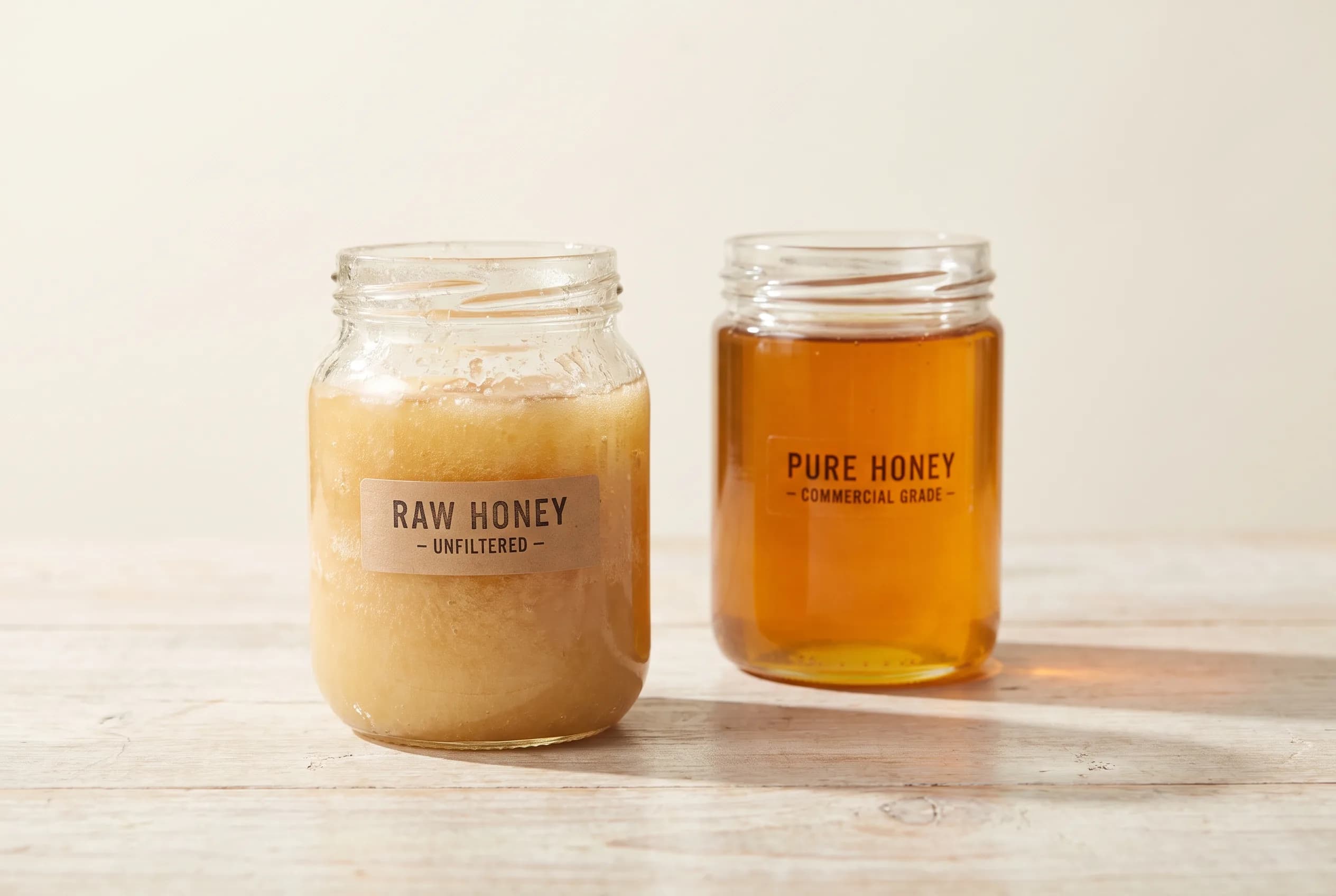
The term "unpasteurised honey" describes honey as bees make it and as it sits in the hive. In concrete terms: it has not been heated above 40 °C, not pasteurised and not finely filtered. It is only strained to remove coarse particles such as bits of wax.
In Germany the situation is fairly consumer-friendly. Under the German Honey Regulation, honey sold as "honey" may not contain any added substances, and none of honey's own components may be removed. Honey with the "Echter Deutscher Honig" seal of the German Beekeepers' Association (D.I.B.) is never pasteurised.
The real challenge lies with imported and industrially bottled honeys, where aggressive processing steps are common to ensure a long shelf life and a consistently liquid texture.
From the Hive
Honey knowledge the supermarket skips
Twice a month: varietals, harvest, origin. Plus 10% off your first order.
10% off your first order · No spam. Unsubscribe anytime.
Side by side: unpasteurised vs. industrial honey
| Feature | Unpasteurised honey | Industrial honey |
|---|---|---|
| Heating | Never above 40 °C, not pasteurised | Often 60–80 °C (pasteurisation) |
| Filtration | Coarse straining | Ultrafiltration (removes pollen) |
| Enzymes | Diastase + invertase retained | Largely destroyed |
| HMF value | Lower | Rises with heating |
| Pollen | Present (proof of origin) | Removed (origin anonymous) |
| Crystallisation | Natural, creamy | Prevented by heat |
| Shelf life | 2–3 years (cool, dark) | Longer through processing |
Why processing makes the difference: a look behind the scenes
Two processes change commercial honey fundamentally: heating and ultrafiltration.
The heat shock: what is lost in pasteurisation
To keep honey liquid on the supermarket shelf for months or years and to prevent crystallisation, it is often heated strongly. Heat-sensitive enzymes such as diastase and invertase suffer in the process. They are essential for turning nectar into honey and are regarded as important quality indicators. A high HMF value (hydroxymethylfurfural), which forms when honey is heated, is a clear sign of an industrially processed or old honey.
Ultrafiltration: clear honey without an origin
Ultrafiltration goes even further. The honey is pressed under high pressure through extremely fine filters. This removes not only the tiniest air bubbles for a clear look, but also the flower pollen.
Pollen is honey's fingerprint. Pollen analysis can determine the geographical and botanical origin of a honey precisely. Remove the pollen and the honey becomes anonymous. That makes it easy to blend cheap honeys from different sources unnoticed. A honey without pollen is, in the end, just a sugar solution.
Is there more nutritional value?
The European Food Information Council (Eufic) notes that the micronutrient content per serving of honey is higher than that of refined sugar, but in absolute terms it amounts to less than 1 % of the recommended daily intake. So the difference is not nutritional value but processing, origin and flavour.
Become a honey connoisseur: your checklist for buying with confidence
With the right knowledge you can easily spot inferior honey.
- Read the label carefully. Look for terms such as "unpasteurised", which point to gentle processing. Be sceptical of "blend of EU and non-EU honeys"; that is almost always a sign of a heavily processed mass product.
- Look for crystallisation. Almost every genuine honey crystallises over time. That is not a defect. Liquid honey on the shelf is often a warning sign.
- Check the consistency. Unpasteurised honey is often cloudy and creamy, not crystal clear.
- Know the origin. The best route to authentic honey is buying from a local beekeeper or a trustworthy brand that relies on a single origin. Transparency is the key.
- Origin labelling since 2026: Since June 2026 an EU directive requires honey blends to list every country of origin with its percentage share. Honey from a single country is easy to spot.
Our mountain honey from Kyrgyzstan
If you are looking for a honey with a clear origin: our mountain honey is a white sainfoin honey from the Tian Shan highlands, harvested at 2,400–3,500 metres.
The bees there collect the nectar of sainfoin (Onobrychis viciifolia). A study (PMC11047671, 2024) found 60 volatile aroma compounds in sainfoin honey, 71.31 % of them terpenoids.
- Processing: processed at a maximum of 40 °C, not pasteurised.
- Origin: Tian Shan, Kyrgyzstan.
The result is a creamy, almost white honey, mild and floral with a delicate caramel note.
Frequently asked questions (FAQ)
Why has my honey become solid? That is a good sign. Crystallisation is a natural process triggered by the high glucose content of honey.
How can I re-liquefy crystallised honey without damaging it? Place the jar in a warm water bath at a maximum of 40 °C. Stir occasionally until it is liquid again. Avoid the microwave: it heats unevenly and far above 40 °C.
Why should infants under 12 months not eat honey? In rare cases honey can contain spores of the bacterium Clostridium botulinum. While harmless to adults, they can cause infant botulism in babies whose gut flora is not yet fully developed.
Is Manuka honey always unpasteurised? Not necessarily. With Manuka honey, too, it is worth checking the label for "unpasteurized" and for the stated MGO content.
Share
Heating above 40 degrees Celsius damages heat-sensitive enzymes that are essential for honey's health benefits.
From 2026, honey blends in the EU must list all countries of origin — strengthening the position of transparent, single-origin honey.
Frequently Asked Questions
That is a good sign. Crystallisation is a natural process triggered by the high glucose content of honey.
Place the jar in a warm water bath at a maximum of 40 °C. Stir occasionally until it is liquid again. Avoid the microwave: it heats unevenly and far above 40 °C.
In rare cases honey can contain spores of the bacterium *Clostridium botulinum*. While harmless to adults, they can cause infant botulism in babies whose gut flora is not yet fully developed.
Not necessarily. With Manuka honey, too, it is worth checking the label for "unpasteurized" and for the stated MGO content.

Jamilia
Autorin, ULU Magazin
Jamilia schreibt über kirgisisches Handwerk, Honig und die Geschichten hinter den Produkten. Aufgewachsen in Zentralasien, lebt sie zwischen Bischkek und Berlin.
Related Articles

The Makers
What Is Sainfoin Honey? The Complete Guide to a Rare Honey
Some honeys you find in every supermarket. Then there is sainfoin honey.
The Makers
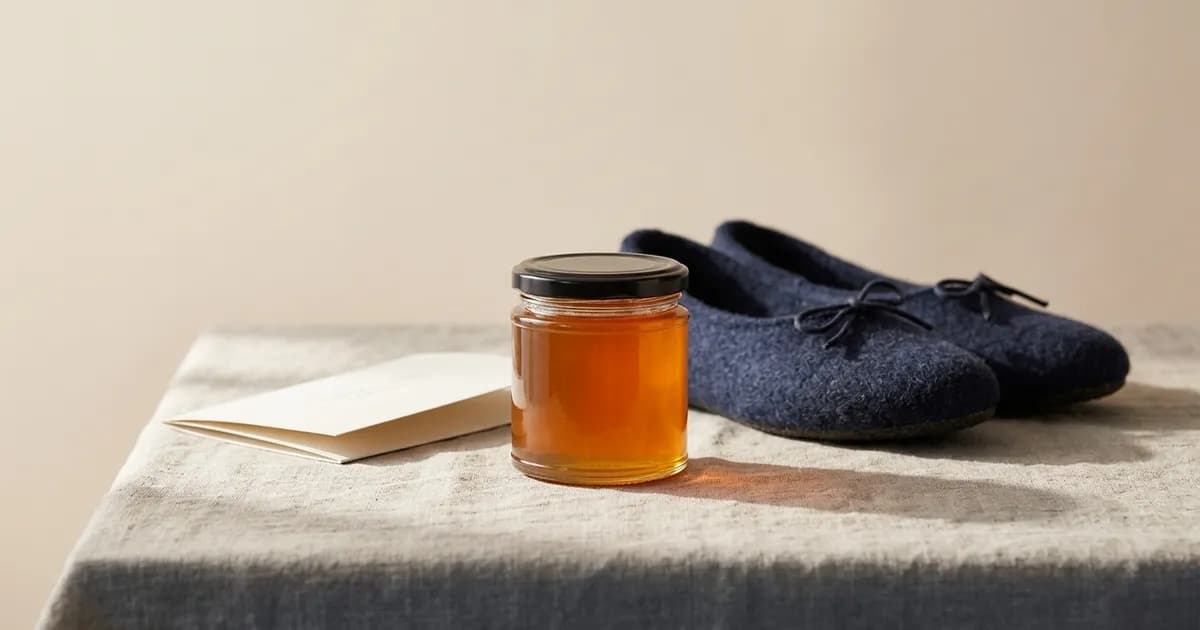
Luxury Honey: What Premium Honey Actually Means
The gap between a €3 supermarket honey and a €40 specialty jar is bigger than most people think. What real quality comes down to.
The Makers
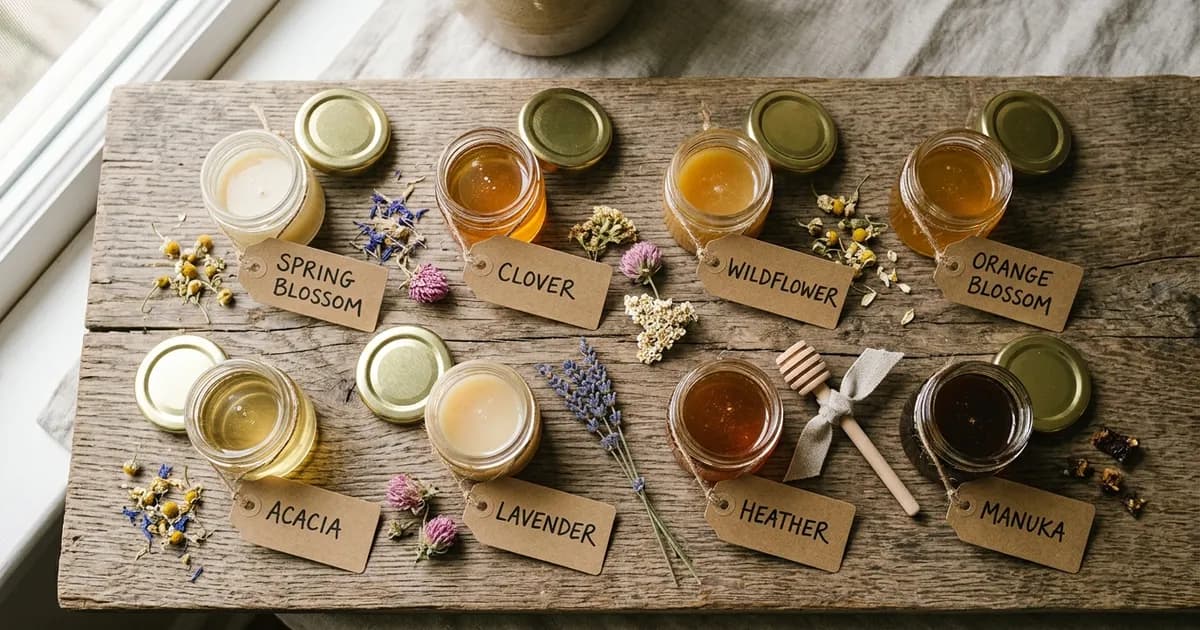
Best Honey in Germany 2026
The best honey varieties in Germany 2026: From forest honey to acacia to Manuka — an honest comparison with ratings.
From the Hive
Honey knowledge the supermarket skips
Twice a month: varietals, harvest, origin. Plus 10% off your first order.
10% off your first order · No spam. Unsubscribe anytime.