
The Land
Nomadic Aesthetics: A Design Philosophy Between Function and Beauty
Last updated:
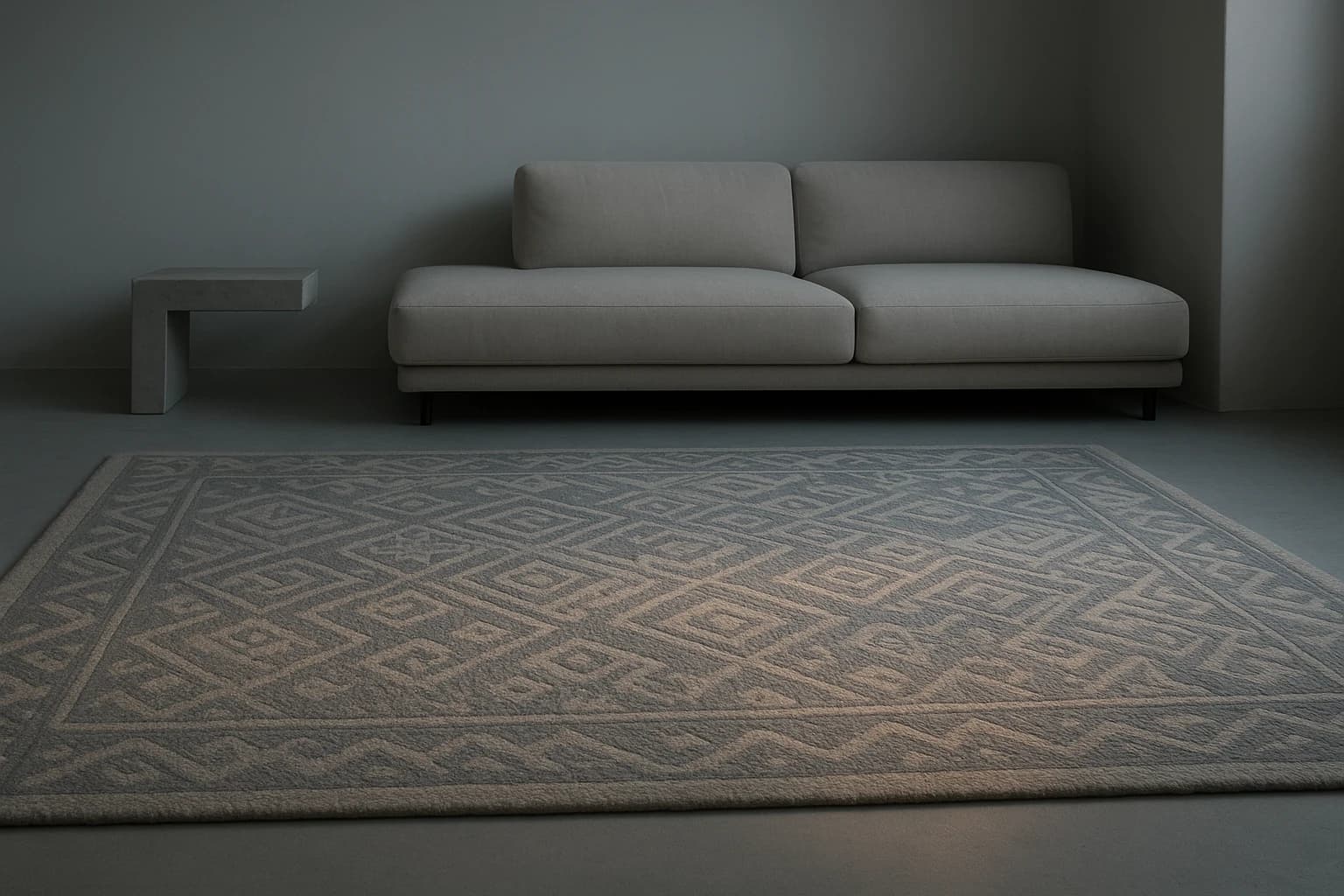
Design Born of Necessity
When everything you own must fit on two horses, you think carefully about what you take. Every object must earn its place — through function, through durability, through versatility. There is no room for decoration without purpose.
This constraint gave rise to one of the most fascinating design traditions in the world. Over centuries, Kyrgyz nomads developed objects that are both practical and beautiful — not as a deliberate design choice, but as the natural consequence of their way of life.
The most beautiful things of the nomads are the most useful. And the most useful are often the most beautiful.
The Principles of Nomadic Aesthetics
Clear design principles can be drawn from nomadic life:
Multifunctionality: A Shyrdak carpet insulates the floor, decorates the space, and tells the family's story. A felt coat protects against rain, wind, and cold. A woven rope holds the yurt together and serves as ornament.
Material honesty: Nomadic design never disguises its materials. Wool looks like wool. Wood like wood. Leather like leather. There is no veneer, no coating, no imitation of finer materials.
Portability: Everything must be light, foldable, or collapsible. The yurt itself is the best example: a complete home that can be dismantled and reassembled in two hours.
Repairability: Nomads could not afford a throwaway culture. Every object was constructed so it could be repaired — with materials available along the way.
From the Hive
Honey knowledge the supermarket skips
Twice a month: varietals, harvest, origin. Plus 10% off your first order.
10% off your first order · No spam. Unsubscribe anytime.
Nomadic Design in a Modern Context
The parallels to modern minimalism are obvious — but there is a crucial difference: nomadic design is not austere. It is generous in its beauty. The felt carpets burst with colour. The embroideries are lavish. Inside, the yurt is a warm, richly decorated space.
The minimalism of the nomads lies not in renouncing beauty, but in renouncing the superfluous. Every ornament carries meaning. Every colour serves a function. There is no empty decoration.
Nomadic minimalism does not mean less beauty — it means more meaning per object.
What Modern Designers Can Learn from Nomads
Some of the most influential designers of the 20th and 21st centuries have drawn inspiration from nomadic traditions. The union of craft and function, the appreciation of natural materials, and the idea that good design is timeless — all of this can be found in nomadic aesthetics.
Three lessons stand out:
- Own less, value more: When every object is chosen with intention, a deeper relationship with things emerges.
- Material determines form: The design is not imposed on the material — the material dictates the form.
- Beauty and utility are not opposites: The separation of art and craft is a modern invention. In the nomadic world, it never existed.
The ULU Philosophy
At ULU, we see our products as a continuation of this tradition. Our felt slippers are not just beautiful — they regulate temperature, are antibacterial, and built to last. Our scarves are not just soft — they are made from wool that needs no chemical treatment. Our carpets are not just decorative — they tell the stories of the women who made them.
This is nomadic aesthetics in the 21st century: products that earn their place — through quality, through meaning, through respect for material and maker.
Share
When everything you own must fit on two horses, every object must earn its place through function, durability, or versatility.
Nomadic minimalism does not mean less beauty — it means more meaning per object.
Nomadic design never disguises its materials: wool looks like wool, wood like wood, leather like leather — no veneer, no coating, no imitation.
Frequently Asked Questions
Nomadic aesthetics is a design philosophy born from the mobile life of nomads. Every object had to be both beautiful and useful, since only essentials could be transported. Its principles are multifunctionality, material honesty, portability, and repairability.
Nomadic design does not renounce beauty, but renounces the superfluous. Unlike the often austere modern minimalism, nomadic design is richly coloured and ornate — but every ornament carries meaning and every colour serves a function.
ULU products combine beauty with function following the nomadic model: felt slippers regulate temperature and last for years, scarves need no chemical treatment, and carpets tell stories. Every product earns its place through quality and meaning.

Jamilia
Autorin, ULU Magazin
Jamilia schreibt über kirgisisches Handwerk, Honig und die Geschichten hinter den Produkten. Aufgewachsen in Zentralasien, lebt sie zwischen Bischkek und Berlin.
Related Articles
The Land
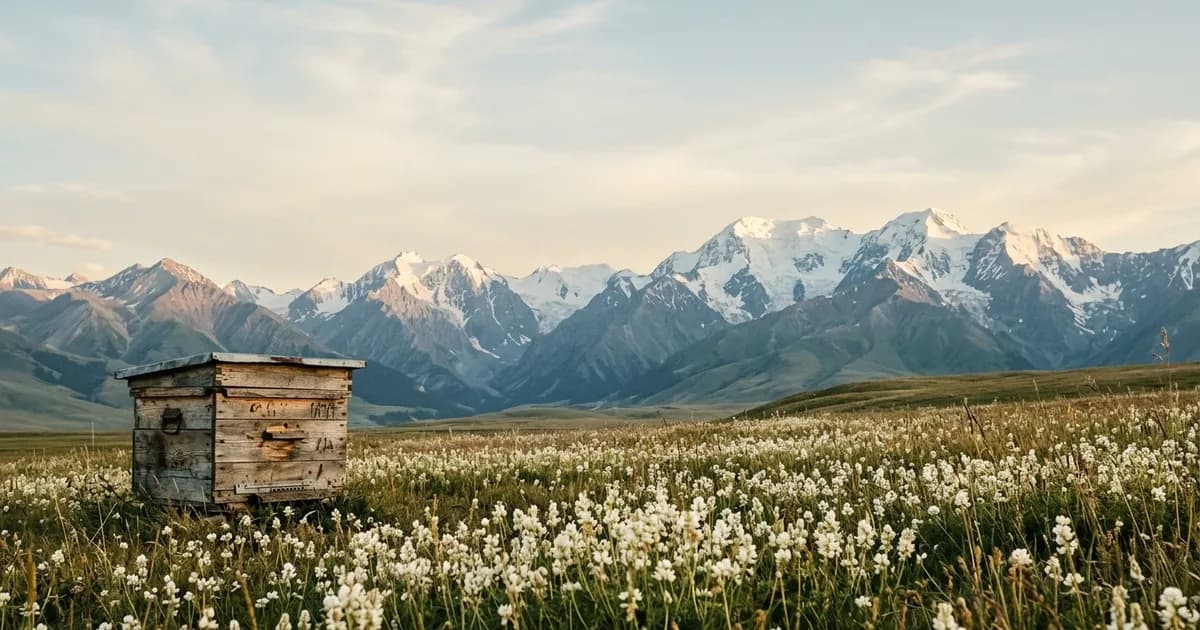
3,000 Metres: Why Genuine Mountain Honey Comes from the Tian Shan
Most honey labelled "mountain honey" comes from valleys at a few hundred metres elevation. Genuine mountain honey from the Tian Shan is something entirely different — and the difference starts at 2,400 metres.
The Land
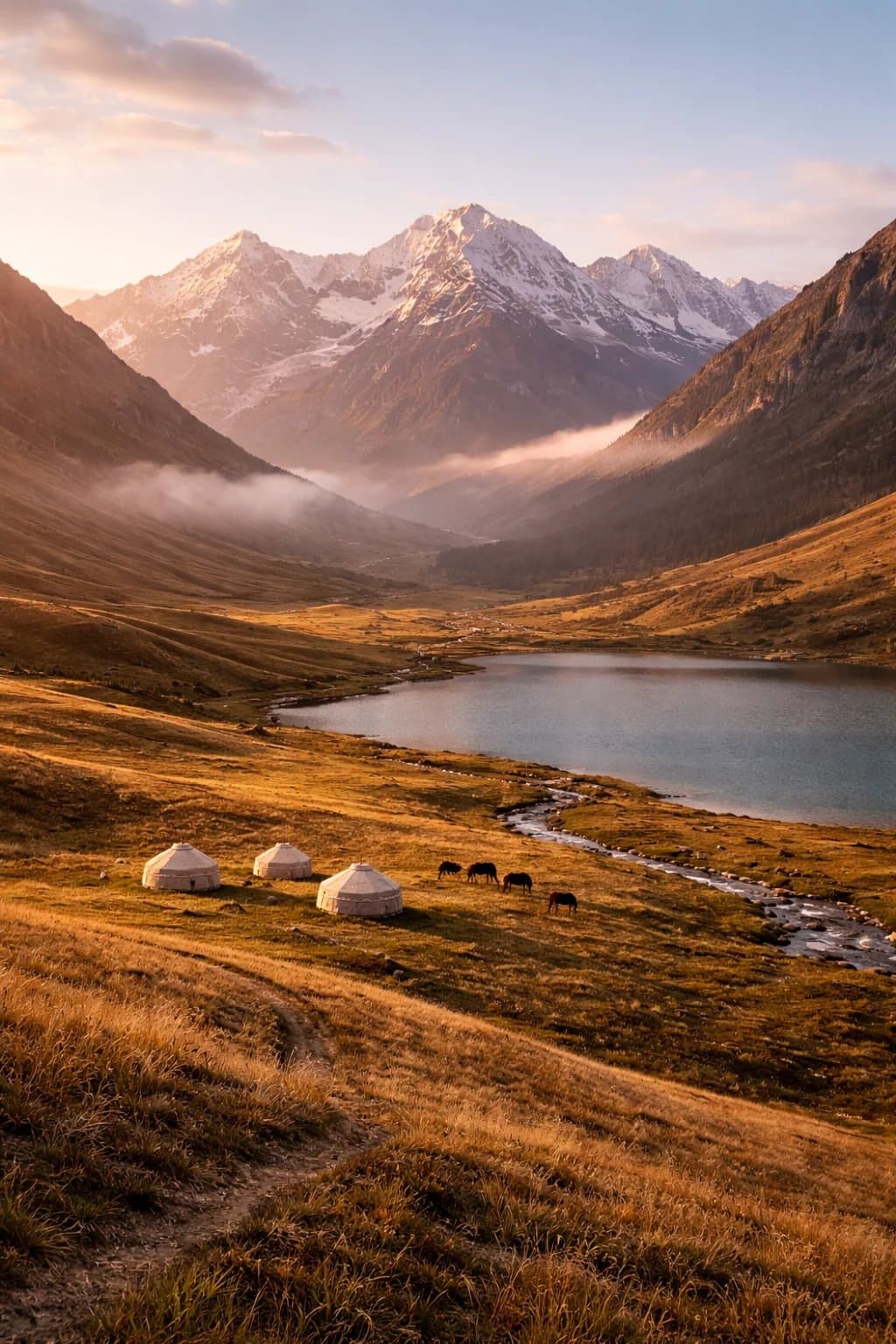
Kyrgyzstan — The Land Behind Our Products
Kyrgyzstan lies at the heart of Central Asia — a land of towering mountains, endless steppes, and a vibrant nomadic culture. This is where the materials and artisan traditions that define ULU come to life.

The Land
How Altitude Shapes Wool Quality
At 3,000 metres, the air is thin, the winters long, and the sheep have adapted. The result: a wool that is denser, warmer, and more resilient than anything grown in the lowlands.
From the Hive
Honey knowledge the supermarket skips
Twice a month: varietals, harvest, origin. Plus 10% off your first order.
10% off your first order · No spam. Unsubscribe anytime.