
The Makers
Nomadic Pedagogy: Learning in Harmony with Nature
Last updated:
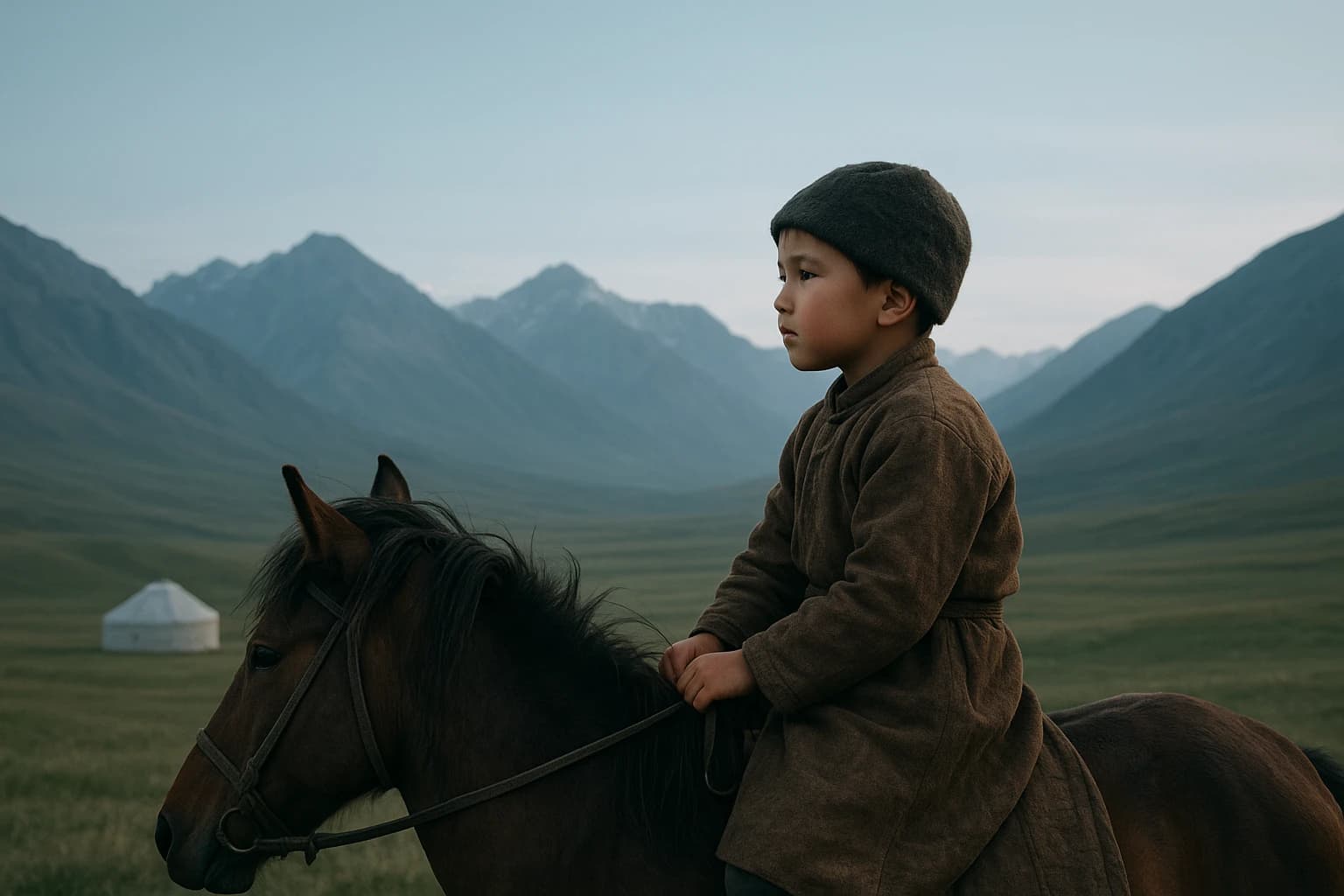
Picture a classroom. Perhaps you see desks, chairs, a blackboard, and books. Now picture a different classroom: one without walls, whose ceiling is the endless sky and whose floor is the vast steppes of Central Asia. A place where the wind whispers the lessons and the seasons set the curriculum.
This is the world of nomadic pedagogy in Kyrgyzstan. An educational philosophy not found in textbooks but anchored in daily life. It shapes children into resilient, self-reliant people deeply connected to their environment. Join us on a journey into this fascinating world of learning, where life itself is the greatest teacher.
What Is Nomadic Pedagogy, Really?
When we speak of "nomadic pedagogy," we do not mean a formal school system with curricula and exams. Rather, it is a lived, implicit form of learning that evolved organically from the nomadic way of life. Unlike modern concepts that sometimes use the term as a metaphor for flexible learning in the digital age, traditional Kyrgyz pedagogy is deeply rooted in culture, nature, and community.
It is about passing on knowledge through observation, imitation, and direct participation. Children do not learn for life — they learn in life.
A common misconception is that all Kyrgyz people still live as full nomads today. In reality, most families practise a form of semi-nomadism: they spend winters in villages (kystoo) and move with their herds to the high mountain pastures (jailoo) in summer. This seasonal migration is the heartbeat of their rhythm of life — and of their pedagogy.
The Yurt: The Beating Heart of Learning
The centre of the nomadic world is the yurt (Kyrgyz: boz ui). It is far more than just a home. It is a microcosm, a symbol of the universe, and a child's first and most important place of learning.
From a young age, children watch the yurt being assembled and taken apart — a complex process requiring teamwork, an understanding of physics, and precision. They learn the name of every single part and understand its function. Inside the yurt, everything has its place and order, teaching respect for space, family, and tradition. Daily tasks — fetching water, making fire, helping prepare food — are not tedious chores but practical lessons in responsibility and self-sufficiency.
[IMAGE 1: A Kyrgyz girl in traditional clothing smiles in front of a yurt. The sun is shining and green hills are visible in the background.]
From the Hive
Honey knowledge the supermarket skips
Twice a month: varietals, harvest, origin. Plus 10% off your first order.
10% off your first order · No spam. Unsubscribe anytime.
The Classroom Without Walls: Learning by Watching and Doing
Beyond the yurt lies the real classroom. Here the skills are learned that are necessary for surviving and thriving in the rugged mountains of Kyrgyzstan.
Riding Before Walking
A Kyrgyz proverb says that nomads are born on horseback. It is hardly an exaggeration. Children often come into contact with horses as toddlers and sit in the saddle before they can walk steadily.
This early riding is a profound lesson. It teaches:
- Balance and body control: Children develop an intuitive feel for movement and equilibrium.
- Responsibility: They learn early to care for and respect another living being.
- Courage and self-confidence: Mastering the vastness of the steppe from the back of a horse builds an unshakeable sense of independence.
[IMAGE 2: Two young Kyrgyz boys sit on horses in a wide, green mountain landscape. They look confident and completely in their element.]
The Legacy of the Hands: Craft as a Store of Knowledge
Craft skills are vital for survival in nomadic culture and a central part of knowledge transmission. Girls learn from their mothers and grandmothers the art of felt-making (Shyrdak), weaving, and embroidery. Boys are introduced by their fathers to leatherwork, tool use, and livestock herding.
This learning rarely happens through formal instruction. Instead, children watch, help with small tasks, and gradually take on more complex work over time. Every pattern on a carpet, every stitch on a leather pouch tells a story and carries centuries of knowledge. In this way, not only techniques but also cultural identity and creativity are passed on. This deeply rooted tradition is the soul behind the unique handmade Shyrdak carpets still crafted by hand today.
[IMAGE 3: Close-up of the hands of an elderly Kyrgyz woman teaching a younger girl how to weave a traditional pattern.]
Nature as Teacher
In the mountains, there is no app that forecasts the weather. Children learn to read the clouds, interpret wind direction, and understand the signs of the animals. They know the medicinal herbs growing by the wayside and which pastures are best for the sheep. Nature is not an abstract concept but a living partner that teaches respect, adaptability, and a deep ecological understanding.
Values That Shape a Life: More Than Just Knowledge
Nomadic pedagogy conveys more than practical skills. It shapes character and anchors profound values in children's hearts:
- Hospitality: In a harsh environment, mutual aid is essential for survival. Every child learns that a guest is a gift from God and is served the best the family has to offer.
- Respect for elders: The elders are the living libraries of the community. Their knowledge and life experience are highly valued and passed on through stories, songs, and the great Kyrgyz epic "Manas."
- Community spirit: Rituals like Tushoo Toi, the celebration of a child's first steps, strengthen cohesion. From the very beginning, children learn that they are part of something greater.
- Resilience: Life in the mountains is tough and unpredictable. Children learn to handle setbacks, find solutions to problems, and make do with what they have.
Tradition Meets Modernity: Today's Challenges
Traditional nomadic education faces major challenges today. The state school system is compulsory for nomad children too, creating tensions. Children who help with the herds on the summer pastures often miss school.
Initiatives such as so-called "yurt schools," launched by various organisations, try to bridge the gap. They bring teachers to the highland camps to give children a basic formal education without separating them from their families and traditional responsibilities. This shows the constant balancing act between preserving a unique culture and meeting the demands of the modern world.
What We Can Learn from Nomadic Pedagogy
The nomadic education of Kyrgyzstan is a powerful example of how learning can be holistic and deeply rooted in life. It reminds us that true education happens not only in the head but also in the hands and in the heart.
It teaches us to see nature as a teacher again, to value the worth of inherited knowledge, and to understand that the strongest lessons are often those we learn through our own experience. If you want to learn more about the rich culture of Kyrgyzstan and its ethically sourced products, discover a world where tradition, nature, and craftsmanship are woven together in the most beautiful way.
Share
Kyrgyz nomadic children do not learn for life — they learn in life, through observation, imitation, and direct participation.
Most Kyrgyz families practise semi-nomadism: winters in villages, summers on the high mountain pastures — the jailoos.
The yurt is far more than a home — it is a microcosm, a symbol of the universe, and a child's first and most important place of learning.
Frequently Asked Questions
There are. Kyrgyzstan has a state-run, compulsory school system. Traditional nomadic pedagogy exists alongside it and conveys knowledge and values that often have no place in formal schooling. The challenge is to reconcile the two.
Traditionally, there is a gender-based division in the skills learned — men are primarily responsible for the herds and outdoor crafts, women for the yurt and processing products like wool and milk. Today, however, these boundaries are increasingly blurring, and many basic skills are learned by everyone. The underlying values of respect and responsibility apply equally to all.
Absolutely. In a world that is becoming ever more complex and digital, the principles of nomadic pedagogy teach us timeless lessons: the importance of hands-on experience, the ability to adapt, a deep connection to nature, and the strength of a close-knit community.

Jamilia
Autorin, ULU Magazin
Jamilia schreibt über kirgisisches Handwerk, Honig und die Geschichten hinter den Produkten. Aufgewachsen in Zentralasien, lebt sie zwischen Bischkek und Berlin.
Related Articles
The Makers
What Is Sainfoin Honey? The Complete Guide to a Rare Honey
Some honeys you find in every supermarket. Then there is sainfoin honey.

The Makers
Luxury Honey: What Premium Honey Actually Means
The gap between a €3 supermarket honey and a €40 specialty jar is bigger than most people think. What real quality comes down to.

The Makers
Best Honey in Germany 2026
The best honey varieties in Germany 2026: From forest honey to acacia to Manuka — an honest comparison with ratings.
From the Hive
Honey knowledge the supermarket skips
Twice a month: varietals, harvest, origin. Plus 10% off your first order.
10% off your first order · No spam. Unsubscribe anytime.