
The Makers
The Philosophy of Slow Living & Mindful Consumption
Last updated:
We live in an age of constant acceleration. Our closets are full, our calendars are bursting at the seams, yet many of us feel a deep inner restlessness. If you find yourself questioning your buying decisions and searching for things with real staying power, you are not alone. According to Statista (2024), around 29 percent of Germans -- over 24 million people -- now place extreme value on a healthy, mindful, and sustainable lifestyle.
The emotional longing for deceleration drives us. We are no longer chasing the next fleeting trend but searching for a home that breathes, grounds, and endures. This is exactly where the philosophy of slow living begins. Guided by our motto "Move light. Live deep.", we show you why consciously stepping away from mass consumption not only liberates your soul but is also one of the smartest financial and health decisions you can make.
The Illusion of Fast Consumption: Fast Fashion vs. Slow Fashion
The conversation around sustainability often starts in the wardrobe. When we examine the concept of "Fast Fashion vs Slow Fashion," the absurdity of our modern consumption quickly becomes clear. Fast fashion is like fast food: it satisfies for a brief moment but leaves behind an unhealthy system in the long run.
Yet the throwaway culture does not stop at t-shirts. A massive, often overlooked problem is so-called "Fast Furniture" -- cheaply produced mass furniture and short-lived home accessories. Every year, millions of tons of furnishings are discarded in Western countries. According to reports from environmental organizations like the EPA, furniture waste has increased by a staggering 450 percent since the 1960s.
Particleboard (MDF) and synthetic carpets from mass production often have a lifespan of just one to three years. Worse still, they off-gas toxic substances like formaldehyde and microplastics for months, continuously polluting our indoor air. The alternative? Craftsmanship that endures for generations.
The Psychology of Slow Living in Your Own Home
Why do some rooms make us feel instant stress while others embrace us like a warm blanket? The answer lies in the psychology of space. The principle of "less, but better" reduces so-called decision fatigue. Every object in your home that wobbles, fades, or serves no real purpose silently drains your energy.
Slow living means understanding your home as an uncompromising sanctuary. This begins with the deepest form of recovery: when it comes to regeneration, it is often the sheer quality of sleep that matters -- the number of hours in bed alone is not enough. A minimalist, low-stimulus bedroom furnished with natural, breathable materials instead of off-gassing plastics measurably promotes the essential deep-sleep phases. When you slip into our handcrafted Steppe Ballerinas made of pure Kyrgyz wool in the evening, you naturally signal to your body: the day is over, rest begins.
From the Hive
Honey knowledge the supermarket skips
Twice a month: varietals, harvest, origin. Plus 10% off your first order.
10% off your first order · No spam. Unsubscribe anytime.
Actionable Insights: Transforming Your Home Sustainably
How do you make the transition from a trend-driven household to a genuine slow-living refuge? The transformation requires a shift in perspective: we need to stop spending money and start investing in quality of life.
Even when it comes to the first tips for finding an apartment, experts today recommend paying attention to spatial structure, natural light, and the ability to let natural materials breathe. But you can also rethink things right now in your existing home. If you are looking for real, practical sustainable living tips, start with radical reduction. Let go of things that tell no story.
Here is how you go from impulse bargain-hunter to a true queen of sustainable shopping:
- The 48-hour rule: Let at least two days pass between impulse and purchase.
- Material check: Favor wool, felt, solid wood, and linen. They develop a beautiful patina over time instead of looking shabby.
- Question the origin: Do you know the face behind the product? At ULU Style, we work directly with herding families at over 2,500 meters elevation -- no middlemen.
Investment Pieces: The ULU Style Philosophy for a Timeless Life
To assess whether a product is worth its price, conscious consumers use the cost-per-use metric. A machine-made synthetic carpet for 80 euros that is worn out after two years is far more expensive in the long run than a handcrafted Modern Shyrdak carpet that lasts decades and preserves traditional felt artistry.
This principle runs through the entire home. Those who understand the value of kitchen quality as a central living space know that a durable kitchen should not be replaced after five years. In precisely this kitchen -- the heart of the house -- real life unfolds, perhaps over a cup of tea sweetened with our rare White Gold Mountain Honey, harvested from Sainfoin blossoms at 3,000 meters elevation.
The same goes for furniture. Long-lasting chairs crafted with robust craftsmanship are not just an aesthetic statement. They are an essential factor for physical health. Ergonomically correct, stable seating is pure prevention -- a fact so important that it is consistently cited in medical guidance for hip surgery preparation or the treatment of back ailments as a foundation for a healthy home.
An authentic home is an interplay of these durable furnishings and the soft, warming soul of handcrafted textiles. A timeless Highland Wool Scarf woven by Kyrgyz women, or a robust felt carpet from ULU Style brings this deeply rooted tradition directly to your home in Europe.
The Ripple Effect: Mindfulness in Business and Everyday Life
Mindful consumption radiates far beyond your own living room. Values attract values. This applies to personal relationships just as much as to the working world. Companies that establish a slow-work culture and value sustainable action build an enormous power of attraction. When companies today want tips for finding employees, authentic employer branding through lived sustainability and fair trade practices -- exactly as ULU Style cultivates them with the artisans in Kyrgyzstan -- is the strongest magnet for talented, values-driven professionals.
Frequently Asked Questions (FAQ) on the Slow-Living Transformation
Are handcrafted and ethically produced products not much more expensive? In terms of initial purchase price, yes -- but calculated over their lifetime, no. The cost-per-use metric shows: a high-quality, handcrafted product that lasts decades is more economical than cheap mass-produced goods you need to replace every few years.
How do I make sure brands truly practice "slow fashion" or fair trade? Look for transparency. A genuinely sustainable brand can tell you exactly where and by whom the products were made. At ULU Style, we know our producers personally and guarantee fair wages with no middlemen.
What is the first step toward a mindful home? Start with decluttering. Remove items that off-gas toxins or no longer hold emotional and practical value. Replace them selectively with a few high-quality investment pieces made from natural materials like virgin wool or wood.
Your Next Step on the Journey
The decision to embrace slow living is not a sprint but a lifelong, enriching journey. It is the conscious choice for quality, for fair trade, and for preserving ancient craftsmanship. If you are ready to enrich your home with pieces that tell a real story and endure for generations, we invite you to become part of the ULU Style community.
Sign up now for our exclusive order now. Secure not only order now to our upcoming opening collection from the highlands of Kyrgyzstan, but also a special welcome discount on your first timeless investment pieces. Move light. Live deep.
Share
According to Statista, around 29 percent of Germans — over 24 million people — now place extreme value on a healthy, mindful, and sustainable lifestyle.
Furniture waste in Western countries has increased by a staggering 450 percent since the 1960s.
Particleboard and synthetic carpets from mass production often have a lifespan of just one to three years and off-gas toxic substances like formaldehyde for months.
Frequently Asked Questions
In terms of initial purchase price, yes -- but calculated over their lifetime, no. The cost-per-use metric shows: a high-quality, handcrafted product that lasts decades is more economical than cheap mass-produced goods you need to replace every few years.
Look for transparency. A genuinely sustainable brand can tell you exactly where and by whom the products were made. At ULU Style, we know our producers personally and guarantee fair wages with no middlemen.
Start with decluttering. Remove items that off-gas toxins or no longer hold emotional and practical value. Replace them selectively with a few high-quality investment pieces made from natural materials like virgin wool or wood.

Jamilia
Autorin, ULU Magazin
Jamilia schreibt über kirgisisches Handwerk, Honig und die Geschichten hinter den Produkten. Aufgewachsen in Zentralasien, lebt sie zwischen Bischkek und Berlin.
Related Articles

The Makers
What Is Sainfoin Honey? The Complete Guide to a Rare Honey
Some honeys you find in every supermarket. Then there is sainfoin honey.

The Makers
Luxury Honey: What Premium Honey Actually Means
The gap between a €3 supermarket honey and a €40 specialty jar is bigger than most people think. What real quality comes down to.
The Makers
Best Honey in Germany 2026
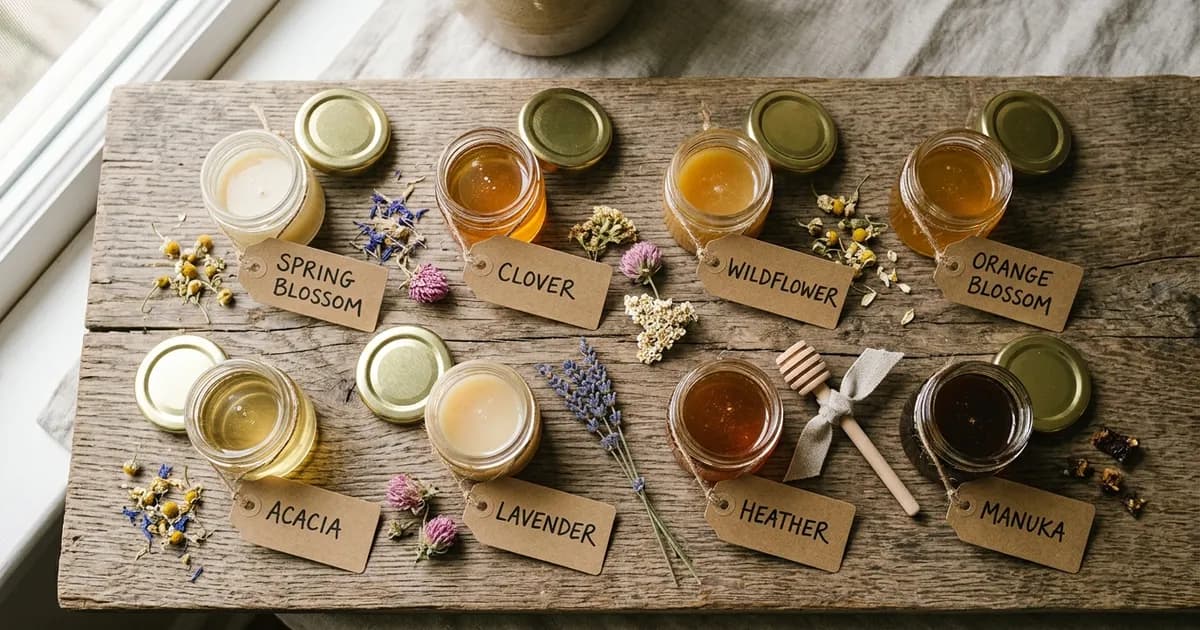
The best honey varieties in Germany 2026: From forest honey to acacia to Manuka — an honest comparison with ratings.
From the Hive
Honey knowledge the supermarket skips
Twice a month: varietals, harvest, origin. Plus 10% off your first order.
10% off your first order · No spam. Unsubscribe anytime.