
The Makers
The Psychology of Mindful Consumption
Last updated:

Do you sometimes feel caught in a strange contradiction? On the one hand, we know we want to live more sustainably. On the other, the consumer world lures us with the promise that the next product, the next bargain, will finally make us happier. Yet often all that remains is a brief high, followed by emptiness -- and more things we never really needed.
This inner conflict is not a personal failing but a deeply human dilemma. The good news: there is a way out. Mindful consumption is not an exercise in deprivation but a path to greater control, deeper satisfaction, and a life that truly feels aligned with your own values. In this guide, we dive deep into the psychology behind our buying decisions and show you how owning less can lead to a richer life.
[IMAGE: A visually striking image showing the contrast between an overloaded, chaotic wardrobe and a minimalist, carefully curated space with a few high-quality pieces.]
Why We Buy What We Do Not Need: The 3 Hidden Instincts in Our Brain
To change our buying behavior, we first need to understand what drives it. Deep in our brain, three ancient instincts are at work that often work against us in the modern world. Marketing experts know these triggers intimately -- once you understand them too, you regain control.
Comparison: The Urge to Be Better
Since ancient times, social comparison has secured our survival within the group. Today, this instinct manifests as the constant drive to keep up with others. We do not just buy a car -- we buy a status symbol. We do not just buy clothes -- we buy an identity that positions us in the social hierarchy. Advertising fuels this instinct deliberately by showing us what we lack in order to be as desirable, successful, or happy as the people in the ad.
Belonging: The Desire to Fit In
Humans are social beings. We have a deep need to be part of a community. Brands exploit this by building cultures and communities around their products. Whether it is the "Apple family" or belonging to the sneaker collector crowd -- purchasing a product becomes a ticket to an exclusive club. We buy to signal our belonging and to find social recognition.
Growth: The Longing for Self-Improvement
The desire to evolve and become a better version of ourselves is a powerful engine. The consumer industry cleverly links this desire to products. A new sports outfit is supposed to make us athletes, an expensive fountain pen to make us creative writers, and a new kitchen appliance to make us gourmet chefs. We buy the idea of a better future, packaged in a product, instead of doing the actual work.
Once we recognize these three instincts, we can pause and ask: Am I buying this because I genuinely need it, or because my brain is reacting to an evolutionary trigger?
The Brief High of the New vs. the Lasting Warmth of the Right
Have you ever experienced so-called hedonic adaptation? You buy something you have been looking forward to for a long time. The first few days are fantastic, but soon the new smartphone, the new bag, is just another object. The feeling of happiness fades and the craving for the next kick arises. This is the hedonic treadmill: we need ever more to reach the same level of satisfaction.
In contrast stands a far more sustainable feeling: the "Warm Glow" effect. Psychologists use this term to describe the deep, lasting satisfaction that arises when we act in alignment with our values. A donation, volunteer work, or an ethical purchasing decision triggers this feeling.
Buying a mass-produced product delivers a brief dopamine hit. Choosing a handcrafted product -- knowing the maker was fairly paid -- creates this warm glow. It is the difference between fleeting pleasure and deeply felt meaning.
[IMAGE: A close-up of hands gently stroking a hand-woven wool scarf. The light is warm and the atmosphere radiates calm and appreciation.]
From the Hive
Honey knowledge the supermarket skips
Twice a month: varietals, harvest, origin. Plus 10% off your first order.
10% off your first order · No spam. Unsubscribe anytime.
Closing the Value-Action Gap: How We Overcome Inner Stress
A recent study by the German Retail Federation (HDE Consumer Monitor 2024) perfectly illustrates our society's dilemma: 66% of Germans have a high sustainability awareness, yet 86% primarily look for bargains when shopping. This gap between our values (what matters to us) and our actions (what we actually do) creates psychological stress that experts call cognitive dissonance.
It is that nagging feeling when your heart wants to protect the planet but you reach for the fast-fashion collection yet again. This inner conflict drains energy and leads to guilt. Mindful consumption is the most effective way to close this gap. Every decision in favor of a durable, fairly produced product is a confirmation of your values. You resolve the inner conflict and replace it with a feeling of integrity and coherence.
From Products to Values: A New Method for Buying Decisions
But how do we make better decisions in everyday life? A powerful mental tool is the "Means-Ends Chain." Instead of only looking at a product's features (the means), ask yourself which deeper value (the end) this purchase truly serves.
Before any purchase, simply ask yourself this one question: Which of my core life values does this product truly serve?
- Freedom? Does this object make me freer, or does it burden me with maintenance and costs?
- Security? Does this purchase give me long-term security or just short-term gratification?
- Connection? Does this item strengthen my relationship with other people or with nature?
- Beauty & Quality? Am I surrounding myself with things whose craftsmanship and story I truly appreciate?
This simple question shifts the focus from "What do I want to have?" to "Who do I want to be?" It transforms a potential impulse buy into a moment of self-reflection.
Your Toolkit for Mindful Consumption: Strategies for a Richer Life
The psychological foundations are clear. Now it is time for practical application. Here are concrete strategies for integrating mindful consumption into your everyday life.
The Cost Myth: How to Afford a Mindful Lifestyle
A report from the German Institute for Economic Research (DIW 2024) confirms what many feel: sustainable products are perceived as up to 56% more expensive. But the calculation is often a short-term one. Mindful consumption means shifting perspective: from purchase cost to cost of use.
A high-quality, hand-woven wool scarf may cost more upfront than five cheap polyester scarves. But it lasts a lifetime, feels better, and never goes out of style. You buy once, correctly, instead of buying over and over again. Quality is the most affordable and most sustainable option in the long run.
Unmasking Greenwashing: How to Spot Genuine Sustainability
Over half of all "green" advertising claims by companies are vague, misleading, or simply false, according to a study by the EU Commission. To avoid falling for it, look for simple signs of authenticity:
- Transparency: Does the brand tell the story behind the product? Do you know where and by whom it was made?
- Specificity: Instead of vague terms like "eco-friendly," look for concrete details about materials, manufacturing processes, and certifications.
- Quality: True sustainability shows up in longevity. A company that prioritizes quality has nothing to hide.
Concrete Steps for Everyday Life, Fashion, and Home
You do not have to overhaul your entire life at once. Choose one area that matters to you.
- Fashion: Join the 62% of Germans who, according to the HDE, are already actively avoiding fast fashion. Invest in timeless classics, discover second-hand treasures, and take care of what you own. Cozy and elegant handcrafted felt products for the home can be a wonderful starting point for experiencing quality against your own skin.
- Home: Surround yourself with objects that tell a story. A unique, modern Shyrdak carpet is not just decoration -- it is a piece of culture and craftsmanship that brings joy for decades.
- Indulgence: Even small moments of luxury can be mindful. Instead of ten jars of industrial honey, savor a single jar of rare, pure Kyrgyz mountain honey and celebrate its origin and distinctive flavor.
[IMAGE: A bright, inviting collage. One image shows a person sewing a button onto a high-quality coat. Another shows fresh vegetables from a farmers' market. A third shows a cozy reading nook with a beautiful carpet and a cup of tea.]
Frequently Asked Questions (FAQ)
Is mindful consumption only for the wealthy?
No, it is about different priorities. Instead of ten cheap t-shirts, you might buy two high-quality ones. In the long run, you often save money because you replace things less often. It is about curating possessions rather than accumulating them.
Does my small contribution even make a difference?
Absolutely. Every purchasing decision is a vote for the kind of world we want to live in. Together, consumers create enormous market power that forces companies to rethink. And do not forget the personal benefit: the "Warm Glow" effect is an immediate win for your well-being, regardless of the global impact.
How do I start without feeling overwhelmed?
Start small. Pick one area of life -- for example, coffee, clothing, or cosmetics. Research alternatives and make a conscious decision. Introduce the 30-day rule: when you feel a buying impulse, wait 30 days. Most of the time, the desire has faded by then.
Am I not missing out if I buy less?
You trade the fear of missing out (FOMO) for the joy of missing out (JOMO). You gain time, money, and mental clarity that you no longer spend chasing the next thing. You miss noise and stress and gain space for what truly matters.
Conclusion: Consumption as an Expression of Your Values, Not Deprivation
Consuming more mindfully does not mean living a life of asceticism. It means regaining control and investing your money and energy in things that truly enrich your life. It is the conscious decision to surround yourself with fewer but better things -- things crafted with care, that tell a story, and that are meant to stay.
It is the philosophy of "Move light. Live deep." -- freeing yourself from unnecessary baggage to live more deeply and more fully. Every purchase becomes a small act of self-realization, an expression of who you are and what you stand for. And that is a feeling you cannot buy.
Share
Deep in our brain, three ancient instincts — comparison, belonging, and growth — are at work, and in the modern world they often work against us.
We do not just buy a car — we buy a status symbol; we do not just buy clothes — we buy an identity that positions us in the social hierarchy.
Mindful consumption is not an exercise in deprivation but a path to greater control, deeper satisfaction, and a life aligned with your own values.
Frequently Asked Questions
Freedom? Does this object make me freer, or does it burden me with maintenance and costs? Security? Does this purchase give me long-term security or just short-term gratification? Connection? Does this item strengthen my relationship with other people or with nature? Beauty & Quality? Am I surrounding myself with things whose craftsmanship and story I truly appreciate?
No, it is about different priorities. Instead of ten cheap t-shirts, you might buy two high-quality ones. In the long run, you often save money because you replace things less often. It is about curating possessions rather than accumulating them.
Absolutely. Every purchasing decision is a vote for the kind of world we want to live in. Together, consumers create enormous market power that forces companies to rethink. And do not forget the personal benefit: the Warm Glow effect is an immediate win for your well-being, regardless of the global impact.
Start small. Pick one area of life -- for example, coffee, clothing, or cosmetics. Research alternatives and make a conscious decision. Introduce the 30-day rule: when you feel a buying impulse, wait 30 days. Most of the time, the desire has faded by then.
You trade the fear of missing out (FOMO) for the joy of missing out (JOMO). You gain time, money, and mental clarity that you no longer spend chasing the next thing. You miss noise and stress and gain space for what truly matters.

Jamilia
Autorin, ULU Magazin
Jamilia schreibt über kirgisisches Handwerk, Honig und die Geschichten hinter den Produkten. Aufgewachsen in Zentralasien, lebt sie zwischen Bischkek und Berlin.
Related Articles

The Makers
What Is Sainfoin Honey? The Complete Guide to a Rare Honey
Some honeys you find in every supermarket. Then there is sainfoin honey.

The Makers
Luxury Honey: What Premium Honey Actually Means
The gap between a €3 supermarket honey and a €40 specialty jar is bigger than most people think. What real quality comes down to.
The Makers
Best Honey in Germany 2026
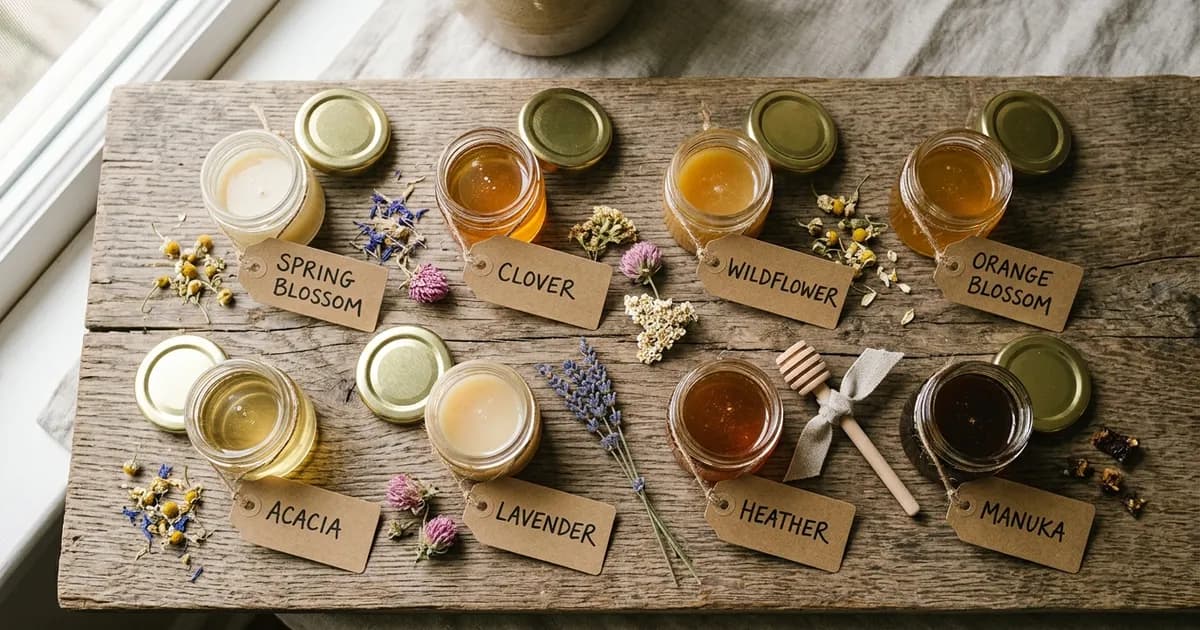
The best honey varieties in Germany 2026: From forest honey to acacia to Manuka — an honest comparison with ratings.
From the Hive
Honey knowledge the supermarket skips
Twice a month: varietals, harvest, origin. Plus 10% off your first order.
10% off your first order · No spam. Unsubscribe anytime.