
The Makers
Sainfoin Honey and Other Highland Honeys Discovering the Differences
Last updated:
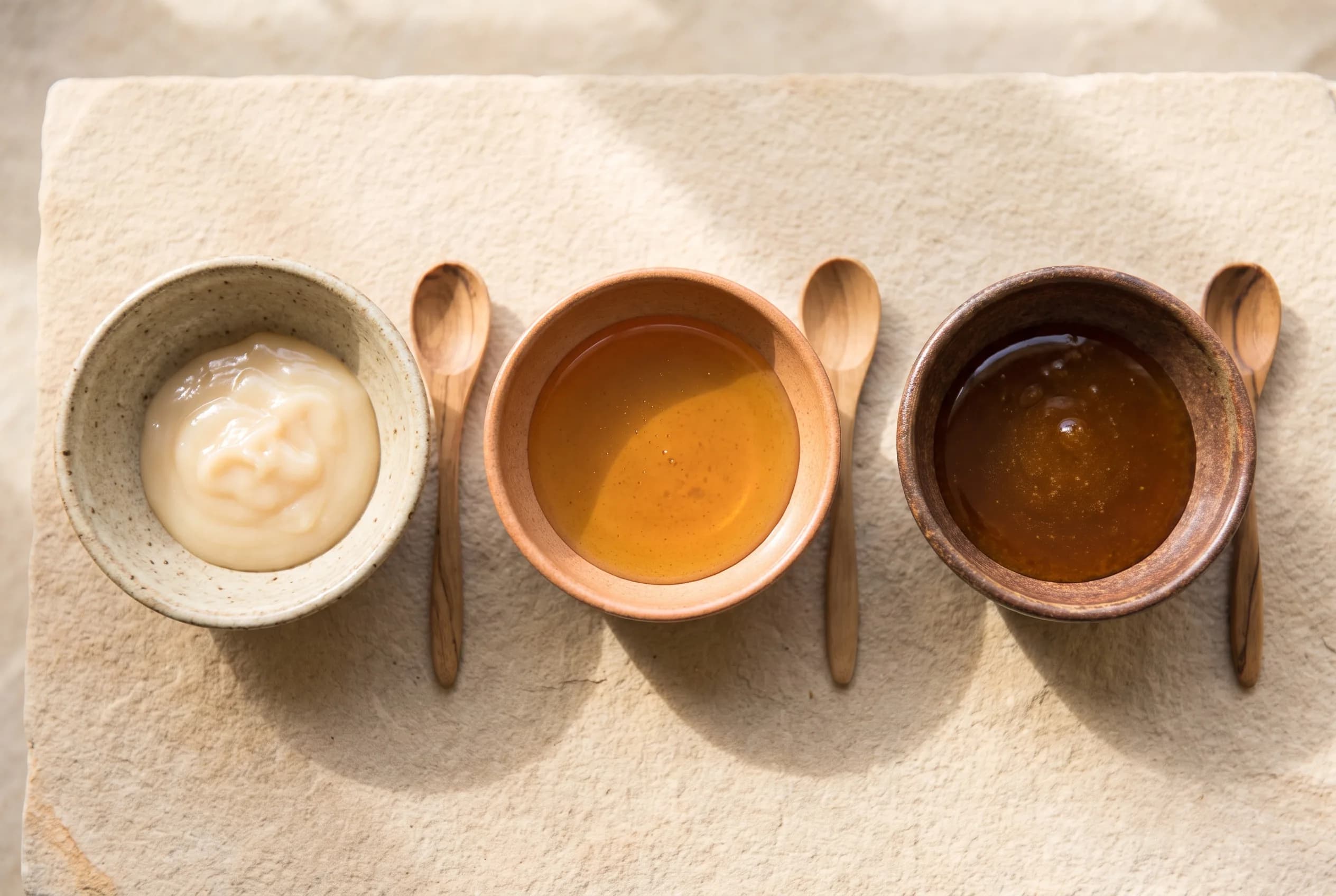
Have you ever wondered what turns a spoonful of honey into more than just a sweet treat? Imagine standing in front of a shelf of different honeys. One is almost snow-white and creamy, another glows like liquid gold. Both are labelled "highland honey," yet their worlds could hardly be more different.
This variety is fascinating, but also confusing. The term "highland honey" is more of a category than a specific variety — a promise of purity and special aroma that comes from high altitudes. But what exactly makes a Kyrgyz Sainfoin honey so unique compared to an Alpine or Mexican highland honey?
In this guide, we take you on a journey of discovery. We decode the subtle but decisive differences in colour, texture, flavour, and even crystallisation behaviour. Think of this as your personal compass in the world of fine mountain honeys.
[IMAGE: A spoon of creamy-white Sainfoin honey held in front of a jar of golden honey, showing the colour contrast.]
What Is "Highland Honey" Anyway? A Foundation
Before we dive into the details, let's clarify a fundamental question: what qualifies a honey as "highland honey"?
Put simply, it's honey made by bees from the nectar of plants that grow at high altitudes — typically above 1,500 metres, often even above 2,500 metres. These extreme environments are often untouched by pesticides and industrial agriculture. The pure air, intense sunlight, and unique flora create the conditions for exceptionally pure and aromatic honeys.
Well-known examples include:
- Mexican highland honey: Often a mild, creamy wildflower honey from the Mexican Altiplano.
- European Alpine honey: Usually a robust, floral honey from a blend of Alpine flowers (rhododendron, clover, thyme).
- Kyrgyz Sainfoin honey: A rare, monofloral honey sourced almost exclusively from the nectar of a single plant.
And here's where the real story begins. While many highland honeys are "multifloral" (from many different blossoms), the defining feature of Sainfoin honey is its concentration on a single source.
The Star of the Show: Sainfoin Honey from Kyrgyzstan
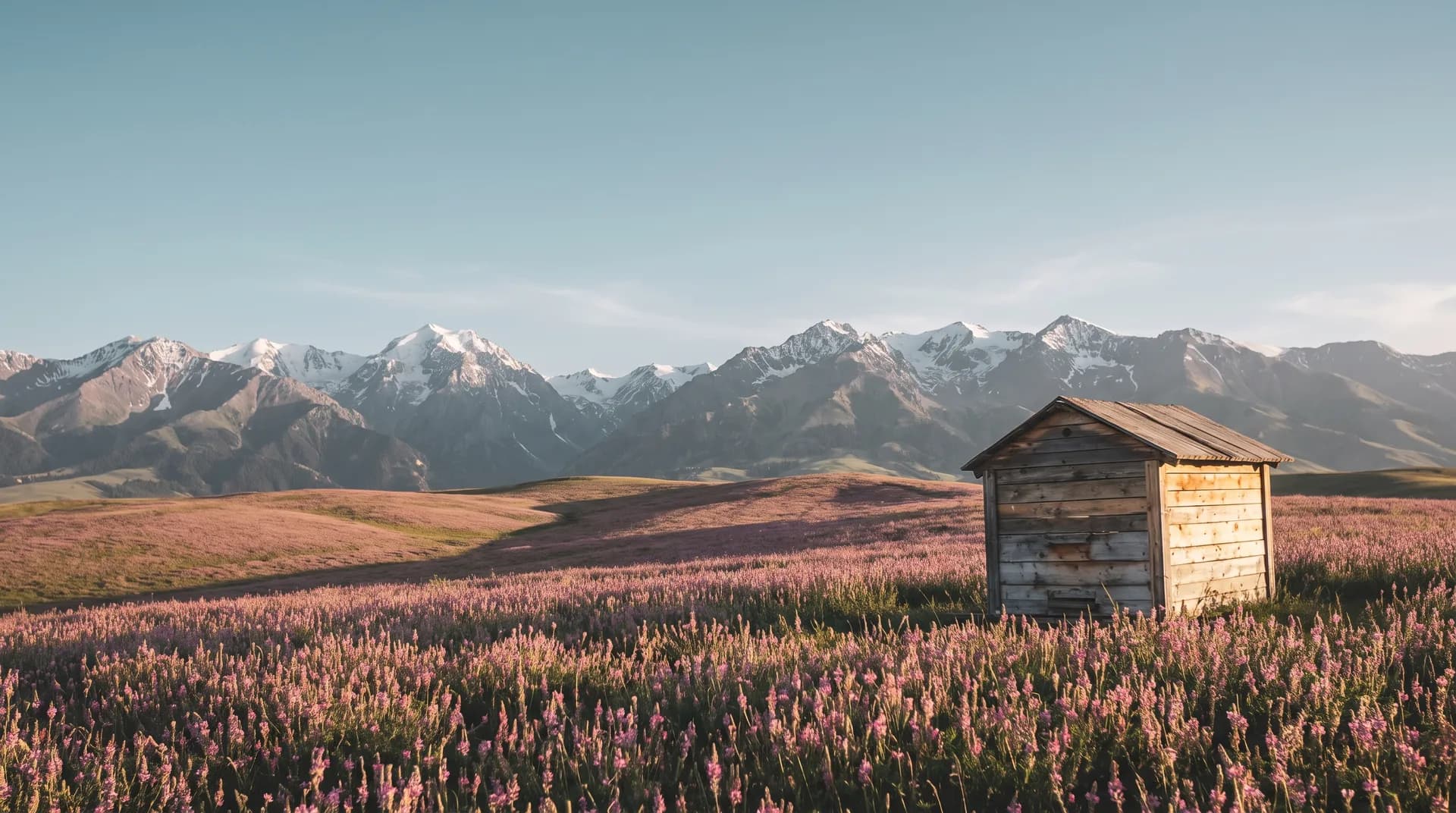
Sainfoin honey, also known as Esparsette honey, comes from the vibrant pink blossoms of the Sainfoin plant, which grows on the untouched mountain meadows of Kyrgyzstan at over 2,500 metres. The bees gather the nectar during a short, intense flowering season, which is what makes this honey so special and rare. It's a prime example of how "terroir" — the unique combination of geography, climate, and flora — shapes the character of a natural product.
[IMAGE: Close-up of the pink-flowering Sainfoin plant (Esparsette) on a mountain meadow in Kyrgyzstan.]
The Direct Comparison: Where the Fine Differences Lie
Now it gets exciting. Let's compare Kyrgyz Sainfoin honey directly with other typical highland honeys. We'll focus on the characteristics you can perceive with your own senses.
1. Colour: From Snow-White to Gold-Amber
The first thing that stands out is the colour. It's a direct clue to the nectar source.
- Sainfoin honey: Famous for its extraordinarily light colour. It ranges from almost pure white through ivory to a very pale cream. After crystallisation, it often becomes a solid, snow-white mass.
- Other highland honeys (e.g. Mexican, Alpine): The colour spectrum is much broader here. They're usually light-golden to amber. The more diverse the blossom mix and the higher the honeydew content, the darker the honey can become.
Aha moment: A light colour like Sainfoin honey's often indicates a mild, delicate flavour, while darker colours suggest bolder, more malty aromas.
2. Viscosity and Texture: Silky-Liquid vs Creamy-Firm
How does the honey feel? Does it flow gently off the spoon or is it more viscous?
- Sainfoin honey: In its liquid state, it has a silky, almost fluid consistency. It feels incredibly delicate on the tongue. But its real magic unfolds after crystallisation.
- Other highland honeys: Viscosity varies widely. Mexican highland honey is often described as "creamy," meaning it has already finely crystallised. Alpine honeys can be more liquid or firmer depending on composition.
3. Crystallisation Behaviour: A Sign of Quality, Not a Flaw
Many people mistakenly believe that crystallised honey is old or low quality. The opposite is true! Crystallisation is a natural process and a sign that the honey has not been pasteurised. The key factor is the ratio of fructose to glucose.
- Sainfoin honey: Has a high glucose content, which is why it crystallises relatively quickly. The trick, however, lies in how it crystallises: it forms extremely fine crystals that create a smooth, spreadable, butter-like texture. It feels as though it melts on the tongue.
- Other highland honeys: Crystallisation behaviour depends on the dominant blossom source. Honeys with high fructose content (like acacia honey) stay liquid for a long time. Multifloral highland honeys can form coarser crystals, resulting in a grainier texture.
A little tip: If your honey firms up, you can gently warm it in a water bath at no more than 40 degrees C to re-liquefy it without destroying the valuable enzymes.
4. Flavour and Aroma: A Journey for the Senses
Perhaps the most important difference lies in the taste.
- Sainfoin honey: Its flavour is as delicate as its colour. It is mild, subtly floral, and has a very fine sweetness with no sharpness on the finish. Connoisseurs describe notes of vanilla, marzipan, and fresh fruits. It doesn't mask other flavours — it complements them.
- Other highland honeys: Are often bolder in flavour. An Alpine honey can have robust floral and spicy notes, while a Mexican wildflower honey may have a pronounced, caramel-like sweetness.
Our White Gold Mountain Honey is a perfect example of the purity and subtle character of Sainfoin honey.
[IMAGE: A clear comparison table contrasting Sainfoin honey, Alpine honey, and Mexican highland honey by colour, viscosity, crystallisation, and flavour profile.]
From the Hive
Honey knowledge the supermarket skips
Twice a month: varietals, harvest, origin. Plus 10% off your first order.
10% off your first order · No spam. Unsubscribe anytime.
What Really Matters: Recognising Quality
Beyond the sensory characteristics, there are scientific indicators that verify a honey's purity and quality. If you're looking for truly authentic honey, these are the decisive factors:
- Pollen analysis: In the lab, pollen in the honey can be analysed under a microscope. In genuine Sainfoin honey, the proportion of Sainfoin pollen must be dominant. This confirms its monofloral origin and rules out blending with cheaper varieties.
- HMF value (Hydroxymethylfurfural): This sounds complicated, but it's simply a heat indicator. A very low HMF value proves the honey hasn't been pasteurised. This is crucial because heat destroys the valuable enzymes and nutrients in honey.
- Provenance verification: True quality comes from transparency. Knowing where the honey comes from and who the beekeepers are is an invaluable marker. It's the difference between an anonymous industrial product and a piece of authentic Kyrgyz craftsmanship.
Frequently Asked Questions (FAQ)
What is the difference between highland honey and regular blossom honey?
The main difference is the altitude of the nectar sources. Plants in high mountain regions are often more resilient and grow in a cleaner environment. This can lead to a purer and more aromatic honey.
My honey has gone solid. Has it gone bad?
No, quite the opposite! Crystallisation is a natural process and a sign of unpasteurised honey. It hasn't spoiled and all nutrients are preserved. You can enjoy it as is or gently warm it in a water bath.
Is lighter or darker honey healthier?
Both have their benefits. Darker honeys tend to contain more antioxidants and minerals. Lighter honeys like Sainfoin honey are often milder and easier to digest. The "healthiest" choice is always a pure, unpasteurised honey, regardless of colour.
What is the best way to store honey?
Store honey at room temperature, in a dry and dark place. The fridge isn't ideal, as cold accelerates crystallisation and can affect the aromas. A well-sealed jar in the pantry is perfect.
Your Next Step on the Honey Journey
The world of honey is as diverse as the landscapes it comes from. Understanding that "highland honey" doesn't always mean the same thing is the first step towards discovering true treasures. Kyrgyz Sainfoin honey is a wonderful example of how a unique terroir can produce a product of unmatched finesse.
Next time you buy honey, look beyond the price — look at the story behind the jar: the origin, the blossom source, and the colour. Allow yourself to taste and appreciate the fine differences. Because good honey is more than just sweetness — it's a liquid portrait of its homeland.
If your curiosity has been sparked to explore the world of ethically sourced products that unite tradition and nature, we invite you to learn more about our mission.
Share
While many highland honeys are multifloral, Sainfoin honey's defining feature is its concentration on a single nectar source.
Bees collect Sainfoin nectar during a short, intense flowering season above 2,500 metres — which is what makes this honey so rare.
The term highland honey is more of a category than a specific variety — a promise of purity that spans from the Alps to Kyrgyzstan.
Frequently Asked Questions
The main difference is the altitude of the nectar sources. Plants in high mountain regions are often more resilient and grow in a cleaner environment. This can lead to a purer and more aromatic honey.
No, quite the opposite! Crystallisation is a natural process and a sign of unpasteurised honey. It hasn't spoiled and all nutrients are preserved. You can enjoy it as is or gently warm it in a water bath.
Both have their benefits. Darker honeys tend to contain more antioxidants and minerals. Lighter honeys like Sainfoin honey are often milder and easier to digest. The healthiest choice is always a pure, unpasteurised honey, regardless of colour.
Store honey at room temperature, in a dry and dark place. The fridge isn't ideal, as cold accelerates crystallisation and can affect the aromas. A well-sealed jar in the pantry is perfect.

Jamilia
Autorin, ULU Magazin
Jamilia schreibt über kirgisisches Handwerk, Honig und die Geschichten hinter den Produkten. Aufgewachsen in Zentralasien, lebt sie zwischen Bischkek und Berlin.
Related Articles
The Makers
What Is Sainfoin Honey? The Complete Guide to a Rare Honey
Some honeys you find in every supermarket. Then there is sainfoin honey.

The Makers
Luxury Honey: What Premium Honey Actually Means
The gap between a €3 supermarket honey and a €40 specialty jar is bigger than most people think. What real quality comes down to.
The Makers
Best Honey in Germany 2026
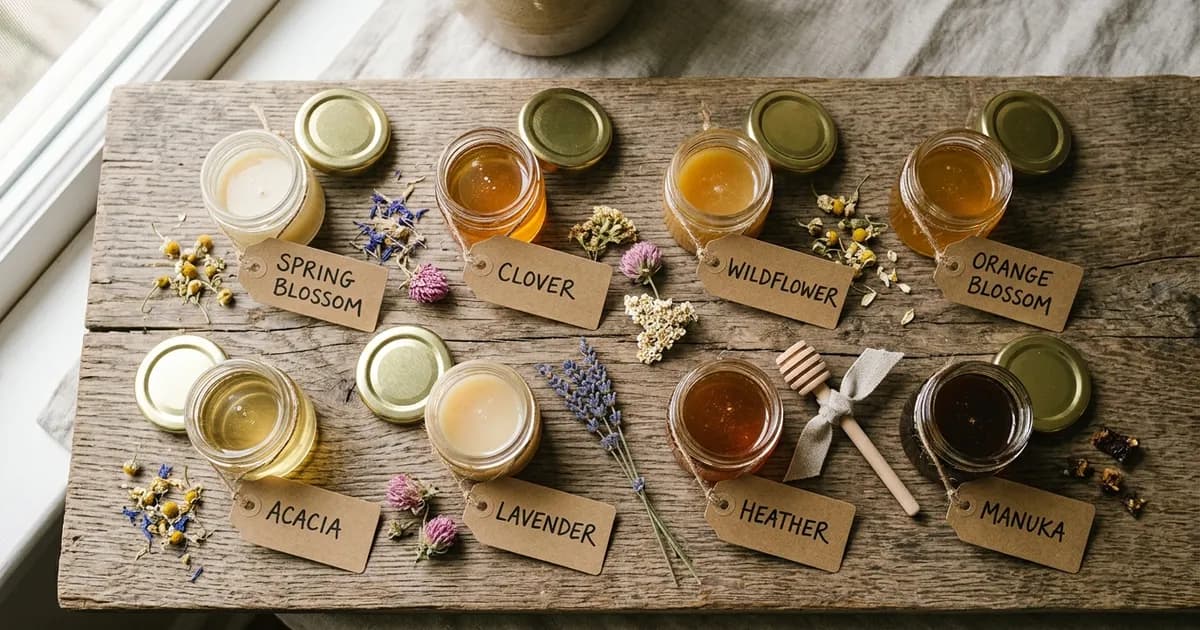
The best honey varieties in Germany 2026: From forest honey to acacia to Manuka — an honest comparison with ratings.
From the Hive
Honey knowledge the supermarket skips
Twice a month: varietals, harvest, origin. Plus 10% off your first order.
10% off your first order · No spam. Unsubscribe anytime.