
The Makers
Shyrdak Patterns Tell Stories
Last updated:
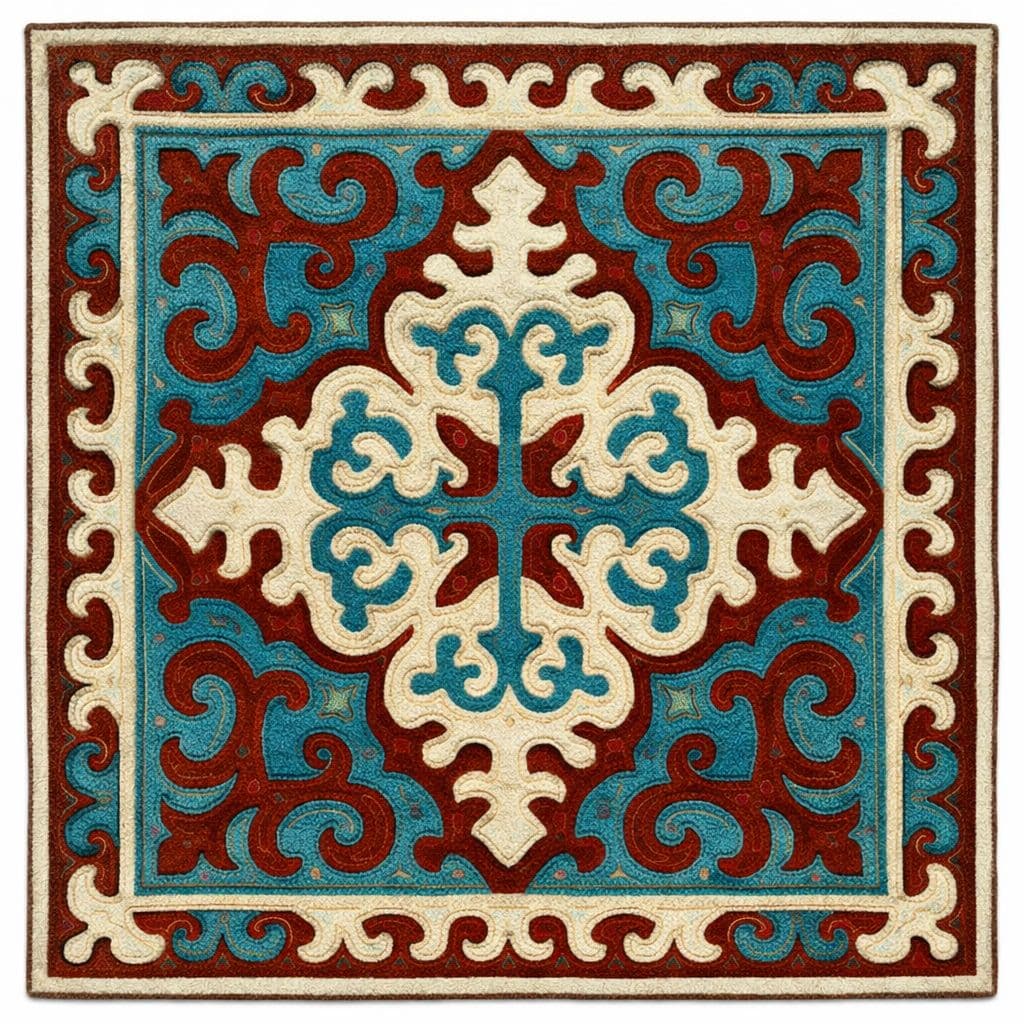
What Is a Shyrdak?
A Shyrdak is a traditional Kyrgyz felt rug, made by cutting and stitching patterns from layers of differently coloured felt. The technique is over 2,000 years old and has been passed down from mother to daughter for generations.
Unlike woven rugs, a Shyrdak isn't built thread by thread. Instead, it works like an applique: two felt layers are placed on top of each other, the pattern is cut out, and the pieces are swapped and stitched together. This means two rugs are always created at the same time — a positive and a negative.
What Do the Most Common Patterns Mean?
Kochkor (Ram's Horns) — The most common motif. Ram's horns symbolise prosperity, strength, and fertility. In their spiral form, they also represent eternity.
Tumarchuk (Amulet) — Diamond-shaped patterns that serve as protection against the evil eye. They are often placed at the centre of the rug.
Every Shyrdak pattern has a double reading: one decorative, one symbolic. The craftswoman chooses the patterns deliberately — they tell the story of the household.
Suun Olmo (Water Streams) — Wavy lines along the edge of the rug. They symbolise purity and the flow of life.
Botomo (Camel Tracks) — Zigzag lines that echo the trade routes of the Silk Road, symbolising wealth through commerce.
From the Hive
Honey knowledge the supermarket skips
Twice a month: varietals, harvest, origin. Plus 10% off your first order.
10% off your first order · No spam. Unsubscribe anytime.
How Does the Craftswoman Choose the Patterns?
Aida, our master Shyrdak maker near Bishkek, explains: "When someone orders a rug for a wedding couple, I choose Kochkor for prosperity and Tumarchuk for protection. For a new home, I use Suun Olmo, so that life flows."
The choice of colours follows similar principles: red stands for sunshine and joy of life, blue for the sky and openness, white for purity and honesty. Our modern interpretations also use more muted tones — sage, terracotta, grey — that fit seamlessly into contemporary spaces.
Why Are Shyrdaks Always Symmetrical?
The symmetry isn't just aesthetic — it's part of the making process. Since the pattern is cut from two layers simultaneously, a mirror-image design is created automatically. In Kyrgyz culture, this natural symmetry symbolises harmony and balance.
Share
Every Shyrdak pattern has a double reading: one decorative, one symbolic.
With a Shyrdak, two rugs are always created at the same time — a positive and a negative.
Ram's horns are the most common motif on Kyrgyz felt rugs — they symbolise prosperity and eternity.
Frequently Asked Questions
Traditional Shyrdaks measure about 150 x 200 cm — large enough to be the centrepiece of a yurt. ULU offers various sizes adapted to modern living spaces.
Vacuum regularly and air it out occasionally. Treat stains with a damp cloth and mild soap. Do not machine wash.
Yes — our Shyrdak rugs are made to order. You can customise colours, size, and pattern in consultation with our craftswoman Aida. Delivery takes 8-12 weeks.

Jamilia
Autorin, ULU Magazin
Jamilia schreibt über kirgisisches Handwerk, Honig und die Geschichten hinter den Produkten. Aufgewachsen in Zentralasien, lebt sie zwischen Bischkek und Berlin.
Related Articles
The Makers
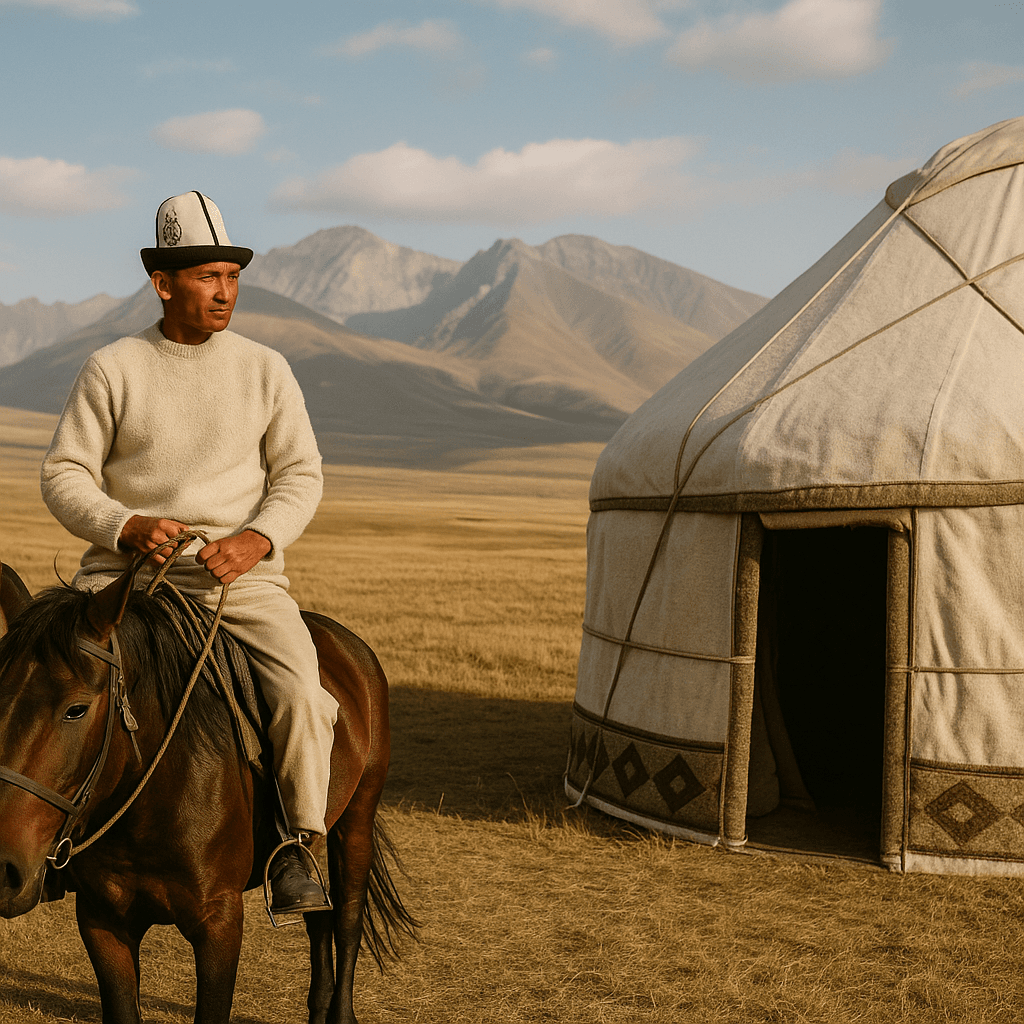
Who Makes Our Felt Slippers? A Visit to Gulnara in Naryn
In a small workshop in Naryn, Gulnara has been making felt slippers by hand for over 40 years. Her technique has been passed down from generation to generation — and today it lives in every pair of ULU Ballerinas. A visit to the master craftswoman.
The Land
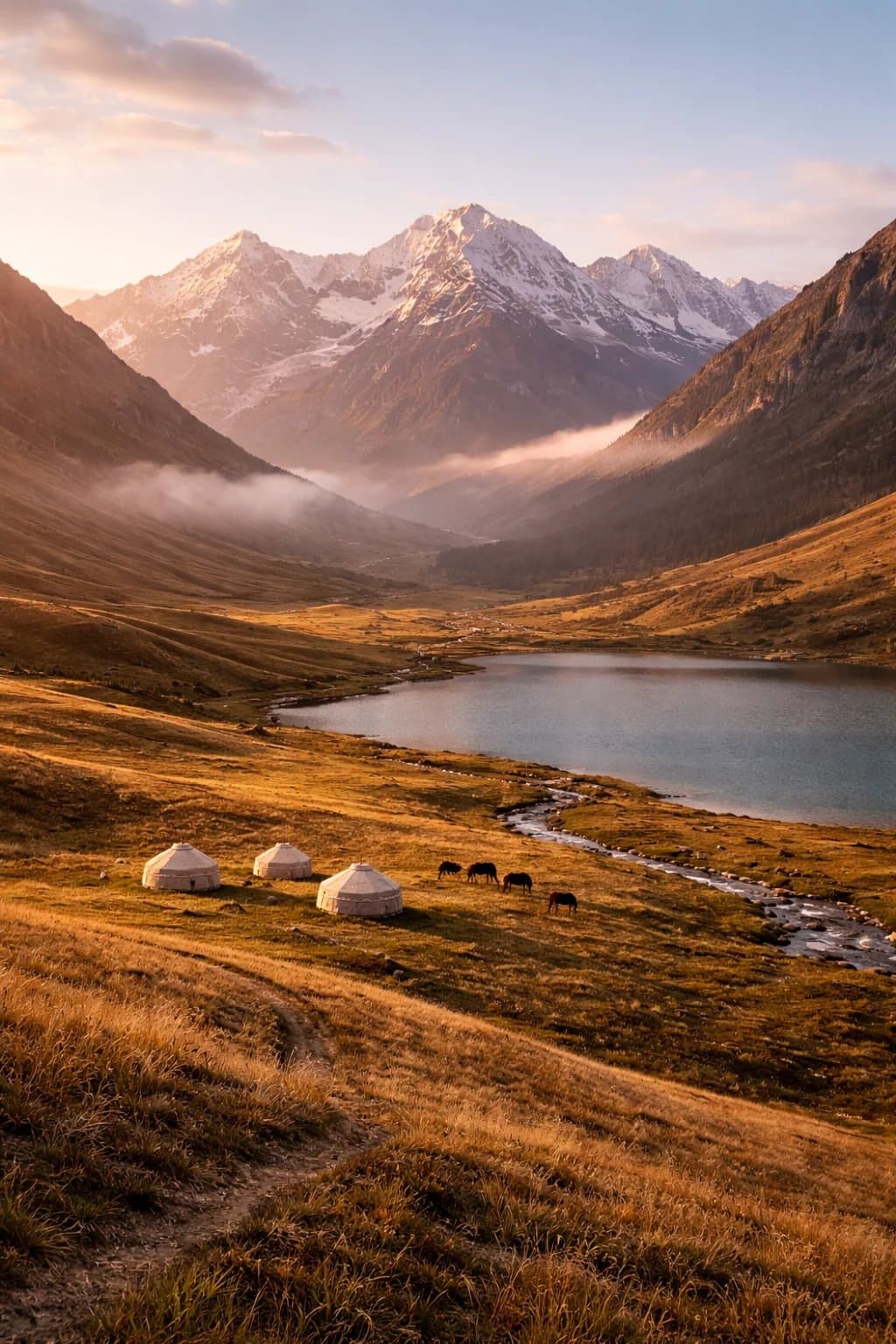
Kyrgyzstan — The Land Behind Our Products
Kyrgyzstan lies at the heart of Central Asia — a land of towering mountains, endless steppes, and a vibrant nomadic culture. This is where the materials and artisan traditions that define ULU come to life.
The Makers
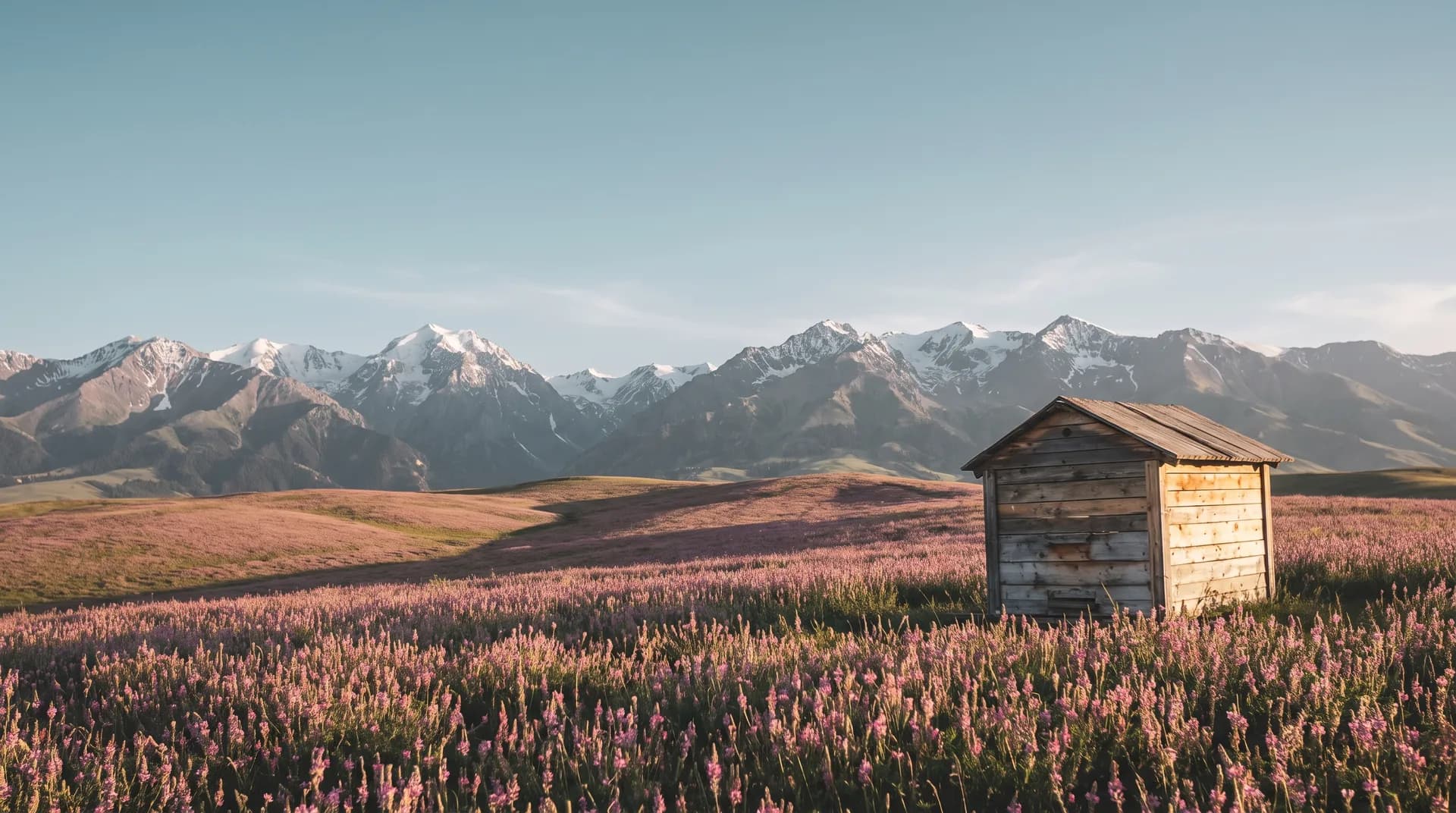
What Is Sainfoin Honey? The Complete Guide to a Rare Honey
Some honeys you find in every supermarket. Then there is sainfoin honey.
From the Hive
Honey knowledge the supermarket skips
Twice a month: varietals, harvest, origin. Plus 10% off your first order.
10% off your first order · No spam. Unsubscribe anytime.