
Good to Know
Homemade Strawberry Jam: The Base Recipe and the No-Cook Version
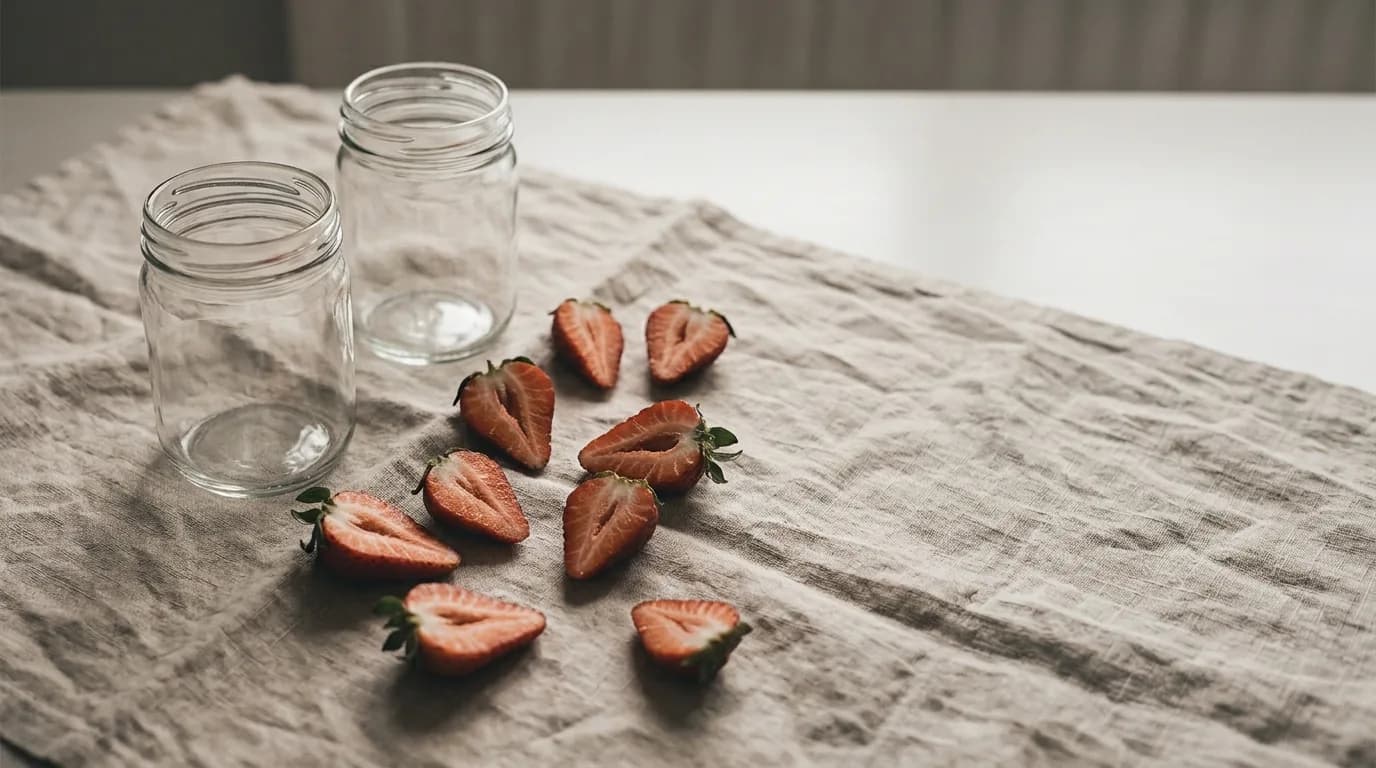
Strawberries do not set on their own. They bring plenty of water and little of the substance that makes a jam firm. Anyone making homemade strawberry jam is therefore not fighting their own kitchen but a fruit that needs help. The recipe below solves that. Further down is what a strawberry spread looks like that never needs the pot at all.
The base recipe for 4 jars
For 4 jars of 250 millilitres:
- 1 kilogram of strawberries, hulled and halved
- 500 grams of jam sugar 2:1
- juice of 1 lemon
Here is how:
- Rinse the jars and lids in hot water and let them dry. They have to be clean, undamaged and genuinely dry, or the rest of it helps nothing.
- Mix the strawberries with the sugar and the lemon juice, cover, and let stand for an hour. The fruit draws juice and the sugar dissolves before it ever reaches the pot.
- Bring everything to the boil and keep it at a rolling boil for 8 minutes, stirring. Rolling means it does not stop bubbling when you stir.
- Do the set test. A spoonful on a cold plate, wait a moment. If it runs thickly and slowly, it is done. If it runs off thin, boil for another two minutes and test again.
- Fill the jars boiling hot and right to the rim, close them immediately, and leave them until everything is cold.
That is it. The set test decides the rest.
Why strawberries need help setting
A jam is made firm by pectin. That is the plant fibre which, under heat and together with sugar, forms a net. Lemon juice supports the set on top of that.
Apples, quinces, redcurrants and gooseberries set well without any added gelling agent. Strawberries need one, and they carry a great deal of water besides. That is where most attempts fail.
There are two honest ways out. The first is jam sugar, meaning sugar with pectin added, plus the juice of a lemon. The second is a grated tart apple in the mixture and a much longer boiling time. The second route tastes fruitier and costs patience.
A third route gets recommended often and is not one: simply boil for longer and change nothing else. The result turns darker and stickier. It does not turn firmer.
From the Hive
Honey knowledge the supermarket skips
Twice a month: varietals, harvest, origin. Plus 10% off your first order.
10% off your first order · No spam. Unsubscribe anytime.
How much sugar really has to go in?
Sugar has two jobs in a jam. It tastes, and it preserves, by binding water that microorganisms would otherwise have available. That is why the amount of sugar is not purely a question of taste.
The ratio is the number that matters. At 2:1 that is 500 grams of sugar to 1 kilogram of strawberries. At 3:1 there is less of it, and the spread tastes fruitier and less sweet.
| Jam sugar 2:1 | Less sugar | |
|---|---|---|
| Taste | sweeter | fruitier |
| Texture | firmer | softer |
| Shelf life unopened | long | shorter |
| After opening | refrigerator | refrigerator, use up quickly |
| Sensible jar size | any | small |
Hygiene matters more here than the amount of sugar. Jars and lids have to be clean and free of damage. A perfectly boiled jar with a damp lid moulds faster than a low-sugar one in a dry jar. And if mould does appear, the whole jar goes, not just the spot. The mould may have spread through the entire product without being visible.
What the EU rules require of the bought jar
Anyone labelling their own jar may write what they like. Anyone selling may not. For the trade, the EU sets how much fruit has to be in it and what the product may be called.
Two of those rules explain why bought jars taste the way they do.
Fruit content. Since the most recent amendment, jam needs at least 450 grams of fruit per kilogram and extra jam at least 500 grams. Both figures used to be lower. On the shelf that is a real shift, even if it appears on no front label.
Soluble dry matter. At least 60 percent, measured by refractometer, and that is essentially the sugar. There are exemptions for products using sweeteners and for individual national traditions. This is where the actual difference between bought and homemade sits: an industrial jam generally has to hold that mark, your jar does not.
Then there is the naming question. Under the EU rule, the name marmalade was reserved for citrus fruit and everything else had to be called jam. Since June 2026 member states may permit a jar of strawberry jam to be called marmalade as well, with no change to the ingredients. The exemption does not cover citrus jam, and the harmonised name stays jam. In everyday speech none of this was ever an issue.
The version without cooking
There is no jelly without heat at all. Pectin only binds once things get hot, and that is not negotiable. What works without a pot is something else: dried strawberry, stirred into creamed honey.
The reason lies in the water again. Honey is a supersaturated sugar solution with very little water, at most 20 percent under the EU rule. That lack of water is where its keeping quality comes from. Stir fresh strawberries in and you raise the water content, and after that you need exactly the aids a jam needs: heat, extra sugar or preservatives.
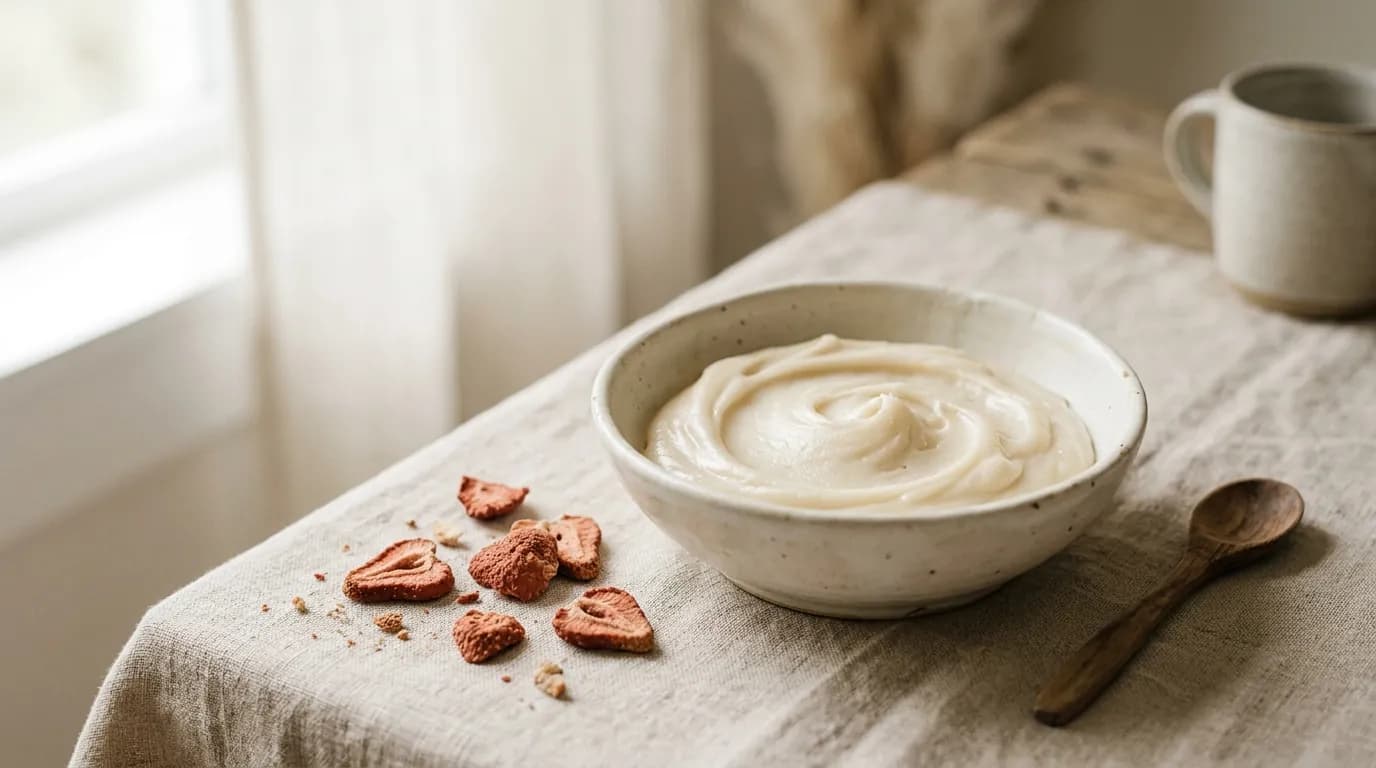
Dried fruit makes that detour unnecessary. It brings colour, acidity and aroma without adding water worth mentioning. The result does not set. It stays spreadable, because creamed honey is finely crystallised and holds the fruit pieces where they were at filling, instead of letting them rise or sink.
Two ingredients, no pot, no gelling agent. In food law this is neither honey nor jam. Why the combination works, and how the label tells you whether there is still honey in there, is set out in strawberry and honey. If it is mainly the sugar that bothers you, fruit spread without sugar is the better way in.
One note that has nothing to do with taste: honey does not belong in the diet of infants in their first year. That does not apply to the boiled jam.
The four mistakes that happen often
Too much at once. More than about a kilogram of fruit in the pot reduces too slowly. The mixture darkens before it firms. Better to do two batches.
Skipping the set test. It costs a minute and it is the last point at which you can still intervene before filling. After that, no.
Filling lukewarm. The mixture belongs in the jar boiling hot with the lid straight on. Letting it cool and then filling leads to mould sooner.
Damp lids. Rinsed and not dried is worse than merely wiped. The residual water sits exactly where the mould starts later.
And the storage
Cool, dry and dark, that goes for both versions. The honey-and-dried-fruit version adds a limit the boiled jam does not have. It sits at 20 °C and concerns storage temperature. Above it the fine crystallisation of creamed honey coarsens or melts, and stirring does not bring the original texture back.
A boiled jam forgives more at this point. It got its structure in the pot and keeps it. In exchange its jar is a refrigerator case once opened, and the spoon you go in with should be clean.
Share
Frequently Asked Questions
Jam sugar 2:1 means one part sugar to two parts fruit, so 500 grams to 1 kilogram of strawberries. At 3:1 the spread turns fruitier and less sweet. Less sugar also means the open jar wants using up faster.
Strawberries set poorly on their own and need added gelling agent. Pectin binds under heat together with sugar, and lemon juice supports the set. If the boiling time was too short, the mixture stays runny. The cold-plate test shows you the rest.
In the trade, marmalade was long reserved for citrus fruit and everything else had to be called jam. Since June 2026 member states may allow a jar of strawberry jam to be called marmalade too, with no change to the ingredients. Jam remains the harmonised name.
Without heat pectin does not bind, so no classic jelly forms. What works without a pot is a different product: dried strawberry stirred into creamed honey rather than boiled. It does not set. It stays spreadable.
Filled hot, worked cleanly and unopened, it keeps for many months without refrigeration. Bought jars keep up to two years unopened. A cold-stirred jam made from fresh fruit and sugar, by contrast, lasts only about two weeks and has to be refrigerated from the start.
No, and the source goes further than merely unnecessary: turned upside down, the preserved fruit may fail to set. What matters is a boiling-hot fill, clean undamaged jars and a lid closed immediately.

ULU Redaktion
Redaktion
Das ULU Team recherchiert und schreibt zu Honig, Herkunft und bewusstem Genuss.
Related Articles
Good to Know
Strawberry honey: what is in the jar, and why the label calls it something else
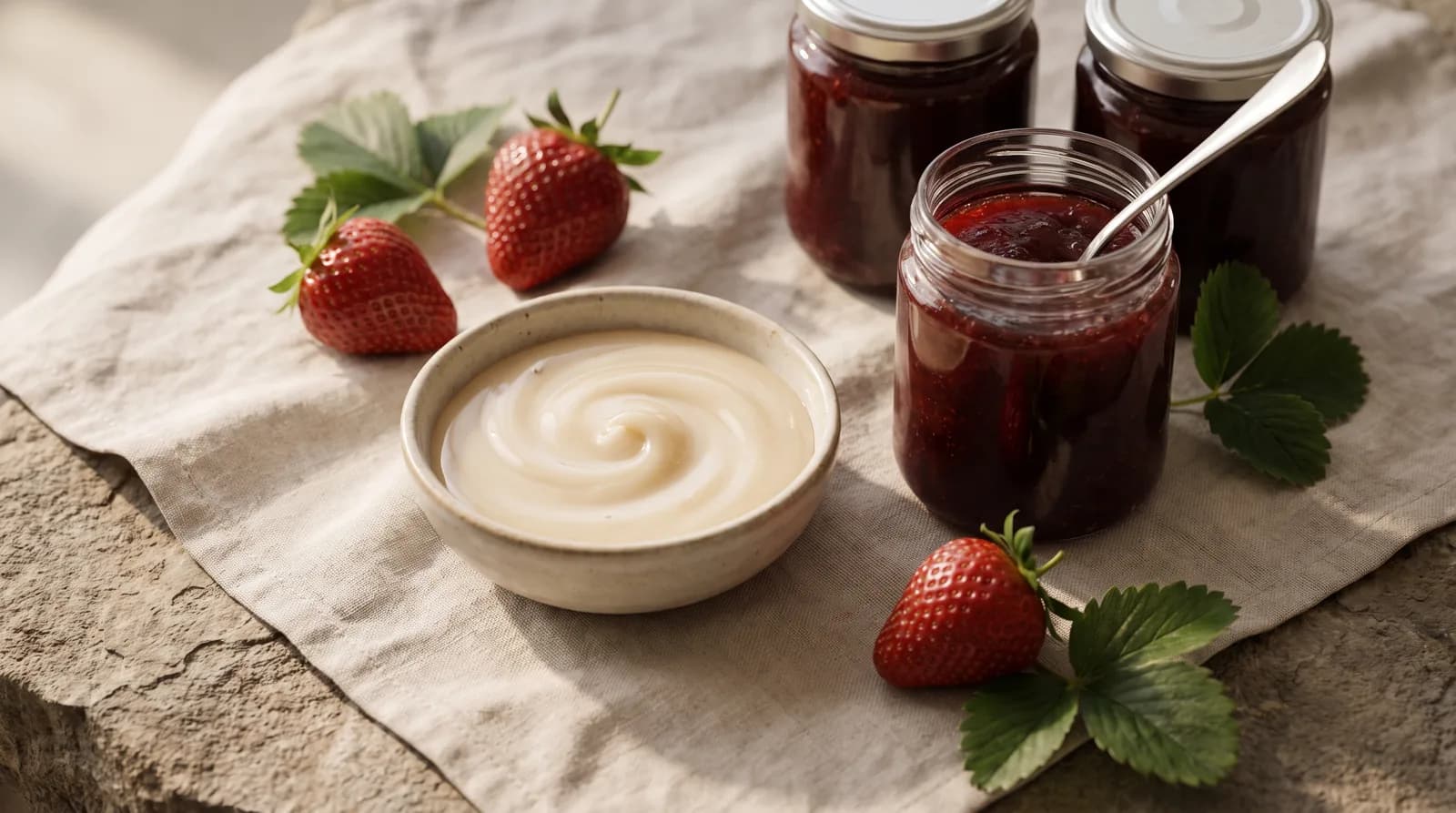
The ULU jar holds 96.4% creamed sainfoin honey and 3.6% dried strawberry. Why a jar like that cannot be labelled honey, and how to tell a good one from the ingredient list.
Good to Know
Fruit spread with no added sugar: what has to be in the jar
“No sugar” on a shelf means one of three things: fruit-juice concentrate, sweeteners, or a food that brings its own sugar. The ingredient list tells you which one is in the jar.
Good to Know
Manuka alternative: sainfoin honey compared with buckwheat, sidr and jarrah
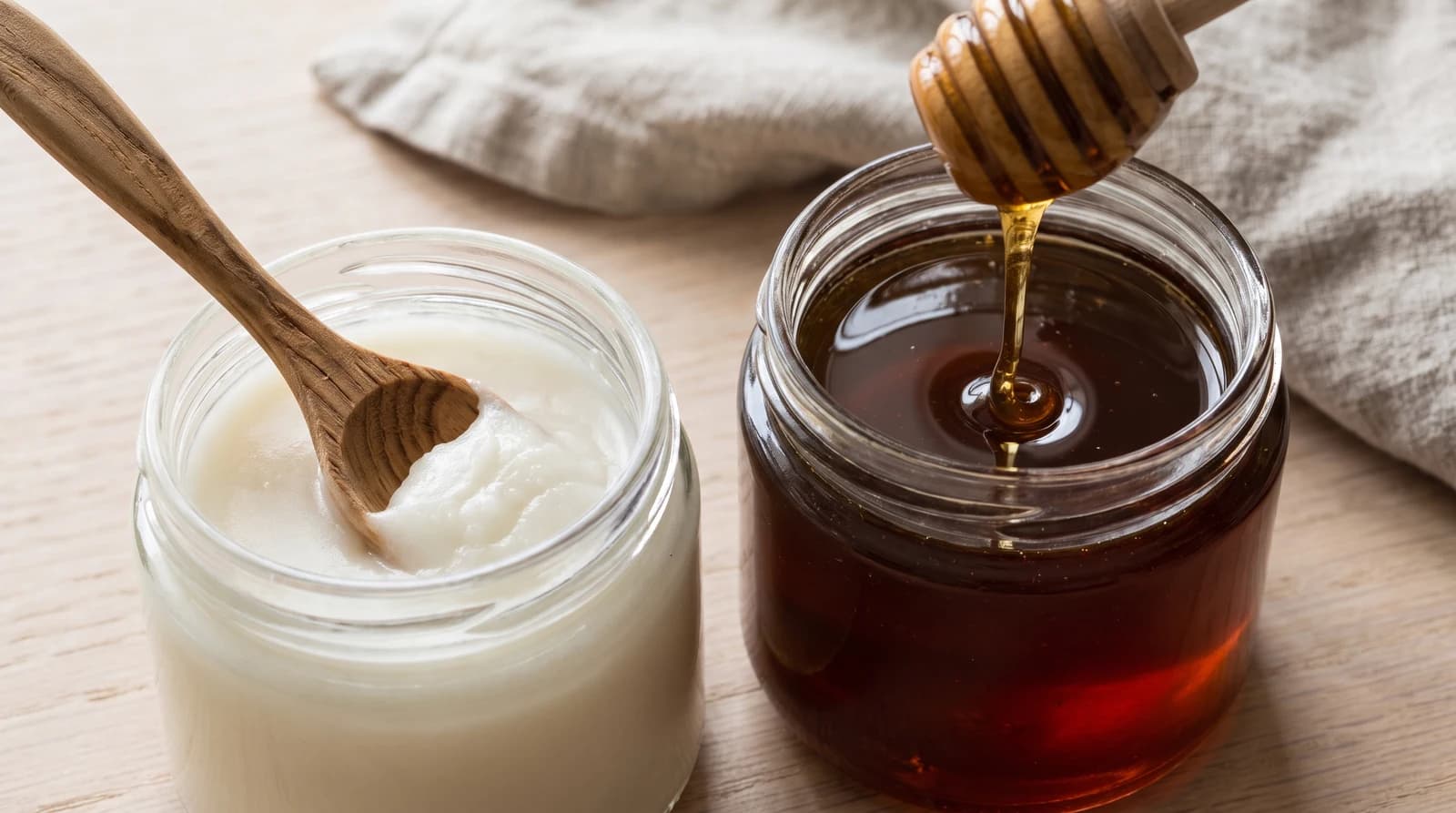
White sainfoin honey from the Tian Shan costs €6.98 per 100 g, Manuka MGO 250+ to 550+ in our examples €9.56 to €25.68. Five honeys side by side, every number sourced, the limits of each one stated.
From the Hive
Honey knowledge the supermarket skips
Twice a month: varietals, harvest, origin. Plus 10% off your first order.
10% off your first order · No spam. Unsubscribe anytime.