
Good to Know
Manuka alternative: sainfoin honey compared with buckwheat, sidr and jarrah
Last updated:
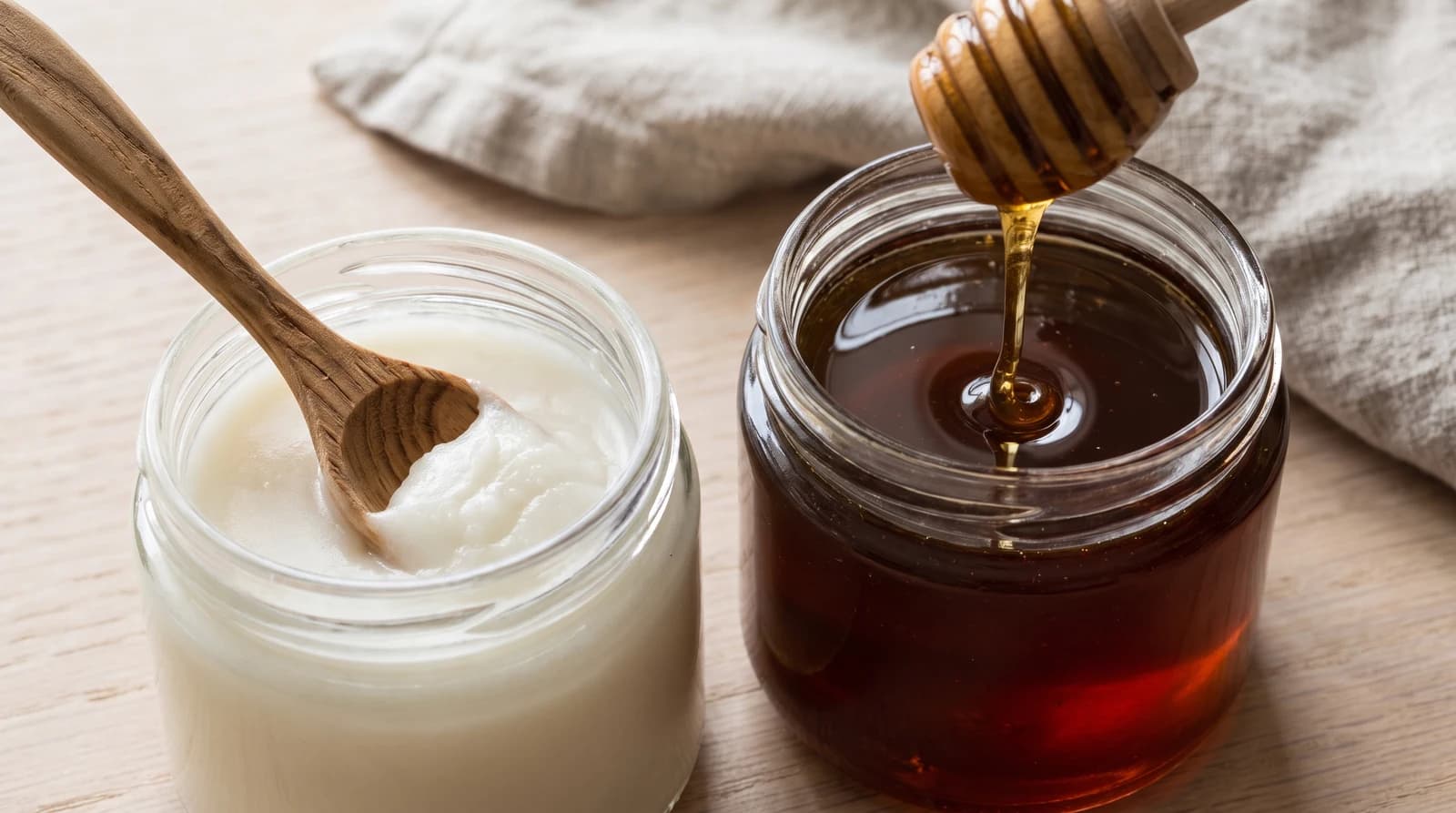
White sainfoin honey from the Tian Shan in Kyrgyzstan, such as ULU's mountain honey, is an alternative to Manuka honey: creamy white, mild and floral, at €6.98 per 100 g, below the Manuka example prices for MGO 250+ to MGO 550+, which run from €9.56 to €25.68 per 100 g (250 g jars, as of 02.11.2026). It carries no MGO or UMF number, it is a food, and it is compared here only on price, origin, harvest, colour, texture and rating system.
People replace Manuka for different reasons: too expensive, too strong. A different honey fits each reason. So five sit side by side here, including three that ULU does not sell.
The comparison at a glance
| Manuka | Sainfoin honey (ULU) | Buckwheat honey | Sidr honey | Jarrah honey | |
|---|---|---|---|---|---|
| Price per 100 g (examples) | €9.56 to €25.68 (MGO 250+ €9.56, MGO 400+ €18.80, MGO 550+ €25.68, each 250 g) | €6.98 (500 g, €34.90) | €1.74 (500 g, €8.69) | €15.96 (250 g, €39.90) | approx. €6.49 (TA 50+, 500 g, AUD 51.95, Australian retailer, sold out on 02.11.2026) |
| Origin | New Zealand | Kyrgyzstan, Tian Shan, 2,400–3,500 m | in Germany mostly from Canada or northern China | Daw'an, Hadramaut, Yemen | south-west Western Australia |
| Harvest and flowering | flowers four to six weeks, Nov–Feb | once a year, June to July (producer statement) | flowers in Germany from early July for five to six weeks (trade press) | harvested in November after the jujube bloom (seller statement) | flowers June to December or January (Western Australian Herbarium) |
| Colour | amber | creamy white | dark brown to almost jet black | very pale caramel, at times golden amber | dark (maker's statement) |
| Texture and taste | strong | finely crystalline, spreadable, mild and floral with a gentle caramel note | viscous, pungent, aromatic, only slightly sweet | soft texture, caramelised aroma (seller statement) | thick, stays liquid, salted-caramel aftertaste (maker's statement) |
| Standardised rating (MGO/UMF) | yes, MGO and UMF | no | no | no, the seller cites a lab analysis | no, but its own system: TA (Total Activity) |
Which honey for whom
Manuka stays the right choice if you want the strong taste or a standardised lab number on the jar. Sainfoin honey has nothing comparable to offer.
Buckwheat honey is the cheapest of the five and the darkest. If Manuka is too expensive and you like a strong, pungent honey, buckwheat gets you there for a fraction of the price.
Sidr honey is the rare, expensive variety from Yemen and, at €15.96 per 100 g, close to Manuka. It is pale and soft, so it suits you better if Manuka is too strong for you.
Jarrah honey comes from Western Australia and has its own rating system, TA. It suits you if you want a dark, thick honey that stays liquid, and a rating figure like TA on the jar.
ULU's sainfoin honey fits if you like it mild and pale, want it spreadable, and want to read up on the origin: Tian Shan, 2,400 to 3,500 metres, harvested once a year. A 500 g jar costs €34.90. Our mountain honey took Silver at the 2019 Apimondia World Beekeeping Awards in Montreal. Apimondia is the International Federation of Beekeepers' Associations. See the mountain honey.
Origin and lab analysis are worth checking when you buy honey. In the EU coordinated action "From the Hives", 320 honey samples were taken at the EU border between November 2021 and February 2022. 147 of them (46 %) were suspected of not complying with the EU Honey Directive. The European Commission published the results in March 2023.
From the Hive
Honey knowledge the supermarket skips
Twice a month: varietals, harvest, origin. Plus 10% off your first order.
10% off your first order · No spam. Unsubscribe anytime.
Limits of ULU
- No standardised rating. Not MGO, not UMF, not TA. If you need a lab number on the jar, you need a different jar.
- Not a medical product. ULU honey is a food. This comparison says nothing about an effect, and we claim none.
- The pollen share is a producer statement. The producer states 60 to 80 percent sainfoin pollen. That is their figure, not a measurement of ours.
- The price applies to one jar. €6.98 per 100 g comes from the 500 g jar at €34.90. Prices can change.
- There is always something cheaper. In this table buckwheat honey costs a quarter of ULU per 100 g. If price is all that counts, buckwheat is the honey to buy.
Why is Manuka honey so expensive?
The Manuka shrub grows in meaningful density only in New Zealand and parts of Australia. It flowers for four to six weeks in the local summer. Then there is the UMF and MGO system, in which the MGO content is tested in a lab, and that costs money. New Zealand turned a regional product into a tested category. That is an achievement, and the price reflects it.
Frequently asked questions
What is a good alternative to Manuka honey? It depends on what you like about Manuka. For a mild, pale, spreadable honey at a price below Manuka MGO 250+, white sainfoin honey from Kyrgyzstan is one option, for example ULU's mountain honey (€34.90 per 500 g). For a dark, pungent honey for very little money, buckwheat honey is the cheaper choice.
Does sainfoin honey have an MGO or UMF rating? No. MGO and UMF are measures of the Manuka system, and sainfoin honey is not graded by them. ULU's honey therefore carries no such number, and we do not invent a substitute.
Why is Manuka honey so expensive? Mainly because the Manuka shrub grows in meaningful density only in New Zealand and parts of Australia, flowers for four to six weeks, and the MGO content is tested in a lab.
How does sainfoin honey taste compared with Manuka? ULU's sainfoin honey tastes mild and floral with a gentle caramel note. Manuka is generally described as stronger. It is a matter of taste, and both sides have fans.
Is ULU honey a medical product? No, it is a food. We make no statement about an effect on the body, and this comparison rates none.
Keep reading
Share
Frequently Asked Questions
It depends on what you like about Manuka. For a mild, pale, spreadable honey at a price below Manuka MGO 250+, white sainfoin honey from Kyrgyzstan is one option, for example ULU's mountain honey (€34.90 per 500 g). For a dark, pungent honey for very little money, buckwheat honey is the cheaper choice.
No. MGO and UMF are measures of the Manuka system, and sainfoin honey is not graded by them. ULU's honey therefore carries no such number, and we do not invent a substitute.
Mainly because the Manuka shrub grows in meaningful density only in New Zealand and parts of Australia, flowers for four to six weeks, and the MGO content is tested in a lab.
ULU's sainfoin honey tastes mild and floral with a gentle caramel note. Manuka is generally described as stronger. It is a matter of taste, and both sides have fans.
No, it is a food. We make no statement about an effect on the body, and this comparison rates none.

ULU Redaktion
Redaktion
Das ULU Team recherchiert und schreibt zu Honig, Herkunft und bewusstem Genuss.
Related Articles
Conscious Living
Sainfoin Honey — The Complete Guide
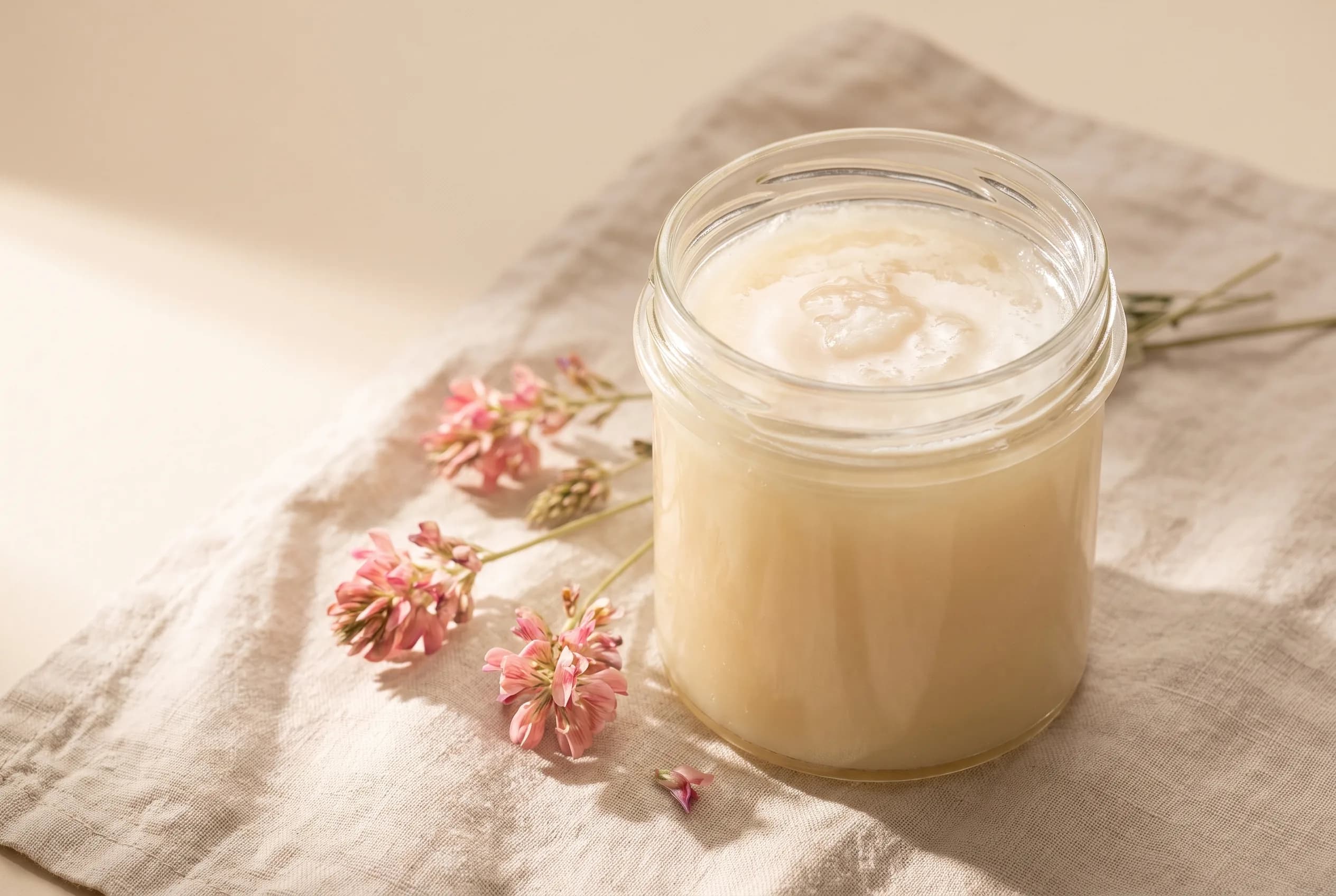
Sainfoin honey is a monofloral mountain honey made from the nectar of sainfoin (Onobrychis viciifolia), harvested mainly in the Kyrgyz highlands of the Tian Shan (2,400–3,500 m). Its creamy-white colour comes from natural fine crystallisation, without additives. Our mountain honey took Silver at the 2019 Apimondia World Beekeeping Awards in Montreal.
Good to Know
How to tell if honey is real: five checks you can do at home
Of 320 honey samples taken at the EU border, 147 were flagged as suspected of adulteration. Here is what you can check yourself, what the viral kitchen tests are worth, and where the limit sits.
Conscious Living
Kyrgyz Honey vs. New Zealand Honey — Two Worlds
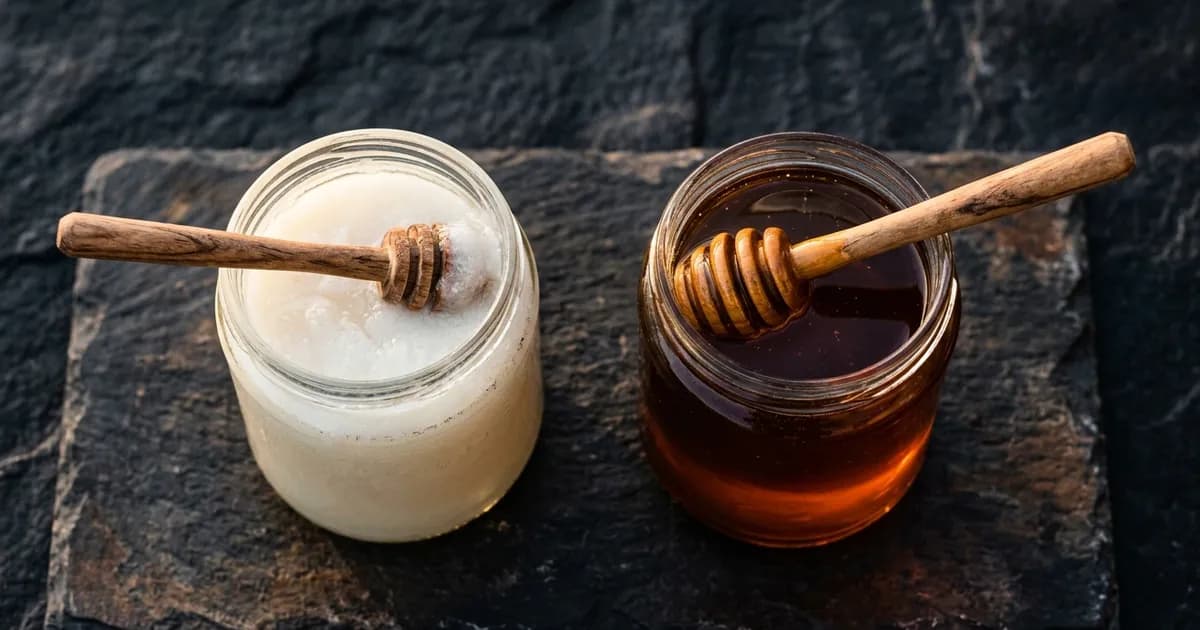
Kyrgyz sainfoin honey (Onobrychis viciifolia, Tian Shan, 2,400–3,500 m) and New Zealand Manuka honey (Leptospermum scoparium) are both monofloral premium honeys with distinct profiles. Manuka contains methylglyoxal (MGO), measured via the UMF system. Sainfoin honey contains gallic acid (291.18 µg/g) and taxifolin (22.23 µg/g) (PMC11047671, 2024). Price: our sainfoin honey EUR 69.80/kg, Manuka UMF 10+ EUR 120–200/kg. Both are genuine, but they are different products.
From the Hive
Honey knowledge the supermarket skips
Twice a month: varietals, harvest, origin. Plus 10% off your first order.
10% off your first order · No spam. Unsubscribe anytime.