
Good to Know
Fruit spread with no added sugar: what has to be in the jar
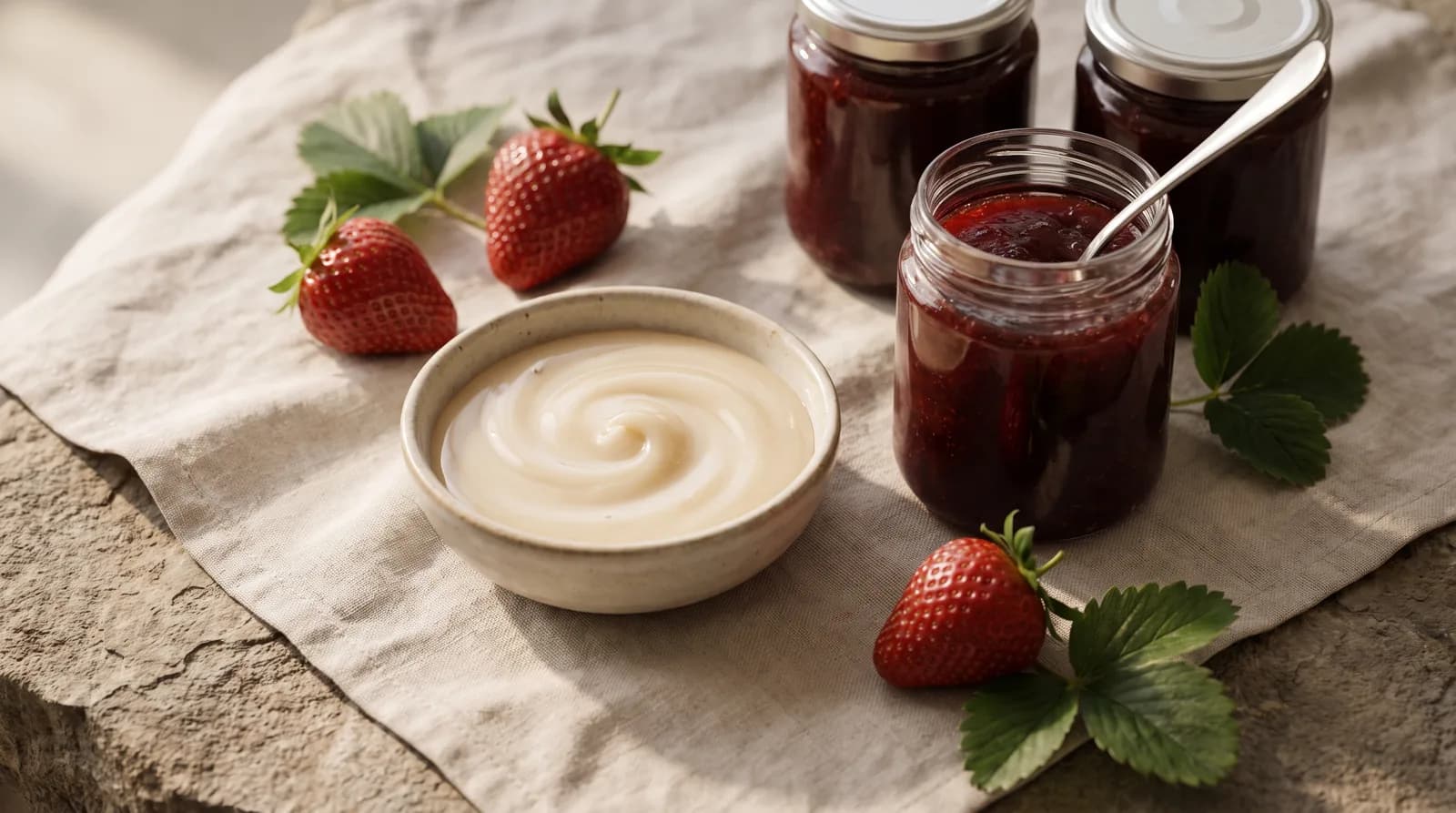
A fruit spread with no added sugar is never without sugar. It is without added granulated sugar, and the sweetness comes from somewhere else: a juice concentrate, a sweetener, or a food that brings its own sugar along. The front of the jar tells you which of the three it is in only one case. The other two are in the ingredient list, and you have to know what you are looking for.
Why is it called fruit spread and not jam?
Because jam and marmalade are reserved names.
The EU jam directive lays down what a jar must contain before it may use them. Two conditions count. First, a minimum share of fruit among the ingredients, which since June 2026 means 450 grams per kilogram of finished product for jam and 500 grams for extra jam. Second, the soluble dry matter, read off a refractometer, at least 60 percent, and the ingredient that gets it there is sugar. Fruit on its own comes nowhere near that figure, so sugar goes in until it does. Germany implements the same rules in its own jam regulation and allows a slightly lower dry matter, but the principle is identical.
The directive provides for one exception: products whose sugar has been wholly or partly replaced by sweeteners, or which qualify as reduced in sugar, may keep the name. Everything else may not.
So if you cook fruit and leave the sugar out, you have made something that is legally not jam. It needs another name. Fruit spread is that name. It is neither reserved nor defined, it simply describes what the jar is: fruit, for spreading. “No added sugar jam” is a name such a jar may carry only in the exception with sweeteners. If you want to find it on the shelf, look for the words that are actually printed on the label: fruit spread.
What does “no sugar” really mean on a label?
“No sugar” is allowed on a label only as a nutrition claim with a condition attached. The EU regulation on nutrition claims sets out four claims about sugar, each with a condition, and three of them matter for spreads.
Low in sugars means no more than 5 grams of sugars per 100 grams. For a fruit spread that is out of reach, fruit brings more than that on its own.
No sugar legally means the same as the strictest claim, the one that calls a product free of sugars, and is permitted only at no more than 0.5 grams of sugars per 100 grams. No spread made of fruit comes anywhere close.
No added sugar is therefore the claim you actually meet on the shelf. It means no mono- or disaccharides were added, and no other food used for its sweetening properties either. If the product naturally contains sugars, and fruit always does, the label must add the words “contains naturally occurring sugars”.
That clause is the most important one in the whole regulation. A fruit spread with no added sugar is not low in sugar. It is a spread whose sugar comes from the fruit itself instead of from a bag.
From the Hive
Honey knowledge the supermarket skips
Twice a month: varietals, harvest, origin. Plus 10% off your first order.
10% off your first order · No spam. Unsubscribe anytime.
Where does the sweetness come from if there is no sugar?
From one of three sources. Each leaves its own trace in the ingredient list.
Fruit-juice concentrate. Apple or grape, boiled down until little but the sugar is left. It makes the spread sweet without the word sugar ever appearing. Legally, though, it is a food used for its sweetening properties, and that alone rules out the claim “no added sugar”. That is why such jars tend to say “sweetened with fruit” instead. It sounds different, but it means: sweetened with the sugar of another fruit.
Sweeteners. Erythritol, steviol glycosides, sucralose. They are additives and carry E-numbers. The EU food information regulation requires such a product to carry the words “with sweetener” right next to its name. You do not even have to read the ingredient list, the front already tells you.
A food that brings its own sugar. Honey is the best-known one. The difference from the other two routes: the honey is not a sweetener that somebody adds to cooked fruit afterwards. It is the food itself, and the fruit joins it. That is a different category, with a different name and different physics. More on that in a moment.
How do the four routes differ inside the jar?
| Jam | Fruit spread, sweetened with fruit | Fruit spread with sweetener | Honey preparation with fruit | |
|---|---|---|---|---|
| Sweetness comes from | added sugar | juice concentrate | sweeteners or sugar alcohols | the honey itself |
| Gelling agent | jam sugar or pectin | pectin | pectin | none |
| Made by | cooking | cooking | cooking | stirring, never boiling down |
| Required on the label | fruit content, reserved name | “no added sugar” not permitted, usually “sweetened with fruit” | “with sweetener” next to the name | ingredients with the percentage of fruit |
| Number of ingredients | several | several | several | 2 |
How do you tell on the shelf where the sweetness comes from?
Five lines, in this order. All of them are on every jar sold in the EU.
1. The name. If it says jam and “with sweetener” is not printed next to it, there is sugar in it, enough for the dry matter to add up. If it says fruit spread, the name tells you nothing about the sugar, and the ingredient list alone decides. If “with sweetener” is printed next to it, you at least know what it was sweetened with.
2. The first word in the ingredient list. Ingredients are listed in descending order of weight. If sugar comes first, the jar is mostly sugar. If fruit comes first, it is mostly fruit.
3. The word concentrate. Apple juice concentrate, grape juice concentrate, pear syrup. That is fruit sweetness. It is sugar in another form, not less of it, just under another name.
4. E-numbers and pectin. A gelling agent is proof that the fruit was cooked and would not set on its own. Preservatives are the admission that there is too much water in the jar.
5. The number of ingredients. Two lines are two ingredients. Seven lines are seven. Either way, somebody made a decision.
The words “contains naturally occurring sugars”, by the way, are not a warning. They are the most honest line on the whole jar, because they admit what every fruit spread is.
And honey instead of sugar?
Honey is a supersaturated sugar solution with very little water. The EU honey directive allows a moisture content of no more than 20 percent, and the German quality standard sets 18 percent. That lack of water is where honey gets its keeping quality, which is why it needs neither cooking nor a gelling agent nor preservation.
That changes the arithmetic. Put fruit into honey and there is nothing to sweeten, because the honey is the sweetness. Nothing to gel, because creamed honey stays spreadable through its fine crystallisation. And nothing to preserve, as long as the fruit is dried and adds no water. Two ingredients, no process in between. Why that only works with dried fruit, and how such a jar differs from strawberry jam, is explained in our piece on strawberry and honey.
Legally it is neither jam nor fruit spread; the customary name is honey preparation, and the ingredient list is correspondingly short. Whether such a jar may carry a nutrition claim like “no added sugar” is decided by the recipe in each case, not by the category. The honey itself stays what it is: almost entirely sugar, and for exactly that reason it keeps. If you want to know why it turns white and creamy along the way, the answer is in the guide to white honey.
One difference is worth remembering. A cooked jam tolerates warmth. A honey preparation does not: above a temperature of 20 °C the fine crystallisation coarsens and does not come back. How to store such a jar is explained under storing honey and understanding crystallisation.
The test
“No sugar” is not a property of a jar. It is a question, and the ingredient list is the answer. Read it and you will find the sweetness again in every spread, just under a different name. The question worth asking is: which name is it this time?
Share
Frequently Asked Questions
Because jam is a reserved name. Under the EU jam directive a jam must as a rule have at least 60 percent soluble dry matter, and that figure is reached almost entirely with sugar. Leave the sugar out and you fall short, so the jar may not be called jam. Fruit spread is the name that remains.
That no mono- or disaccharides were added, and no other food used for its sweetening properties either. The EU regulation on nutrition claims sets this out. If the product naturally contains sugars, the label must also carry the words “contains naturally occurring sugars”.
Legally, concentrate is a food used for its sweetening properties, and that alone rules out the claim “no added sugar”. In the ingredient list it appears as apple juice concentrate or grape juice concentrate, not as sugar. It is sweet all the same.
By the name. Under the EU food information regulation, a food containing sweeteners must carry the words “with sweetener” right next to its name. In the ingredient list the substances then appear by name or E-number, for example erythritol, steviol glycosides or sucralose.
No, it is a third category. A honey preparation with dried fruit is neither cooked nor gelled; it stays spreadable because creamed honey is finely crystallised. Its sweetness is the honey itself, not something added afterwards. Which nutrition claim such a jar may carry is decided by the recipe, not by the category.
Turn the jar around. If the name says jam and “with sweetener” is not printed next to it, there is sugar in it, enough for the dry matter to add up. If a juice concentrate is in the ingredient list, it is fruit sweetness. If “with sweetener” sits next to the name, it is sweeteners or sugar alcohols. If only honey and fruit are listed, it is a honey preparation.

ULU Redaktion
Redaktion
Das ULU Team recherchiert und schreibt zu Honig, Herkunft und bewusstem Genuss.
Related Articles
Good to Know
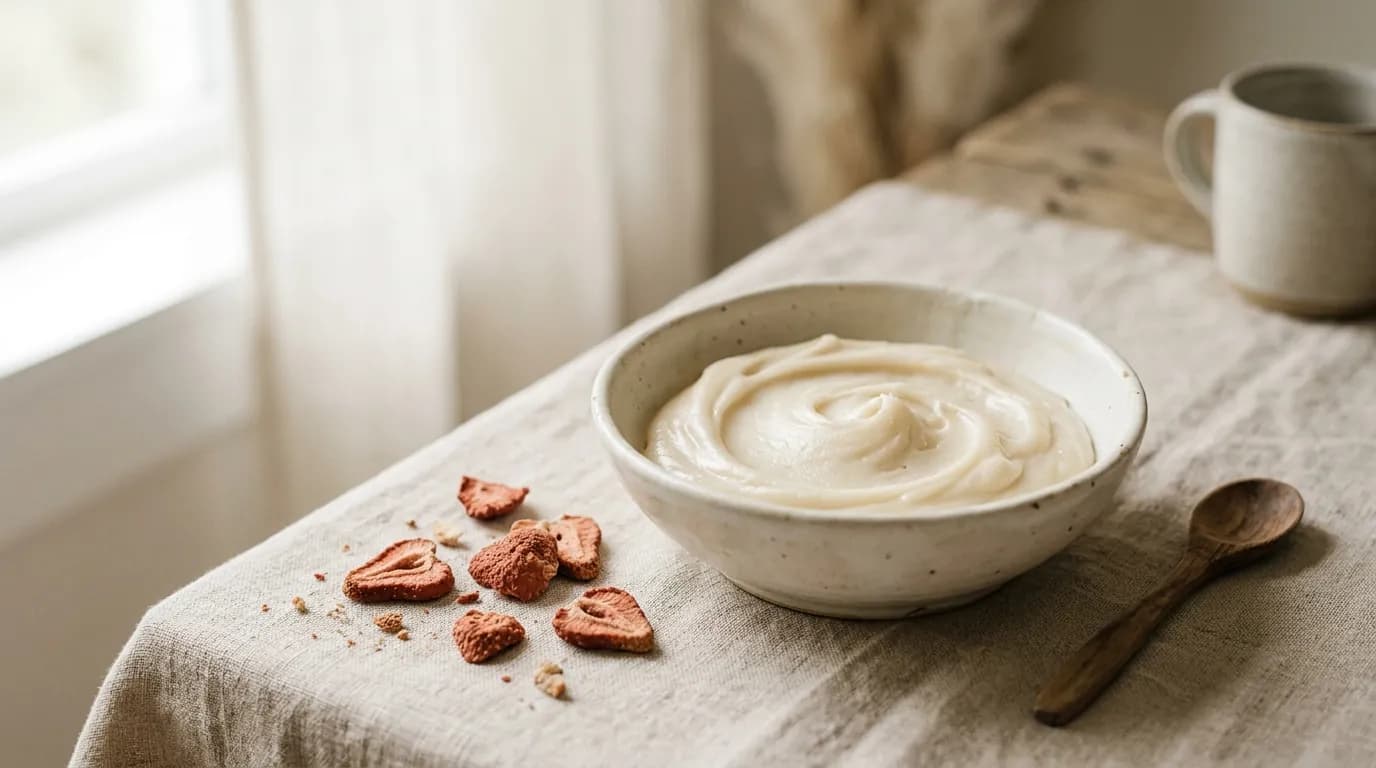
Strawberry Honey: Why Honey and Dried Strawberry Work
Honey and dried strawberry, nothing else. Everything further down the ingredient list pushes the jar towards jam, and the label tells you which one you are holding.
The Makers
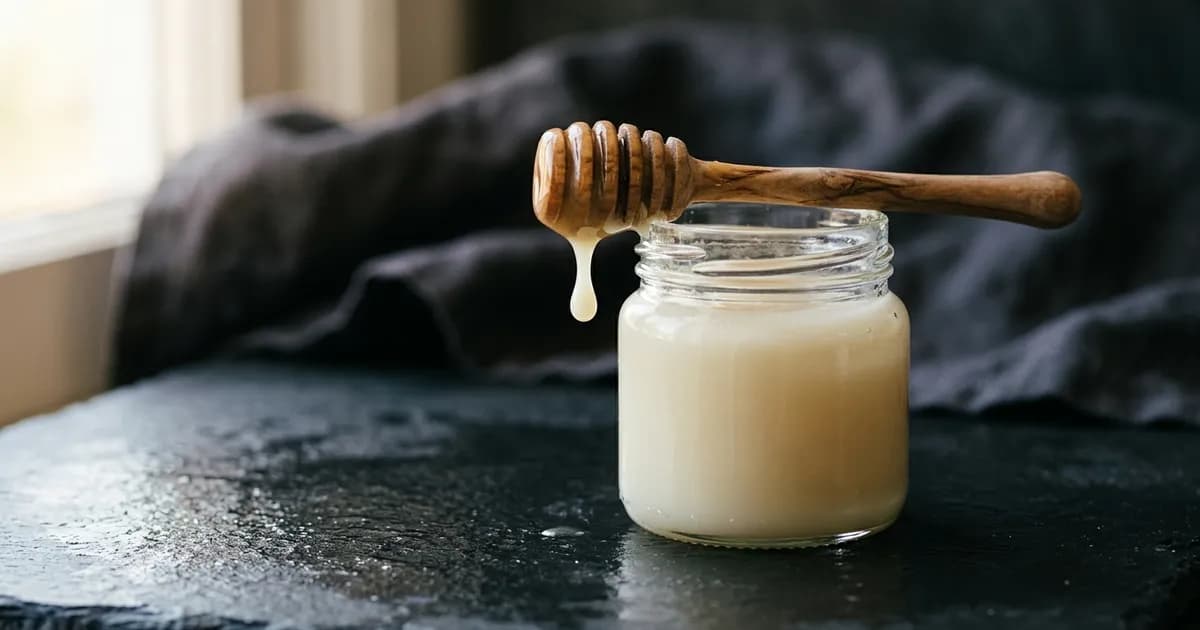
White honey: what it is, where it comes from and where to buy it
White honey is honey whose glucose has crystallised into very fine crystals. The crystals reflect light, which is why it looks creamy white. Which varieties do this, where they come from and how to recognise good white honey.
Good to Know
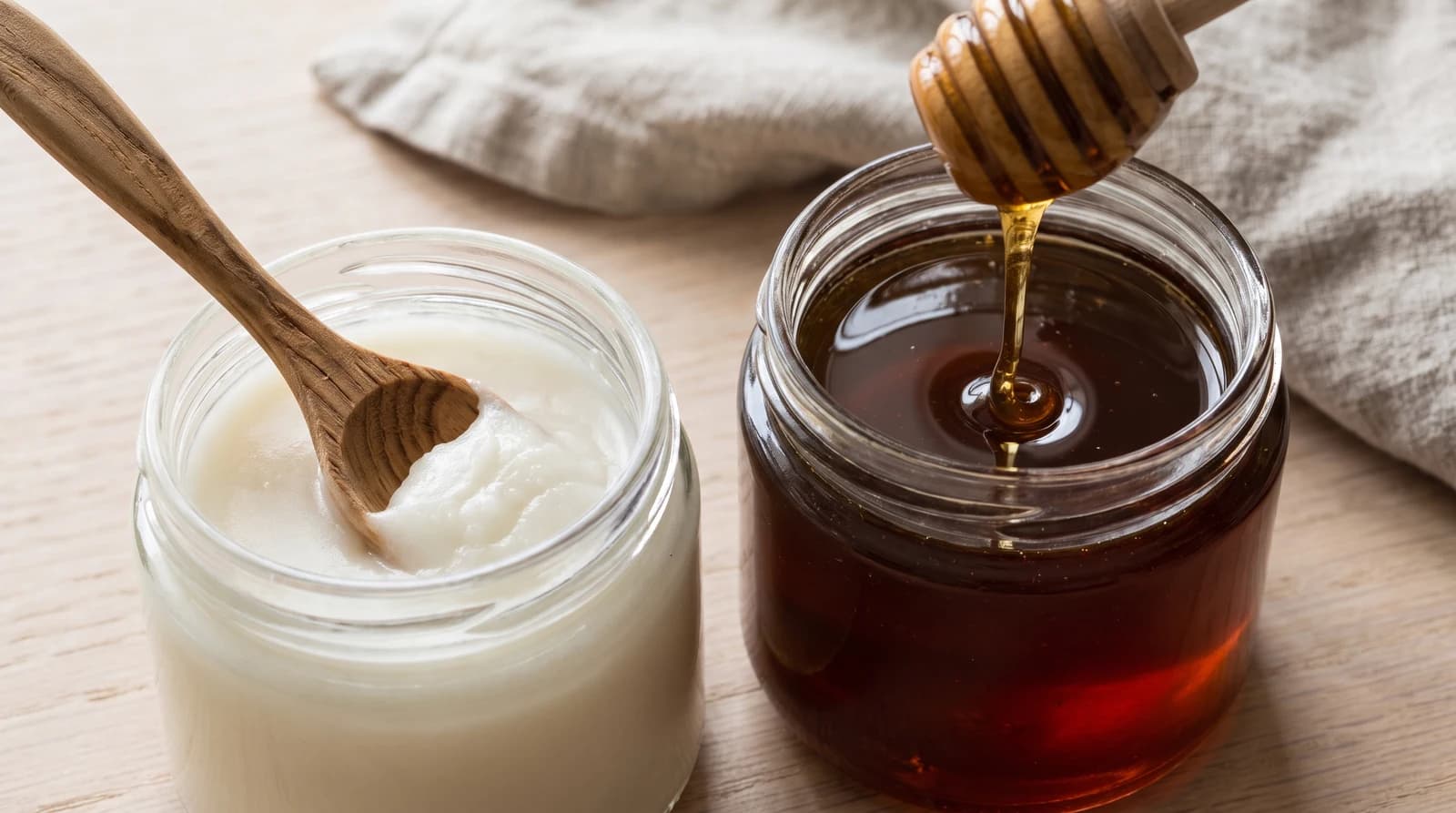
Manuka alternative: sainfoin honey compared with buckwheat, sidr and jarrah
White sainfoin honey from the Tian Shan costs €6.98 per 100 g, Manuka MGO 250+ to 550+ in our examples €9.56 to €25.68. Five honeys side by side, every number sourced, the limits of each one stated.
From the Hive
Honey knowledge the supermarket skips
Twice a month: varietals, harvest, origin. Plus 10% off your first order.
10% off your first order · No spam. Unsubscribe anytime.