
Good to Know
Sainfoin Honey from Kyrgyzstan: What White Honey Really Means
Last updated:
The plant most people have never heard of
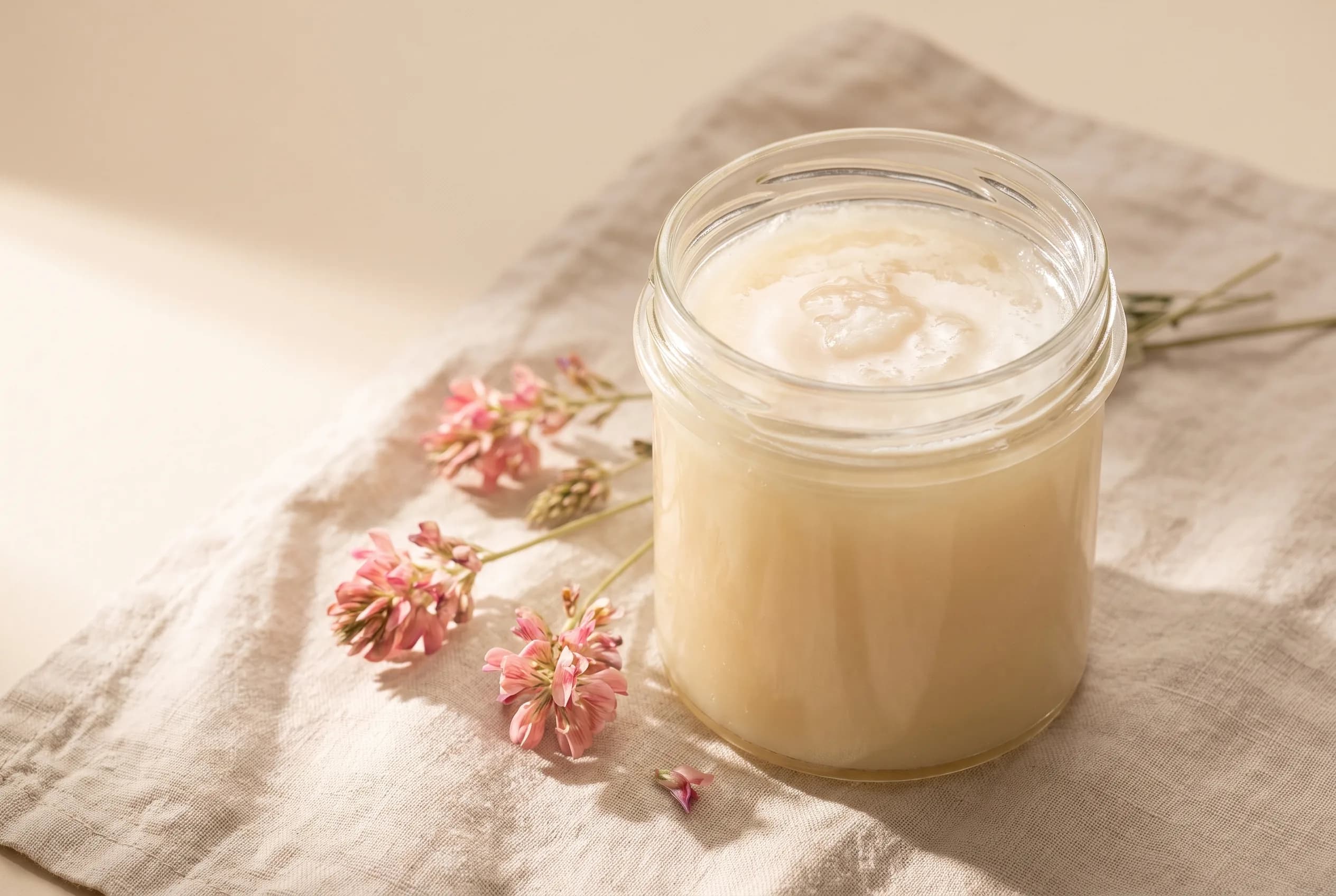
Sainfoin. Not sage, not savory — sainfoin. Onobrychis viciifolia, to be precise. An old forage plant that thrives on poor soils where other plants give up. Its hallmark: soft pink flower spikes that cover the high-altitude meadows of Central Asia in midsummer.
In most of Western Europe, sainfoin has been largely forgotten. Farmers once grew it as fodder, as a soil stabiliser on dry hillsides. Today it turns up in botanical gardens with a small sign explaining what was once obvious. In Kyrgyzstan, it simply grows. Nobody planted it. Nobody tends it.
For bees, sainfoin is a gift: high nectar content, a long flowering window, no competing crops nearby. The honey that results is called sainfoin honey — and it looks like no honey you have ever seen.
White honey: what it actually means
Freshly extracted, sainfoin honey is pale yellow, almost transparent. Within a few weeks it begins to crystallise — evenly, fine-grained, creamy. The result is honey of an almost white colour. Not because of any processing. Not because anything has been added. But because the sugar composition of sainfoin nectar is what it is.
Crystallisation is not a sign of poor honey. It is the opposite. The liquid honey in supermarkets that stays unchanged for months has typically been heated — to 70°C or higher — to delay crystallisation. In the process, enzymes, pollen, and aromatic compounds are lost.
Kyrgyz white honey from sainfoin is gently processed at max. 40 °C, not pasteurised.
From the Hive
Honey knowledge the supermarket skips
Twice a month: varietals, harvest, origin. Plus 10% off your first order.
10% off your first order · No spam. Unsubscribe anytime.
2,000 metres: why altitude matters
- No pesticides. The meadows lie far above any farmland. The bees work in a floral landscape undisturbed for centuries.
- Wild biodiversity. Above 2,000 metres: wild thyme, mountain mint, alpine clover, meadowsweet.
- Extreme climate. Short summers, cold nights, intense solar radiation. Plants compress their nectar into a few weeks.
- Small harvests. Nursultan, one of the beekeepers of the Tian Shan, keeps dozens of colonies across seasonal sites.
These conditions cannot be simulated. The plant, the soil, the climate, the altitude — the combination is not replicable.
How Kyrgyz mountain honey differs from supermarket honey
- Origin. EU honey can be blended from up to 27 countries. Our honey comes from four regions of the Tian Shan: Naryn, Issyk-Kul, Talas and Osh.
- Heating. Industrial honey is pasteurised (up to 72°C). Unpasteurised mountain honey is gently processed at max. 40 °C.
- Crystallisation. Our sainfoin honey crystallises within weeks into a creamy white consistency. Proof it has not been heated.
- Pollen. Heated honey loses its pollen content — the only reliable proof of origin.
A word on purity
The European Commission estimates that up to 46% of honey sold in the EU has been adulterated. Kyrgyz honey sourced directly through small importers sits outside this industrial supply chain.
Direct trade: no middlemen, no anonymous factory
ULU does not source through wholesalers. Nurgul, co-founder of ULU, grew up in Kyrgyzstan.
- We know the locations of the hives.
- The beekeeper receives a fair price — not one negotiated down by an intermediary.
We call this direct trade. Two parties, one price, no intermediaries.
How to store and eat sainfoin honey
No refrigerator. Store at room temperature — cool and dark. If you prefer it softer, place the jar in a warm water bath (maximum 40°C). Not the microwave.
Sainfoin honey is mild enough to eat on its own. It pairs with fresh cheese, yoghurt, aged goat cheese. It is the honey that needs no recipe.
Genuinely sweet is rare
Sainfoin honey from the Kyrgyz highlands is not a mass-market product. But it is what honey once was before it became a commodity: the concentrated result of plants, bees, time, and a specific place on earth.
We call it Sky Nectar. Because what forms at 2,000 metres is a little closer to the sky.
Share
Crystallisation is not a sign of poor honey. It is the opposite.
Genuinely sweet is rare.
Frequently Asked Questions
Sainfoin honey crystallises within weeks into a creamy white consistency — because of the natural sugar structure of sainfoin nectar.
Harvested above 2,000 metres in the Tian Shan range, far above farmland and without pesticides.
Yes — crystallisation is a sign of high-quality, unpasteurised honey. Place the jar in a water bath at max 40°C to soften.
ULU sources its honey from its beekeeping partner in Kyrgyzstan.

Jamilia
Autorin, ULU Magazin
Jamilia schreibt über kirgisisches Handwerk, Honig und die Geschichten hinter den Produkten. Aufgewachsen in Zentralasien, lebt sie zwischen Bischkek und Berlin.
Related Articles
Good to Know
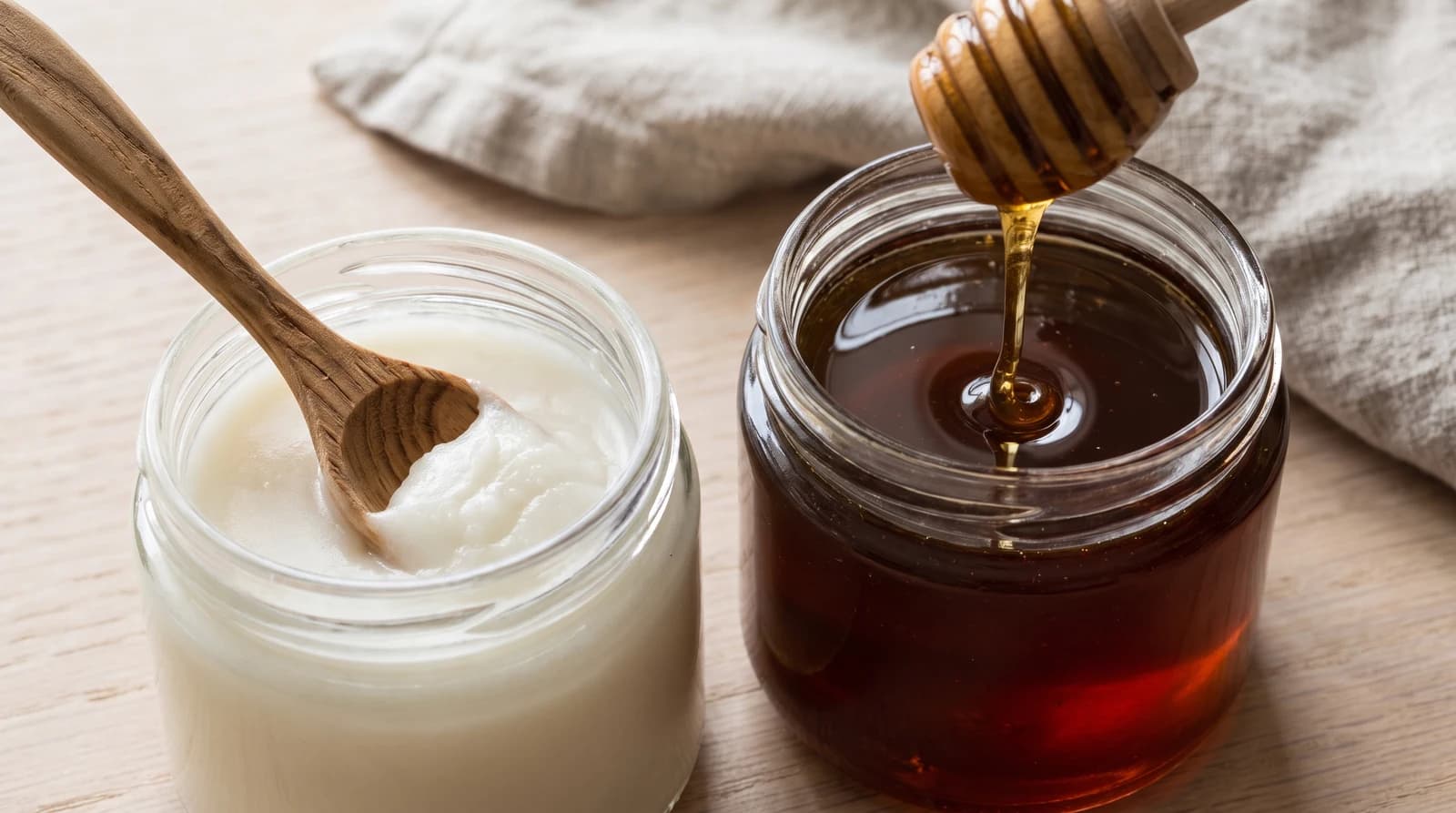
Manuka alternative: sainfoin honey compared with buckwheat, sidr and jarrah
White sainfoin honey from the Tian Shan costs €6.98 per 100 g, Manuka MGO 250+ to 550+ in our examples €9.56 to €25.68. Five honeys side by side, every number sourced, the limits of each one stated.
Good to Know
Homemade Strawberry Jam: The Base Recipe and the No-Cook Version
Strawberries do not set on their own. Plenty of water, little pectin. The base recipe, the sugar question and the route without a pot.
Good to Know
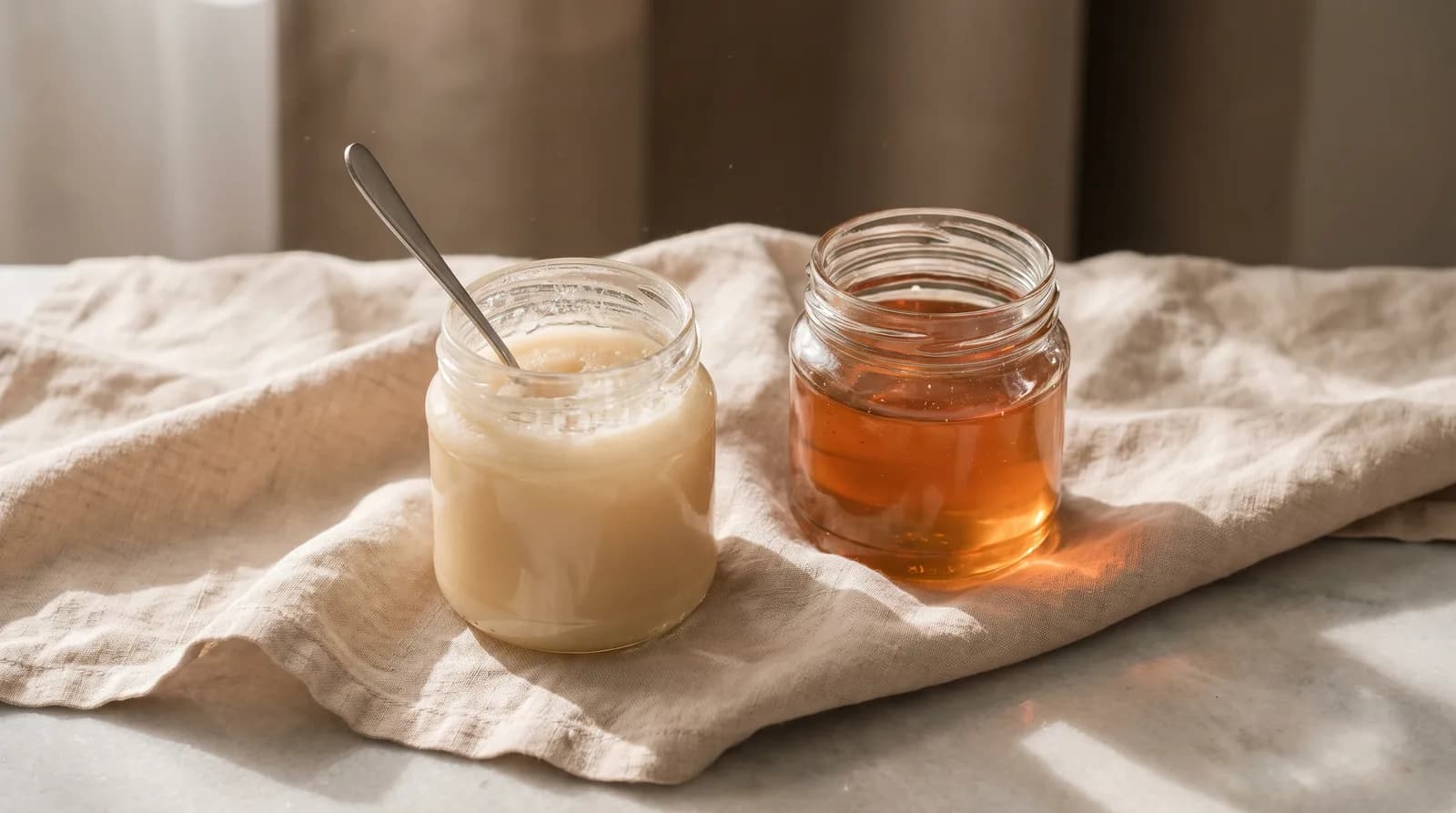
How to tell if honey is real: five checks you can do at home
Of 320 honey samples taken at the EU border, 147 were flagged as suspected of adulteration. Here is what you can check yourself, what the viral kitchen tests are worth, and where the limit sits.
From the Hive
Honey knowledge the supermarket skips
Twice a month: varietals, harvest, origin. Plus 10% off your first order.
10% off your first order · No spam. Unsubscribe anytime.