
Travel Light
The Historic Silk Road in Kyrgyzstan Tracing Ancient Trade Routes
Last updated:
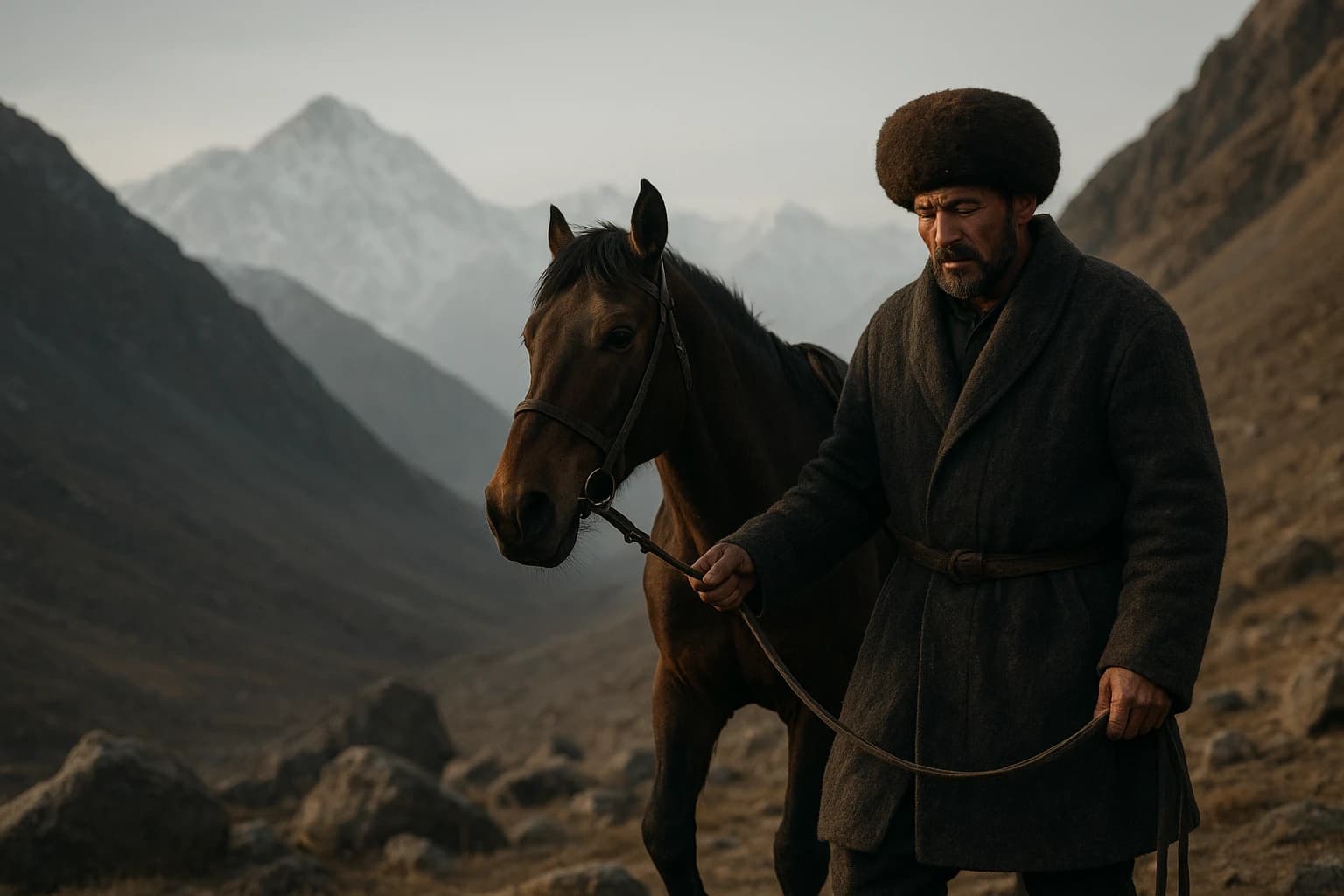
Forget for a moment the image of a single, well-paved road connecting East and West. Instead, picture a 6,400-kilometre network of rugged mountain passes, hidden caravanserais, and cities now partly lost to time in the heart of Central Asia.
When you think of Kyrgyzstan today, you might see pristine nature, majestic mountains, and vast steppes. Yet it was precisely this rugged landscape that once served as the most critical geographic bottleneck of the global economy. To truly understand the history of the Silk Road, you cannot simply look at the imperial courts of Rome or Chang'an. You must look where trade was at its most dangerous and fascinating: in the high valleys of the Tian Shan mountains.
Here, at elevations above 2,500 metres, the worlds of settled merchants and free-roaming nomads merged. It is a story of survival, craftsmanship, and a cultural exchange whose echo still resonates today in the traditional felt carpets and way of life of Kyrgyz herding families.
Origins and History: When the Han Dynasty Met the Tian Shan
The origins of this legendary network reach back to 130 BC. The Chinese diplomat Zhang Qian was sent westward by the Han Dynasty to forge alliances. What he brought back from his expeditions was more valuable than gold: knowledge of new kingdoms, foreign cultures, and trade routes that led through what is now Kyrgyzstan.
Kyrgyzstan sat at a strategically unavoidable position along the route. The foothills of the Pamir-Alai and the towering peaks of the Tian Shan forced caravans to navigate through specific valleys. The routes split here into northern and southern branches to bypass the merciless Taklamakan Desert basin. Anyone who wanted to cross these passes needed not just courage, but the deep expertise of the locals.
Old and New Silk Road: A Contrast of Worlds
When we speak of the Silk Road today, we must separate two entirely different concepts to grasp the historical depth.
- The Old Silk Road (The Historic Network): Active from the 2nd century BC to the 15th century. This was not merely about trading goods — silk, spices, or gemstones. It was the greatest intercultural bridge in human history. Buddhism and later Islam travelled along these paths. It was an era of camel caravans, handwoven textiles, and direct, human exchange.
- The New Silk Road (Belt and Road Initiative): China's multi-billion-dollar project launched in 2013 is a geopolitical and infrastructural power play. Here, high-speed trains, pipelines, and massive container ships dominate. It is about efficiency and modern supply chains.
The magic for the culturally curious, however, lies not in the new asphalt roads. It lies in the relics of the old route — in that handmade, authentic world that has defied modernisation in Kyrgyzstan.
From the Hive
Honey knowledge the supermarket skips
Twice a month: varietals, harvest, origin. Plus 10% off your first order.
10% off your first order · No spam. Unsubscribe anytime.
The Stations of the Kyrgyz Route: An Archaeological Deep Dive
The physical remains of the ancient trade routes in Kyrgyzstan are not sterile museum exhibits. They are embedded in the wild landscape and tell stories of wealth, faith, and natural disasters.
Tash Rabat: The Caravanserai in the Clouds
Tash Rabat is an absolute architectural anomaly. At over 3,200 metres elevation, nestled in a remote valley of the Tian Shan, stands this massive stone structure. Originally built in the 10th century as a Nestorian Christian (or Buddhist) monastery, it transformed in the 15th century into one of the most important caravanserais on the Silk Road. For exhausted merchants, this place was a life-saving refuge from blizzards and bandits after crossing the treacherous Torugart Pass.
Osh and the Secret of the "Heavenly Horses"
The 3,000-year-old city of Osh in the Fergana Valley was one of the liveliest bazaars in Central Asia. Yet the most coveted export heading toward China was not silk at all. It was the legendary "Fergana horses." The Chinese military desperately needed these hardy, robust animals for their cavalry. In return, enormous wealth flowed into the region.
The Sunken Heritage of Lake Issyk-Kul
Here, history becomes a real adventure: the deep-blue Lake Issyk-Kul holds a secret that archaeologists have only recently begun to unravel. At depths of up to four metres, researchers from Tomsk State University discovered medieval Muslim and Christian necropolises as well as building remains from the 13th century. Massive earthquakes caused these once-thriving Silk Road trading cities to literally sink beneath the lake.
Balasagun and the Burana Tower
The legacy of the Karakhanids, a powerful Turkic dynasty, is embodied in the Burana Tower. It was once the minaret of the proud capital Balasagun in the Chuy Valley. Today, the tower and the surrounding "Balbals" (stone warrior statues) mark the remains of a city that once attracted scholars, merchants, and artisans from across Asia.
The Invisible Engine: How Nomads Kept the Silk Road Alive
It is a widespread myth that a merchant loaded his camels in Venice or Rome and rode all the way through to China. The Silk Road functioned as a highly complex relay system. Goods changed hands countless times.
In this system, the Kyrgyz nomads played an essential, often overlooked role. They were not passive bystanders but the backbone of trade in the high mountains. The nomads controlled the passes. They offered caravans protection, provided fresh horses and camels, and traded themselves.
Their own products were highly valued: sturdy wool, warming felt, and artful Shyrdaks (traditional felt carpets) were exchanged for Chinese tea, ceramics, or Indian spices. This millennia-old connection of deep bonds with nature, artisanal precision, and fair barter trade is the exact cultural core that you can still sense today in the high valleys of Kyrgyzstan. Anyone who chooses ethically traded, handmade products from this region today is seamlessly continuing this ancient tradition of appreciation.
Excursus: From the Tian Shan to Your Doorstep — The Global Network
But how did goods from the yurts and bazaars of Kyrgyzstan ultimately reach Europe? The Silk Road did not end at the Bosporus. From Constantinople or Venice, the precious goods made their way across the Alps.
If today you walk along old trade routes near Nuremberg, cross the Spessart on historic salt and pepper routes, pass by the Wartburg in Eisenach, or look at the trading houses of the Hanseatic city of Hamburg, you are standing on the final stretch of the Silk Road. The fine cloth or exotic spice that a German merchant purchased in the Middle Ages had often been on a journey lasting months — guarded by nomads in the Tian Shan, traded in the caravanserais of Central Asia. This global network connected cultures long before the invention of the internet.
Experiencing the Silk Road Heritage Today
The Historic Silk Road in Kyrgyzstan is not a closed chapter. For the culturally curious who seek the authentic, the country today offers the rare opportunity to not just observe history, but to experience it.
Those who travel through Kyrgyzstan today — lightly packed and ready to dive deep into the culture — will find the descendants of those nomads. They still weave scarves from pure highland wool, craft warming slippers from felt, and harvest rare mountain honey at altitudes above 3,000 metres. The direct exchange with these herding families, without middlemen and with deep respect for their work, is the modern, ethical answer to the ancient caravan trade.
Frequently Asked Questions (FAQ) About the Silk Road in Kyrgyzstan
What is the difference between the old and new Silk Road? The Old Silk Road was a historic network of unpaved routes along which caravans transported spices, silk, and culture until the 15th century. The New Silk Road (Belt and Road Initiative) is a modern Chinese infrastructure project from 2013, focused on geopolitical influence, railway lines, and pipelines.
Which archaeological Silk Road sites can you visit in Kyrgyzstan? The most significant sites include the Tash Rabat caravanserai at 3,200 metres elevation, the Burana Tower (remains of the ancient city of Balasagun), the sacred mountain Sulaiman-Too in Osh, and the underwater ruins in Lake Issyk-Kul, parts of which can be explored.
What goods were traded besides silk? Silk gave the route its name, but in reality countless goods were traded. From Kyrgyzstan and Central Asia came above all the famous Fergana horses, raw wool, artful felt carpets (Shyrdaks), jade, and later also gunpowder and paper.
Why were the nomads so important for the Silk Road? Since merchants rarely travelled the entire distance, trade operated in stages. The nomads knew the inhospitable mountain passes, offered protection from bandits, provided fresh pack animals, and supplied the caravans with vital equipment made from wool and felt.
***
The Silk Road was never just a path from A to B. It was a lifeline. When we appreciate the artisanal traditions of Kyrgyzstan today — whether through conscious consumption or cultural curiosity — we keep the spirit of these ancient trade routes alive. We travel with light luggage, but our understanding of the world grows deeper.
Share
The Silk Road was a 6,400-kilometre network of rugged mountain passes, hidden caravanserais, and cities now partly lost to time.
Kyrgyzstan sat at a strategically unavoidable position — the Pamir-Alai foothills and Tian Shan peaks forced caravans through specific valleys.
The old Silk Road was the greatest intercultural bridge in human history — Buddhism and later Islam travelled along these paths.
Frequently Asked Questions
The Old Silk Road was a historic network of unpaved routes along which caravans transported spices, silk, and culture until the 15th century. The New Silk Road (Belt and Road Initiative) is a modern Chinese infrastructure project from 2013, focused on geopolitical influence, railway lines, and pipelines.
The most significant sites include the Tash Rabat caravanserai at 3,200 metres elevation, the Burana Tower (remains of the ancient city of Balasagun), the sacred mountain Sulaiman-Too in Osh, and the underwater ruins in Lake Issyk-Kul, parts of which can be explored.
Silk gave the route its name, but in reality countless goods were traded. From Kyrgyzstan and Central Asia came above all the famous Fergana horses, raw wool, artful felt carpets (Shyrdaks), jade, and later also gunpowder and paper.
Since merchants rarely travelled the entire distance, trade operated in stages. The nomads knew the inhospitable mountain passes, offered protection from bandits, provided fresh pack animals, and supplied the caravans with vital equipment made from wool and felt.

Jamilia
Autorin, ULU Magazin
Jamilia schreibt über kirgisisches Handwerk, Honig und die Geschichten hinter den Produkten. Aufgewachsen in Zentralasien, lebt sie zwischen Bischkek und Berlin.
Related Articles

Travel Light
Responsible Tourism in Kyrgyzstan: Travelling with Purpose
Anyone planning a trip to the other side of the world today is often looking for more than just relaxation. Perhaps you know this feeling: the Western pressure to perform becomes too much, and the thought of "travel as escape" creeps in. Yet the standard package-holiday conveyor belt of mass tourism often leaves an inner emptiness and a massive ecological footprint.
Travel Light
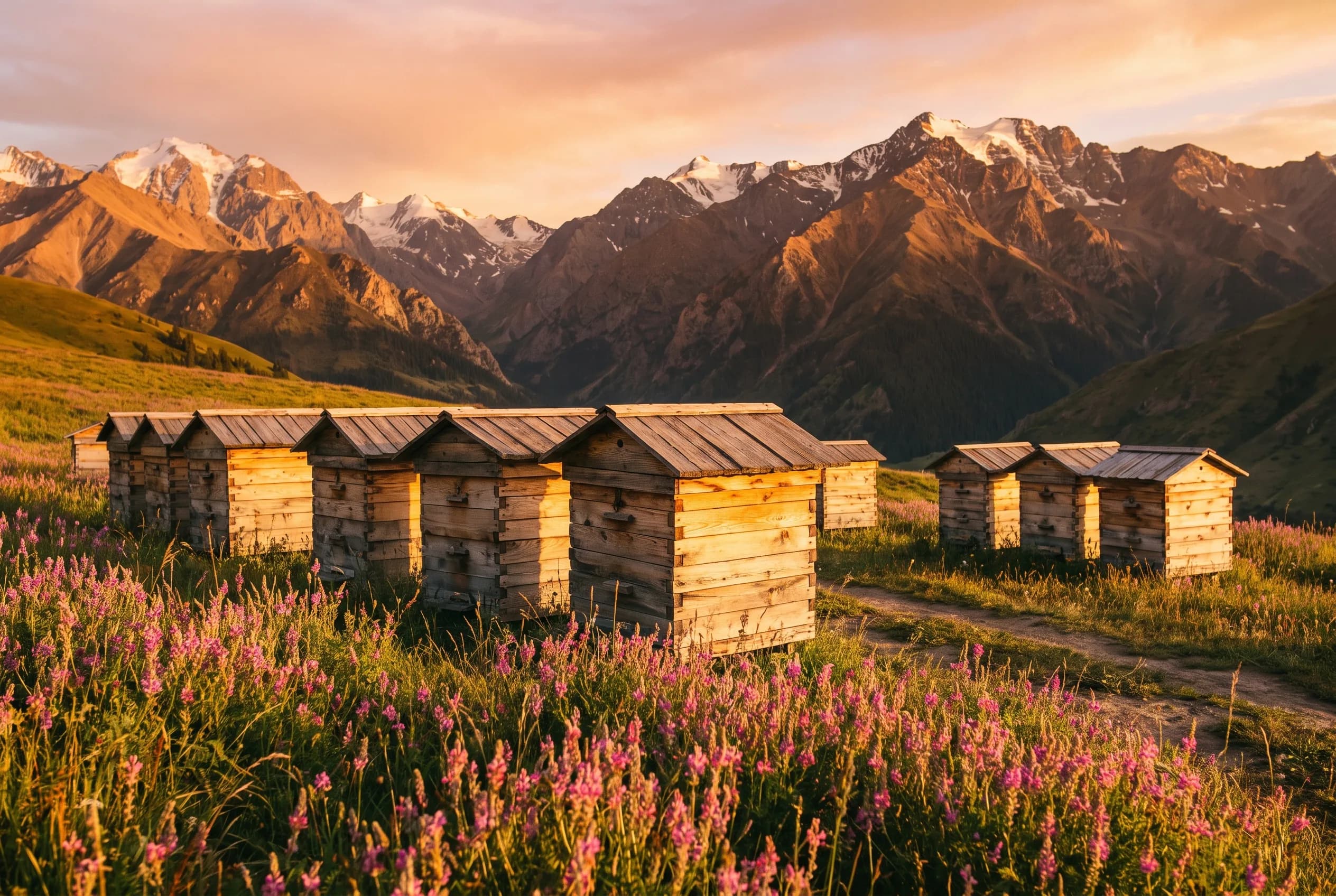
More Than Just Honey: The Liquid Gold of Kyrgyzstan
If you are looking for genuine Kyrgyz honey, you face a real challenge. You will find countless offers, yet most raise more questions than they answer. Where exactly does this honey come from? Who are the people behind it? And what truly makes it special enough to justify a higher price?

Travel Light
Kymyz, Juniper Smoke and Pilgrim Springs: Rituals of the Kyrgyz Nomads
Kymyz from a wooden vessel, juniper smoke before moving in, springs with their own legends on Issyk-Kul: three rituals that still shape the Kyrgyz nomads' summer.
From the Hive
Honey knowledge the supermarket skips
Twice a month: varietals, harvest, origin. Plus 10% off your first order.
10% off your first order · No spam. Unsubscribe anytime.