
Travel Light
More Than Just Honey: The Liquid Gold of Kyrgyzstan
Last updated:
If you are looking for genuine Kyrgyz honey, you face a real challenge. You will find countless offers, yet most raise more questions than they answer. Where exactly does this honey come from? Who are the people behind it? And what truly makes it special enough to justify a higher price? The superficial product descriptions of most online shops leave you guessing and make an informed decision nearly impossible.
We understand. That is why we are taking you on a journey — deep into the Tian Shan mountains, to the roots of a centuries-old tradition. This is not a sales page. This is a window into a world where nature, people, and bees live in a delicate balance. Here you will learn why traditional beekeeping in Kyrgyzstan is more than just a method for harvesting honey; it is a cultural heritage.
The Source of Flavour: The Pristine Terroir of the Tian Shan Mountains
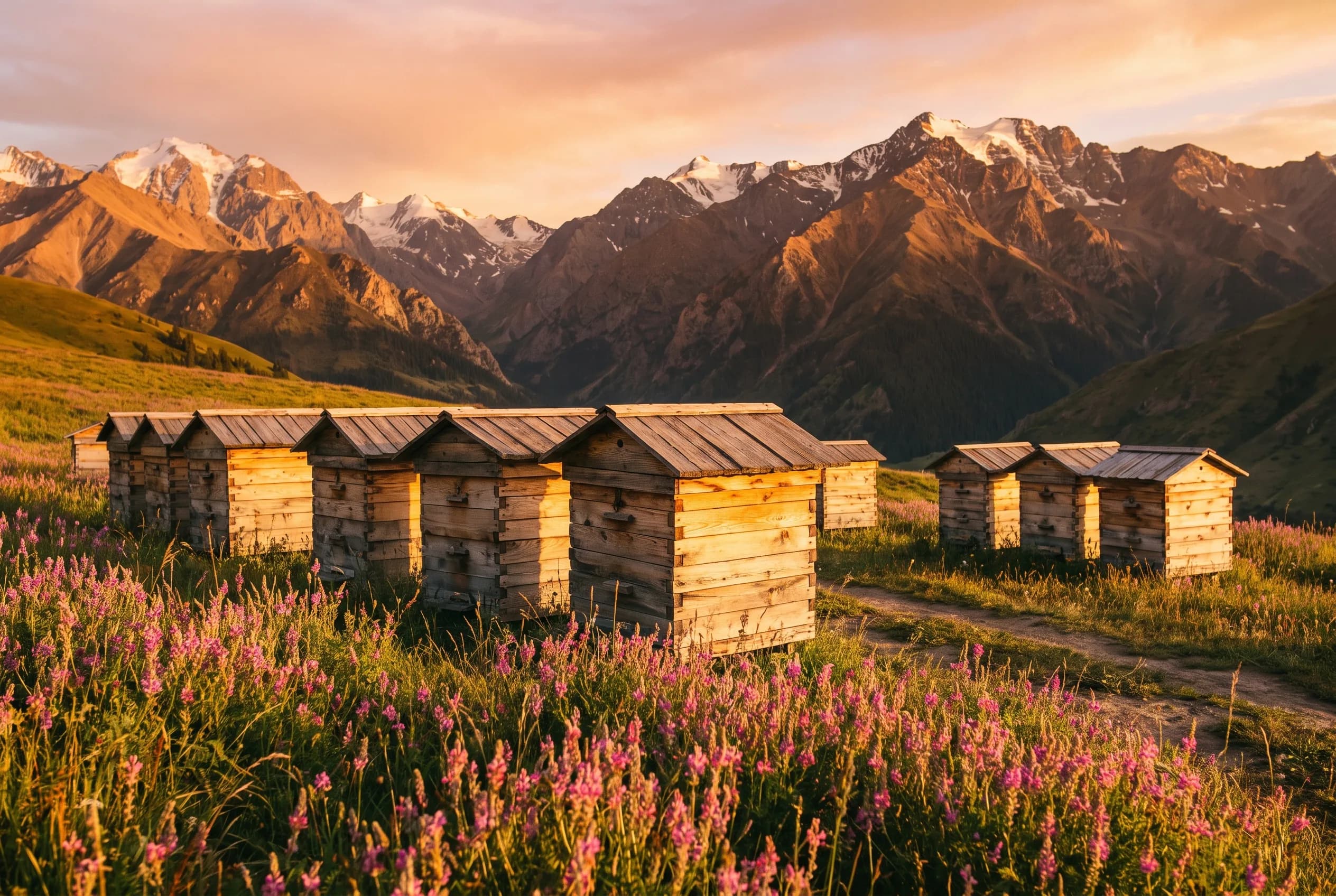
Every exceptional honey begins with its environment. Our honey does not simply come "from Kyrgyzstan." Its home is the high-altitude summer pastures, the jailoos, in four regions of the Tian Shan — Naryn, Issyk-Kul, Talas and Osh — at 2,400 to 3,500 metres. In this pure, thin air, far from industry and agriculture, a unique alpine flora unfolds.
The undisputed star of these mountain meadows is Sainfoin. Its delicate pink blossoms are the primary nectar source and the secret behind the creamy, almost white texture of our honey. This aroma is complemented by wild alfalfa and sweet clover. This interplay — this "terroir" — creates a flavour profile unlike anything you have tasted before: mild, floral, with a delicate, almost buttery consistency that melts on the tongue.
In Rhythm with Nature: The Art of the Gentle Harvest
Industrial honey production is designed for maximum yield. Traditional Kyrgyz beekeeping follows a different principle: the rhythm of nature. In the Tian Shan, a form of transhumance beekeeping is practised. In spring, the beekeepers transport their hives to the high-altitude jailoos so the bees can follow the peak of the blossom.
This method has decisive advantages:
- Varied forage: The bees always have access to the richest and most diverse nectar sources without overburdening the local flora.
- Bee health: The colonies stay strong and healthy, operating in their natural environment rather than being weakened by artificial feeding or stress.
- Gentle harvest: Honey is only taken when the combs are fully capped — a sign of ripeness. Enough honey is always left in the hive for the colony to overwinter strong and healthy.
This "gentle harvest" stands in direct contrast to practices where bee colonies are exploited for maximum profit. It is an approach rooted in respect and coexistence.
From the Hive
Honey knowledge the supermarket skips
Twice a month: varietals, harvest, origin. Plus 10% off your first order.
10% off your first order · No spam. Unsubscribe anytime.
The Guardians of Gold: Beekeeping in the Tian Shan
One example is Askar and Gulmira from a small village near Song-Köl Lake. For generations, their family has tended not only sheep but also the knowledge of bees. For them, beekeeping is not a business but an integral part of their livelihood and culture.
After the Harvest: What Happens to Our Honey
The decisive difference lies in what happens to the honey after harvest — or rather, what does not happen.
Our honey is gently processed at max. 40 °C, not pasteurised. This gentle handling preserves its aroma and texture.
Insights into Quality
- Natural crystallisation: Most honeys crystallise over time. This is not a defect but a natural process; how fast and how finely depends on the ratio of fructose to glucose. Our Sainfoin honey crystallises particularly finely due to its sugar composition, which gives it its creamy consistency.
- Unadulterated flavour: The gentle processing preserves the full, complex aroma of Kyrgyzstan's alpine blossoms.
Discover the White Mountain Blossom Honey from ULU
We invite you to taste the difference for yourself. Our mountain honey comes from the high pastures of the Tian Shan and is gently processed at max. 40 °C, not pasteurised.
Frequently Asked Questions (FAQ)
Why is this honey almost white and creamy?
The light colour and creamy texture are a direct result of the high proportion of Sainfoin blossom nectar. The fine crystallisation of the sugars found in this nectar produces this unique consistency.
Is the honey pasteurised?
No. It is gently processed at max. 40 °C and not pasteurised.
Why is the honey more expensive than supermarket honey?
The price reflects the labour-intensive harvest in remote mountain regions. You are investing in quality and the preservation of a culture.
Where does ULU source its honey?
ULU sources its honey from a beekeeping partner in Kyrgyzstan.
Try our mountain honey from the Tian Shan.
Share
Nomadic herding families transport their hives to the high-altitude jailoos in spring so the bees can follow the peak of the bloom.
In the gentle harvest, honey is only taken when the combs are fully capped — enough is always left in the hive for the colony to overwinter healthily.
The terroir of the Tian Shan mountains — pure air, thin atmosphere, and Sainfoin blossoms at 2,400 to 3,500 metres — creates a flavour profile that is mild, floral, and almost buttery.
Frequently Asked Questions
The light colour and creamy texture are a direct result of the high proportion of Sainfoin blossom nectar. The fine crystallisation of the sugars found in this nectar produces this unique consistency.
No. It is gently processed at max. 40 °C and not pasteurised.
The price reflects the labour-intensive harvest in remote mountain regions. You are investing in quality and the preservation of a culture.
ULU sources its honey from a beekeeping partner in Kyrgyzstan.

Jamilia
Autorin, ULU Magazin
Jamilia schreibt über kirgisisches Handwerk, Honig und die Geschichten hinter den Produkten. Aufgewachsen in Zentralasien, lebt sie zwischen Bischkek und Berlin.
Related Articles

Travel Light
Responsible Tourism in Kyrgyzstan: Travelling with Purpose
Anyone planning a trip to the other side of the world today is often looking for more than just relaxation. Perhaps you know this feeling: the Western pressure to perform becomes too much, and the thought of "travel as escape" creeps in. Yet the standard package-holiday conveyor belt of mass tourism often leaves an inner emptiness and a massive ecological footprint.
Travel Light
Kymyz, Juniper Smoke and Pilgrim Springs: Rituals of the Kyrgyz Nomads
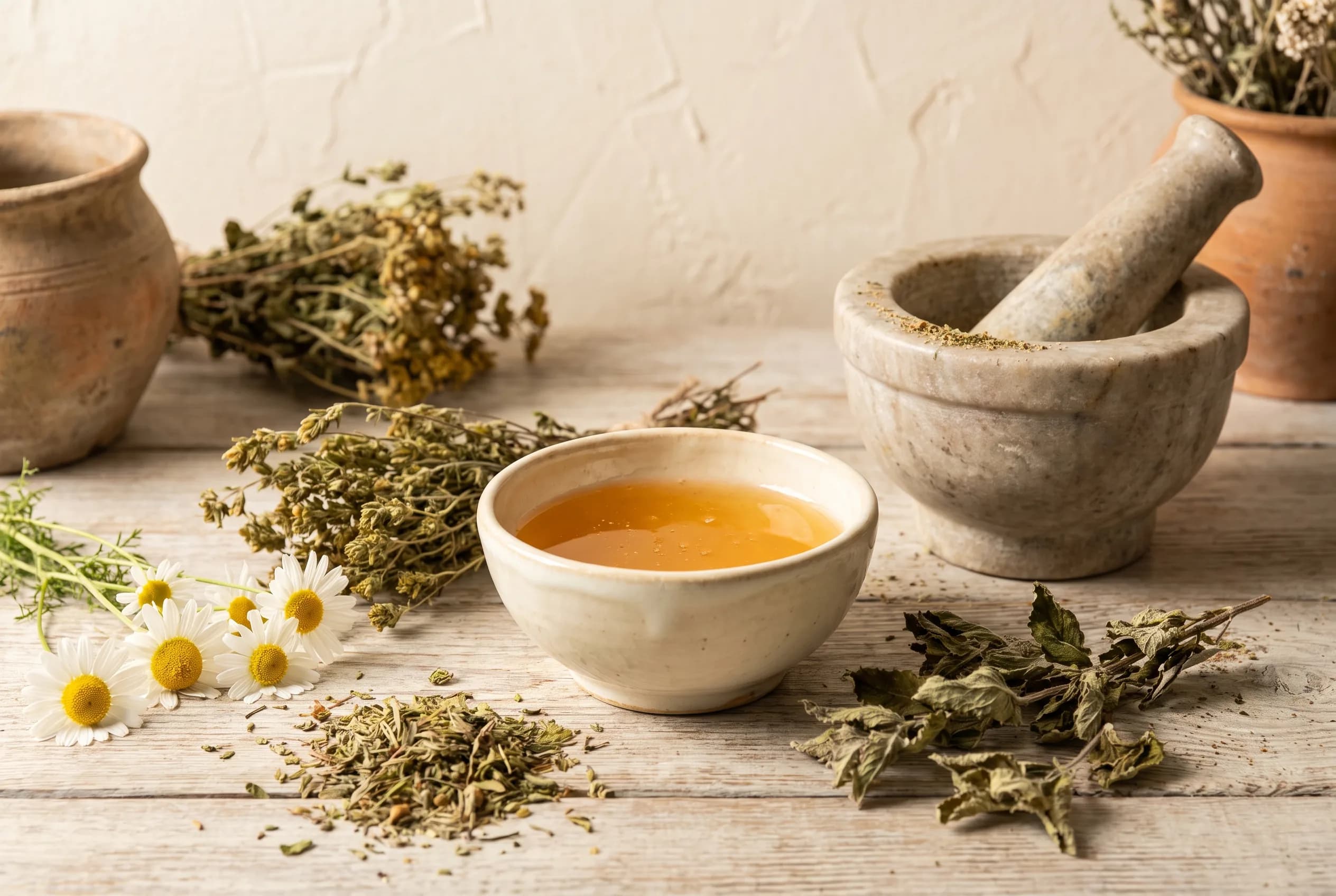
Kymyz from a wooden vessel, juniper smoke before moving in, springs with their own legends on Issyk-Kul: three rituals that still shape the Kyrgyz nomads' summer.
Travel Light
The Historic Silk Road in Kyrgyzstan Tracing Ancient Trade Routes
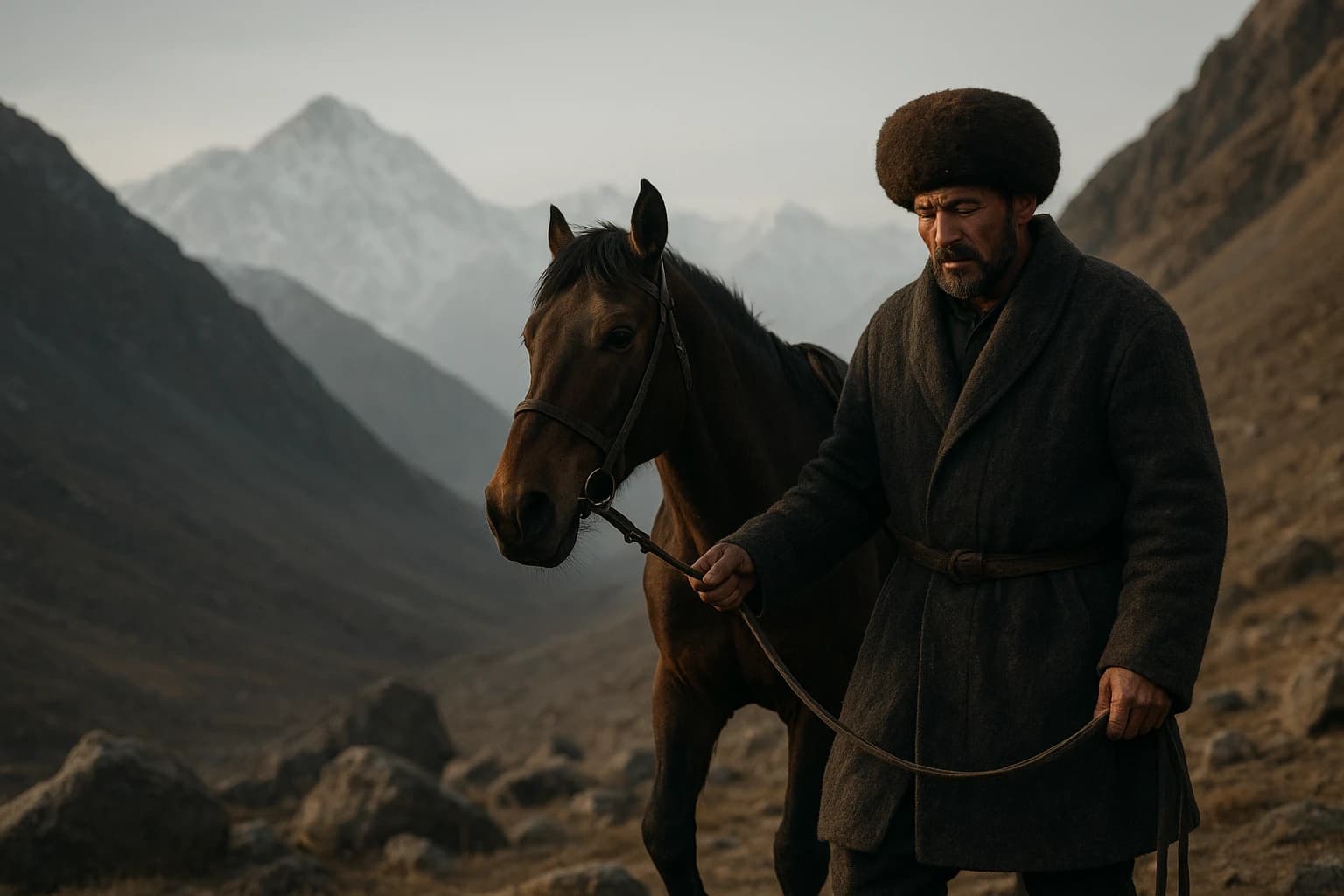
Forget for a moment the image of a single, well-paved road connecting East and West. Instead, picture a 6,400-kilometre network of rugged mountain passes, hidden caravanserais, and cities now partly lost to time in the heart of Central Asia.
From the Hive
Honey knowledge the supermarket skips
Twice a month: varietals, harvest, origin. Plus 10% off your first order.
10% off your first order · No spam. Unsubscribe anytime.