
Good to Know
The 8 Rarest Honeys in the World
Last updated:
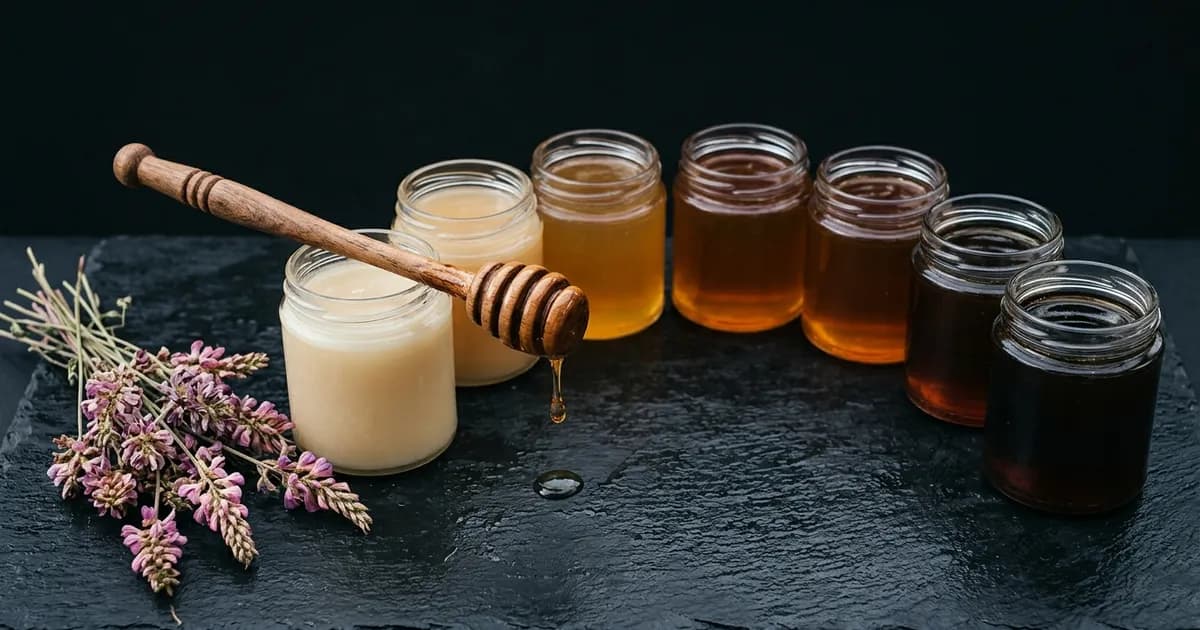
# The 8 Rarest Honeys in the World
Cave honey from Turkey is considered the rarest honey in the world. Guinness World Records has listed Centauri Honey as the most expensive honey since 16 February 2021, at €10,000 per kilogram, harvested at 2,500 m, 10 to 15 kg a year.
Behind it come seven varieties that are scarce for the same reason: one particular plant, a remote place, a harvest that cannot be sped up. Take away one of those conditions and the honey no longer exists.
Every number on this page has a source. Where we found no price, none is given.
Rare honey: what makes a honey rare
Rare is not the same as expensive. Three things decide:
- The plant. Some flower for only a few weeks a year or grow only on certain soils.
- The place. A Pacific island, a mountain cave, a war zone.
- The harvest. If you harvest from a giant rainforest tree or inside a cave, you cannot increase the amount.
1. Cave honey from Turkey
Origin: caves and rocks in Turkey, 2,500 m Quantity: 10 to 15 kg a year (Centauri Honey) Price: €10,000 per kg, Guinness record 2021
This honey does not come from hives. It is taken from deep caves and rocks. According to Guinness World Records, Centauri Honey harvests once a year and had samples tested by the Turkish food institute. The record page describes the honey as dark and bitter.
It is often confused with Elvish honey ("Peri balı", fairy honey) from Artvin province. Beekeeper Günay Gündüz found it in 2009 in a cave on the Sarıçayır plateau, and he takes honey from it only every three years, three to five kilograms per harvest (TRT Haber). Price in 2017: €5,000 per kilogram (TRT Haber). In April 2025 Elvish honey arrived at Harrods in London: 100 jars of 150 g, $1,500 a jar, from a year's harvest of 20 kg (Hürriyet Daily News).
Both come from caves in Turkey. Centauri holds the record.
From the Hive
Honey knowledge the supermarket skips
Twice a month: varietals, harvest, origin. Plus 10% off your first order.
10% off your first order · No spam. Unsubscribe anytime.
2. Pitcairn honey from the South Pacific
Origin: Pitcairn, South Pacific Quantity: small, no figure published
Pitcairn has fewer than 50 inhabitants. The bees are Italian honey bees (Apis mellifera ligustica) and forage on mango, passion flower, guava and rose apple. In 1998 the UK Department for International Development funded training for the island's beekeepers and an inspection of the colonies for disease. Today Pitcairn honey goes to New Zealand and the rest of the world.
It is rare because of the place, not the plants.
3. Sidr honey from Yemen
Origin: Daw'an, Hadramaut, Yemen Harvest: in November, after the sidr tree flowers Price: €15.96 per 100 g (retail example, 250 g for €39.90)
Sidr honey comes from the flower of the sidr tree, a species of jujube. It is a very light caramel colour, sometimes golden amber, soft in texture, with a caramelised aroma (retailer's description).
What makes it scarce is the location. The war in Yemen makes every supply chain harder, so when you buy, it pays to ask about origin and lab analysis.
4. Burzyan honey from the Urals
Origin: Bashkortostan, southern Urals, Russia Forage: mainly linden
The Burzyan bee lives only in Bashkiria. The Shulgan-Tash reserve was reorganised in 1986 for its last purebred population, and since 1995 the republic has banned the import of other bee strains. An old form of beekeeping survives there: beekeepers hollow out trees, carve an entrance hole and a door, and the bees move in.
One tree, one colony, one wooden door. A beekeeping operation like that does not get bigger.
5. Tualang honey from Malaysia
Origin: Malaysia Bees: giant honey bee Apis dorsata, wild
The tualang tree (Koompassia excelsa) is one of the tallest trees in the tropics. The tallest measured specimen stands 85.8 to 88 m. Its smooth trunk keeps bears away, and the giant honey bees hang their combs from the branches.
Climbers harvest it, going up on bamboo ladders and calming the bees with smoke. None of that can be planned.
6. Manuka honey from New Zealand
Origin: New Zealand Flowering: four to six weeks, North Island November to January, South Island December to February Price: €9.56 to €25.68 per 100 g (MGO 250+ to 550+, 250 g each, retail example)
Manuka is the best-known name on this list. It is rare because of the short flowering of the manuka shrub (Leptospermum scoparium): manuka nectar exists only in those weeks. The price rises with the MGO grade, almost threefold from 250+ to 550+ in the example above.
More numbers: our comparison of sainfoin honey and Manuka.
7. Anama honey from Ikaria
Origin: Ikaria island, Greece Plant: heather Erica manipuliflora
Anama is a single-variety honey from the nectar of a heather that grows on the Aegean island of Ikaria. Fresh, it is reddish-bronze. After fine crystallisation it turns light caramel. The taste is pungent, smoky, slightly bitter and only mildly sweet (Kasiotis et al., 2022).
One island, one heather. We have not found Anama in German shops.
8. Sainfoin honey from Kyrgyzstan
Origin: Tian Shan, Kyrgyzstan, 2,400 to 3,500 m Harvest: once a year Price: €6.98 per 100 g (ULU Mountain Honey, 500 g for €34.90)
In the Tian Shan highlands the nectar of sainfoin (Onobrychis viciifolia) becomes a honey that crystallises creamy white, tastes mild and floral and carries a delicate caramel note. Researchers have found more than 60 natural aroma compounds in sainfoin honey. According to the producer, the share of sainfoin pollen is 60 to 80 %.
Unlike cave honey, Pitcairn or Anama, it is regularly on sale in Germany: ULU sells it as Mountain Honey. Our mountain honey took Silver at the 2019 Apimondia World Beekeeping Awards in Montreal. Apimondia is the International Federation of Beekeepers' Associations.
More about the plant: What is sainfoin honey?
What rare honey costs
| Honey | Price per 100 g | Source |
|---|---|---|
| Cave honey, Centauri (Turkey) | €1,000 | Guinness record, 16.02.2021 |
| Cave honey, Elvish (Artvin) | €500 (2017) · at Harrods $1,000 (2025) | TRT Haber · Hürriyet Daily News |
| Sidr (Yemen) | €15.96 | retailer, 250 g |
| Manuka MGO 250+ to 550+ | €9.56 to €25.68 | retailer, 250 g each |
| Sainfoin (Kyrgyzstan) | €6.98 | ULU, 500 g |
What to look for when buying
The scarcer a honey, the stronger the incentive to stretch it. In the EU coordinated action "From the Hives", authorities took 320 honey samples at the EU border between November 2021 and February 2022. 147 of them, 46 %, were suspected of not complying with the EU Honey Directive.
- The origin is specific. A valley, a region, an altitude, not "from the highlands".
- The variety is proven. A pollen analysis shows which plant dominates.
- The price fits the quantity. If a rare honey sells far below the prices above, ask questions.
How to recognise real honey is explained in this guide.
Frequently asked questions
Which honey is the rarest in the world?
Measured by harvest size and price, it is Turkish cave honey. According to Guinness World Records, Centauri Honey harvests 10 to 15 kg a year from caves at 2,500 m. Pitcairn honey comes from an island with fewer than 50 inhabitants.What is the most expensive honey in the world?
Guinness World Records lists Centauri Honey from Turkey as the most expensive honey: €10,000 per kg, sold on 16 February 2021 in Istanbul. Elvish honey, also Turkish, from Artvin province is often named, but it is not the record holder.Why is rare honey so expensive?
Three things limit the amount: a plant that flowers briefly, a place few people can reach, and a harvest that cannot be sped up. Where all three meet, the quantity stays small.Where can I buy rare honey in Germany?
Sidr is sold by specialist retailers, Manuka by pharmacies. ULU sells white sainfoin honey from the Kyrgyz Tian Shan as Mountain Honey in its own shop and on Amazon.Is sainfoin honey rare?
Sainfoin honey is harvested once a year, in the Tian Shan at 2,400 to 3,500 m. It is little known in Germany, but unlike cave honey or Pitcairn honey it is regularly available in shops.Share
Frequently Asked Questions
Measured by harvest size and price, it is Turkish cave honey. According to Guinness World Records, Centauri Honey harvests 10 to 15 kg a year from caves at 2,500 m. Pitcairn honey comes from an island with fewer than 50 inhabitants.
Guinness World Records lists Centauri Honey from Turkey as the most expensive honey: €10,000 per kg, sold on 16 February 2021 in Istanbul. Elvish honey, also Turkish, from Artvin province is often named, but it is not the record holder.
Three things limit the amount: a plant that flowers briefly, a place few people can reach, and a harvest that cannot be sped up. Where all three meet, the quantity stays small.
Sidr is sold by specialist retailers, Manuka by pharmacies. ULU sells white sainfoin honey from the Kyrgyz Tian Shan as Mountain Honey in its own shop and on Amazon.
Sainfoin honey is harvested once a year, in the Tian Shan at 2,400 to 3,500 m. It is little known in Germany, but unlike cave honey or Pitcairn honey it is regularly available in shops.

ULU Redaktion
Redaktion
Das ULU Team recherchiert und schreibt zu Honig, Herkunft und bewusstem Genuss.
Related Articles

The Makers
What Is Sainfoin Honey? The Complete Guide to a Rare Honey
Some honeys you find in every supermarket. Then there is sainfoin honey.
The Makers
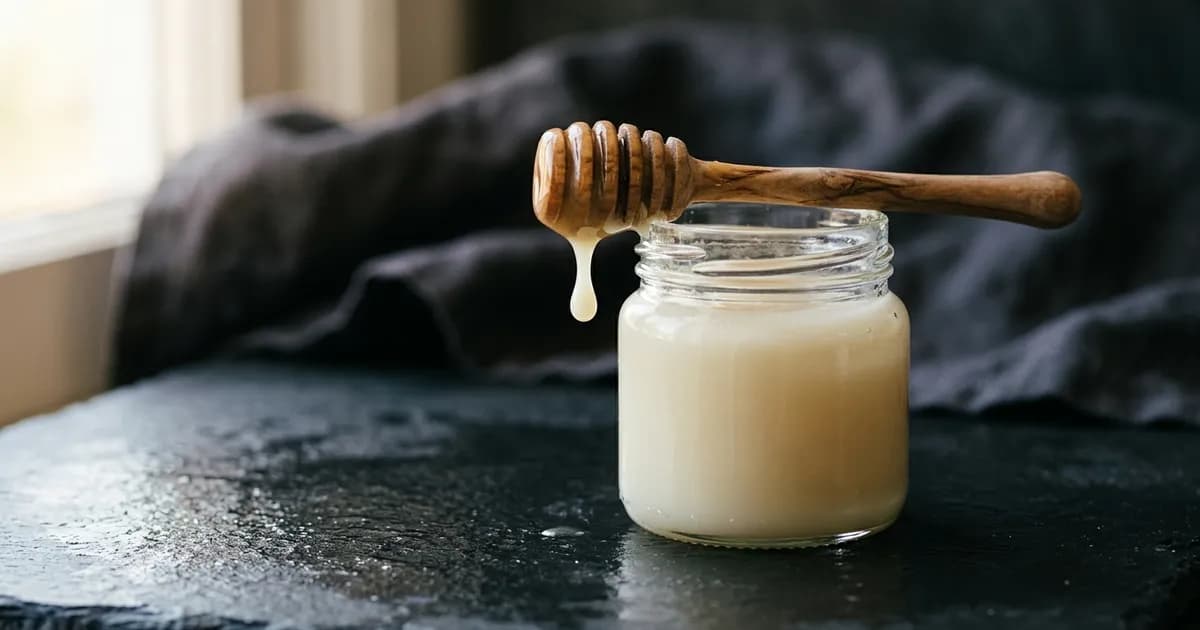
White honey: what it is, where it comes from and where to buy it
White honey is honey whose glucose has crystallised into very fine crystals. The crystals reflect light, which is why it looks creamy white. Which varieties do this, where they come from and how to recognise good white honey.
Good to Know
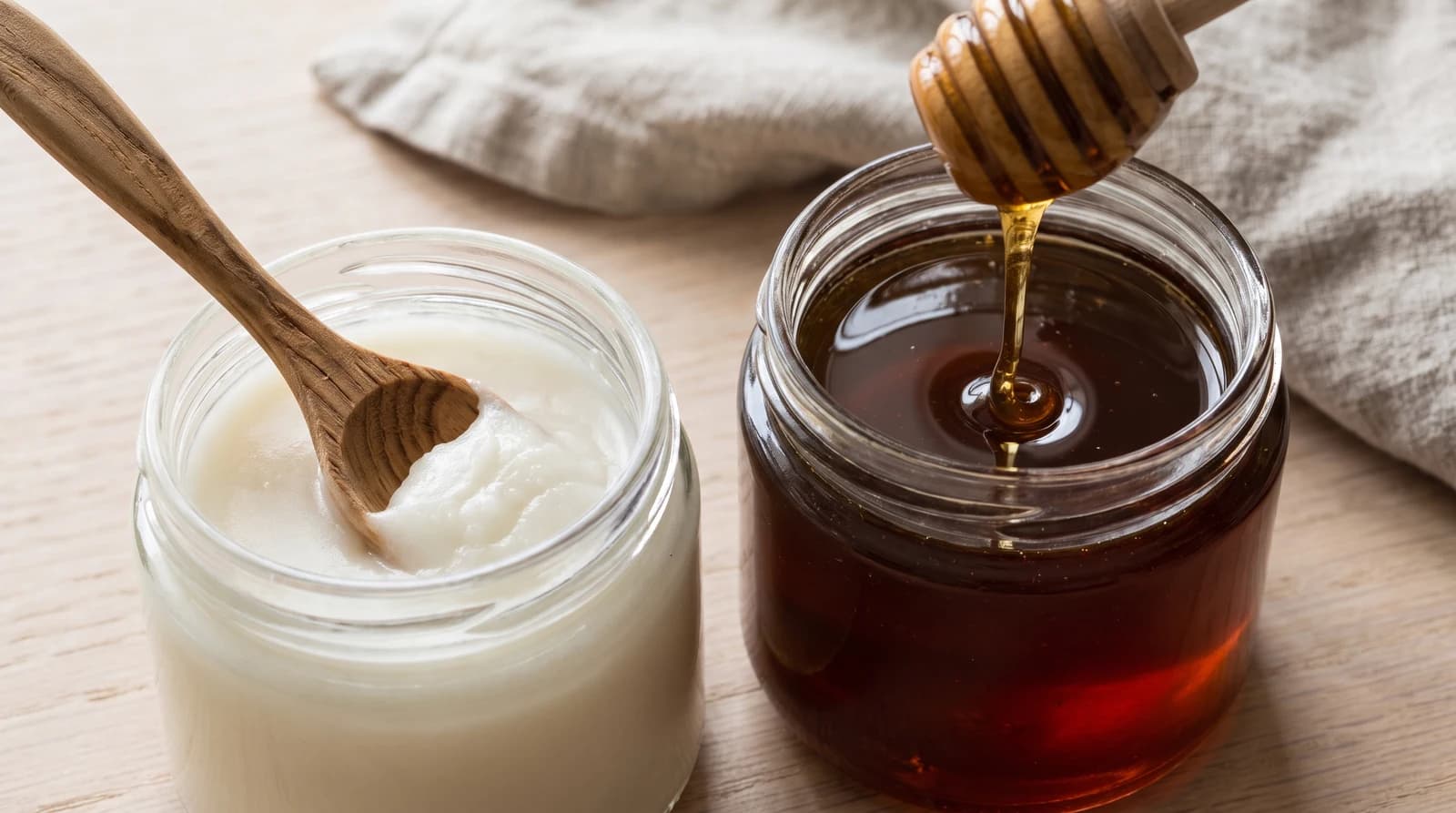
Manuka alternative: sainfoin honey compared with buckwheat, sidr and jarrah
White sainfoin honey from the Tian Shan costs €6.98 per 100 g, Manuka MGO 250+ to 550+ in our examples €9.56 to €25.68. Five honeys side by side, every number sourced, the limits of each one stated.
From the Hive
Honey knowledge the supermarket skips
Twice a month: varietals, harvest, origin. Plus 10% off your first order.
10% off your first order · No spam. Unsubscribe anytime.